
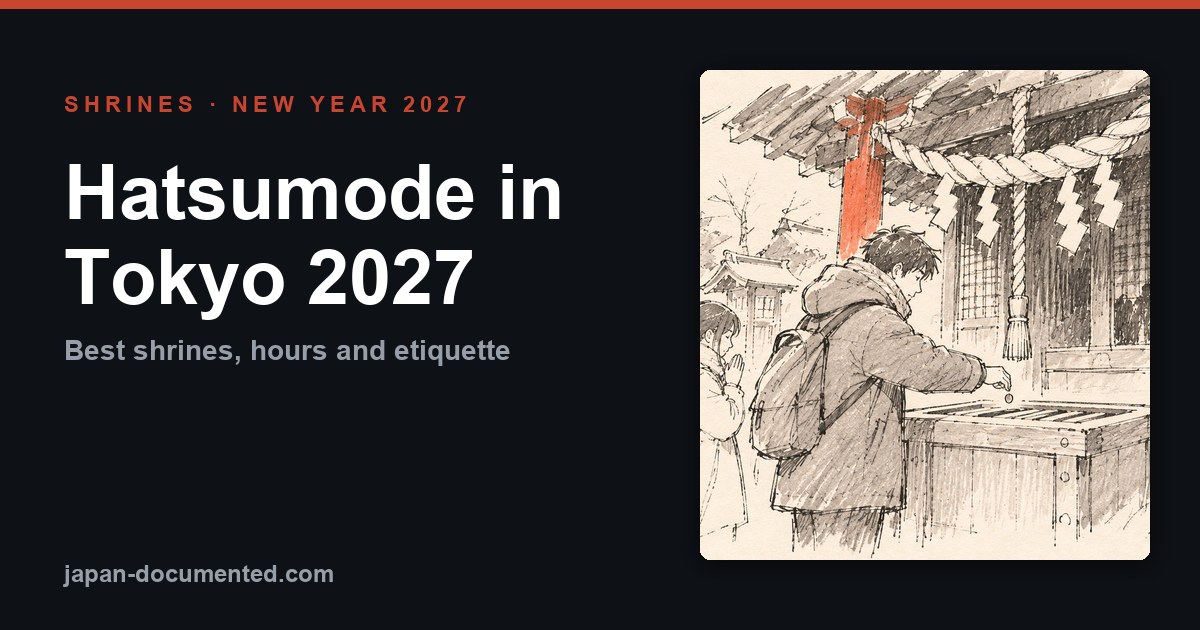
Hatsumode (初詣) is the first visit of the new year to a Shinto shrine or Buddhist temple, made to pray for health and good luck in the year ahead. In Tokyo, many people arrive late on December 31 and pray as midnight passes, and others go on January 1, 2 or 3, according to GO TOKYO, the official Tokyo travel guide. Meiji Jingu alone draws more than 3 million people over the first three days, so the shrine you pick and the hour you go shape the whole visit.
| What it is | The first shrine or temple visit of the new year (GO TOKYO) |
|---|---|
| Main dates | Midnight on December 31 to January 3. Senso-ji lists January 1 to 7. |
| Busiest shrine | Meiji Jingu, more than 3 million visitors in the first three days |
| How to pray | Shrines: two bows, two claps, one bow. Temples: no clapping. |
| Typical costs | Omikuji 100 to 500 yen. Most charms 500 to 1,000 yen. |
| Payment | Cash. Meiji Jingu’s amulet office takes no credit cards. |
| New Year 2027 hours | Only Kanda Myojin had published them by October 28, 2026. |
Hatsumode in Tokyo: what it is and when people go
Hatsumode, the New Year shrine visit Japan is known for, can be made at a shrine (jinja) or a temple (tera), and you do not need to be religious. Meiji Jingu’s official Q&A says people who do not follow Shinto are welcome. The custom grew out of toshigomori, in which the head of a household stayed at the local shrine from New Year’s Eve to the next morning, as Tanashi Shrine explains.
Most visits fall into three windows.
- Midnight on December 31. People queue and pray as the year turns. JNTO calls this night extremely popular and notes that some people go a little later to avoid the crowds.
- January 1 to 3. JNTO defines hatsumode as a shrine visit in the first three days of the year, to pray, buy lucky charms and draw fortunes.
- The rest of January. Senso-ji lists January 1 to 7 as its hatsumode period. Companies visit in groups on the first working days, and Kanda Myojin warns that January 4 and 5 are very crowded for that reason.
Plan meals around the holiday too. GO TOKYO notes that many stores are closed on January 1.
Best shrines for hatsumode in Tokyo
GO TOKYO names Meiji Jingu and Senso-ji as two of Tokyo’s top hatsumode spots, and says Meiji Jingu receives more visitors than anywhere else in the country. The table adds three central shrines with long histories.
| Shrine or temple | Nearest stations | Why go at New Year |
|---|---|---|
| Meiji Jingu (Shibuya) | JR Harajuku or Meiji-jingumae (Harajuku). The main hall is about 10 more minutes on foot from the entrance. | Enshrines Emperor Meiji and Empress Shoken. Omikuji are waka poems with English translations. |
| Senso-ji (Asakusa) | Asakusa Station (Ginza Line, Tobu, Tsukuba Express, or Asakusa Line exit A4), about 5 minutes | Tokyo’s oldest temple. Pray without clapping. Its bell is rung 108 times starting at midnight on New Year’s Eve. |
| Kanda Myojin (Chiyoda, official site) | Ochanomizu or Shin-ochanomizu, about 5 minutes. JR Akihabara, about 7 minutes. | The guardian shrine of old Edo. Its oldest charm is the katsu mamori, for victory. New Year 2027 hours already published. |
| Hie Shrine (Akasaka, official site) | Akasaka (exit 2) or Tameike-sanno (exit 7), about 3 minutes | Brought into Edo Castle as a guardian shrine by Ota Dokan in 1478. Its New Year page lists a midnight Wakamizu-sai ritual. |
| Yushima Tenmangu (Yushima, official site) | Yushima (exit 3), about 2 minutes. JR Okachimachi (north exit), about 8 minutes. | Enshrines Sugawara no Michizane, the deity of scholarship. Daily exam prayers. |
For exam prayers, Yushima Tenmangu takes requests for gokaku kigan daily from 9:00 AM to 4:30 PM on its regular schedule, with no reservation, from 5,000 yen. Its academic charm (gakugyo mamori) costs 1,000 yen. Togo Shrine also holds exam prayers from 5,000 yen.
Quieter shrines for a New Year shrine visit in Tokyo
Japan Documented has a full guide to each shrine below. They are smaller or sit outside the main sightseeing areas. Quieter does not mean empty: GO TOKYO counts about 500,000 New Year visitors at Okunitama Shrine.
| Shrine | Nearest stations | Why go at New Year |
|---|---|---|
| Tanashi Shrine (Nishitokyo, official site) | Seibu Shinjuku Line, Tanashi Station (north exit), about 6 minutes | Known for its five dragon gods. Taiko drum countdown at midnight. Omikuji read aloud by voice actors, 300 yen. |
| Togo Shrine (Harajuku, official site) | JR Harajuku (Takeshita exit), about 3 minutes. Meiji-jingumae (exit 5), about 5 minutes. | Admiral Togo Heihachiro, enshrined as a god of victory. Hello Kitty charms, 700 yen. Near Meiji Jingu’s Harajuku entrance. |
| Hatonomori Hachiman Shrine (Sendagaya, official site) | JR Sendagaya, Kokuritsu-Kyogijo or Kita-sando, about 5 minutes | The Sendagaya Fujizuka, a mini Mount Fuji from around 1789, the oldest surviving one in Tokyo. Prayer possible 24 hours. |
| Nezu Shrine (Bunkyo, official site) | Nezu, Sendagi or Todaimae, about 5 minutes | Buildings designated Important Cultural Properties. Gate opens at midnight on January 1. |
| Okunitama Shrine (Fuchu, official site) | Keio Fuchu (south exit) or JR Fuchu-Hommachi, about 5 minutes | Guardian of old Musashi Province, known for warding off bad luck (yakuyoke). |
| Hanazono Shrine (Shinjuku, official site) | Shinjuku-sanchome (exit E2), right outside. JR Shinjuku (east exit), about 7 minutes. | The chief guardian shrine of Shinjuku. Fox omikuji, 500 yen. |
Hatonomori Hachiman asks visitors to climb its Fuji mound in daylight, as the path is dark at night. Tanashi Shrine closes its car park from January 1 to 4 and Yushima Tenmangu closes its car parks over New Year, so come by train.
New Year 2027 hours, the December 31 overnight opening and late trains
Shrines set New Year hours each year. On October 28, 2026, only Kanda Myojin had posted New Year 2027 times. Four smaller shrines show standing New Year rules. The rest showed regular hours only, so look again in December.
| Shrine or temple | What the official site shows |
|---|---|
| Meiji Jingu | No New Year 2027 schedule yet. Regular January hours: 6:40 AM to 4:20 PM. |
| Senso-ji | No New Year 2027 schedule yet. The main hall normally opens 6:30 AM to 5:00 PM from October to March. Members of a temple group ring the bell 108 times starting at midnight on New Year’s Eve, which takes about 40 minutes. |
| Kanda Myojin | Published. Charm counter: Friday, January 1, 2027, midnight to 9:40 PM. January 2, 6:30 AM to 9:40 PM. January 3, 6:30 AM to 9:15 PM. From January 18, 9:00 AM to 6:00 PM. |
| Hie Shrine | Its hatsumode page still showed the New Year 2026 schedule. Check in December. |
| Yushima Tenmangu | No New Year 2027 schedule yet. Regular gate hours: 6:00 AM to 8:00 PM. |
| Tanashi Shrine | Standing rule: a countdown at midnight, then New Year prayers from midnight to 3:00 AM and from 9:00 AM to 6:00 PM on January 1. |
| Togo Shrine | Standing rule: the gate opens at midnight on New Year's Day and closes at 6:00 PM from January 1 to 3. |
| Hatonomori Hachiman | Standing rule: you can pray 24 hours a day. |
| Nezu Shrine | Standing rule: the Karamon gate is open midnight to 7:00 PM on January 1, and the amulet office opens at midnight. |
| Okunitama Shrine | No New Year 2027 schedule yet. Regular gate hours: 6:30 AM to 5:00 PM from September 15 to March 31. |
| Hanazono Shrine | No New Year 2027 hours yet, only company prayer bookings. |
Late-night trains on New Year’s Eve
None of the rail operators we checked on October 28, 2026 had announced New Year’s Eve 2026 service. JR East’s New Year’s Eve page on its JRE Media site still showed last year’s trains, and Tokyo Metro, Keio and Seibu had posted nothing. Check again in December. Until then, plan as if trains may stop at the usual time: pick a shrine within walking distance of your hotel, or go on the morning of January 1.
How to pray during hatsumode at a shrine or temple
At a shrine, the basic form is two bows, two claps and one bow. Meiji Jingu's etiquette page lists the steps: coins in the offertory box if you wish, two bows, two claps, a wish if you like, and one more bow. Rinse your hands and mouth at the temizuya water basin first. Our guide, How to Pray at a Japanese Shrine, shows each step with a Shinto priest.
Temples are different. At Senso-ji, place your hands together in prayer and chant “Namu Kanzeon Bosatsu,” the temple's English site says. JNTO notes that there is no clapping at a temple.
- Have your coins out before you reach the front, so the line keeps moving.
- Pray first, then buy charms. Kanda Myojin calls this the polite order.
- Walk at the edge of the approach. Okunitama Shrine asks visitors to keep left, because the center is the path of the deity.
Omikuji, omamori and returning last year’s charms
Omikuji fortunes
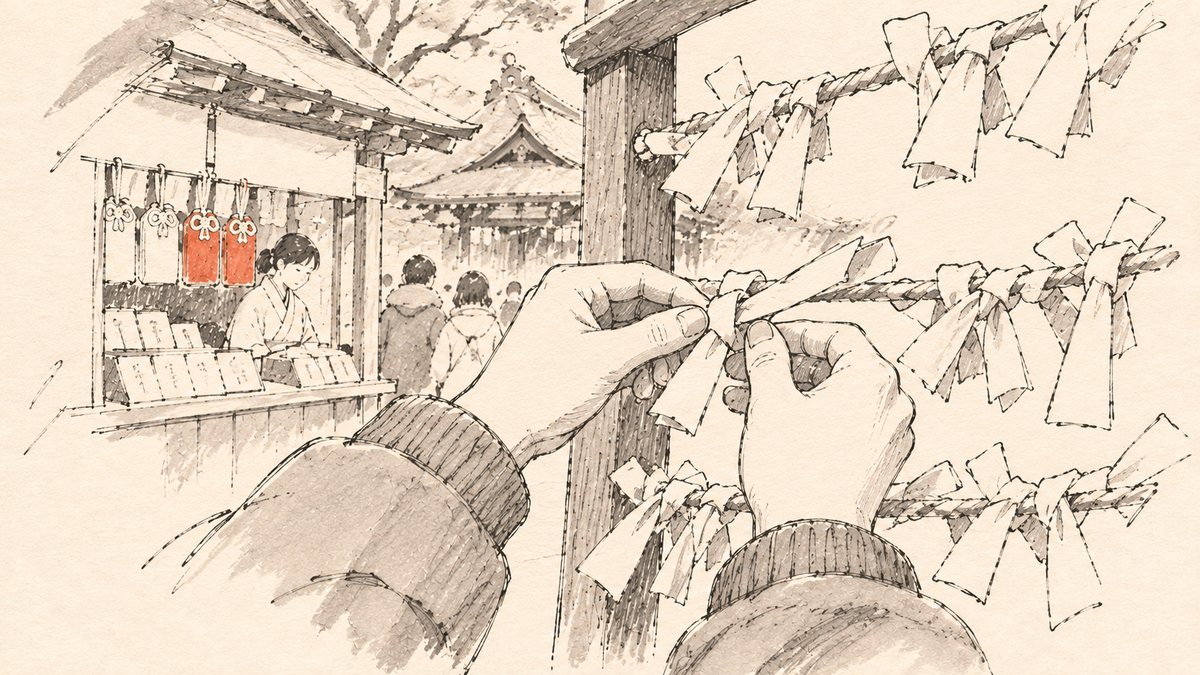
Omikuji are paper fortunes, and JNTO calls hatsumode a popular time to draw one. The custom is to keep a good fortune and tie a bad one to a designated rack. Kanda Myojin adds that tying is not required.
- Meiji Jingu: no good or bad ranking, just a waka poem by Emperor Meiji or Empress Shoken with an English translation, 100 yen.
- Senso-ji: its fortunes are often said to include many bad results (kyo), which the temple says is the traditional form. Return the stick to its box and tie a kyo fortune at the designated place.
- Tanashi Shrine: kotodama omikuji read aloud by voice actors, 300 yen.
- Togo and Hanazono: carp omikuji and fox omikuji, 500 yen each.
Omamori charms
Omamori are small charms for a specific wish, such as health, safe travel or exam success. Kanda Myojin says there is no rule on how many you carry and mixing charms from different places is fine, though not in very large numbers. Hanazono Shrine advises keeping a charm unopened and carrying it with you.
Returning last year’s charms
Charms are usually kept for one year. Tanashi Shrine says it is best to return them with thanks after a year and receive new ones. Rules differ by shrine.
- Meiji Jingu accepts only its own ofuda and omamori, at the Kojinpu Osamejo by the south temizuya.
- Tanashi Shrine has a 24-hour return box that takes charms from other shrines, but not from Buddhist temples.
- Kanda Myojin burns paper and wooden charms, but not dolls or daruma. It says charms should, as a rule, go back to the shrine that issued them, and asks you to check with a shrine before returning one elsewhere.
Hatsumode crowds, etiquette, what to wear and food stalls
Crowds
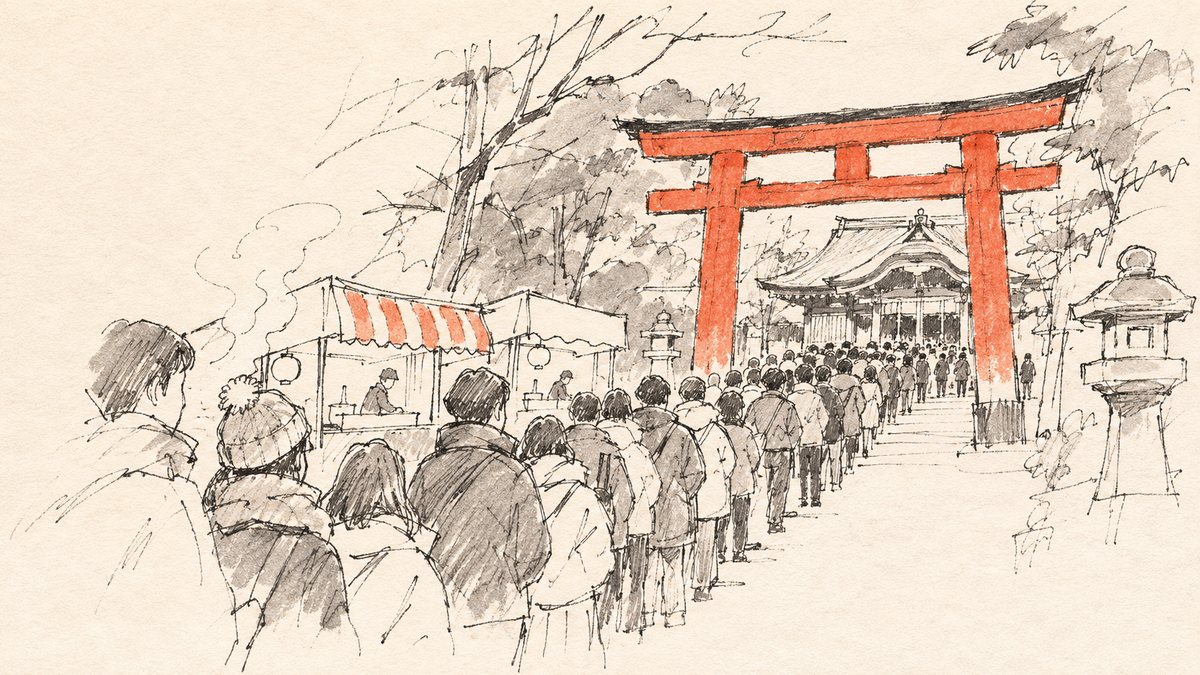
Expect the longest waits at Meiji Jingu, where JNTO says it can take a couple of hours to reach the main hall. Togo Shrine warns that Takeshita Street gets very crowded and suggests another route. Visiting after January 3 is another option, though Kanda Myojin expects heavy crowds on January 4 and 5.
Etiquette
- No photos where people pray. Meiji Jingu prohibits photography in front of the main shrine, and Nezu Shrine bans photos on the stone path in front of its hall.
- Keep your voice down. Nezu Shrine asks visitors not to speak loudly.
- Carry cash. Meiji Jingu’s amulet office does not take cards, and Tanashi Shrine takes cash only for prayers. See our guide to payment methods in Japan.
What to wear
Dress for a long wait in the cold. Tokyo’s average January high is 9.8°C (about 50°F) and the average low is 1.2°C (about 34°F), based on Japan Meteorological Agency normals for 1991 to 2020. Midnight is closer to the low, so wear layers, gloves and comfortable shoes. Meiji Jingu asks visitors to dress suitably for worship, and JNTO notes that many visitors come in kimono.
Food stalls
Yatai street stalls selling hot drinks and snacks such as udon and yakisoba often line the streets outside famous shrines at New Year, JNTO says. At Senso-ji, the Nakamise shopping street has about 90 shops, many selling snacks. Step out of the queue to eat: Meiji Jingu allows eating and drinking only in designated areas.
Frequently Asked Questions
When is hatsumode in 2027?
Hatsumode in 2027 centers on the night of December 31, 2026 and January 1 to 3, 2027. Visits continue after that, and Senso-ji lists January 1 to 7 as its hatsumode period. Kanda Myojin expects heavy crowds again on January 4 and 5, when companies visit.
What is the best shrine for hatsumode in Tokyo?
Meiji Jingu is the best-known shrine for hatsumode in Tokyo, with more than 3 million visitors in the first three days. For a smaller shrine in central Tokyo, try Togo, Hatonomori Hachiman, Nezu or Hanazono. For exam prayers, go to Yushima Tenmangu.
Is Meiji Jingu open overnight on New Year’s Eve?
Meiji Jingu had not published its New Year 2027 hours when we checked on October 28, 2026. Its regular January hours are 6:40 AM to 4:20 PM. Check its official site in December before you plan a midnight visit.
Do trains run all night on New Year’s Eve in Tokyo?
All-night trains for New Year’s Eve 2026 had not been announced by JR East, Tokyo Metro, Keio or Seibu as of October 28, 2026. Check the operators’ official sites in December, and plan a way home in case trains stop at the usual time.
Can tourists do hatsumode?
Hatsumode is open to tourists and to anyone who is not religious. Meiji Jingu’s official Q&A says people who do not follow Shinto are welcome. Pray before buying charms, avoid photos where people pray, and bring cash.
What do you do with last year’s omamori?
Last year’s omamori should go back to the shrine that issued it, and many people return theirs during hatsumode. Rules differ: Meiji Jingu accepts only its own charms, and Tanashi Shrine accepts charms from other shrines but not from temples.
Last checked: October 28, 2026. New Year hours and train plans change every year, so confirm with the official sources linked above before you go.
Share