
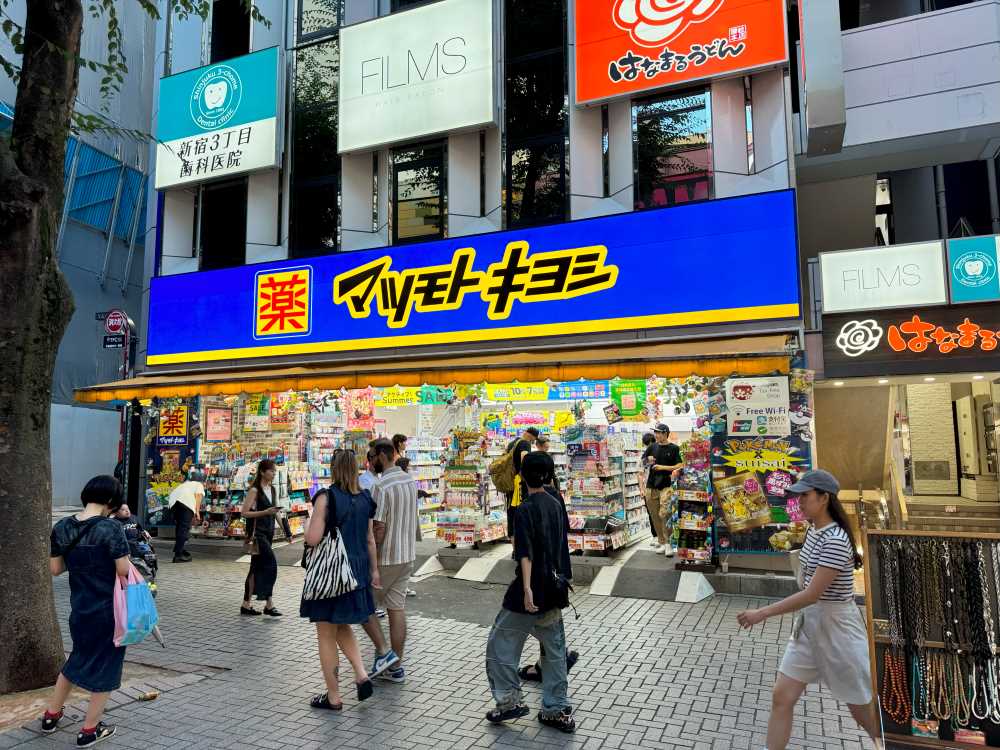
Japanese cold medicine (かぜ薬, kaze-gusuri) is over-the-counter medicine that relieves cold symptoms such as fever, sore throat, cough and runny nose, and you can buy it without a prescription at pharmacies and drugstores. The common type, 総合感冒薬 (sogo kanboyaku, combination cold medicine), puts several active ingredients in one tablet, and every box shows a legal risk class that decides who may sell it. Since May 1, 2026, cold medicines with ingredients such as pseudoephedrine or dihydrocodeine also come with extra questions at the register.
| What to ask for | かぜ薬 (kaze-gusuri), cold medicine. Combination products are sold as 総合感冒薬. |
|---|---|
| Where to buy | Pharmacies (薬局, yakkyoku) and drugstores (ドラッグストア), no prescription needed |
| Who sells it | Class 1 (第1類): pharmacist only. Class 2 and 3: pharmacist or registered seller (登録販売者). |
| Adult dose line | 15才以上 or 15歳以上, age 15 and over |
| Extra checks since May 1, 2026 | Ephedrine, pseudoephedrine, methylephedrine, codeine, dihydrocodeine, bromovalerylurea |
| Tax-free | Only for medicine that leaves Japan unused. Minimum 5,000 yen before tax, per store, per day. |
| Help in English | Japan Visitor Hotline, 050-3816-2787, 24 hours a day |
This guide is general information, not medical advice. Ask the pharmacist before you buy, and tell them about any medicine you already take.
How Japanese cold medicine works
Japanese cold medicine is approved for symptom relief. Both example leaflets below print the same approved use, かぜの諸症状の緩和, relief of cold symptoms. Instead of a separate painkiller, decongestant and cough syrup, a combination box puts a fever and pain reducer, a cough suppressant, an antihistamine and other ingredients in one tablet.
The two products below are widely sold examples, shown to explain the labels, not as recommendations. Figures come from Taisho’s leaflet for Pabron Gold A and Alinamin Pharmaceutical’s leaflet for Benza Block L Premium DX, both revised in May 2026.
| Product and class | Active ingredients | Dose on the leaflet |
|---|---|---|
| Pabron Gold A Tablets (パブロンゴールドA〈錠〉), Taisho Pharmaceutical. Designated Class 2 (第②類) | Per 3 tablets: acetaminophen 300 mg, guaifenesin 60 mg, dihydrocodeine phosphate 8 mg, dl-methylephedrine hydrochloride 20 mg, chlorpheniramine maleate 2.5 mg, anhydrous caffeine 25 mg, riboflavin (vitamin B2) 4 mg | 15 and over: 3 tablets, 3 times a day after meals. Age 12 to 14: 2 tablets. Under 12: do not take. |
| Benza Block L Premium DX Tablets (ベンザブロックLプレミアムDX錠), Alinamin Pharmaceutical. Designated Class 2 | Per 9 tablets (one day): ibuprofen 600 mg, tranexamic acid 750 mg, dextromethorphan hydrobromide hydrate 48 mg, bromhexine hydrochloride 12 mg, guaifenesin 250 mg, pseudoephedrine hydrochloride 135 mg, d-chlorpheniramine maleate 3.5 mg, anhydrous caffeine 75 mg | 15 and over: 3 tablets, 3 times a day after meals. Under 15: do not take. No more than 5 days. |
Taisho posts an English version of the Pabron Gold A leaflet on its catalog page. Search the maker’s site for the product name to see whether your box has one.
Risk classes on Japanese drugstore medicine: 第1類, 第2類 and 第3類
Japan sorts non-prescription medicine into classes that decide who may sell it and whether they must explain it. The Ministry of Health, Labour and Welfare (MHLW) says the rules differ because of concerns such as side effects. The class is printed on the box in a square frame, and MHLW’s sales rules set the explanation duties below, including a best-effort duty (努力義務) for Class 2.
| Class | On the box | Who may sell it | Explanation at the register |
|---|---|---|---|
| Guidance-required | 要指導医薬品 in a black frame | Pharmacist | Required, face to face. Often recently switched from prescription. |
| Class 1 | 第1類医薬品 | Pharmacist only | Required, with written information |
| Designated Class 2 | 第2類医薬品 with the 2 circled or boxed, as in 第②類 | Pharmacist or registered seller | Best effort. Stores post notices asking you to check who should not take it. |
| Class 2 | 第2類医薬品 | Pharmacist or registered seller | Best effort |
| Class 3 | 第3類医薬品 | Pharmacist or registered seller | Not required, but staff must answer if you ask |
For guidance-required and Class 1 medicines, the Japan Pharmaceutical Association says the pharmacist asks about age, sex, pregnancy or breastfeeding, other medicines, symptoms and past side effects, explains the precautions in writing and gives their name and contact details. Both examples above are designated Class 2. Some newer cold medicines sit higher: Taisho lists its Pabron LX tablets, which contain loxoprofen, as guidance-required.
Timing matters. JNTO’s medical guide notes that some medicines cannot be bought when the pharmacist is not there, and stores must post which staff are pharmacists or registered sellers and how name tags tell them apart.
Extra checks for some cold medicine in Japan since May 2026
Since May 1, 2026, six ingredients are 指定濫用防止医薬品 (designated medicines for abuse prevention): ephedrine, pseudoephedrine, methylephedrine, codeine, dihydrocodeine and bromovalerylurea. Both example products contain at least one. Under MHLW’s December 2025 notice to prefectures, expect the following.
- Staff ask your age, your other medicines, and whether you have bought this or a similar product elsewhere.
- If your age is not obvious, staff may ask to see ID.
- More than one box, or a large box, requires a reason and an explanation in person or by video call.
- Under-18s get the explanation in person or by video call, and MHLW says young buyers can buy only one small box.
- These products sit in a separate display area or a case shoppers cannot reach, or within 7 meters of the advice counter with a pharmacist or registered seller stationed there.
How to read a Japanese cold medicine box
Every Japanese term below appears in the Pabron Gold A or Benza Block L Premium DX leaflet.
| Japanese | Reading | Meaning |
|---|---|---|
| 発熱 | hatsunetsu | Fever |
| 頭痛 | zutsu | Headache |
| のどの痛み | nodo no itami | Sore throat |
| せき | seki | Cough |
| 鼻水 or 鼻みず | hanamizu | Runny nose |
| 鼻づまり | hanazumari | Stuffy nose |
| 眠気 | nemuke | Drowsiness |
| 用法・用量 | yoho yoryo | How to take it and how much |
| 15才以上 or 15歳以上 | jugo-sai ijo | Age 15 and over |
| 1回3錠, 1日3回 | ikkai san-jo, ichinichi sankai | 3 tablets per dose, 3 times a day |
| 食後 | shokugo | After meals |
| 服用しないこと | fukuyo shinai koto | Do not take |
| 成分 | seibun | Active ingredients |
| 相談すること | sodan suru koto | Ask a doctor, pharmacist or registered seller first |
Find three warnings before you pay. Do not drive after a dose, because drowsiness may occur (服用後、乗物又は機械類の運転操作をしないでください). Do not drink alcohol before or after a dose (服用前後は飲酒しないでください). Do not take other cold medicines, fever and pain relievers, cough medicines or oral antihistamines at the same time, including allergy and motion-sickness pills. Both leaflets carry these warnings.
才 and 歳 both mean years of age. Taisho labels its Pabron Ace Pro-X range 大人専用〈15才以上〉, adults only (15 and over). Children’s doses differ by product: Pabron Gold A is not for under-12s, and Benza Block L Premium DX is not for under-15s.
Japanese cold medicine ingredients compared with Western names
Ingredients on a Japanese box are written in katakana, often with the salt form added, such as 塩酸塩 (hydrochloride). Matching them to the medicine you already carry prevents a double dose. Roles below are from the two leaflets and Taisho’s product pages.
| Ingredient | On a Japanese box | Role |
|---|---|---|
| Acetaminophen (paracetamol) | アセトアミノフェン | Fever and pain |
| Ibuprofen | イブプロフェン | Fever and pain |
| Dextromethorphan | デキストロメトルファン臭化水素酸塩水和物 | Cough |
| Dihydrocodeine | ジヒドロコデインリン酸塩 | Cough. Extra checks apply. |
| Pseudoephedrine | プソイドエフェドリン塩酸塩 | Stuffy nose. Extra checks apply. |
| Methylephedrine | dl-メチルエフェドリン塩酸塩 | Opens the airways to ease cough. Extra checks apply. |
| Chlorpheniramine | クロルフェニラミンマレイン酸塩 | Runny nose and sneezing. An antihistamine, which Taisho notes can cause drowsiness. |
| Guaifenesin | グアイフェネシン | Loosens phlegm |
| Tranexamic acid | トラネキサム酸 | Sore throat |
Acetaminophen and paracetamol are the same drug. MedlinePlus, from the US National Library of Medicine, lists paracetamol as another name, warns against taking more than one acetaminophen product at a time, and notes that cold products may share ingredients. Taking your own paracetamol with a Japanese tablet that already contains it is exactly that mistake. The same check applies to ibuprofen.
Pseudoephedrine is an approved ingredient in some Japanese cold medicine: Benza Block L Premium DX contains 135 mg per daily dose. Bringing it in from abroad is a separate rule. An MHLW regional bureau Q&A says medicine with more than 10% pseudoephedrine cannot be brought into Japan, and the Narcotics Control Department list excludes substances containing 10% or less. Our guide to medications you can’t bring into Japan explains which products from home are affected.
Doses are set product by product, so compare the 成分 line with what you take at home. Then check interactions: the Benza leaflet asks people on MAO inhibitors such as selegiline to consult first, and both leaflets ask people under a doctor’s care, pregnant people and older people to consult before taking. Show the pharmacist your own medicines or a list of their active ingredients.
Where to buy cold medicine in Japan, and when pharmacists are on duty

MHLW says you can buy cold medicine at a pharmacy or drugstore without going to a hospital. Our guide to where to buy body wash and daily necessities in Japan covers the main drugstore chains. After a clinic visit, JNTO says you take the prescription to a pharmacy and pay for the medicine there.
Hours vary by branch, and an open store does not always have a pharmacist in. Chain store finders such as Welcia’s have branch pages with hours and service labels such as 第一類医薬品 (Class 1 medicines), 調剤受付 (prescriptions) and 24時間営業 (open 24 hours).
JNTO links to an English-language OTC medicine search by body part or symptom, and publishes a symptom pointing sheet for clinic visits. These three phrases cover most counter conversations, and our essential Japanese phrases for travelers has more.
- かぜ薬はありますか (kaze-gusuri wa arimasu ka): Do you have cold medicine?
- 眠くならないものはありますか (nemuku naranai mono wa arimasu ka): Is there one that does not make you drowsy?
- この薬を飲んでいます (kono kusuri o nonde imasu): I am taking this medicine.
Can you buy Japanese drugstore medicine tax-free?
Japanese drugstore medicine can be bought tax-free only if it leaves Japan unused. For purchases from November 1, 2026, the Japan Tourism Agency sets these rules.
- You pay the tax-inclusive price and get the tax back after Customs confirms at departure, within 90 days of purchase, at a kiosk before you check bags.
- The minimum is 5,000 yen before tax, at one store on one day.
- Consumables used in Japan get no refund. The agency names food, drinks and cosmetics as examples.
- If one item from a receipt is missing, nothing on that receipt is refunded.
Pay for medicine you will take during the trip in a separate, regular transaction. The agency has an English leaflet, and our guide to Japan tax-free shopping walks through the airport steps. Taking Japanese cold medicine home? Check your country’s import rules for ingredients such as dihydrocodeine and pseudoephedrine first.
Flu medicine in Japan: when to see a doctor instead
Flu medicine in Japan means two different things. Drugstore cold medicine eases symptoms. Antivirals such as oseltamivir (Tamiflu) and baloxavir marboxil (Xofluza) are on MHLW’s list of flu treatments, used on a doctor’s judgment. MHLW says flu usually clears up on its own after 4 to 5 days of fever and other symptoms, and that antivirals started within 48 hours usually shorten the fever by 1 to 2 days, while later starts are not expected to work well.
See a doctor, or at least ask a pharmacist first, in these cases.
- High fever continues, breathing is hard, or the person seems confused. MHLW says to see a doctor early.
- Symptoms do not improve after 5 to 6 doses, especially if fever lasts 3 days or more or keeps returning. The Benza leaflet says to stop and consult.
- You are under a doctor’s care, pregnant, or have heart disease, high blood pressure, diabetes or thyroid problems. The leaflets say to consult first, or not to take the product.
- A child or teenager has the flu. MHLW warns that minors with flu may suddenly run or try to leave the room, and says not to leave them alone for at least 2 days after treatment starts.
JNTO’s guide lists fever, sore throat, cough and runny nose under internal medicine (内科, naika) and searches clinics by area, language and department. Its Japan Visitor Hotline, 050-3816-2787, runs 24 hours a day, 365 days a year in English, Chinese and Korean, and can introduce clinics that consult in foreign languages. Call 119 for an ambulance. Clinics generally take cash only, JNTO notes.
Frequently Asked Questions
Which Japanese cold medicine should I buy?
Japanese cold medicine should be chosen with a pharmacist or registered seller, based on your symptoms, your age and the medicine you already take. Point to your symptoms on the box, such as せき for cough or 鼻水 for runny nose, and check the 成分 list so you do not take the same ingredient twice.
Can I buy pseudoephedrine in Japan?
Pseudoephedrine is sold in Japan in some over-the-counter cold medicines, such as Benza Block L Premium DX tablets. Since May 1, 2026, it is a designated abuse-prevention ingredient, so staff ask your age, your other medicines and your recent purchases, and buying more than one box requires a reason.
Is Japanese cold medicine the same as paracetamol?
Japanese cold medicine can contain acetaminophen, the same drug as paracetamol, written as アセトアミノフェン on the box. Combination products add other ingredients as well. Do not take your own acetaminophen or paracetamol with a Japanese cold medicine that already contains it, and ask the pharmacist if you are unsure.
Do I need to see a doctor for flu medicine in Japan?
Flu medicine in Japan that targets the virus, such as oseltamivir, is used on a doctor’s judgment, according to MHLW, and works best when started within 48 hours of symptoms. Drugstore cold medicine only eases symptoms. See a doctor early if fever stays high, breathing is hard or the person seems confused.
Can I drink alcohol with Japanese cold medicine?
Japanese cold medicine leaflets tell you not to drink alcohol before or after a dose. The Pabron Gold A and Benza Block L Premium DX leaflets both say this, and both also warn against driving after a dose because drowsiness can occur. Plan doses around evenings out and travel days.
Where can I get medical help in English in Japan?
The Japan Visitor Hotline, run by JNTO, gives help in English, Chinese and Korean at 050-3816-2787, 24 hours a day, 365 days a year. It can introduce medical institutions that consult in foreign languages. For an ambulance, call 119. JNTO’s online guide also searches clinics by language.
Last checked: October 2026. Medicine sales rules, product formulas and tax-free procedures change, so confirm with the official sources linked above and ask a pharmacist before you buy or take any medicine.
Share