
Two bows, two claps, one bow is the standard way to pray at a Shinto shrine in Japan. Jinja Honcho, the organization that brings together most of Japan’s roughly 80,000 shrines, gives this sequence as the basic form nationwide. A Shinto priest at Yushima Tenmangu in Tokyo demonstrates the basic etiquette below.
| Depth of the prayer bows | 90 degrees at the waist, with the back kept flat |
|---|---|
| At the torii gate | One bow before passing through, and one more toward the shrine when leaving |
| Temizuya order | Left hand, right hand, mouth (from the left palm), left hand again, then the ladle handle |
| Known exception | Izumo Taisha uses two bows, four claps, one bow |
Checked in October 2026 against jinjahoncho.or.jp, isejingu.or.jp, izumooyashiro.or.jp.
Visiting a Japanese shrine is one of the most memorable cultural experiences in Japan.
But for many travelers, it also comes with a quiet moment of hesitation.
Should you bow before entering?
How do you use the water basin?
When do you clap?
Are you supposed to make a wish?
The good news is that shrine etiquette is not about performing every movement perfectly. It is about entering a sacred place with respect.
To understand the proper way to pray at a Japanese shrine, Japan Documented visited Yushima Tenmangu, also known as Yushima Tenjin, in Tokyo. With the cooperation of the shrine, we asked Mr. Sarumaru, a Shinto priest, to demonstrate the basic etiquette that visitors should know.
The steps below are general guidelines followed at many Shinto shrines in Japan. Some shrines may have different customs, so always follow local signs or instructions when they are provided.
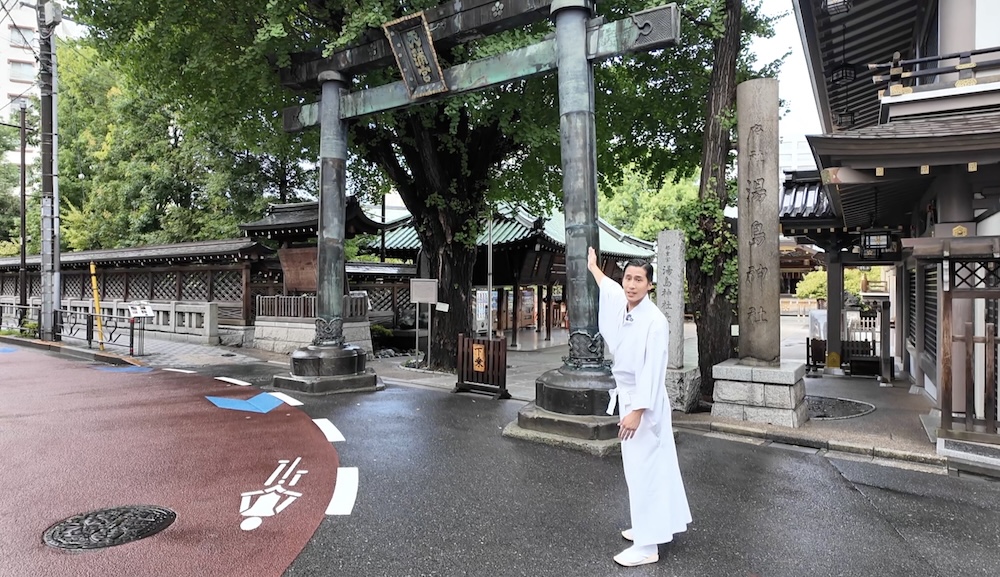
Quick Answer: How to Pray at a Japanese Shrine
At most Japanese Shinto shrines, the basic flow is simple:
- Bow once before passing through the torii gate.
- Walk along the side of the approach, not directly through the center.
- Purify your hands and mouth at the temizuya water pavilion.
- Stand in front of the main hall.
- Place a coin in the offering box.
- Ring the bell if there is one.
- Bow deeply twice.
- Clap twice.
- Pray silently.
- Bow deeply once more.
This sequence is often called “two bows, two claps, one bow.”
It may look formal at first, but once you understand the meaning behind each step, the ritual becomes much easier to follow.
What Is a Japanese Shrine?
A Japanese shrine, or jinja, is a sacred place in Shinto, Japan’s native spiritual tradition.
Shrines are dedicated to kami. The word kami is often translated as “deity” or “spirit,” but it can refer to many kinds of sacred presences, including forces of nature, ancestral spirits, or revered historical figures.
For visitors, a shrine may look like a beautiful historical site. But for local worshippers, it is still an active place of prayer. That is why the most important rule is simple: behave calmly and respectfully.
You do not need to be Shinto to visit a shrine. Tourists are welcome at many shrines across Japan. What matters is that you treat the space not only as a sightseeing spot, but as a place of worship.
1. Bow at the Torii Gate Before Entering
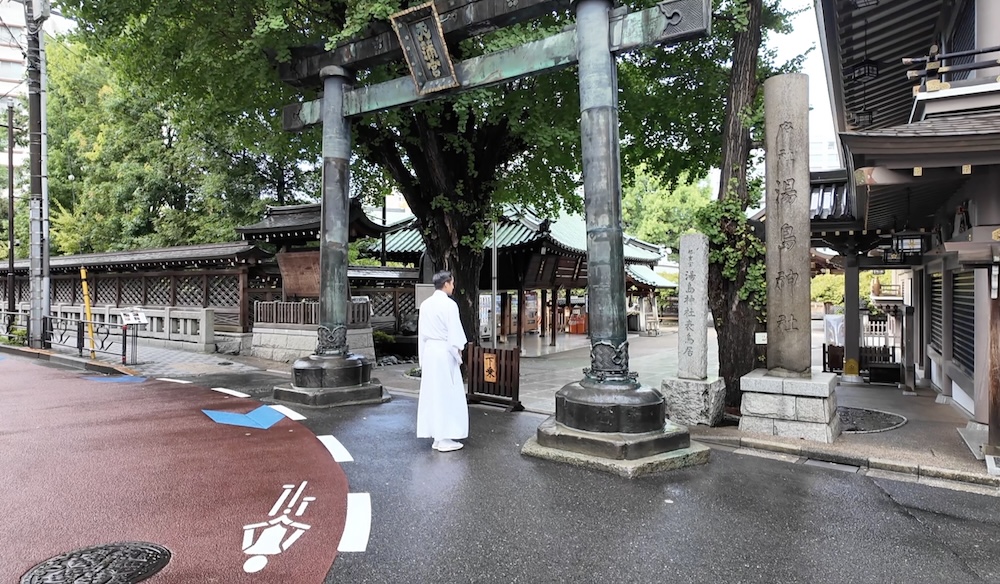
The torii gate marks the entrance to the sacred area of a shrine.
It is more than a photo spot. Symbolically, it separates the everyday world from the sacred space of the kami.
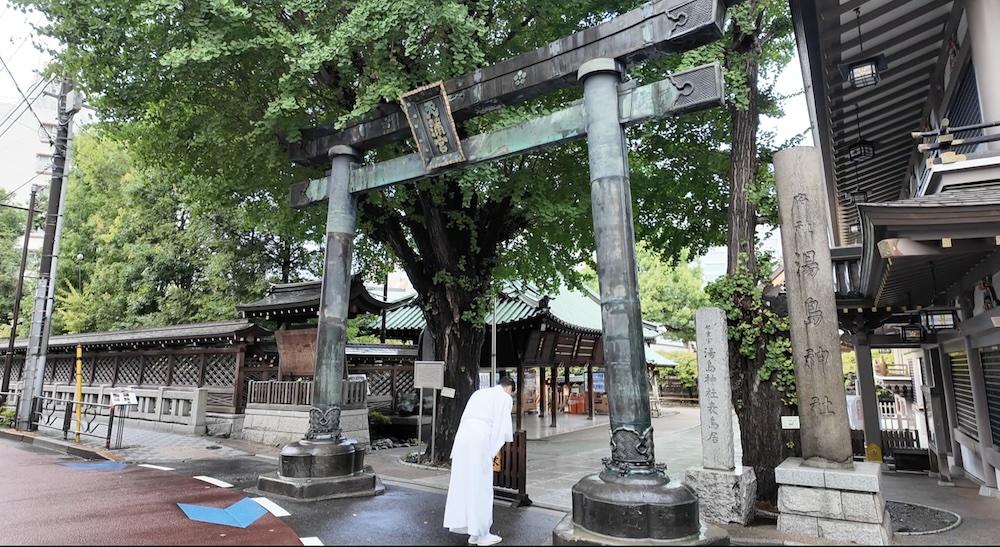
Before walking through the torii, stop briefly and bow once.
You do not need to make this dramatic. A simple, respectful bow is enough.
After passing through the torii, try not to walk directly down the center of the approach. The center of the path is traditionally considered the route of the kami. Visitors usually walk slightly to the left or right side.
This is a small detail, but it shows awareness of the meaning of the space.
Mr. Sarumaru’s Advice: Before walking through, stop and bow once. This simple act signifies respect for the deity. Also, when walking along the approach (Sando), try to walk slightly to the side. The center of the path, called Seichu, is traditionally reserved for the gods.
2. Purify Yourself at the Temizuya
Before approaching the main hall, you will often find a water pavilion called a temizuya or chozuya.
This is where visitors symbolically purify their hands and mouth before praying.
The act is not about physical cleanliness in an ordinary sense. It is a ritual gesture of preparation before standing before the kami.
If there is a ladle available, follow these steps:
Quick Steps:
1. Hold the ladle with your right hand and rinse your left hand.
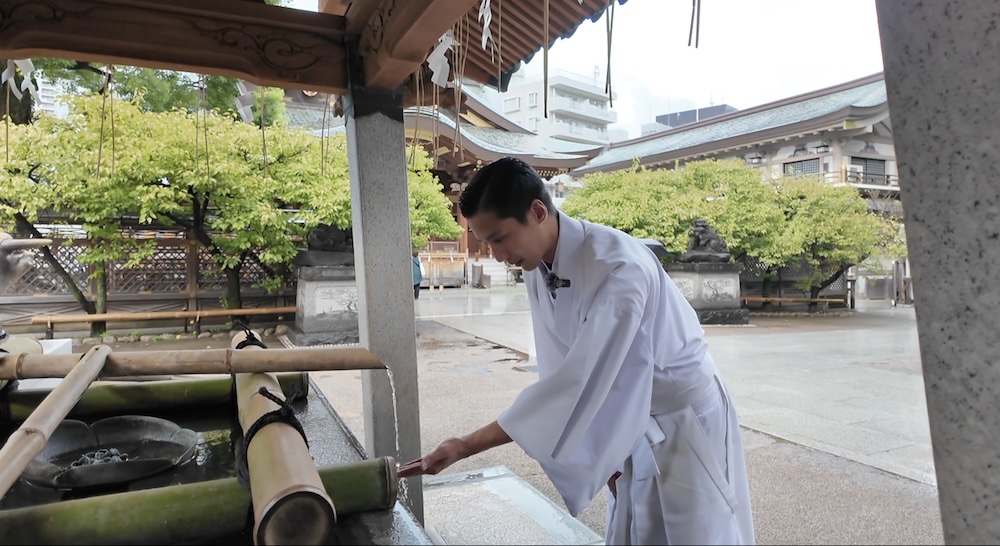
2. Switch the ladle to your left hand and rinse your right hand.
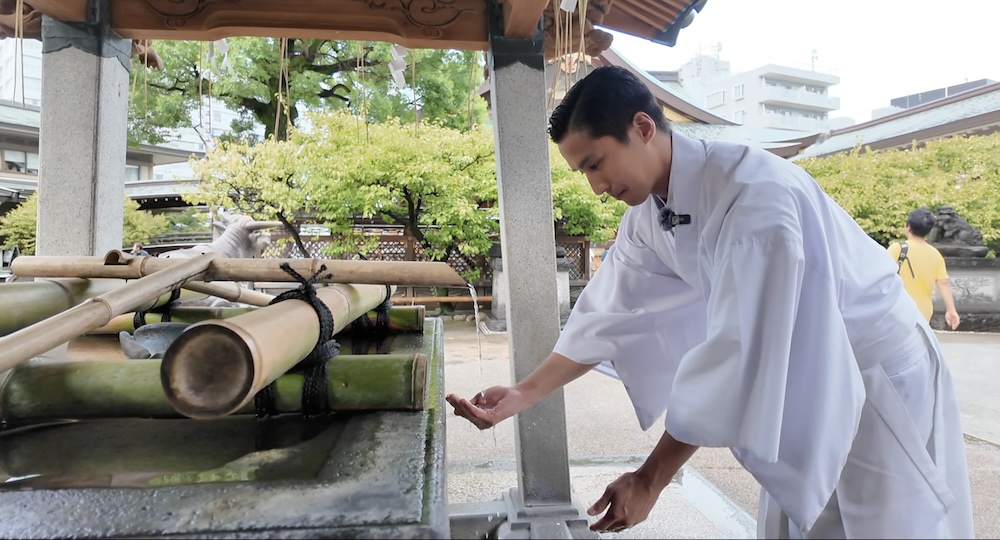
3. Hold the ladle again with your right hand, pour water into your left palm, and gently rinse your mouth from your hand.

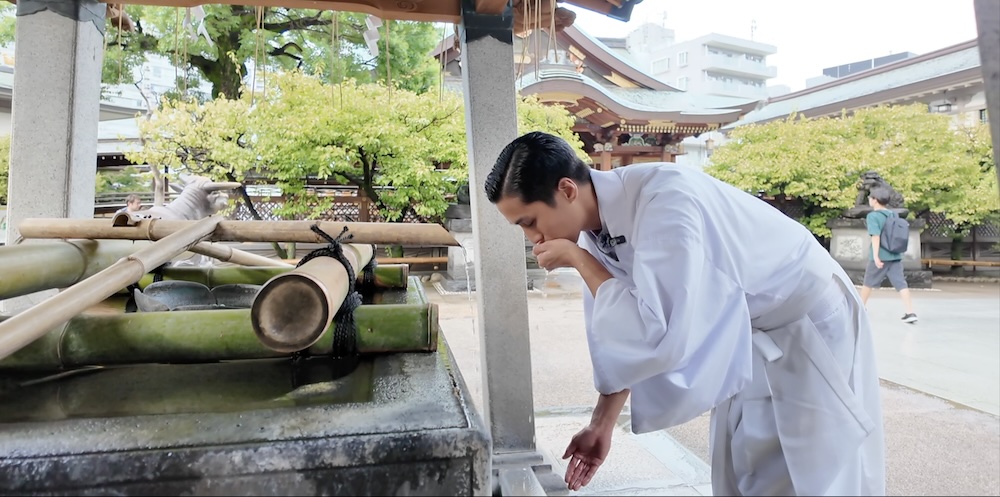
4. Rinse your left hand again.

5. Tilt the ladle so the remaining water runs down the handle.
There are two important things to avoid.
Do not put your mouth directly on the ladle.
Do not spit water back into the basin.
At some shrines, especially after recent hygiene changes, ladles may not be available. In that case, follow the instructions at the shrine. If the water pavilion is closed or unavailable, simply proceed respectfully.
3. Approach the Main Hall
After purifying yourself, walk toward the prayer hall, called the haiden.
This is where visitors offer prayers.
If there are other people waiting, line up calmly. Do not rush, push forward, or take too long when others are waiting behind you.
When it is your turn, stand in front of the offering box.
You may place a coin into the box. There is no strict amount required. Some people like to offer a five-yen coin because “go-en” can sound like “good connection” or “good fortune” in Japanese, but this is a custom rather than a rule.
Any small offering is acceptable. The attitude matters more than the amount.
If there is a bell rope, you may ring the bell before praying. Not every shrine has one. If there is no bell, simply continue with the prayer.
4. Pray with Two Bows, Two Claps, One Bow
The most common way to pray at a Shinto shrine is called “two bows, two claps, one bow.”
Here is the basic sequence.
First, bow deeply twice.
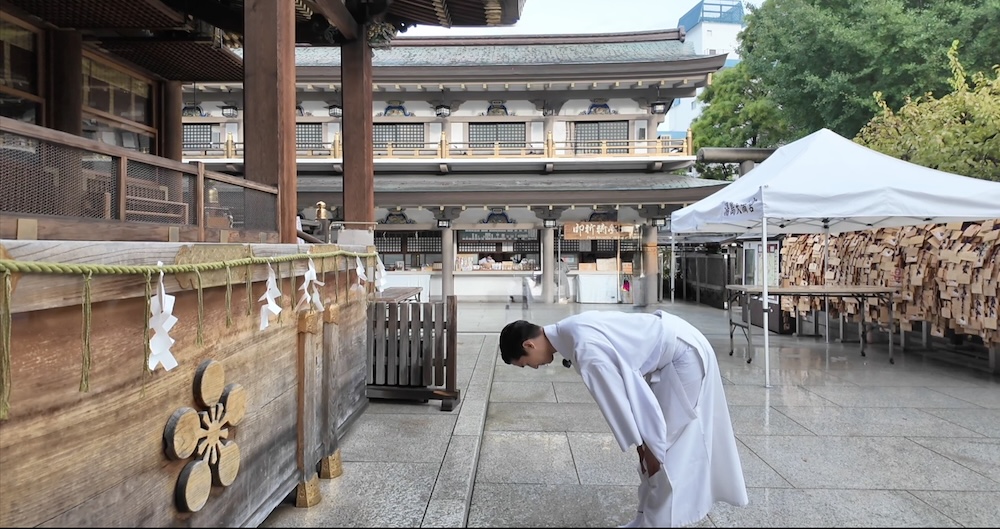
Then, bring your hands together in front of your chest and clap twice.
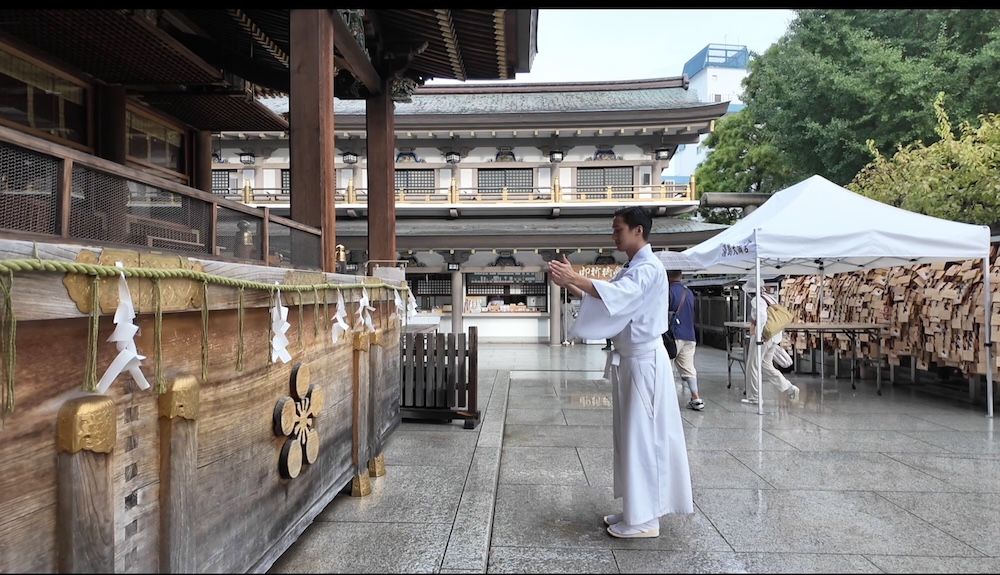
After clapping, keep your hands together and offer a silent prayer. You can express gratitude, make a wish, or simply take a quiet moment.
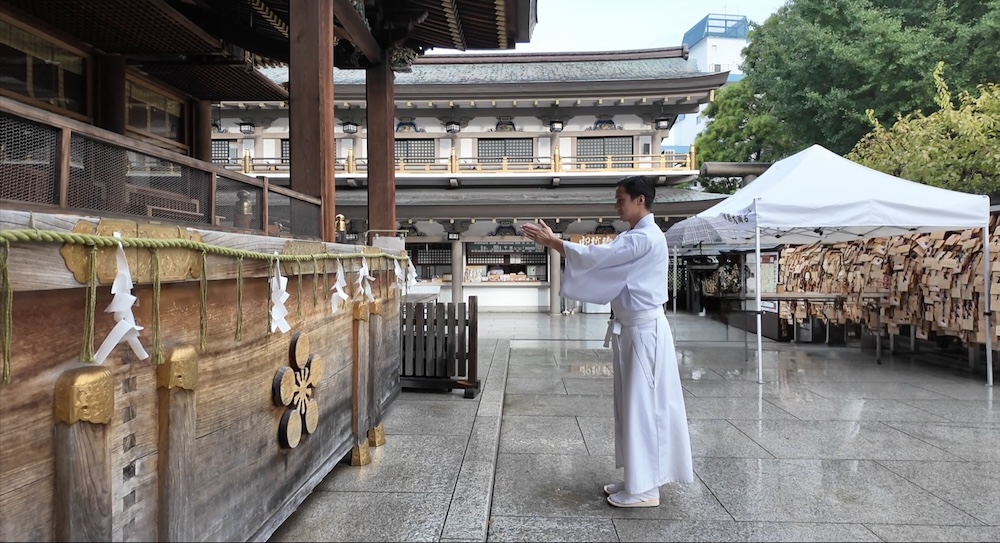
Finally, lower your hands and bow deeply once more.
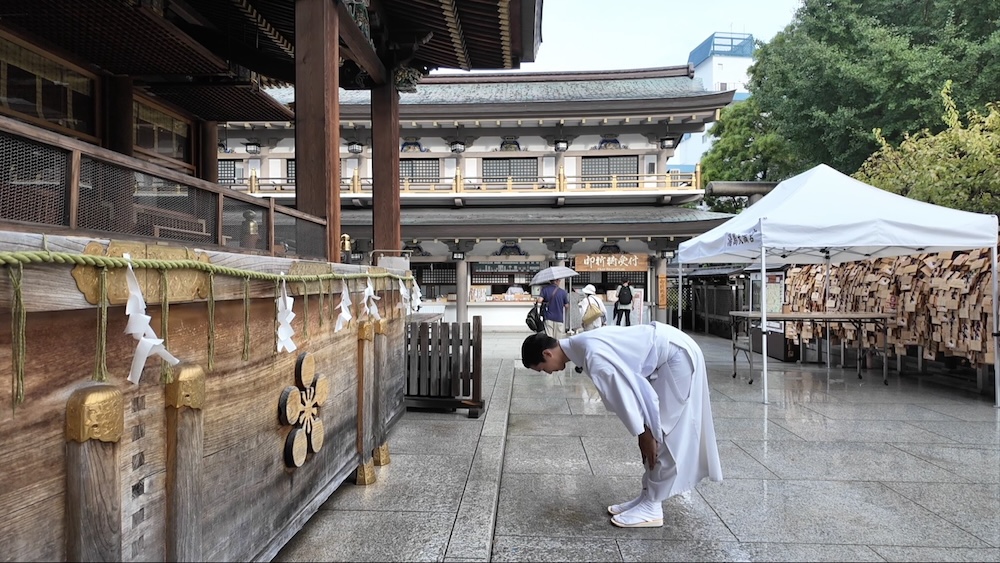
According to Mr. Sarumaru of Yushima Tenmangu, one detail many visitors miss is the position of the hands when clapping. Before clapping, shift your right hand slightly lower than your left. This helps create a clearer sound.
5. What Should You Pray For?
There is no single correct prayer.
Some people express gratitude.
Some ask for success in studies, work, health, love, family, or safe travel.
Some simply stand quietly and reflect.
At Yushima Tenmangu, many visitors pray for academic success because the shrine is associated with Sugawara no Michizane, a historical figure revered as a kami of learning.
But even at shrines known for specific blessings, your prayer does not need to be complicated. A quiet, sincere prayer is enough.
You do not need to overthink it. The form is important, but the purpose is respect.
6. Common Mistakes Tourists Make at Japanese Shrines
Most mistakes are not serious. Japanese people do not expect foreign visitors to know every detail.
Still, there are a few things worth avoiding.
Walking straight down the center of the approach
The center is traditionally considered the path of the kami. Walk slightly to the side when possible.
Treating the torii gate only as a photo spot
Taking photos is usually fine in many outdoor areas, but remember that the torii is also a sacred entrance.
Putting your mouth directly on the ladle
At the temizuya, pour water into your hand first. Do not drink directly from the ladle.
Clapping at a Buddhist temple
Shrines and temples are different. At a Shinto shrine, clapping is common. At a Buddhist temple, you usually put your hands together quietly without clapping.
Taking photos where photography is prohibited
Some shrines allow photos in the grounds but prohibit photography near the prayer area or inside certain buildings. Always check signs.
Blocking other visitors
Do not stand too long in front of the offering box when others are waiting. Step aside after praying.
Worrying too much about perfection
The goal is not to perform like an expert. The goal is to show respect.
Shrine vs. Temple Etiquette: What Is the Difference?
One of the most common points of confusion for travelers is the difference between shrines and temples.
A shrine belongs to Shinto. A temple belongs to Buddhism.
At a shrine, the common prayer style is:
Two bows, two claps, one bow.
At a temple, you usually do not clap. Instead, you may place your hands together quietly, bow, and pray in silence. Some temples also have incense, which is not part of ordinary shrine prayer.
In simple terms:
At a shrine, you clap.
At a temple, you usually do not clap.
This distinction is useful for travelers because Japan has both shrines and temples, and they often appear on the same travel itinerary.
Is It Okay to Visit a Shrine as a Tourist?
Yes. Many shrines welcome visitors, including international travelers.
You do not need to belong to Shinto. You do not need to speak Japanese. You do not need to understand every detail of the ritual before visiting.
What matters is your attitude.
Move calmly.
Follow signs.
Avoid loud behavior.
Respect worshippers.
Do not enter restricted areas.
Do not treat sacred objects as props.
A shrine visit can be both a cultural experience and a personal moment of quiet reflection.
What to Do After Praying
After praying, many visitors explore the shrine grounds.
You may see omamori, which are protective amulets, or omikuji, which are fortune slips. Some shrines also offer goshuin, special calligraphy seals collected in a dedicated book.
These are meaningful parts of shrine culture, not ordinary souvenirs. If you receive an amulet, fortune, or goshuin, treat it with care.
When leaving the shrine grounds, some visitors turn back toward the main hall or torii gate and bow once more. This is a respectful way to close the visit.
FAQ: Japanese Shrine Etiquette
Do I have to pray at a Japanese shrine?
No. You can visit a shrine respectfully without praying. Many travelers simply walk through the grounds, observe the architecture, or learn about the history. If you do pray, follow the basic etiquette as much as you can.
How much money should I offer at a shrine?
There is no fixed amount. A small coin is fine. Some people offer five yen because it is associated with good fortune or good connections, but this is a custom, not a requirement.
Do I always need to clap twice?
At many Shinto shrines, yes, two claps are part of the standard prayer sequence. However, some shrines have different customs. If the shrine provides instructions, follow them.
Should I ring the bell?
If there is a bell rope, you may ring it before praying. If there is no bell, you can simply place your offering and continue with the prayer.
Can I take photos at a shrine?
Usually, outdoor photos are allowed, but not always. Some areas prohibit photography, especially near the main sanctuary or prayer area. Always check signs and avoid photographing people who are praying without permission.
What should I wear to a Japanese shrine?
For ordinary sightseeing, normal clean clothing is fine. You do not need formal wear unless you are attending a ceremony, wedding, or special ritual.
What happens if I make a mistake?
Do not worry too much. Most visitors, including many Japanese people, are not perfect in every detail. If you are calm and respectful, small mistakes are unlikely to be a problem.
Is shrine etiquette the same as temple etiquette?
No. At a shrine, the common prayer style is two bows, two claps, and one bow. At a Buddhist temple, you usually pray quietly with your hands together and do not clap.
What do people say when they pray at a Japanese shrine?
Prayer at a Japanese shrine has no set words, so a silent prayer of thanks or a wish is enough. Jinja Honcho, the organization that brings together most shrines in Japan, notes that some worshippers recite a short Shinto phrase: harae tamai, kiyome tamae, kamunagara mamori tamai, sakiwae tamae. The phrase asks the kami to purify, cleanse, protect and bring happiness.
Why do people clap when praying at a Shinto shrine?
Clapping at a Shinto shrine is a way to offer sincerity to the kami and to give thanks for their protection, according to Jinja Honcho. The clap is called kashiwade because the fingers are held together like the leaf of the kashiwa tree as the hands meet.
Final Thoughts: Respect Matters More Than Perfection
A Japanese shrine is not just a tourist attraction. It is a sacred place where people come to pray, give thanks, and reconnect with something beyond everyday life.
Learning the basic etiquette helps you enter that space with more awareness.
Bow at the torii.
Purify yourself at the temizuya.
Offer a coin.
Bow twice, clap twice, pray silently, and bow once more.
These gestures may be simple, but they change the way you experience a shrine.
Instead of only looking at Japanese culture from the outside, you take part in it with respect.
That is the real value of learning how to pray at a Japanese shrine.
➡️ To learn more about Japanese shrines, check out this link.
Share