
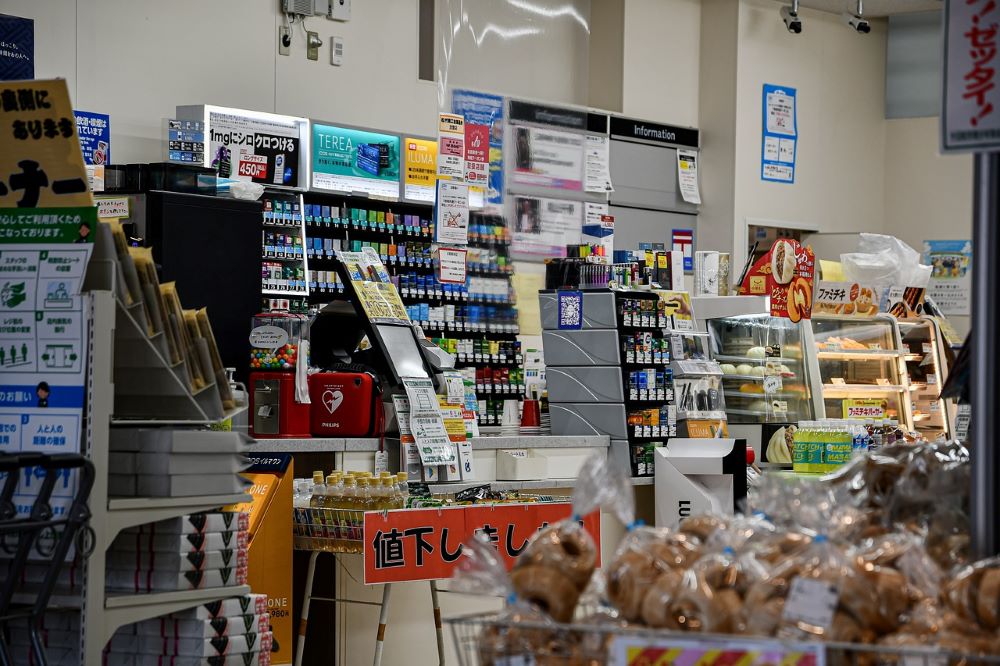
A konbini is a Japanese convenience store, a shop that sells ready-made meals, drinks and daily goods in cities and towns across Japan. Many are open 24 hours a day, and the Japan Franchise Association counted 56,189 stores at its seven member chains in August 2026. This guide covers four chains: 7-Eleven, FamilyMart, Lawson and Ministop.
| Stores in Japan | 56,189 at the 7 member chains of the Japan Franchise Association (August 2026) |
|---|---|
| Hours | Many stores are open 24 hours a day, including national holidays |
| ATMs for overseas cards | Over 28,000 Seven Bank ATMs in Japan, at 7-Eleven and other sites, take overseas cards |
| ATM withdrawal limit | Seven Bank ATMs: 100,000 yen per withdrawal, or 30,000 yen with a magnetic stripe card |
Checked in October 2026 against jfa-fc.or.jp, japan.travel, sevenbank.co.jp.
When visiting Japan, convenience stores are more than just a place to grab snacks. They offer a range of services that can make your trip smoother, cheaper, and more enjoyable.
Whether you’re in need of a quick meal, travel essentials, or even financial services, Japan’s convenience stores are truly a traveler’s BEST FRIEND.
More Than Just Snacks
One of the first things you’ll notice is the incredible variety of high-quality food available at convenience stores. From bento boxes (prepared meals) to onigiri (rice balls), sandwiches, and even soba or ramen, you can find a wide range of freshly prepared foods that are both affordable and delicious. Many stores also have microwaves where you can heat up your food, as well as utensils like chopsticks and forks.
Don’t miss out on the desserts either. Japanese convenience stores are known for their tasty, unique sweets like mochi, dorayaki (pancake filled with sweet red bean paste), and a variety of cream puffs and cakes.
Different Konbini Chains and Their Unique Features
Japan’s convenience stores are dominated by three major chains, and the smaller Ministop is also worth a visit. Each offers a slightly different experience:
7-Eleven
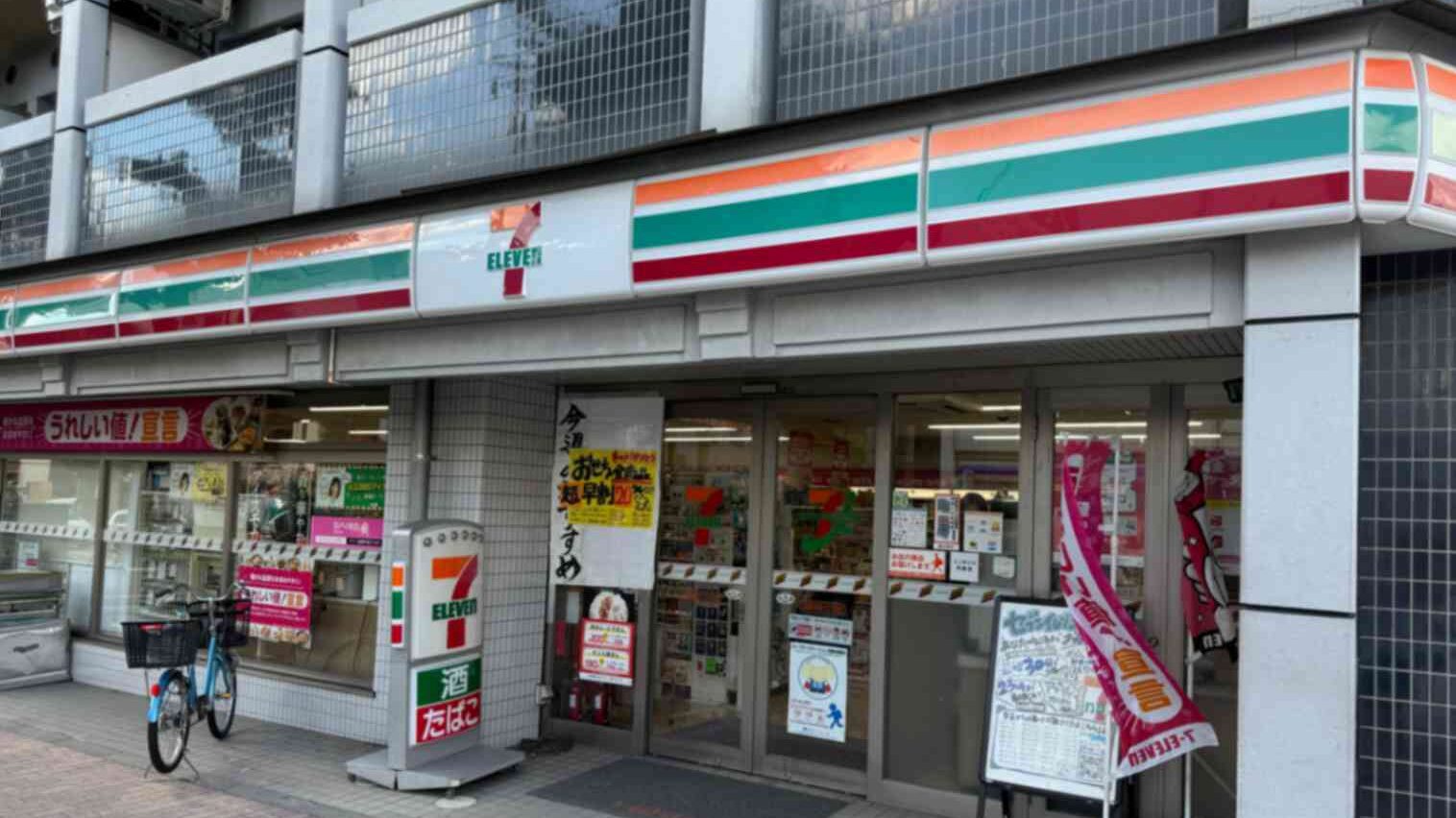
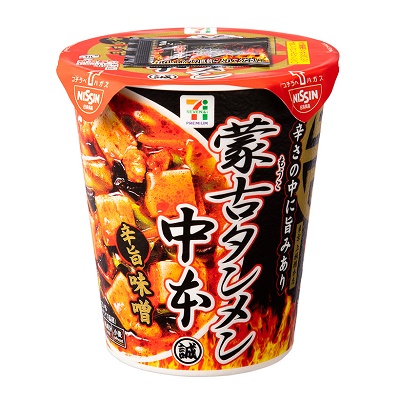
Known for its wide selection of fresh food, 7-Eleven is often praised for its high-quality sandwiches and coffee. It also tends to have a greater number of ATMs that accept international cards, making it a popular choice for tourists. Additionally, 7-Eleven is famous for its exclusive product line known as Seven Premium, easily recognizable by the “7” logo. These products include a variety of items, but one of the most beloved is the Mouko Tanmen cup noodles, a spicy and flavorful dish. In Japan, spicy food can be hard to find, so if you’re craving heat, this is a must-try!
FamilyMart
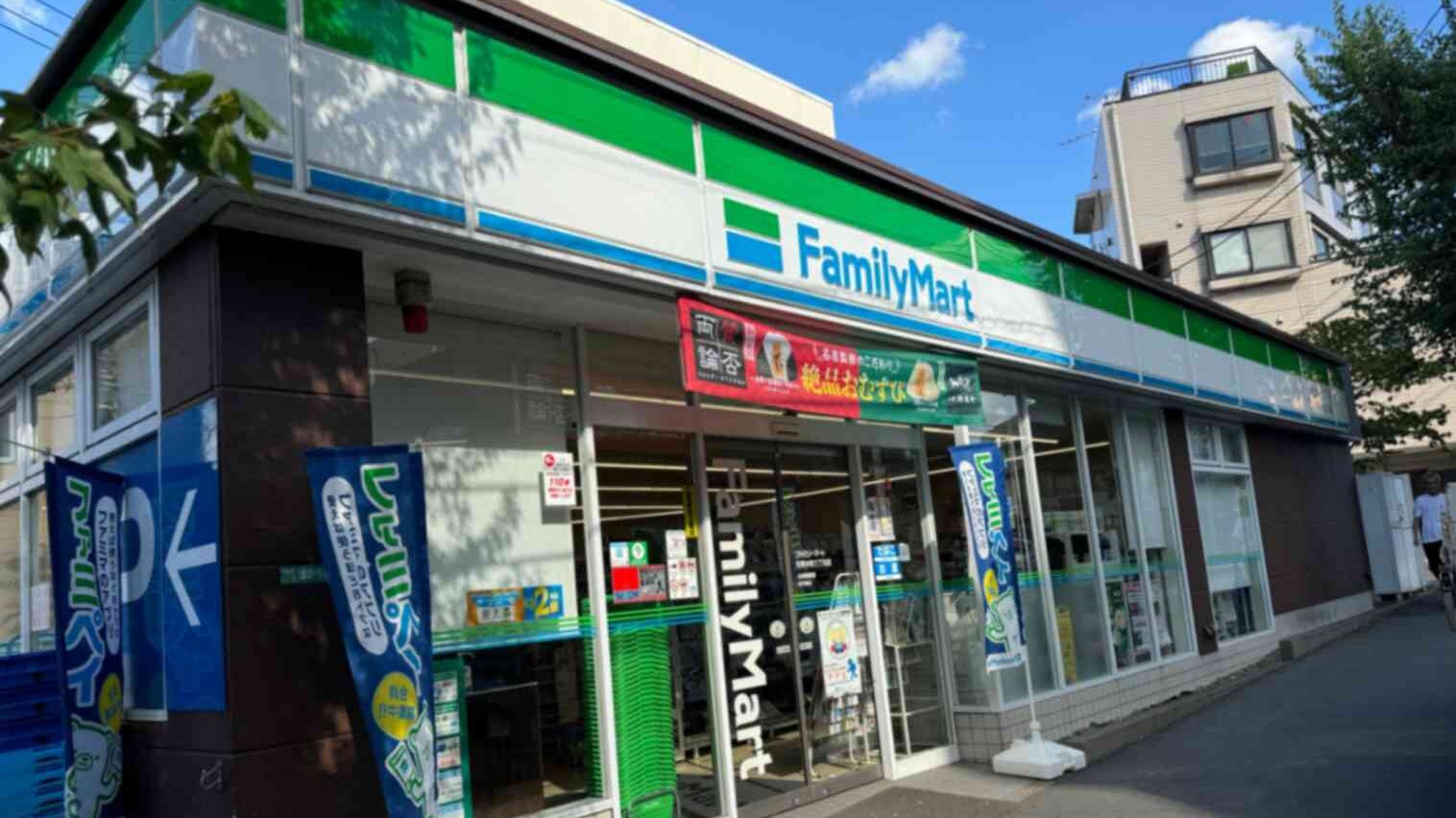
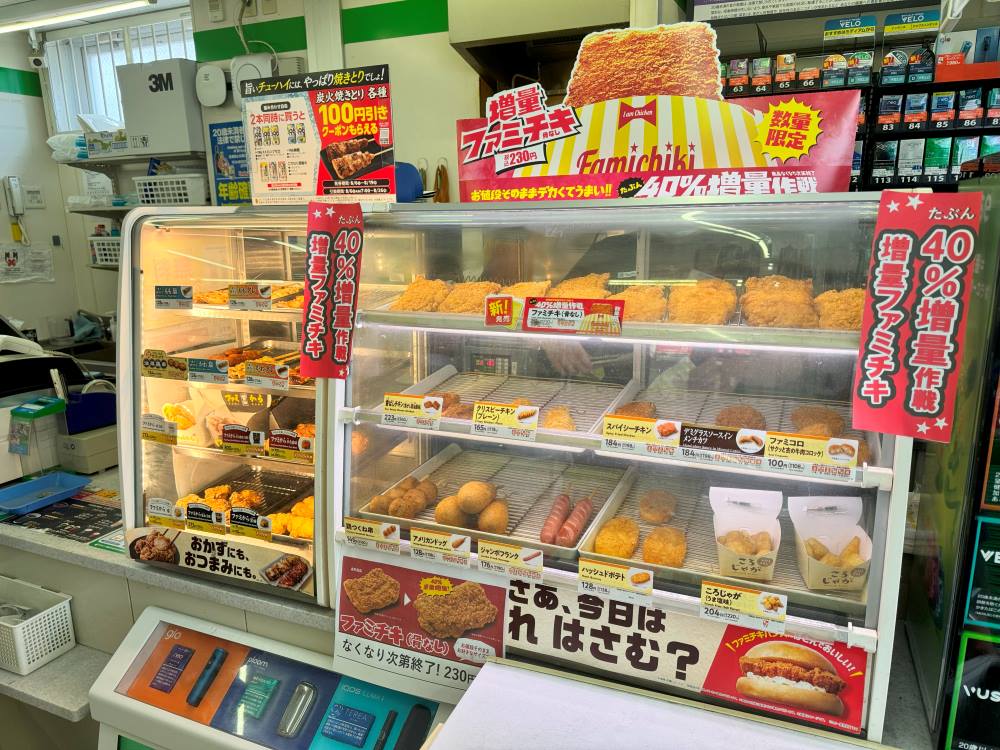
FamilyMart is famous for its exclusive Famichiki (crispy fried chicken) and other hot food items. It’s also a go-to for quick meals, with a variety of ready-to-eat foods like pastas and salads. Some stores even feature seating areas for enjoying your meal on-site.
LAWSON
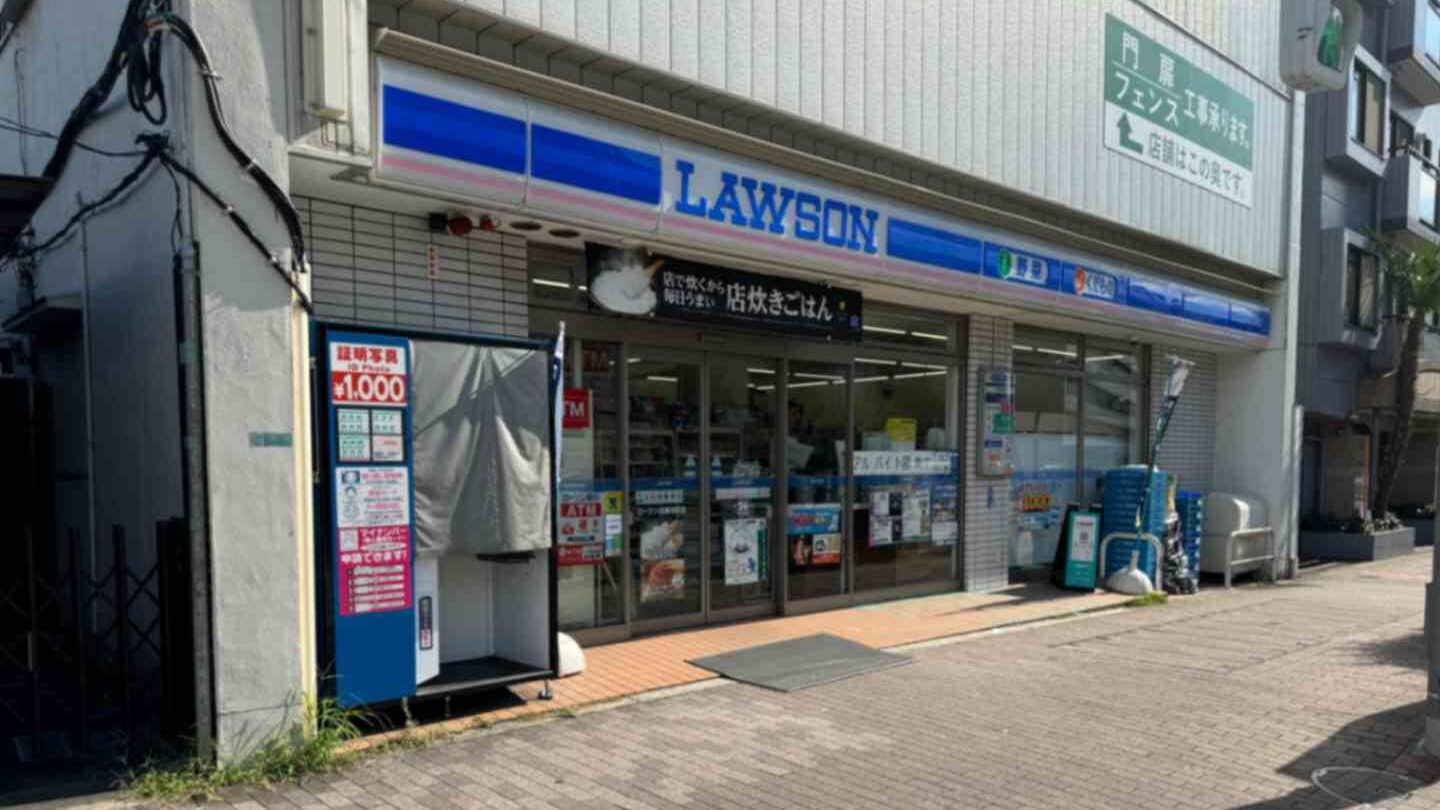
If you have a sweet tooth, Lawson might be your favorite stop. They are known for their premium sweets, especially their Uchi Café line of desserts, which are top-notch. They also carry healthier food options, like fresh fruits and salads.
MINISTOP
Ministop stands out as the most unique of the convenience store chains. One of its signature features is the hot snacks and soft serve ice cream, which are freshly made when ordered. Their soft serve ice cream is particularly popular and highly recommended for dessert lovers. If you want a fresh snack or a delicious ice cream, Ministop is the place to go!
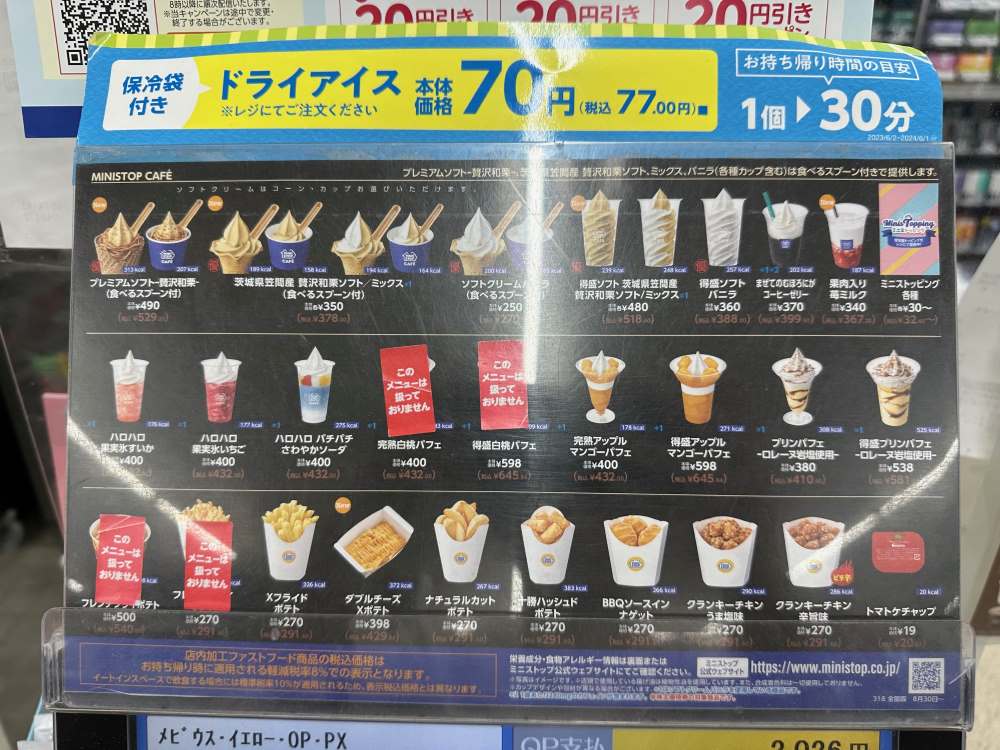
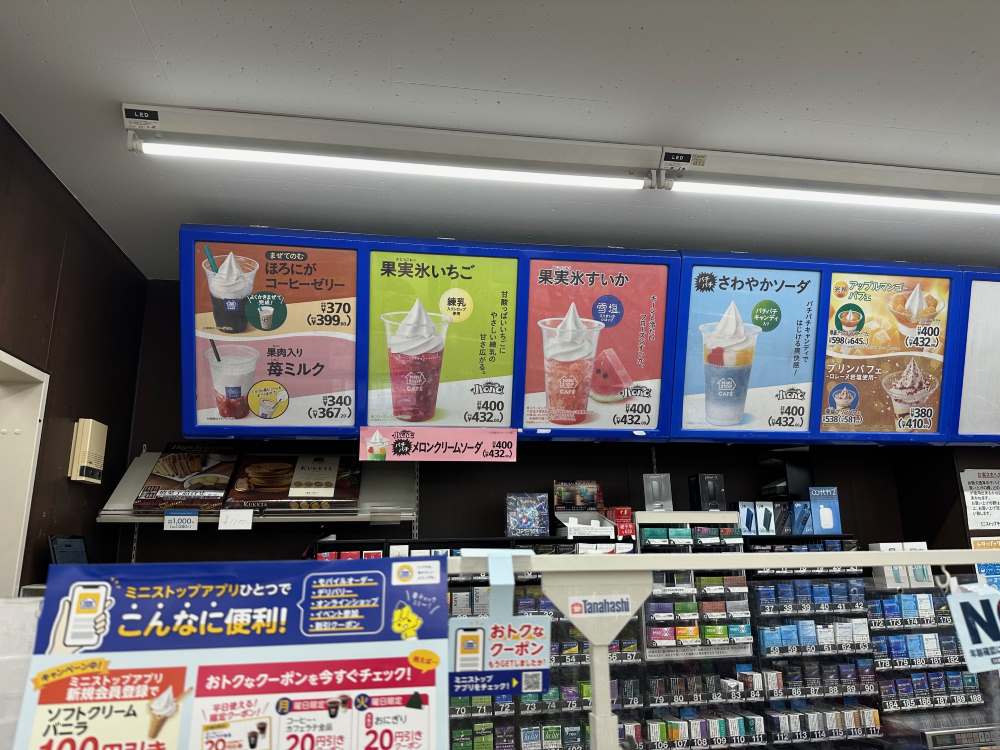
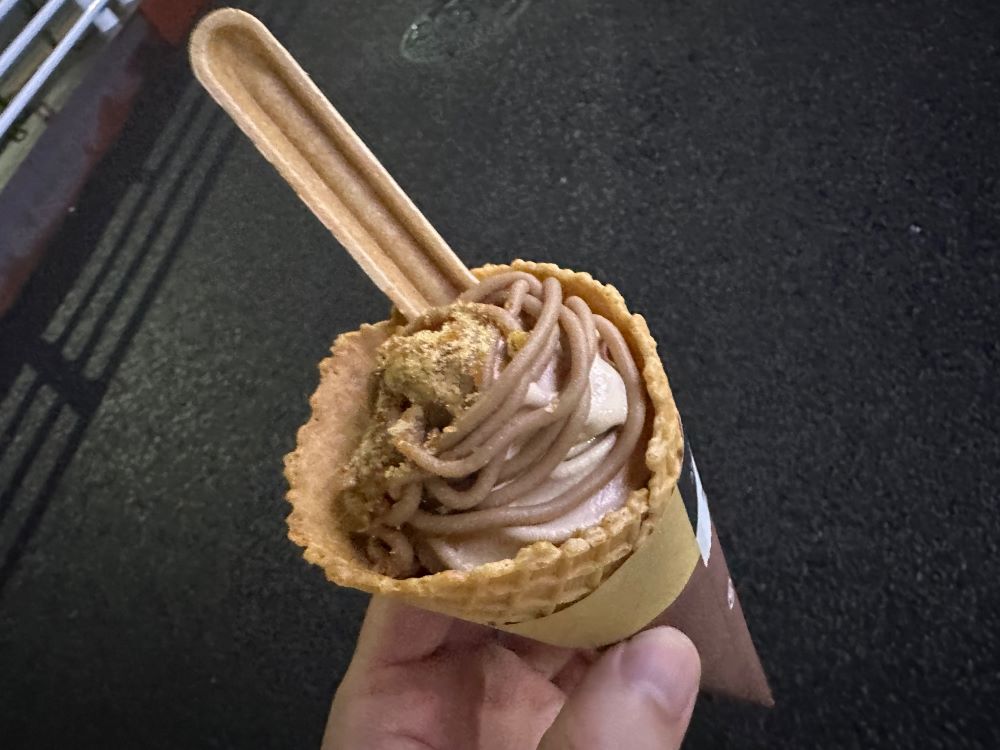
This is a seasonal marron soft serve ice cream. Very tasty!!
Travel Essentials at Your Fingertips
Forgot to pack something? No problem! Japan’s convenience stores stock a surprising range of travel essentials. You can find everything from toiletries like toothbrushes and deodorant to small umbrellas and phone chargers. Need some medicine? Only a small share of convenience stores sell over-the-counter medicines such as pain relievers and cold medicine, but many stock basics like band-aids.
Additionally, if you find yourself in need of a restroom, convenience stores are often a reliable option. Many of them have clean, well-maintained toilets that are available for public use, free of charge. Just head to a nearby konbini, and you can take advantage of this convenient service!
Also, use the microwave and hot water stations: Many stores provide these services for free, making it easy to heat up your meal or make instant noodles. You can eat them quickly!
Financial Services
Convenience stores in Japan also serve as mini financial hubs. ATMs found in stores like 7-Eleven, Lawson, and FamilyMart often accept international credit and debit cards, making it easy to withdraw cash in yen. Some stores also offer currency exchange services, although it’s less common.
Additionally, you can pay for things like utility bills, shipping packages through services like Takkyubin, and even purchase concert or train tickets at in-store kiosks.
A Safe Place to Recharge
Convenience stores are scattered all over Japan, often found on nearly every street corner in cities and towns. Many are open 24 hours a day, providing a safe and reliable spot to recharge, whether that’s to grab a midnight snack, use the restroom, or simply stop in for a quick break. Many stores have seating areas where you can enjoy your purchases, and some even have Wi-Fi, making it an ideal spot to rest while exploring.
Unique Japanese Goods
Japan’s convenience stores also offer a curated selection of regional snacks and limited-edition items you won’t find anywhere else. Whether it’s a special flavor of Kit-Kat or a seasonal item, konbini can be a great place to find unique gifts and souvenirs to take home. Some convenience stores offer tax-free shopping, but the ¥5,000 per-store minimum and the rule that food eaten in Japan gets no refund make it less useful at a konbini; our guide to tax-free shopping in Japan explains how it works.
Conclusion
Japan’s convenience stores are a lifeline for both locals and tourists alike. With their wide variety of products, convenient services, and around-the-clock availability, they’re an essential stop during your travels in Japan. Each konbini chain brings something unique to the table, so whether you’re craving hot snacks, desserts, or just need an ATM, there’s a convenience store that’s perfect for you.
Find your favorite convenience store!
Frequently Asked Questions
What soft serve ice cream is on the Ministop menu?
Ministop’s regular soft serve is Hokkaido Milk Soft, which replaced vanilla in April 2025. As of October 2026 Ministop lists it at 345.60 yen with tax for takeaway, in a cone or a cup. Limited-time flavors are sold beside it, and the October 2026 menu lists Japanese chestnut (waguri) soft serve at 410.40 yen and a Mont Blanc version at 594 yen. Prices and availability differ by store.
Where in Japan can I find a Ministop?
Ministop has 1,721 stores in Japan as of September 30, 2026, in 27 prefectures from Tohoku to Kyushu. Tokyo has the most with 233, followed by Aichi with 172 and Chiba with 156. Osaka has 79 and Kyoto has 28. Ministop’s official store list shows none in Hokkaido or Okinawa.
Can I withdraw cash with a foreign card at a Japanese convenience store?
Convenience store ATMs in Japan accept many overseas cards. Seven Bank has over 28,000 ATMs, at 7-Eleven and other sites, that take Visa, Mastercard, UnionPay, American Express, JCB, Discover and Diners Club. The limit is 100,000 yen per withdrawal, or 30,000 yen with a magnetic stripe card. Lawson ATMs, and E-net or Japan Post Bank ATMs in FamilyMart stores, also accept overseas Visa, Mastercard, JCB and UnionPay cards.
Are convenience stores in Japan open 24 hours?
Many convenience stores in Japan, including 7-Eleven, FamilyMart and Lawson, operate 24 hours a day, even on national holidays, according to the Japan National Tourism Organization. Lawson and Ministop both describe their stores as open 24 hours a day, 365 days a year.
Share