
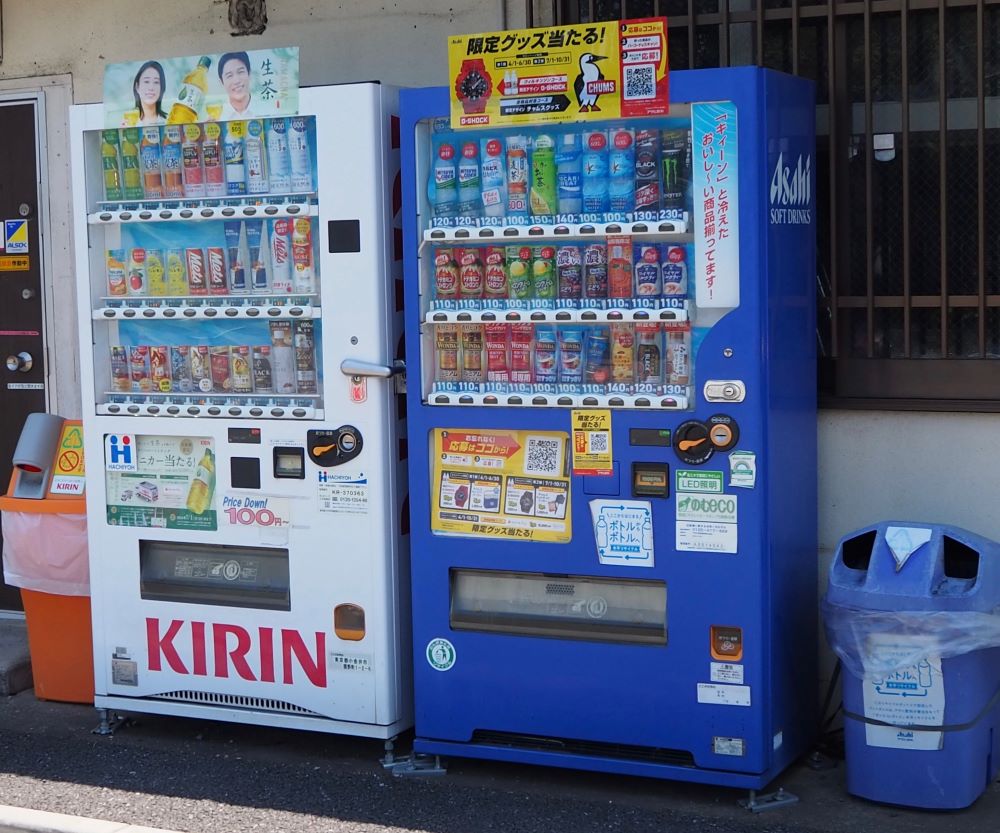
Vending machines in Japan are self-service machines that sell drinks and food around the clock on street corners, in train stations and in rural areas across the country. The Japan Vending System Manufacturers Association reported 2,585,200 vending machines of all types at the end of December 2025, including 2,178,800 drink machines and 81,100 food machines. Besides hot and cold drinks, some machines sell ice cream and frozen foods such as ramen, motsunabe hotpot, daifuku and pizza.
| All vending machines in Japan | 2,585,200 at the end of December 2025 (drinks, food, tobacco, tickets, daily goods) |
|---|---|
| Drink vending machines in Japan | 2,178,800 at the end of December 2025 (industry association figure) |
| Food vending machines in Japan | 81,100 at the end of December 2025 (instant noodles, frozen food, ice cream, snacks) |
| Payment | Coins and banknotes. Cashless models take IC cards, phones and QR code payment |
| Drink temperature | Cold cans about 5°C, hot cans about 55°C |
| Box beside the machine | Recycling box for empty drink containers, not a general trash can |
Checked in October 2026 against jvma.or.jp, j-sda.or.jp.
When you think of Japan, what comes to mind? Sushi, cherry blossoms, perhaps high-tech gadgets? But there’s another fascinating aspect of daily life in Japan that often catches visitors by surprise, vending machines.
A Vending Machine for Every Need
Vending machines are incredibly convenient: if you’re thirsty, you can grab a drink for around 100 to 200 yen (about $0.65 to $1.25) anytime, day or night.
An Impressive Array of Beverages
One of the most remarkable features of Japanese vending machines is the sheer variety of drinks they offer. In the sweltering summer months, you can cool down with a selection of iced teas, sodas, and sports drinks. Come winter, the machines switch gears, providing warm beverages like hot tea, coffee, corn soup, and occasionally even miso soup or ramen broth.
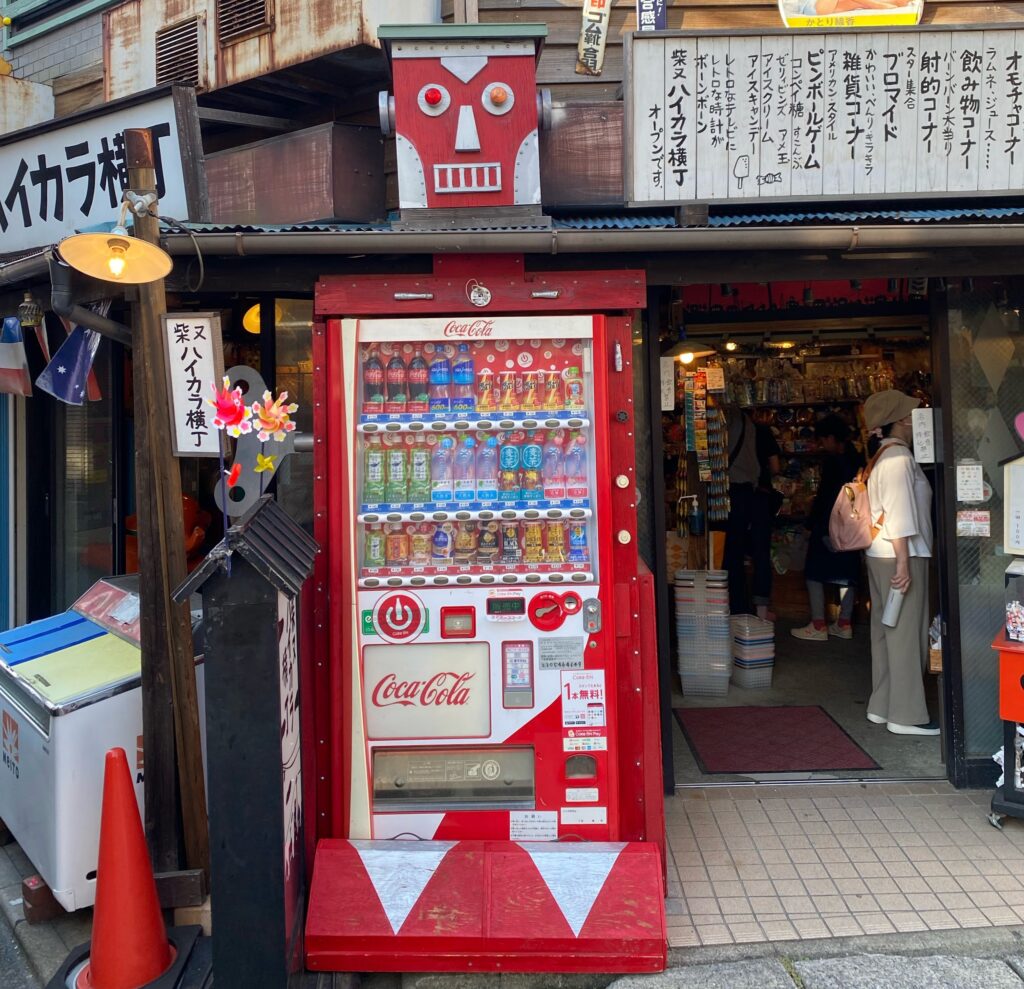
Convenient and Clean
Japanese vending machines are designed with user convenience in mind. Each machine typically has a recycling box right next to it, so you can dispose of your empty bottles or cans on the spot. This thoughtful feature helps keep the streets clean and makes it easy to recycle. However, many people choose to dispose of their trash in other garbage bins or take it home to throw away.
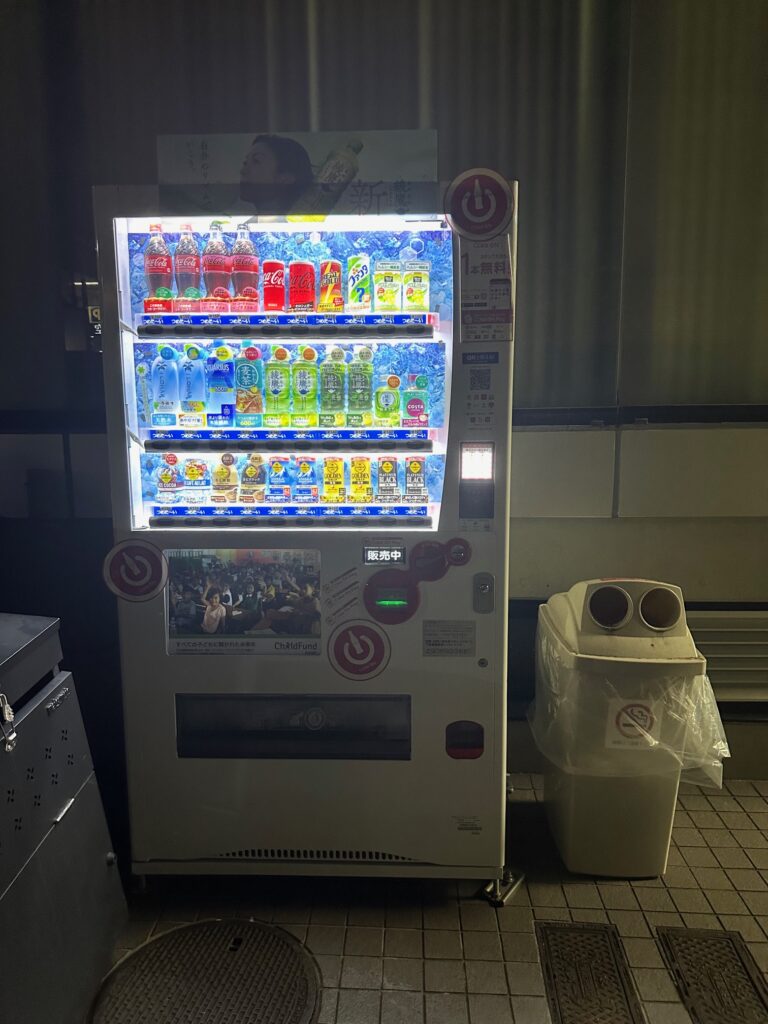
Beyond Drinks: A World of Surprises
While drinks are the most common item found in vending machines, Japan takes things to another level. You can find machines selling everything from snacks and sweets to more substantial fare like bread, rice, and even ramen or motsunabe (a local hotpot dish). The diversity of products available is a testament to Japanese ingenuity and their commitment to convenience.
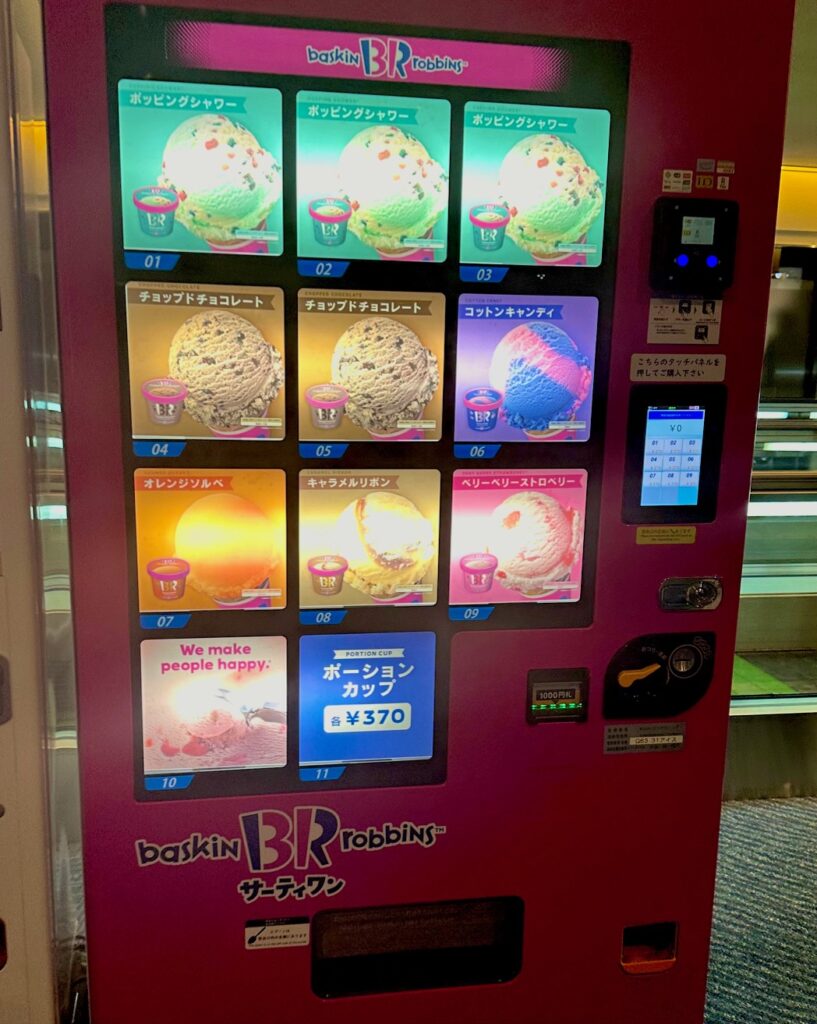
Vending machines for ice cream
There are also ice cream vending machines. You can enjoy Baskin-Robbins ice cream by purchasing it from these vending machines.
Vending machines for Ramen
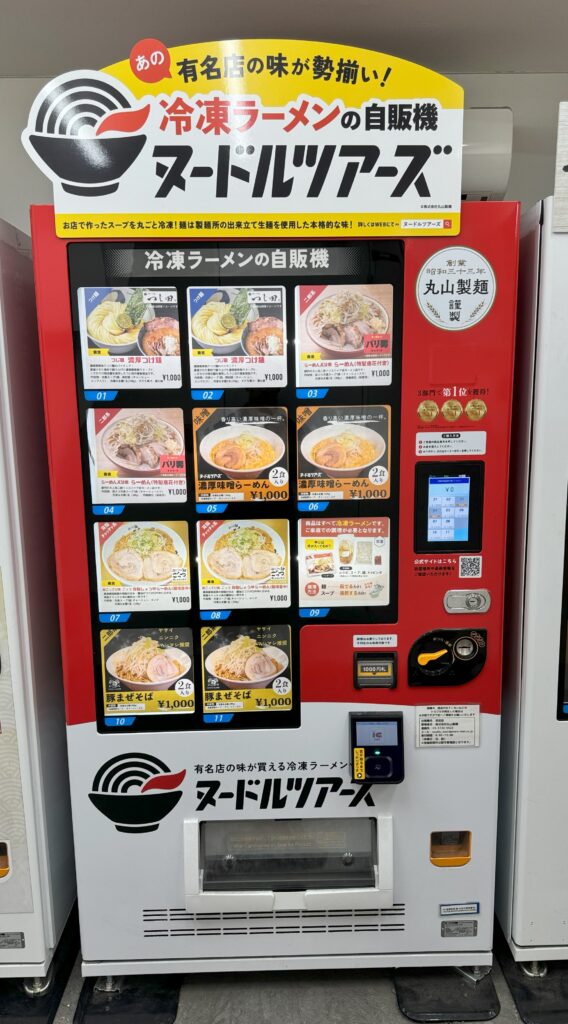
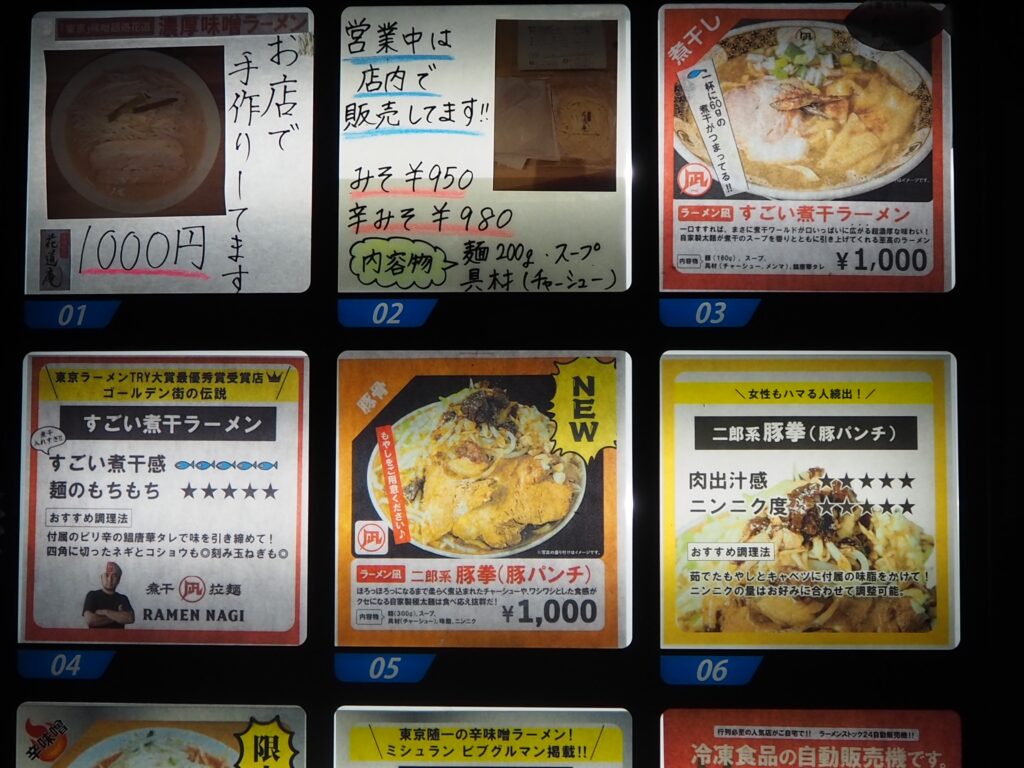
You can see many kinds of ramen in one vending machine.
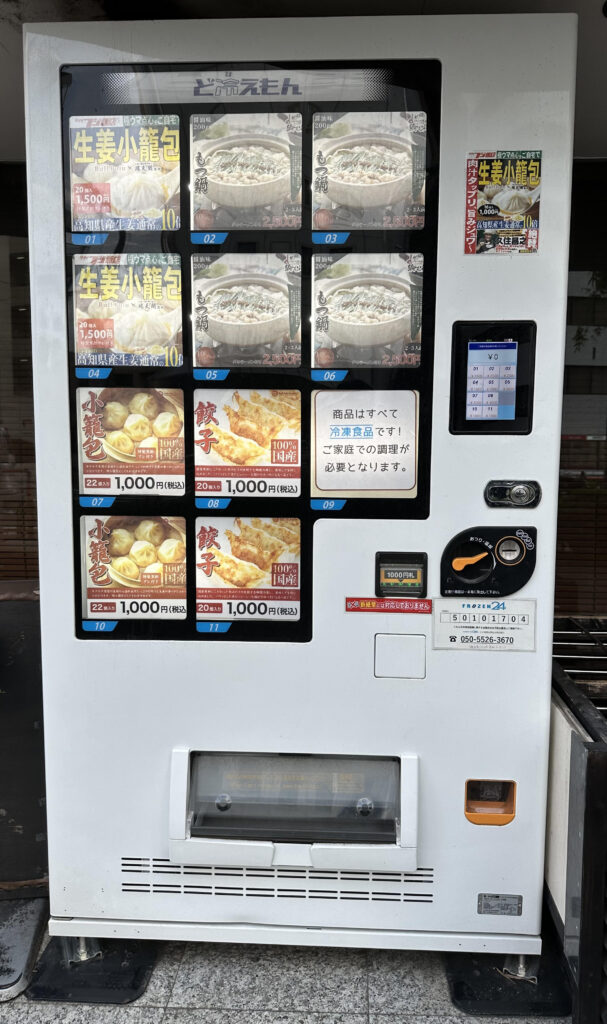
Vending machines for Motsunabe
Motsunabe is a famous Hakata dish from Fukuoka Prefecture, popular throughout Japan. This vending machine sells frozen motsunabe, which can be easily prepared by simply heating it in a pot.
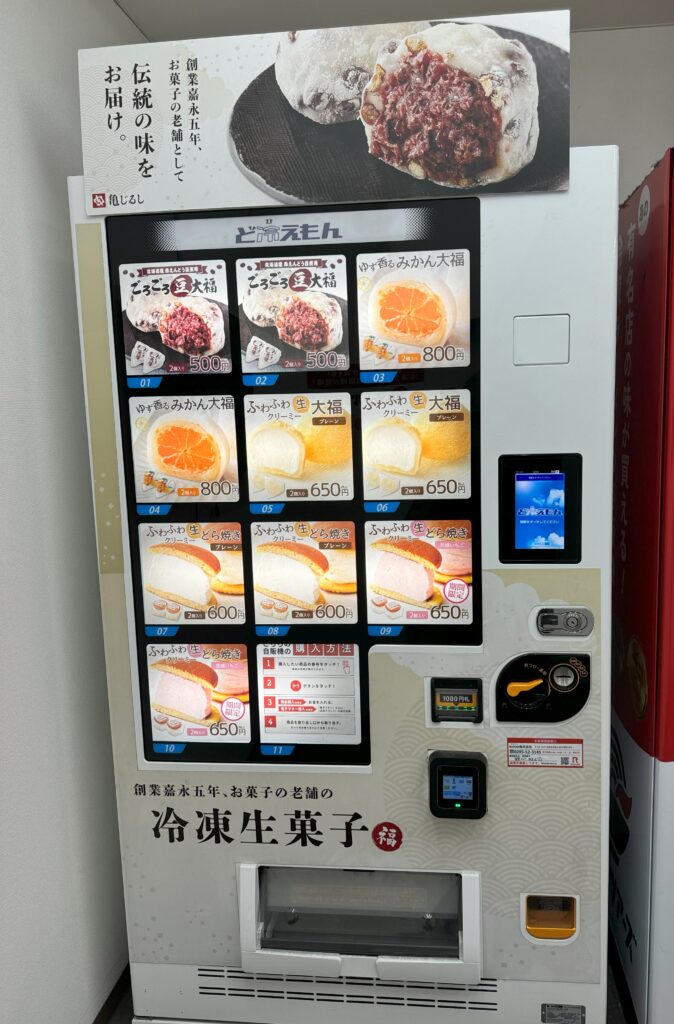
Vending machines for Daifuku and Dorayaki
This is a vending machine for frozen Daifuku and Dorayaki.
Daifuku are soft rice cakes filled with sweet red bean paste. Dorayaki are two small pancake-like patties with a sweet red bean filling in between.
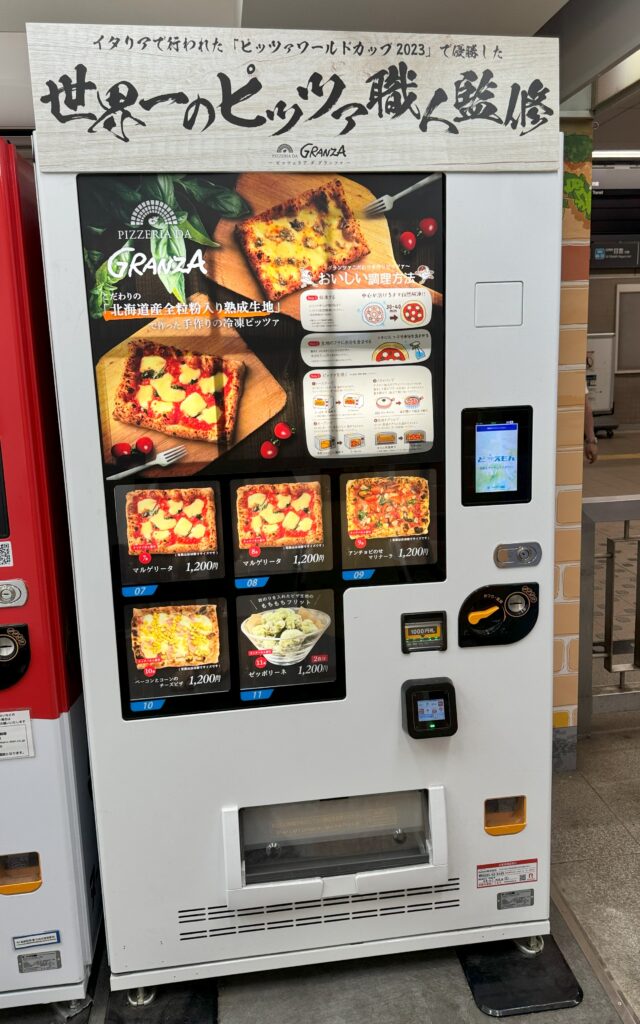
Vending machines for pizza
This is a frozen pizza vending machine. You can buy one anytime and easily heat it up at home using your microwave or oven.
Summary
Japan’s vending machines are more than just a quick stop for a drink; they’re a reflection of the country’s innovative spirit and dedication to convenience. Whether you’re a traveler looking to stay hydrated or a curious visitor eager to try something new, these machines offer a little slice of Japanese culture that’s both fascinating and incredibly practical.
So, next time you find yourself in Japan, be sure to explore the world of vending machines. You never know what surprising and delightful products you might discover!
On the other hand, there are opinions that the large number of vending machines in Japan puts a burden on the environment. If you like, please take a look at this article as well!
Frequently Asked Questions
How do you pay at a vending machine in Japan?
Vending machines in Japan take coins and banknotes, and cashless models also accept contactless IC cards, mobile phones or QR code payment. With cash, insert the money first, then press the button for the drink. With an IC card or phone, choose the drink first, then touch the card or phone to the reader. This order comes from the Japan Vending System Manufacturers Association.
Why are there so many vending machines in Japan?
Japan has so many vending machines for four main reasons given by the Japan Vending System Manufacturers Association: good public safety, the mass circulation of 100 yen coins, the introduction of transit ticket machines, and the development of canned coffee and of machines that sell hot and cold drinks. The association estimates that Japan ranks first in the world for vending machines relative to population and land area.
Can you put trash in the bin next to a vending machine in Japan?
No. The box beside a vending machine in Japan is a recycling box for empty drink containers, not a general trash can. The Japan Soft Drink Association reports that about 30 percent of what goes into these boxes is something other than an empty drink container. Finish the drink before you drop the container in, because leftover liquid lowers recycling quality.
Do vending machines in Japan sell hot drinks?
Vending machines in Japan sell hot drinks as well as cold ones. In winter the range includes hot tea, coffee and corn soup. Hot canned drinks are sold at around 55°C and cold ones at around 5°C, according to the Japan Vending System Manufacturers Association.
Share