
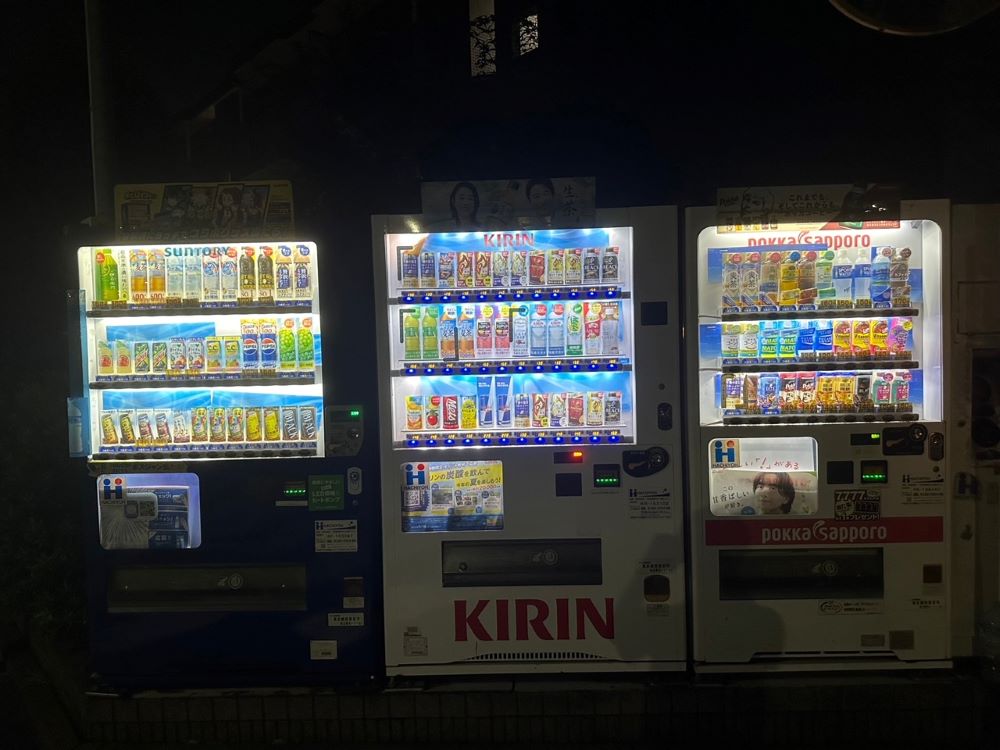
A beverage vending machine in Japan is a self-service unit that sells cold and hot drinks. A can and bottle model shipped in fiscal 2025 uses 725 kWh of electricity a year on average, according to the Japan Vending System Manufacturers Association (JVMA). The Japan Soft Drink Association reports that annual electricity use per can and bottle machine fell by about 77% between 1991 and 2015.
| Machines in Japan | 2,585,200 vending machines at the end of 2025, of which 2,178,800 sell drinks |
|---|---|
| Power use, fiscal 2025 shipments | 725 kWh a year per can and bottle machine (weighted average) |
| Power use, fiscal 2005 shipments | 1,642 kWh a year per can and bottle machine (weighted average) |
| Cut since 1991 | About 50% by 2005 and about 77% by 2015, per can and bottle machine |
| Summer peak cut | Eco-vendor machines stop cooling 1:00 PM to 4:00 PM, July 1 to September 30 |
| Lights off indoors | 24-hour lights-off is expected to cut electricity use by about 10% |
| Refrigerants | Hydrocarbon, CO2 and HFO-1234yf, each with a global warming potential of 4 or less |
Checked in October 2026 against jvma.or.jp, j-sda.or.jp.
Japan is famous for its vending machines, with approximately 2.6 million of them operating 24/7 across the country as of the end of 2025. These machines offer unparalleled convenience, providing cold drinks in the summer and hot beverages in the winter. However, the environmental impact of these ubiquitous machines is a growing concern. This article explores the energy consumption of vending machines in Japan and the steps being taken to mitigate their environmental footprint.
The Ubiquity and Convenience of Vending Machines
Vending machines are incredibly convenient. They offer a wide variety of drinks and snacks at any time of day. For more details about the extensive variety of Japanese vending machines, read the link below.
Energy Consumption: A Hidden Cost
While vending machines provide great convenience, they also consume a significant amount of electricity. A standard beverage vending machine in Japan uses between 500 and 1,000 kWh of electricity annually. On average, taking into account machines that might not be in use all the time, each machine consumes around 750 kWh per year. With about 2.18 million beverage vending machines in operation, the total annual electricity consumption adds up to a staggering amount.
The Issue with Older Machines
Older vending machines, which are still widely used, tend to consume even more electricity. Recognizing this problem, the Japan Soft Drink Association and major companies like Coca-Cola and Kirin have been working on creating more energy-efficient vending machines. By 2005, these efforts had led to a reduction of about 50% in the annual electricity consumption per new can and bottle machine compared to 1991 levels. By 2015, the reduction had reached approximately 77%.
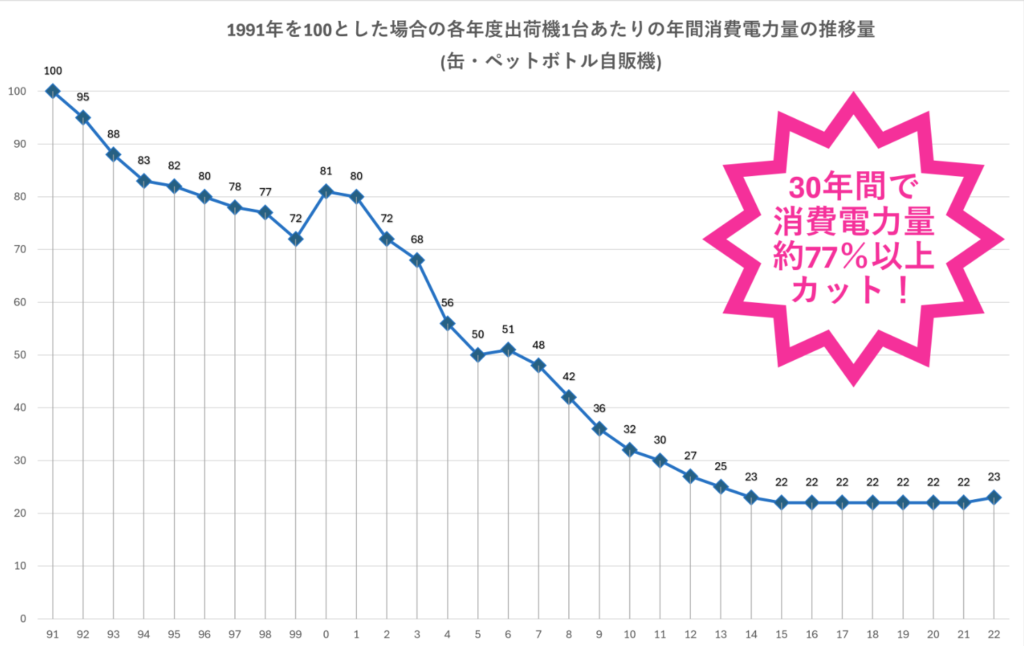
Reference: “Japan Soft Drink Association”
Steps Toward Sustainability
To reduce the environmental impact, companies are implementing several green technologies:
- LED Lighting: Modern vending machines now use LED lights, which consume significantly less power than traditional lighting.
- Solar Power: Some vending machines are equipped with solar panels to harness natural energy, further reducing their reliance on conventional power sources.
- Energy-Efficient Cooling and Heating Systems: Advanced technologies have been developed to improve the efficiency of cooling and heating mechanisms in vending machines.
Do We Really Need So Many Vending Machines?
Despite these advancements, there is an ongoing debate about the necessity of having so many vending machines. Some critics argue that reducing the number of machines could be a more effective solution for cutting down energy consumption and environmental impact.
Conclusion
Japan’s vending machines are a testament to the country’s innovation and convenience-focused culture. However, this convenience comes with environmental challenges. Efforts by companies to make vending machines more energy-efficient are commendable, but the larger question remains: Is it time to rethink the number of vending machines in use?
Balancing convenience with sustainability is crucial. By understanding the environmental impact and considering sustainable practices, we can all contribute to a greener future. What are your thoughts on this issue? Share your opinions and let’s continue the conversation on balancing convenience with environmental responsibility.
Frequently Asked Questions
How much electricity does a vending machine in Japan use?
A can and bottle vending machine shipped in Japan in fiscal 2025 uses 725 kWh of electricity a year on average, according to the Japan Vending System Manufacturers Association (JVMA). Can and bottle machines shipped in fiscal 2005 averaged 1,642 kWh. Cup drink machines use more, at 915 kWh a year for fiscal 2025 shipments.
How do Japanese vending machines cool and heat drinks with less electricity?
Japanese vending machines cool and heat drinks with less electricity through zone cooling, heat pumps and vacuum insulation, according to the Japan Vending System Manufacturers Association. Zone cooling chills only the products about to sell, and a built-in microcomputer sets the amount from past sales data. A heat pump reuses heat from the cooling unit to warm hot drinks. Vacuum insulation keeps cold and warmth inside the machine.
Do vending machines in Japan stop cooling on summer afternoons?
Most can and bottle vending machines in Japan stop cooling from 1:00 PM to 4:00 PM between July 1 and September 30, when electricity demand peaks. These machines are called eco-vendors and chill their drinks in the morning. Installation began in 1995, and the Japan Soft Drink Association says almost 100% of can and bottle machines outside Hokkaido are now eco-vendors.
Why are the lights off on some vending machines in Japan?
Vending machines in Japan switch off their lights to save electricity, and a dark machine is not necessarily out of service. Outdoor machines use a brightness sensor to turn the lights off in daylight. Indoor drink machines keep their lights off 24 hours a day unless that would hinder buying. The Japan Soft Drink Association expects 24-hour lights-off to cut electricity use by about 10%.
Share