
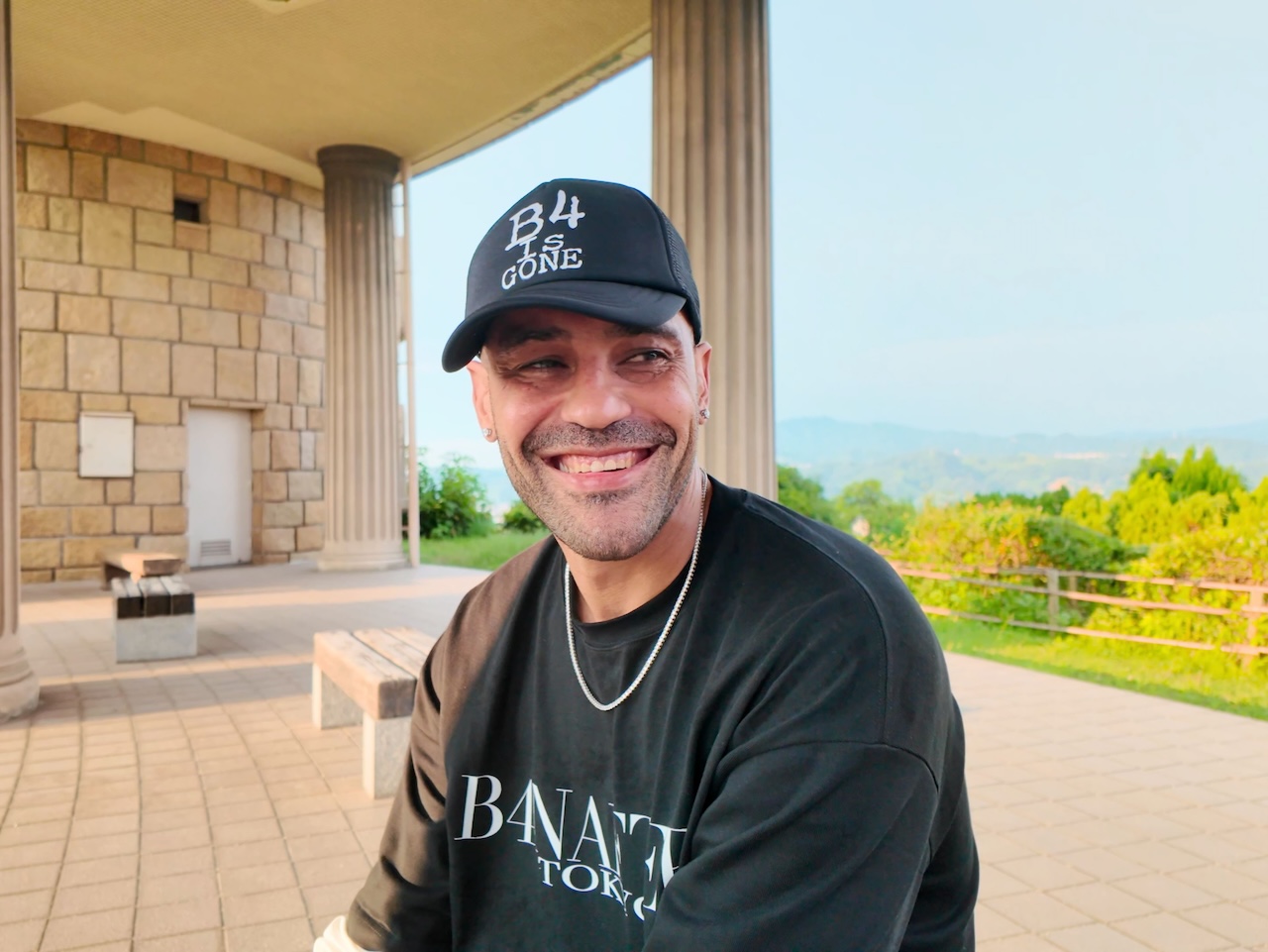
Michael Parker is a professional basketball player in Japan. At the time of this interview, published in February 2026, he had played 18 straight seasons there and lived in about seven places, from Fukuoka, his first, to Ehime. He talks about the merger and growth of Japan’s basketball leagues, raising three children in Japan, and the luxury fashion brand he is working on for life after basketball.
The Journey of a Basketball “OG”
Q: Could you introduce yourself and tell us a bit about your background?
Michael: My name is Michael Parker. I was born in Washington, D.C., and grew up in the Seattle-Tacoma area. I’ve been in Japan for 18 years now. It wasn’t exactly a planned decision to move here; I got an opportunity to try out for a basketball team and I took it. I’ve played professional basketball here every single season since then, 18 seasons in total.
Q: Playing for 18 seasons is quite rare. You’re like an “OG” of the league.
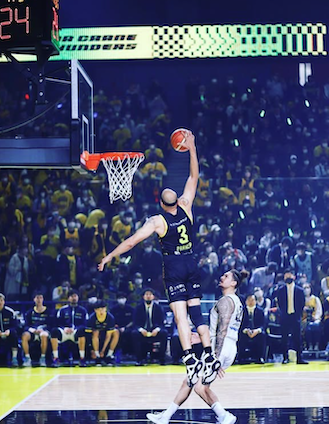
Michael: For sure. I’ve definitely played longer than most people. In that time, I’ve seen the leagues change, grow, and even change their names. When I first started, there were two separate leagues: a professional league and a corporate league where companies like Panasonic, Toyota, and Hitachi had teams as tax write-offs.
About 10 years ago, FIBA (the International Basketball Federation) suspended Japan because of this two-league system, which forced them to merge into one professional league. Since then, the growth has been crazy. We went from practicing in city gyms next to regular people exercising to having our own arenas and huge sponsorships.
A Circular Path: The Okinawa Connection
Q: What was your first impression or biggest culture shock when you arrived?
Michael: It’s actually a roundabout story. My parents were both in the Marines and actually met in Okinawa. My mother got pregnant with me while they were there. Back then, she had to leave the military because she was pregnant, and though she went back to the States, she always felt she made a mistake and wished she had found a way to stay in Japan.
Because of that, I was raised with Japanese culture. We used chopsticks, we’d visit Japantown to eat, and she always told me stories. When I finally got to Japan, I felt like I fit in because I already liked miso soup and knew how to use chopsticks. However, experiencing the reality was still different. One of the first things that surprised me was seeing people drinking alcohol or smoking openly on the streets, in the States, you’d get arrested for that instantly.
Life Across Seven Cities: From Fukuoka to Shimane
Q: You’ve played for many teams. Which cities have you lived in?
Michael: I think it’s been about seven cities: Fukuoka, Shimane, Wakayama, Tokyo, Chiba, Gunma, and now Ehime. My first city, Fukuoka, remains one of my favorites; it feels like the “Miami of Japan”, down south, warmer, and more relaxed.
Q: Did you find any major differences between the countryside and the big cities?
Michael: Definitely. Fukuoka and Tokyo are metropolitan, but when I moved to Shimane, it was “old town Japan”, very small and quiet. My biggest shock there was the trash separation. If you didn’t separate it correctly into burnable and unburnable, they would actually bring the trash back and leave it at your door. I also remember in Shimane, everything was dead quiet by 9:00 PM, no one on the roads, nothing. Personally, I prefer the city because the countryside can get a bit boring.
Living and Raising a Family in Japan
Q: How has living in Japan for 18 years changed you?
Michael: I’ve become quieter and more respectful of personal space and manners. I’m so used to the Japanese way of doing things now that I’m not sure I could do it any other way. When I go back to the States, I get “counter-culture shock”, the volume of people, the lack of personal space, and the lower level of customer service really stand out.
Q: You’re raising three kids here. What is that experience like as a foreigner?
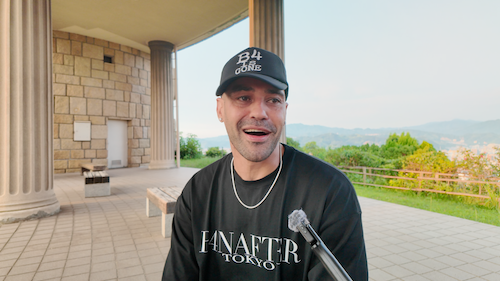
Michael: My wife is half-Japanese and fluent, so she handles a lot of the logistics. Raising kids here is much easier because it’s so safe. Seeing six or seven-year-olds take the train to school alone is very calming for a parent. My kids go to international and Japanese-international schools. The hardest part is being away from them when I play for teams outside of Tokyo, where they live.
Observations and Future Ambitions
Q: What has been the biggest change in Japan over the last 18 years?
Michael: The English proficiency. 18 years ago, you had to speak Japanese. Now, everyone tries to speak English to you, sometimes even when I’m trying to speak Japanese to them at a convenience store. It’s a complete 180-degree turnaround.
Q: Do you have any advice for people visiting or moving to Japan?
Michael: First, don’t just do the tourist spots; go off the beaten path to see the “real” Japan. Second, follow the etiquette: don’t listen to music out loud on your phone, and don’t talk on the phone while on the train. And definitely don’t drive in Tokyo, just take the trains. Also, a big misconception is that Japanese people aren’t welcoming; they are actually very curious and friendly, just a bit shy.
Q: What’s next for you after your basketball career?
Michael: I’ve been working on a luxury fashion brand. I want to use Tokyo as a creative “jump-off” point, similar to how brands use Paris or Milan. Someone once told me Tokyo is the “Paris of Asia” because of the huge art community here. After basketball, I really want to dive into that creative side.
・・・
Want to hear more stories from people living in Japan? Explore more interviews in our Humans of Japan series →
Frequently Asked Questions
Why did Michael Parker move to Japan?
Michael Parker moved to Japan because he got an opportunity to try out for a basketball team. He says the move was not exactly planned. He has played professional basketball in Japan every season since, 18 seasons in total at the time of this interview, published in February 2026.
How has professional basketball in Japan changed during Michael Parker’s career?
Michael Parker says professional basketball in Japan went from two separate leagues to one during his career. He recalls a professional league and a corporate league with company teams such as Panasonic, Toyota and Hitachi when he started. By his account, a FIBA suspension forced the two to merge. He says teams that once practiced in city gyms now have their own arenas and large sponsorships.
What does Michael Parker plan to do after basketball?
Michael Parker wants to move into fashion after his basketball career. He says he has been working on a luxury fashion brand and wants to use Tokyo as a creative starting point, in the way brands use Paris or Milan. Someone once described Tokyo to him as the “Paris of Asia” because of its large art community.
Share