
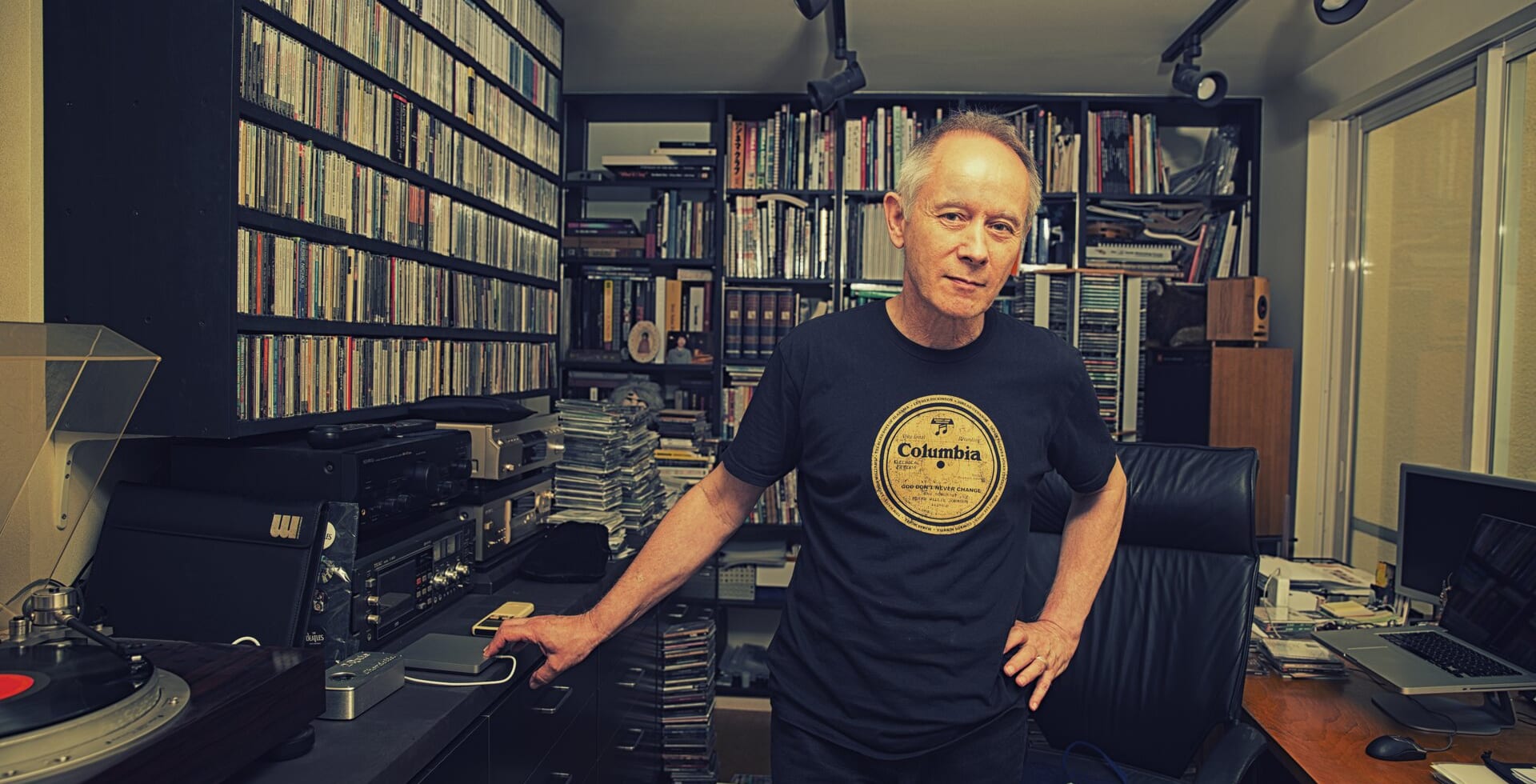
You've been with somebody or somewhere for so long that you know each other inside out, and at times you hate each other's guts, but you survive anyway.
Peter Barakan was born in London in 1951 and has lived in Japan since 1974. He came to work for a music publisher, helped Ryuichi Sakamoto with English lyrics, and became one of the best-known voices in Japanese broadcasting: on music radio, as host of the Japanese edition of 60 Minutes for 26 years, and on NHK World’s Japanology, which he has presented for 23 years.
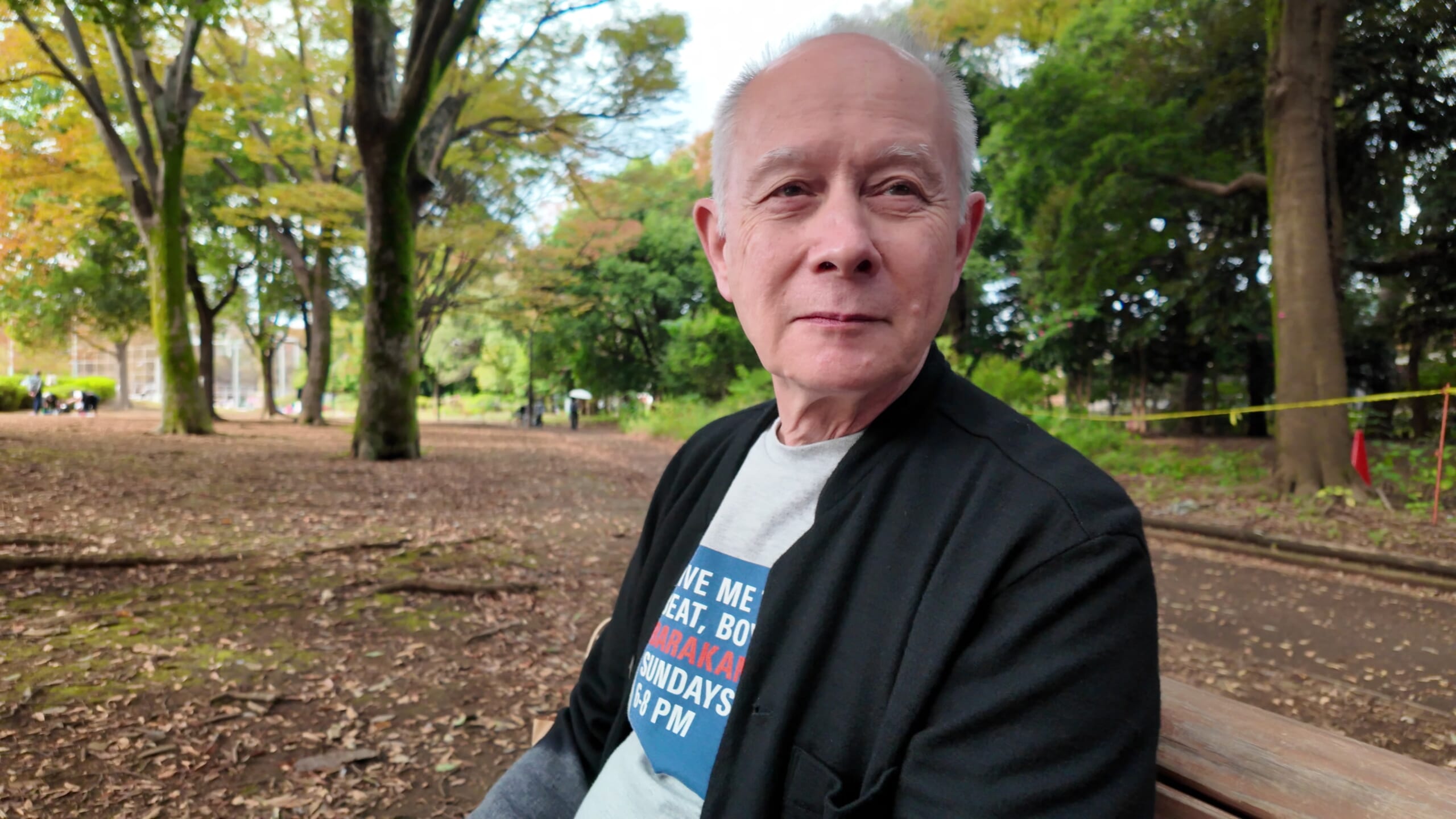
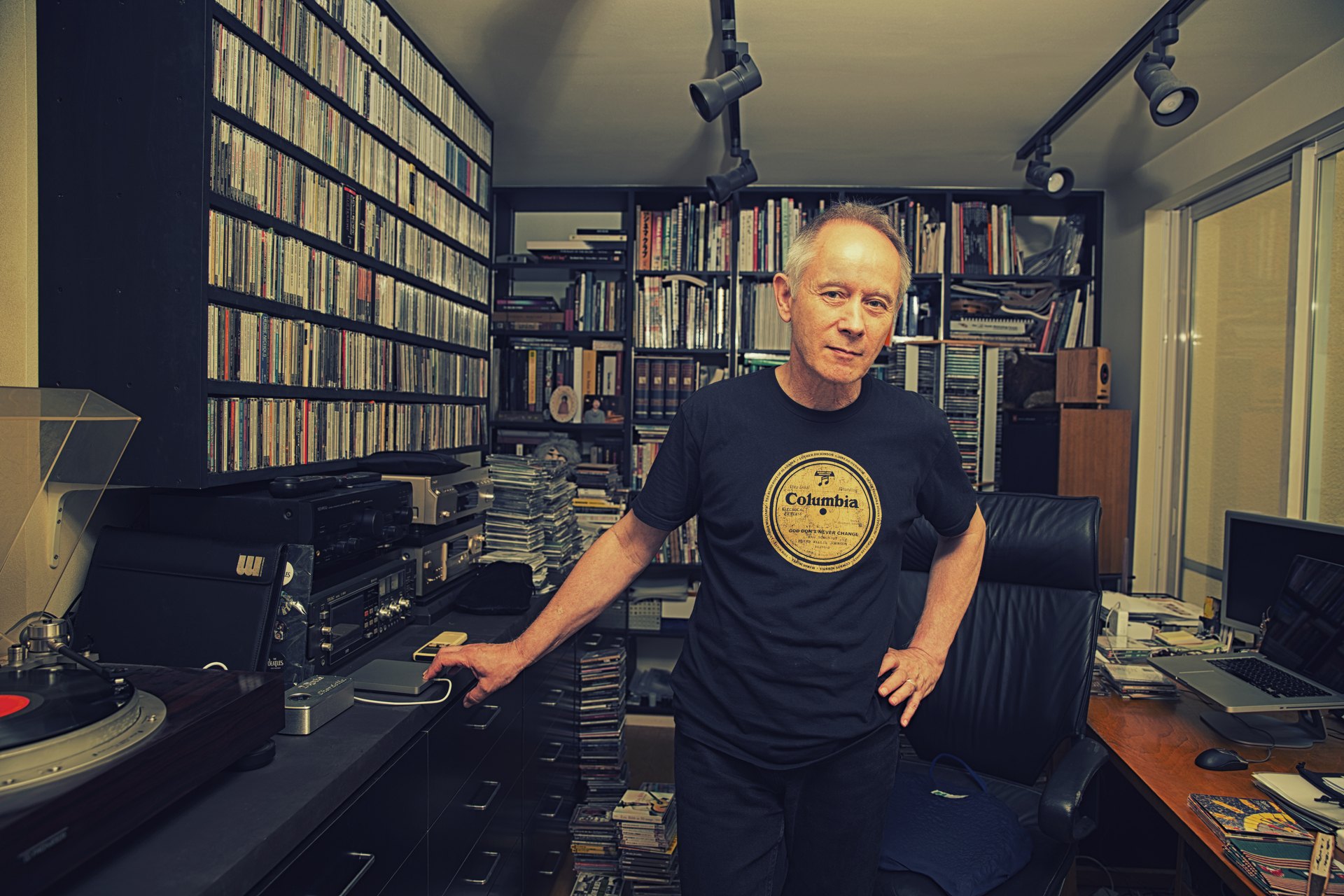
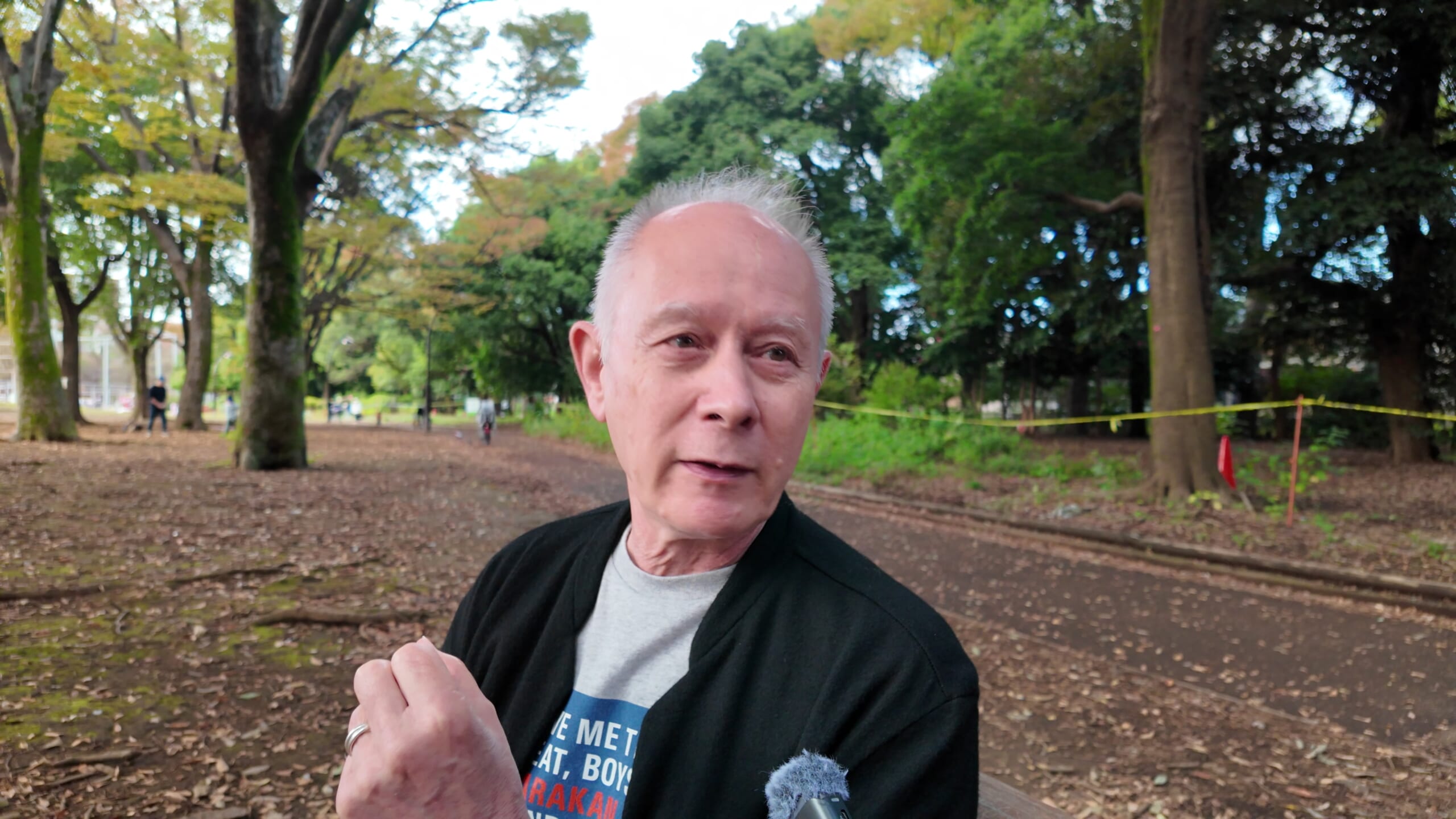
We met him in Komazawa Park on a November holiday. He talked about the phone call that brought him to Tokyo, lyrics that arrived by telex, the day his boss called the company “a family,” and the two Japanese phrases he uses for his 52 years with Tokyo: sumeba miyako and kusare-en.
How Peter Barakan Came to Japan: “Can You Be Here in Tokyo in 10 Days?”
Q: You’re not half Japanese. How did your relationship with Japan start?
Peter: I’m not. My mother was half Burmese. She was born in London, so she’s half English and half Burmese. My father was Polish. I didn’t have any relationship to Japan when I was a child. I did study Japanese in university, but that’s a long story, and there’s no really good reason for it. Back in my day, people went to university to do something they thought might be interesting, regardless of whether it was going to lead to a job.
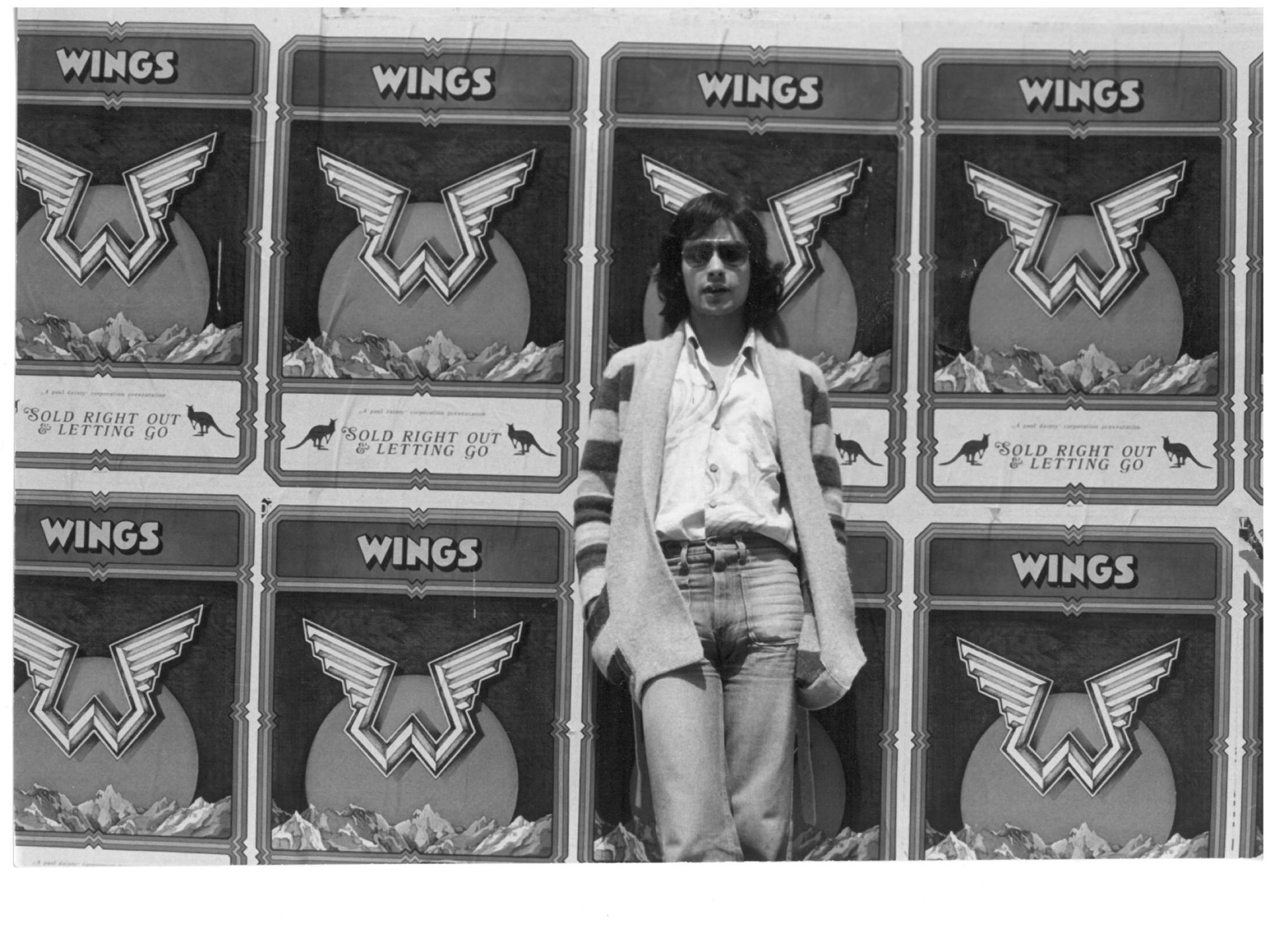
After graduating, he had no thought of coming to Japan. Music was his passion, and he worked in a London record shop for just under a year. Then he saw an ad in a music industry magazine: a Japanese music publishing company was looking for a young Englishman to work in Tokyo. He wrote a letter and was interviewed in London, along with ten or twelve other applicants.
Peter: About a month went by. I didn’t hear anything from them, and I assumed I hadn’t got the job, so I’d kind of given up on that. Then suddenly the phone rang one morning, just as I was going out to work, and they said, “Can you be here in Tokyo in 10 days?” So I had to make a decision there on the spot.
Q: Who did you tell first?
Peter: My mum, because I was going to have to leave all of my stuff in her house, so I called her up. I said, “Guess what?” She said, “You’re going to Tokyo.” I think she was pleased for me.
Soy Sauce and Black Hair: Tokyo in 1974
Q: In your early days in Japan, what was the biggest culture shock?
Peter: People always ask that, and I’ve been here so long now that you forget these things. I remember one thing that I’ve often said. When I was first in Tokyo, the first few days, you’d be walking around near the office where I was working. There’d be lots of restaurants at lunchtime. There was an overpowering smell of soy sauce, or soup stocks made from soy sauce, and that was a smell that you never got in London. So that made me very conscious of the fact that I’d come to somewhere very different. Whether you call it a culture shock or not, I don’t know.
Another thing I remember: I think maybe the second day I was here, I got on a subway train, and today it would be different, but back in those days everybody had black hair. Looking down the length of the carriage, everybody in the carriage had black hair, and in London that would be something you would just never see. It’s not culture shock, but you notice the difference.
The Nail That Sticks Out
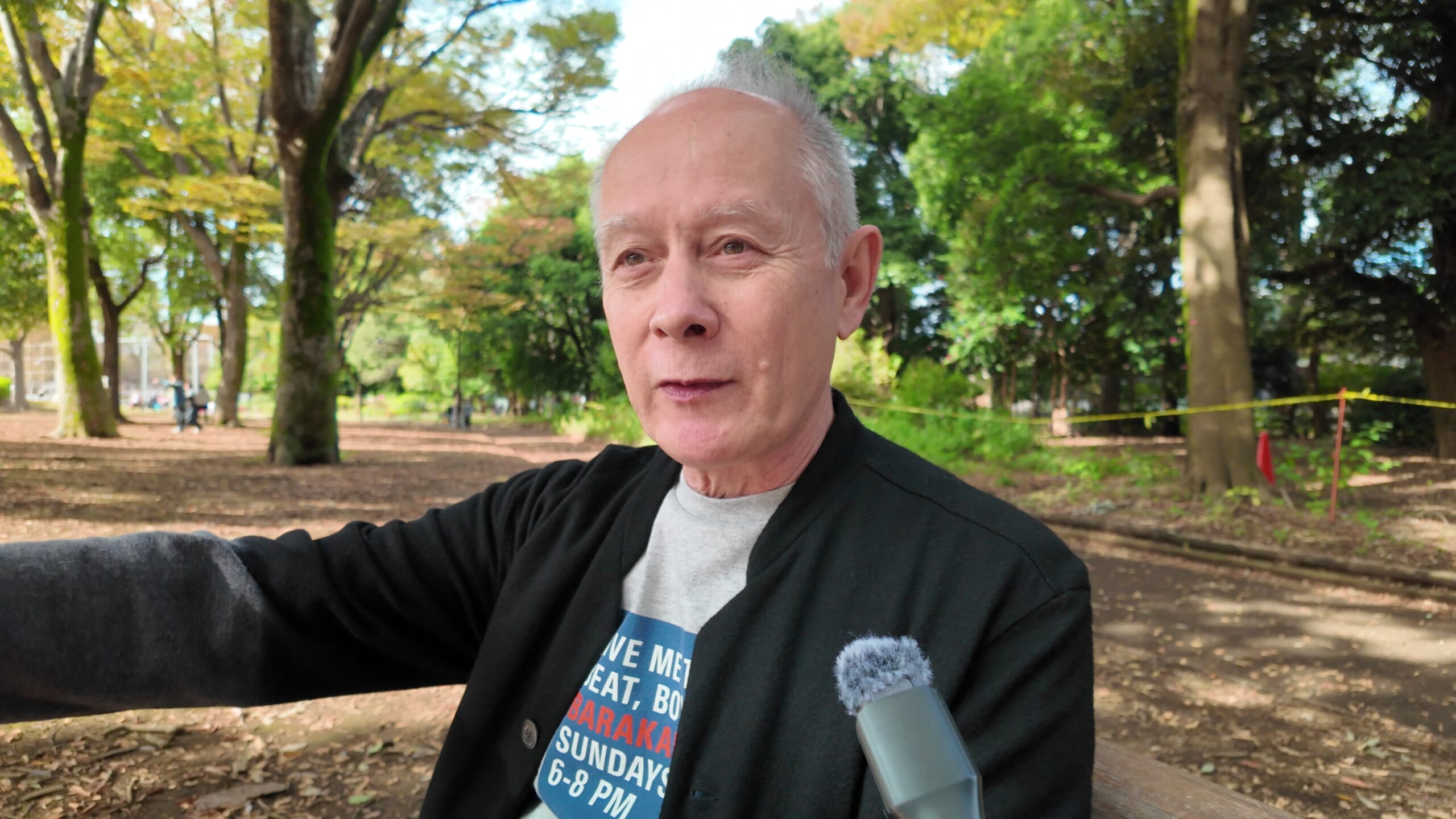
For his first six years in Tokyo, Peter worked for the music publisher, mainly writing letters to publishers in America, Britain, and other countries and negotiating the rights for songs. The company also published music magazines, and he wrote record reviews for a couple of them from time to time. Then a magazine from another publisher asked him to write a review.
Peter: After the magazine came out, I thought, I wonder if I should have mentioned this to the office before doing it. So I went to the boss and said, “I got asked to write a review for this magazine, and I wrote it. That’s okay, yeah?” And he said, “No, it’s not okay. This company is like a family, and it won’t do to have one member of the family stick out.” That wasn’t the answer I was expecting.
When the other magazine asked for another review, he ended up writing it under a pen name. Then, in 1980, a friend invited him to audition for a new radio program, and he got it. The show was recorded once a week at night, after his work was finished, but the company didn’t like that either.
Peter: They didn’t fire me, but it was suggested I might want to find a new job. I was very frustrated about that at the time. But looking back now, they did me a favor. I was frustrated with the work anyway, for different reasons. But when you’re young and you’ve got a steady salary, it’s difficult to make the decision to give that work up, especially when you’re on a visa that has to be renewed every six months. So I wasn’t keen on quitting the job of my own accord.
Peter Barakan and Ryuichi Sakamoto: Lyrics by Telex
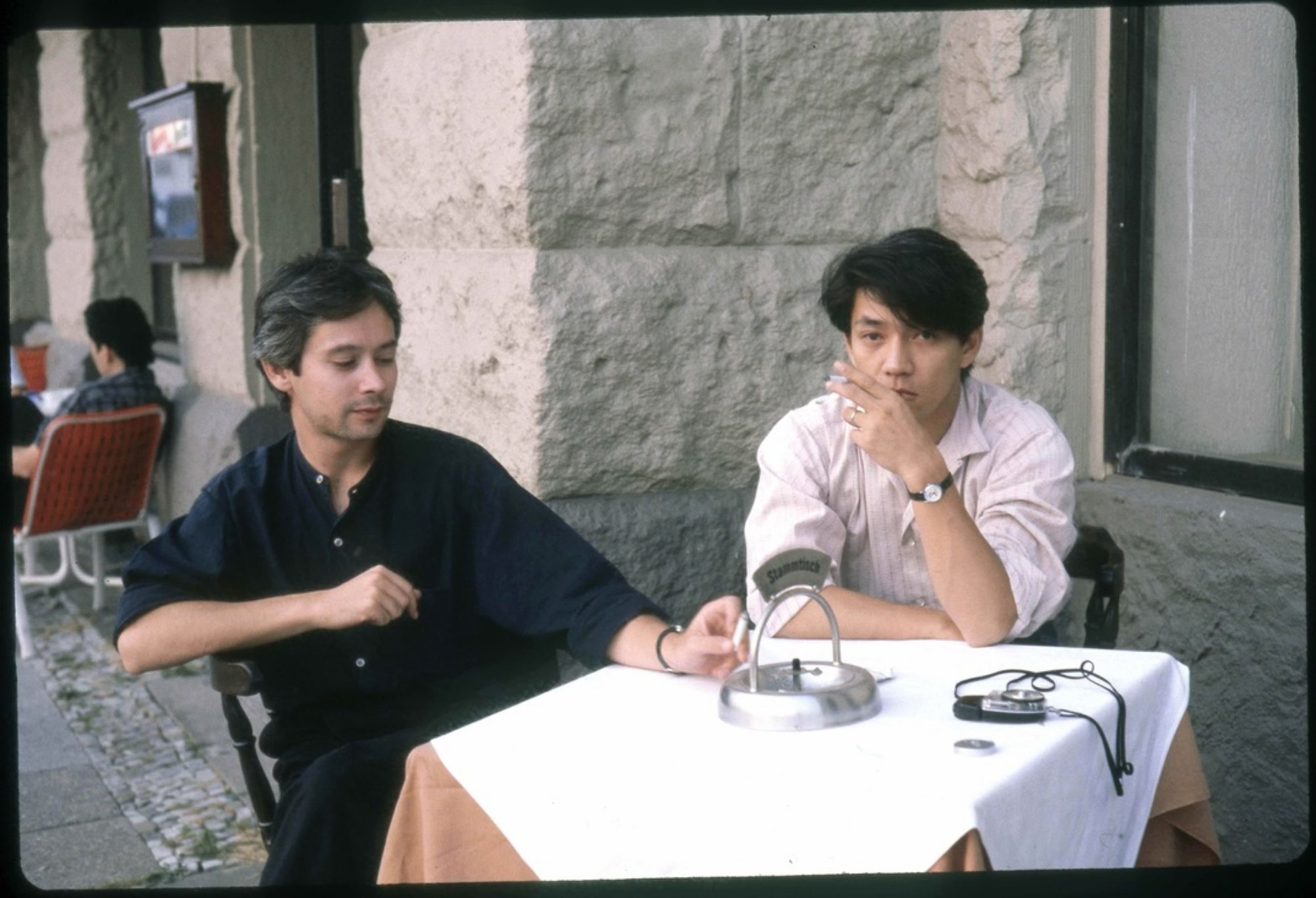
Around the same time, a friend who worked at a record shop Peter often went to called him up. A friend of his was making a record with one song in English. Could Peter help with the lyrics?
Peter: He didn’t say who his friend was, but it was Sakamoto Ryuichi, who I actually didn’t know at that time. I knew who Yellow Magic Orchestra were. I didn’t really like their music in the early days. It felt kind of disco-ish and kind of lightweight. It just wasn’t my taste in music. I knew Hosono Haruomi from his earlier days, when he was working solo, but I didn’t know who Sakamoto Ryuichi or Takahashi Yukihiro were.
Sakamoto was going to London to record part of the album, and Peter was going there on a business trip. They ended up on the same plane, which is where they were introduced. The lyrics were supposed to reach Peter in London, but that didn’t happen, so after he got back to Japan they were sent to him by telex.
Peter: I still hadn’t heard the song. I had no idea what the music was like. So I just had these words to work with, and I did the best I could and sent them back. The first time I heard the song was when the record came out, which was in the summer of 1980.
Then Ryuichi’s manager called me up and said, “We have to organise payment for your work. Can we get together?” The payment was organised within seconds, probably 10 or 20 seconds. And then he said, “Actually, there’s something else I’d like to talk about. Would you be interested in coming to work for our office?”
The album was Sakamoto’s solo record B-2 Unit, and the song was “Thatness and Thereness.” Peter was about to leave the publishing company anyway.
Peter: Originally, I hadn’t been interested in Yellow Magic Orchestra. But since then, they put out a different record, which I did find a little interesting. And I thought, okay, this may be fun. So let’s just give it a try, see how it goes. It ended up going very well. I enjoyed the work, and it led to all kinds of other opportunities.
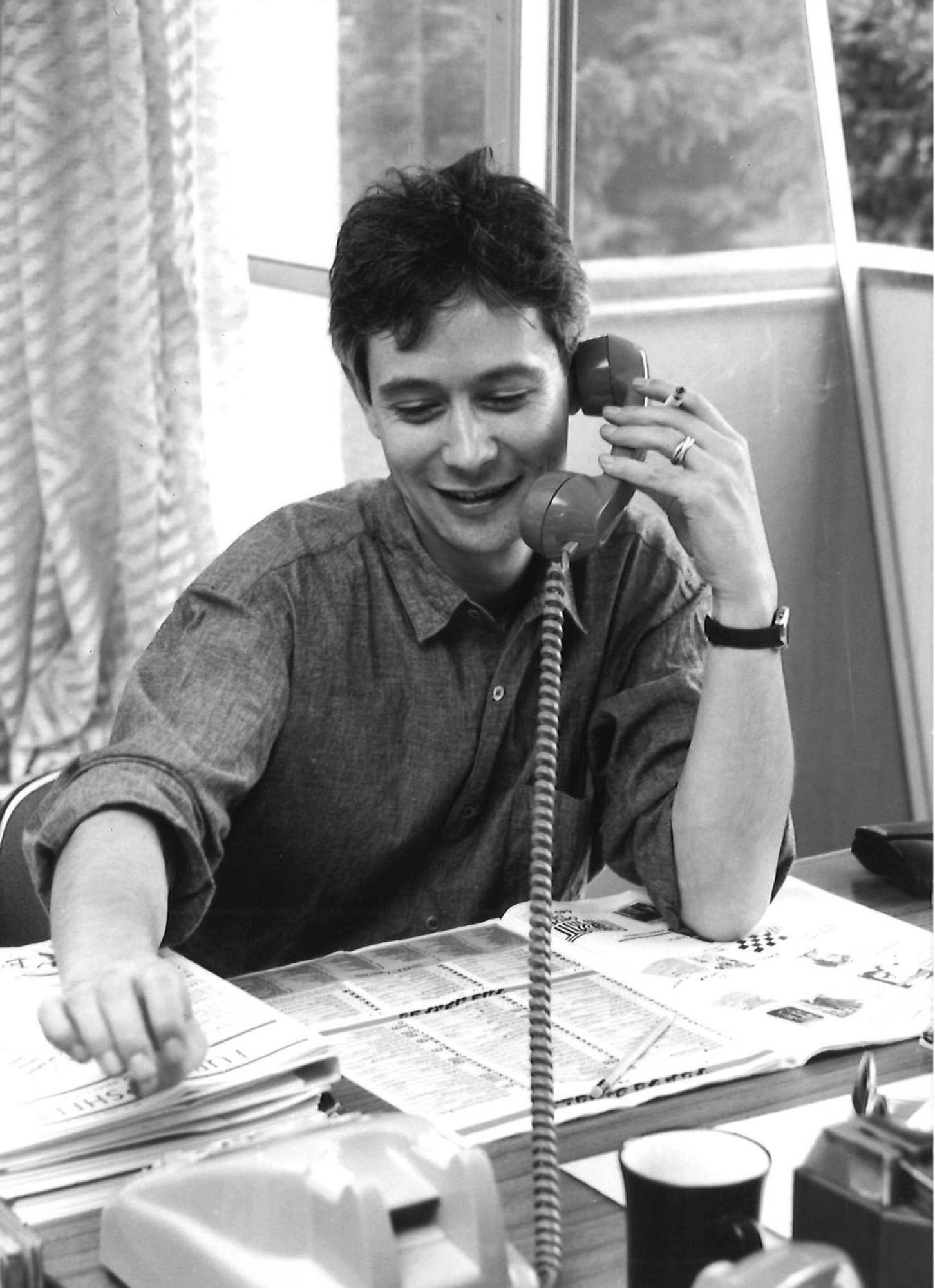
He spent about five or six years in the band’s management office, doing anything for them that required a knowledge of English.
Q: That’s a lot of things falling into place at the same time.
Peter: Yeah, this seems to be what happens in my life. Perhaps it’s because I have this attitude of, I don’t know how it’s going to go, but let’s give it a try. If it doesn’t work out, I can do something else. I’ve done that repeatedly, and almost every time it’s worked out well and has led to something else. So why change my modus operandi now?
“No Way”: Hosting 60 Minutes in Japan for 26 Years
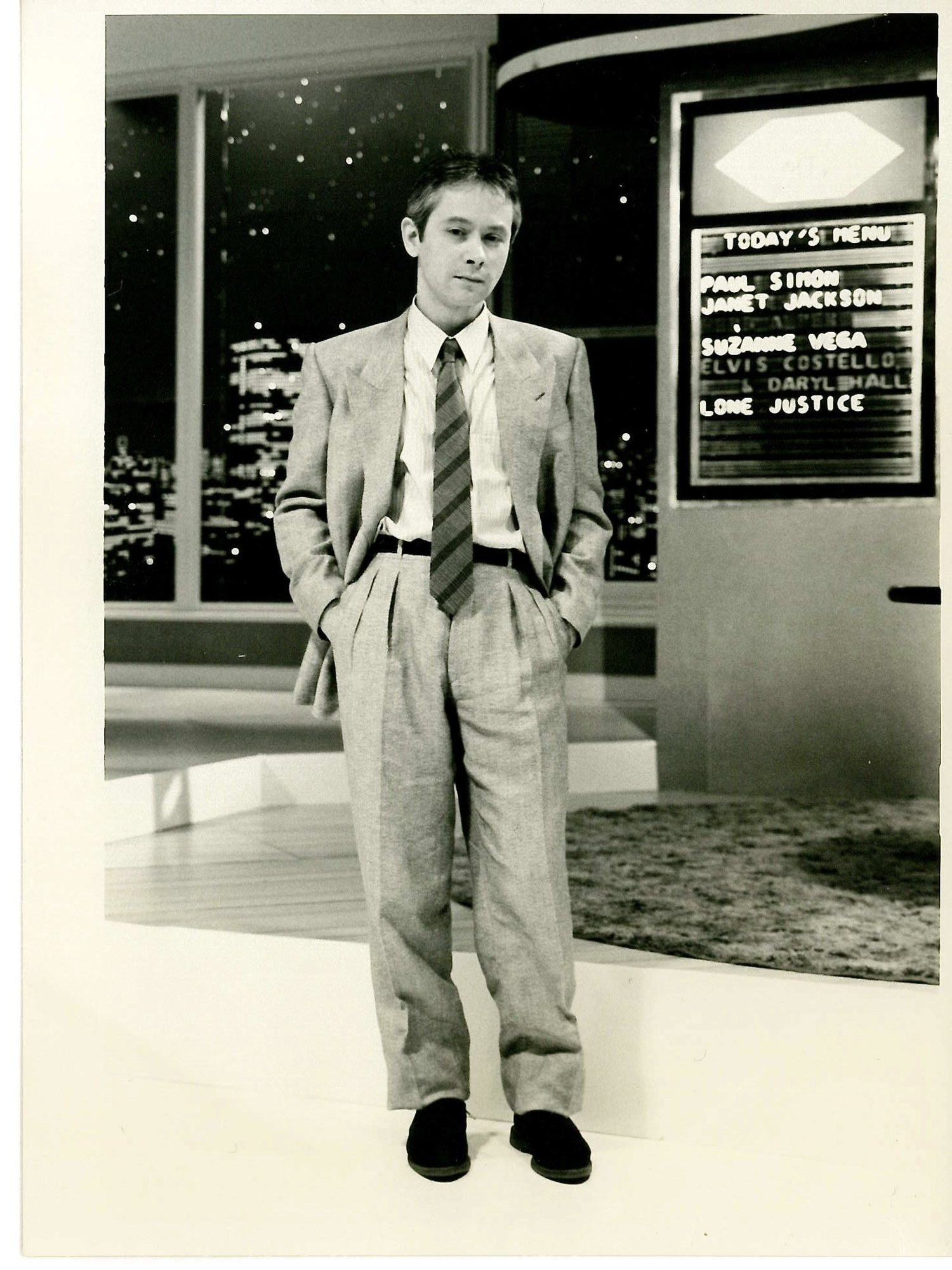
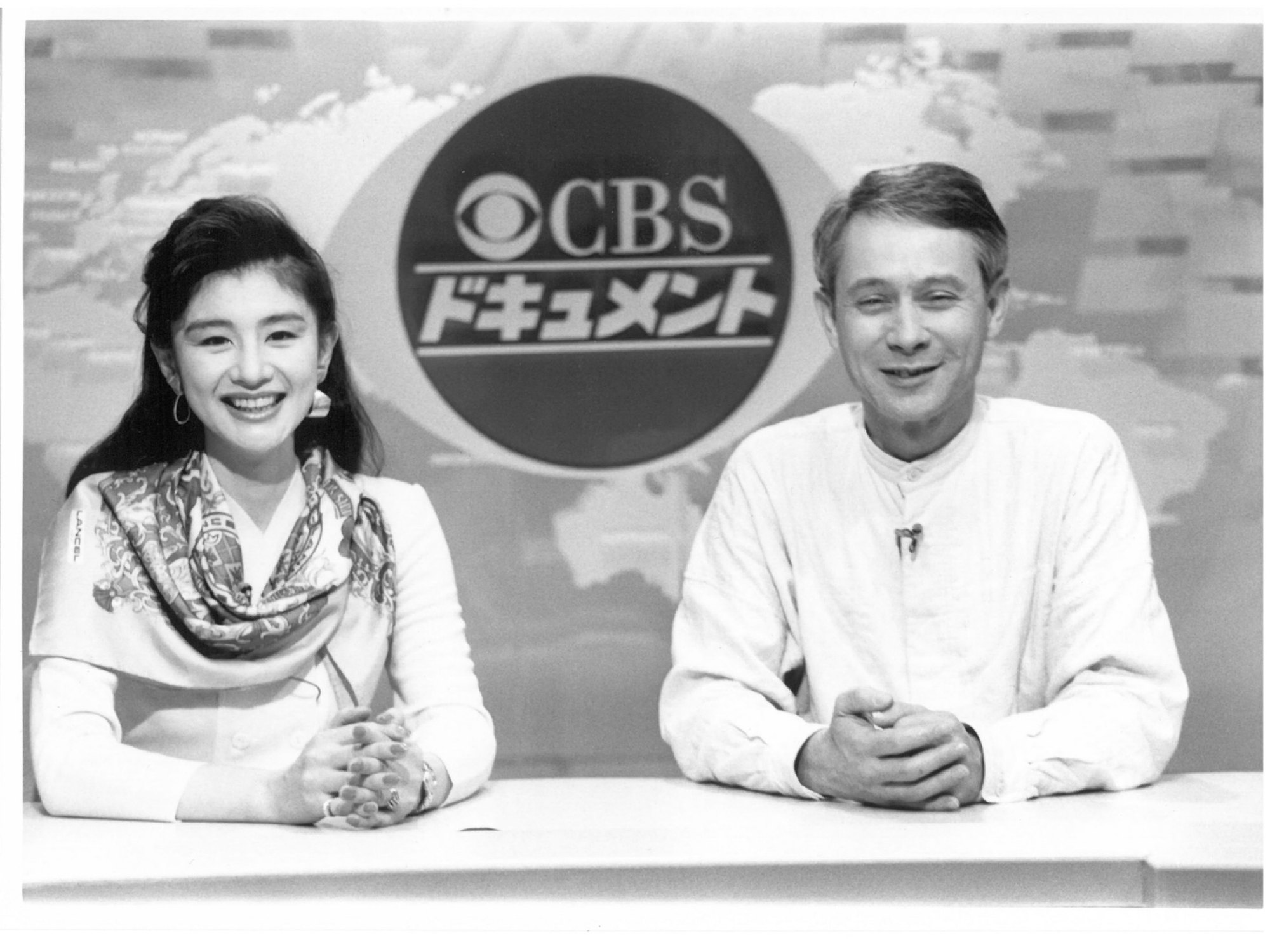
In the 1980s, Peter was asked to host a music video program on television, and in 1986 he went completely freelance. His first job that had nothing to do with music came through that show. One viewer had shown it to his father, who worked in a different department of the same TV station and only liked classical music. A year or two later, the father was putting together a current affairs program built on American short documentaries, with Japanese commentary, and he asked Peter to host it.
Peter: I said, “No way. I’ve never done anything with current affairs. I don’t know a lot about politics or economics.” So he said, “Well, at least here’s a video of some of the material. Have a look at it and tell me what you think.” I took the video home, and the material was really good. It was from an American program called 60 Minutes.
I thought, wow, this is really good. I still don’t think I’m going to be able to do this job. But if I take this on, I’ll be able to see this stuff every week, and it’ll just be really educational for me. So even if he decides to fire me after a few months, I don’t think I have anything to lose. So I said, okay, I’ll give it a try.
I ended up doing that program for 26 years. He told me later on that he’d seen the earlier program I was doing, and he didn’t like the music, but he liked the way that my Japanese didn’t sound foreign. That was what made him remember me, I guess. It’s funny how these things work out.
Q: What’s the harshest reaction you’ve ever gotten?
Peter: There was a German guy, a journalist actually, who had children in the same school as my own kids. He came up to me once in the playground and said, “I like everything about your show, except the commentary.”
He himself was a journalist, and being a European, probably had a fairly cynical view of America, perhaps. I definitely wasn’t spouting pro-American views on everything. But perhaps he thought the things I said were a little simplistic, which is probably fair. I’m not a journalist. I’m not a specialist in politics. His was probably the only time anybody ever said that to me. There may be other people who have thought that. But I did find that harsh. On the other hand, sometimes you need those comments to make you aware that, okay, there are people that don’t appreciate what you do.
2011: The Song Listeners Kept Requesting
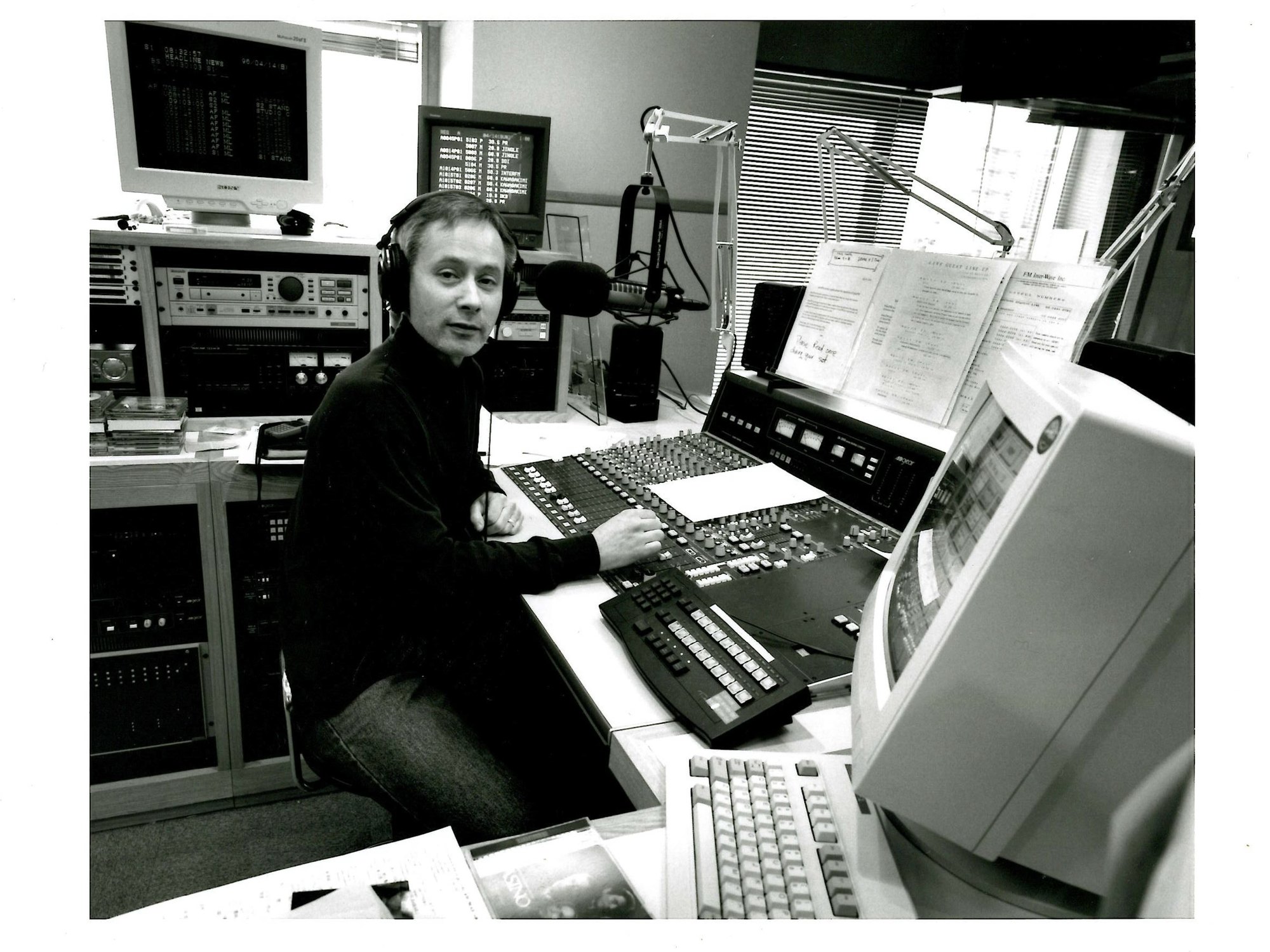
In March 2011, Peter was doing a live morning program on the radio. After the nuclear disaster in Fukushima, a lot of people were very worried about fallout, and he got a lot of requests for one song: Imawano Kiyoshiro’s cover of “Love Me Tender” with RC Succession. Years before, Kiyoshiro had made a whole album of anti-nuclear songs. His record company at the time refused to release it, and he got out of his contract and put the album out with a different company.
Peter: I actually wasn’t a fan of that group, but I got so many requests from listeners that I thought, okay, maybe I will. I looked at the lyrics, and there was a line in it about it not being safe to drink milk. So I ran it by the station manager, just to make sure I wasn’t going to get into some kind of problem for playing it. And he said, “I think you shouldn’t play this.” It may lead to false rumors. I think that’s what he said in Japanese: fūhyō higai.
There was a lot of talk about that sort of stuff at the time. I could see that this was going to be a battle I probably wouldn’t win. On the other hand, I felt it wasn’t fair to the listeners just to ignore all the requests. So I said, “I got a lot of requests for this song, but I can’t play it, because the station have told me it’s for these reasons. Please bear with me.” And people did understand.
Somebody came back to me and said, “Okay, there’s this other song by the same group. How about this one?” I think it was “Summertime Blues.” Again, it had slightly altered lyrics, but nothing the station could object to. So I ran it by the station manager again, and he said, “Okay, I can’t object to this. Go ahead.”
Normally, I would never ever do this. It was only because this was a very extraordinary situation that I even did that. Normally, any song I want to play, I just play. I’ve played songs with controversial lyrics as well sometimes, and nobody has ever made any issue of it.
Where He’d Send a Friend: Obihiro and the Big Sky
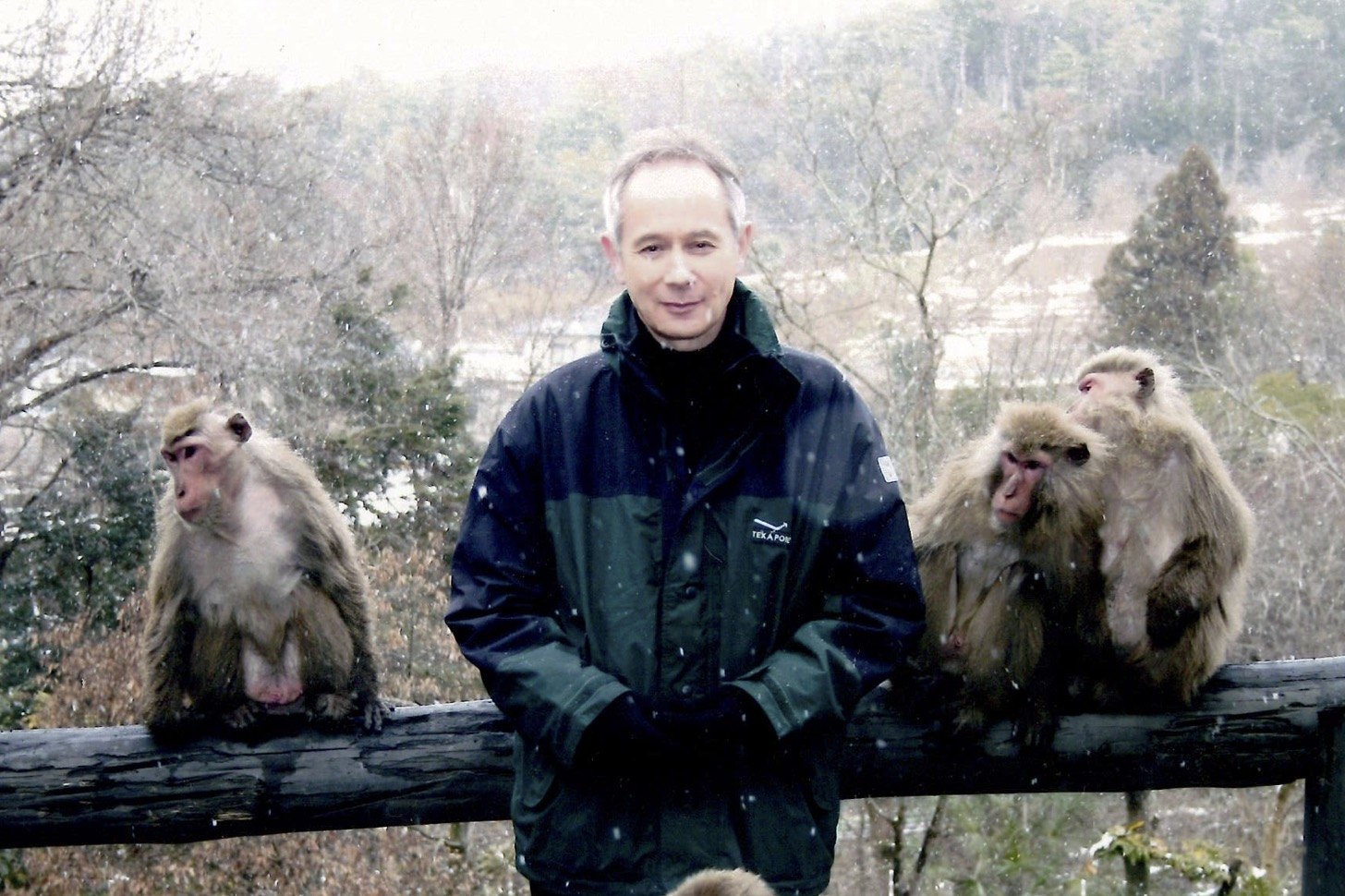
Q: Of all the places Japanology has taken you, where would you send a good friend who has one day outside Tokyo?
Peter: I couldn’t possibly answer that. We’ve been doing Japanology for 23 years now, and I’ve been all over Japan shooting episodes of the show. I wouldn’t send them to places like Kyoto, because it’s going to be so full of tourists. There’s lots of great things to see there, but I’d probably recommend somewhere that’s a little bit more out of the way.
Q: And if they had more time to get there?
Peter: It’s going to take a while to get there. I might send them to Obihiro in Hokkaido. I go there every summer to do a DJ gig, and it’s just a really nice, chilled-out place. There’s wonderful scenery around there. It’s in the middle of a very flat area, the Tokachi Plain, and there are mountains in the distance. Because it’s so flat, it has a big sky, and there’s so few places in this country where you can really experience that big sky.
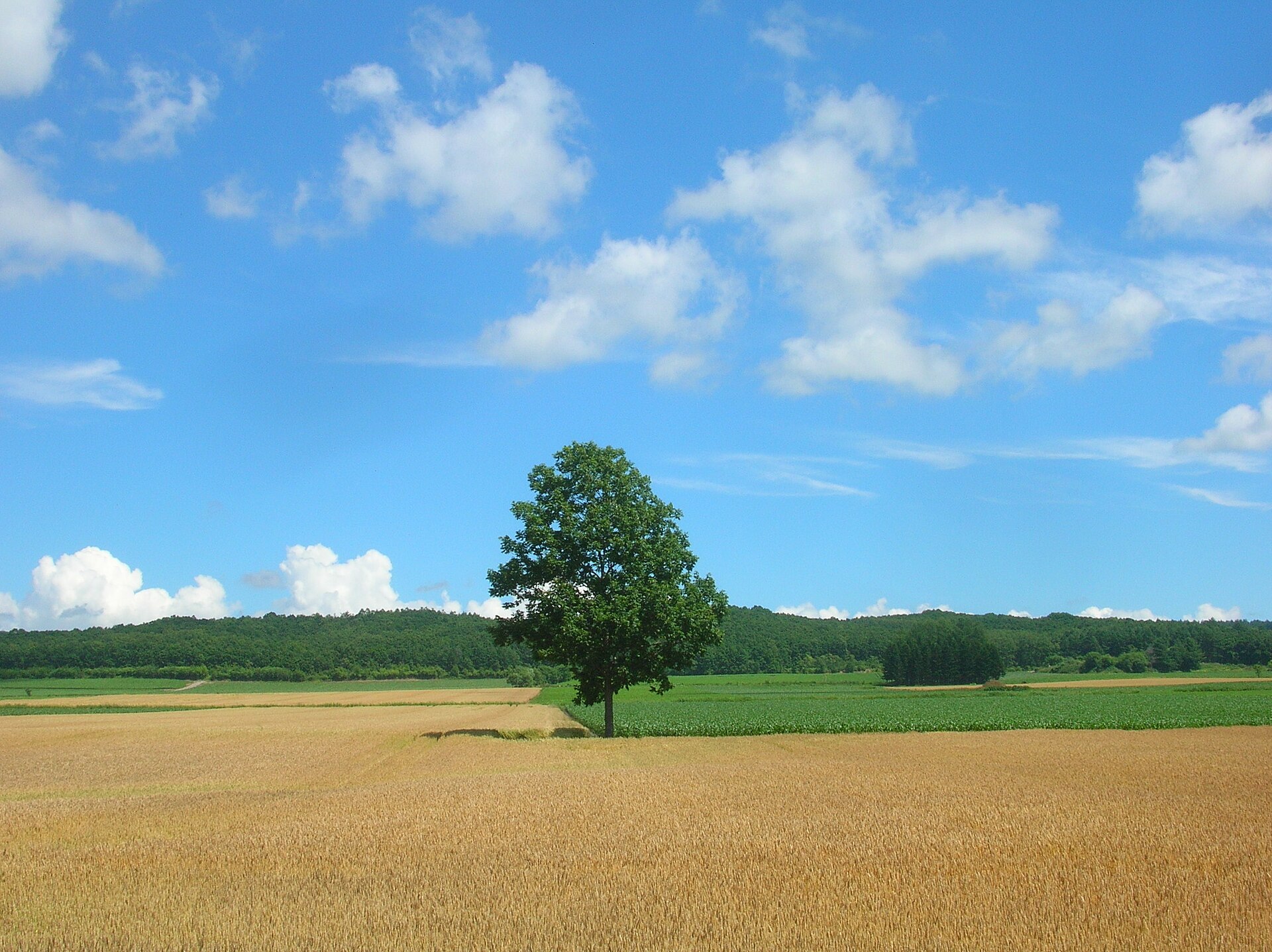
Peter: I just like the town too. It’s a cool place.
Japanese Music That Could Only Exist in Japan
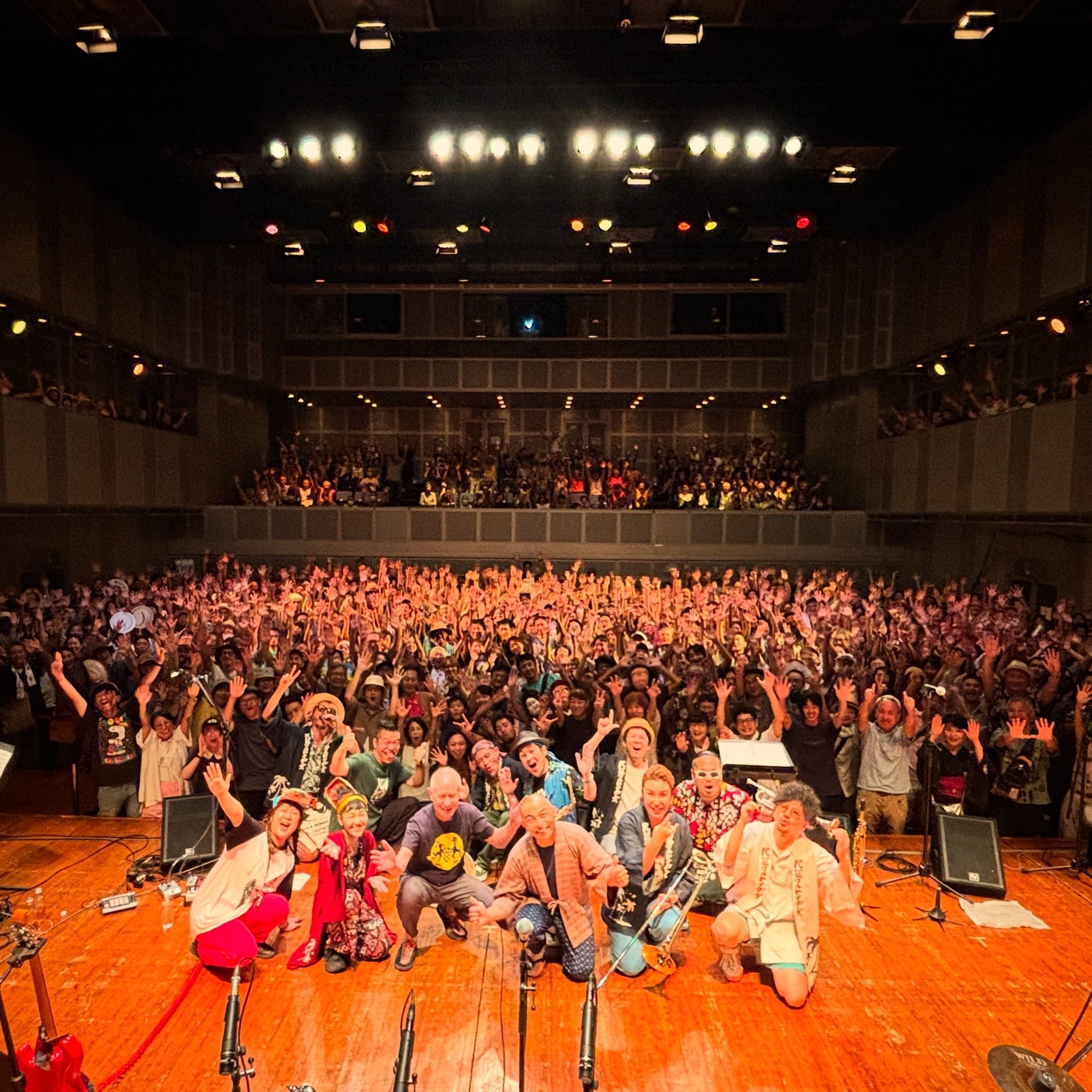
Q: If someone had never been to Japan, which Japanese song would you play them first?
Peter: I don’t know about songs. I would play them certain bands, maybe, or acts. The Japanese music that I tend to find interesting generally has something kind of traditional about it. I guess in that way I’m a typical foreigner: if I’m going to listen to some Japanese music, I want it to be something that could only exist in Japan.
For example, there is a band called the Minyo Crusaders, who started out kind of semi-pro about 10 years ago. They play traditional Japanese folk songs from different parts of the country, but the arrangements are like salsa and afrobeat and reggae, and they’re all kind of tropical sounding. The songs themselves are minyo, sung authentically as folk songs. They’ve become quite popular on the festival circuit around Europe. I know they did a short tour on the eastern seaboard of the US this year as well. So they’re getting known a little bit outside Japan. They’re not that well known here.
Or there’s an island called Amami, which belongs to Kagoshima Prefecture in Kyushu, but it’s halfway between Kyushu and Okinawa. There’s a singer in Amami called Sato Anna, and she sings traditional Amami songs. The first time I heard her music, she was working with a drummer, and he was using hip-hop beats. So she had these very traditional Japanese folk songs with her own shamisen backing and a hip-hop drummer, which is totally not what you’re expecting to hear, but it really worked well.
Why Peter Barakan Keeps AI Out of His Life
Q: Do you feel any impact of AI in your work around music?
Peter: I think we all feel the impact of AI in our lives. I try to minimize the impact of AI as much as I can. I’ve changed my Google settings so that the AI thing doesn’t come up unless I want it to. I find AI scary. I think it can change all of our lives far too much. Nobody really knows what the potential is for the destructive element in AI, and I just want to keep it out of my life as much as I can.
There are a lot of songs now that are on the net that were AI created, and I got fooled one time, actually. Somebody played me [one]. I said, “Oh, that sounds quite good.” And then I realized later, oh my God, it’s AI. But once you know that it’s made by a machine, I just found that a total turn-off, personally. There are people who don’t find that. They will enjoy it as much as music made by people. But I guess my take on it is that it’s too easy.
I still use Twitter. I refuse to call it anything else. But my use of it has decreased somewhat over the last few weeks, because I’ve been fooled too many times by short videos or photographs that I thought were real and turned out to be AI created. When it gets to the point where you don’t know what’s real and what’s not, I kind of turn off.
I guess I have an attitude that to create something, whether it’s music or writing or painting or whatever, we use our senses, which means we’re using our brains. Once you stop using your brain and you just accept things that have been created by a machine, then your brain is going to lose its computing power. They say use it or lose it, and I think that applies to the brain as well. So I prefer to try and use mine as much as possible.
English Humor Doesn’t Travel
Q: What did moving to Japan teach you about yourself? You’ve often talked about language.
Peter: It’s more about humor than language, perhaps, but obviously humor has a lot to do with language. I grew up in London, and I was born in the 1950s. Totally different society from what we have now. I learned to laugh at things which English people laugh at, and English humor can be perceived as being mean-spirited by people from other countries, I think. Among English people themselves, it’s all taken for granted. Anything is up for laughs. Nothing is taboo, at least it didn’t used to be.
Then I came to Japan in the 1970s. Totally different society. I would just say things assuming that people would laugh in the same way as English people talk among themselves. People didn’t laugh. They didn’t understand. And when I explained what I was trying to do, they would kind of think it was mean. So I realized, oh, okay, English humor isn’t going over in Japan. After a while, I guess I just stopped trying to tell jokes.
Actually, even not necessarily with Japanese people: one of the first friends I had here was an American guy, and he would sometimes do kind of clumsy things. I would just tease him a little bit, in the way that, if he was English, he would have thought nothing of it. But one day he said to me, “If you’re going to keep making these remarks, we can’t be friends.” I had no idea that he would take offence at any of the things I said. If we’d both been English, [we’d] take the whole thing for granted. So I realized, okay, I’m going to have to temper my comments.
When I first started going out with my wife, a long, long time ago, she said things the same to me, like, you make these kind of sarcastic comments. It’s just in Japan that doesn’t work. People don’t understand it, and they think it’s mean. So I thought, okay, fair enough, I’ll just stop doing it. It was a bit of a shame. You grow up with a certain sense of humor, and those things don’t go away.
Even now, I will laugh at things that I laughed at when I was a kid, and they might be kind of ethnic jokes. They’re not meant in a sadistic kind of way or anything like that. It’s just that those things are funny. At least they can be. But in this day and age, especially after political correctness, which obviously did go too far. The whole conservative backlash happened as a result of political correctness going too far. On the other hand, there was a reason why political correctness came about. And the whole thing with colonialism, which when I was a kid, we didn’t even think about. You just took it for granted. But then when you grow up and you learn the dark side of the history of the country you grew up in, you see the world in a different way, and you have to start thinking, okay, these jokes that I found funny when I was a kid aren’t funny to a lot of other people. So maybe we have to stop telling them.
Kusare-en: Peter Barakan’s Love-Hate Relationship with Tokyo
Q: What is your favorite Japanese word or concept? You’ve mentioned kusare-en before.
Peter: The reason I said that was that I kind of have a love-hate relationship with Tokyo. Not with Japan so much, but with Tokyo. I’ve lived here for 52 years, and I’ve said that half of my relationship with Tokyo is sumeba miyako, which I’m not quite sure how you translate into English. It’s a bit like “when in Rome,” but again, it’s a bit different. It’s like when you live in a place, it becomes your home.
On the other hand, there’s another word, kusare-en, which means you’ve been with somebody or somewhere for so long that you know each other inside out, and at times you hate each other’s guts, but you survive anyway. So there are elements of both of those in my relationship with Tokyo.
I wouldn’t say either of them are my favorite Japanese word, if I have one.
The Train Announcements He Would Rewrite for Free
Q: There’s a lot of English around Tokyo, and you’ve worked in broadcasting for decades. What is one announcement you would like to correct?
Peter: So many. The most stressful things in my daily life are riding trains or getting on escalators and things like that. There are always announcements. When I ride the trains, what I like to do is read. I have very little time in my life to read, and the announcements are so annoying because they interrupt your concentration. Now, the Japanese ones, okay, fair enough. They have to have them, but I don’t think they need so many. The English ones are just so awful. The intonation is bad. The grammar is bad. They’re badly written. They’re just intolerable, most of them.
There are some that are better than others. Actually, the Shinkansen JR East ones, the ones going north, they’re okay. Just about any other train, I just really find stressful. And especially, I’ve been using the Tokyu trains. I live on the Tōyoko Line. I’ve been using the Tokyu trains for 45 years now, and they’re awful. The English announcements are absolutely intolerable. I’ve tried to get somebody to introduce me to somebody high up in the Tokyu company, so I can just explain to them, you really, really need to re-record all of these. And if you want me to do it, I’ll do it for free. And I don’t even have to do it myself. I will write the script, re-write the scripts, and produce them if you want, and I’ll do it for free. Because it’s just so embarrassing. And it’s not just Tokyu. There’s a lot of others as well. It just happens that I use those trains every day.
If you go to Shibuya and you get onto the escalator in the Hikarie building, what is it the woman says? “Hold on to the handrail. Do not place your body outside.” Give me a break. I don’t know who wrote that script. Who supervised it? It makes absolutely no sense.
There are a lot of announcements that, even if you say them in Japanese, in English, they don’t need to be said in the first place. Because English people don’t require that kind of babying. It’s almost like you’re treating people like they’re five-year-olds. And I think Japanese people are maybe so used to being told these things day in, day out, that they don’t think much about it anymore. But I think the average English speaker is going to say, wait a minute, I know that. You don’t have to tell me that. And I really, really wish that they would rethink that. And maybe it doesn’t have to be me. Just find a native English speaker who also speaks Japanese and can advise you on this stuff.
You can find Peter Barakan’s radio shows, events, and books on his official website at peterbarakan.net.
FAQ
Who is Peter Barakan?
Peter Barakan is a London-born broadcaster who has lived in Japan since 1974. He worked for a Japanese music publisher and then for Yellow Magic Orchestra’s management office before going freelance in 1986. He hosted the Japanese edition of 60 Minutes for 26 years and has presented Japanology on NHK World for 23 years.
How did Peter Barakan come to work with Yellow Magic Orchestra?
He helped with the English lyrics for “Thatness and Thereness” on Ryuichi Sakamoto’s 1980 solo album B-2 Unit. Sakamoto’s manager then asked him to come and work for the office, where he spent five or six years doing anything for the band that required a knowledge of English.
What does kusare-en mean?
In Peter’s words, kusare-en “means you’ve been with somebody or somewhere for so long that you know each other inside out, and at times you hate each other’s guts, but you survive anyway.” He uses it, together with sumeba miyako, to describe his relationship with Tokyo.
What Japanese music does Peter Barakan recommend?
Music that “could only exist in Japan,” such as the Minyo Crusaders, who play traditional Japanese folk songs with salsa, afrobeat, and reggae arrangements, and Amami singer Sato Anna.
Read Next
Want to hear more stories from people living in Japan? Explore more conversations in Humans of Japan.
Share