
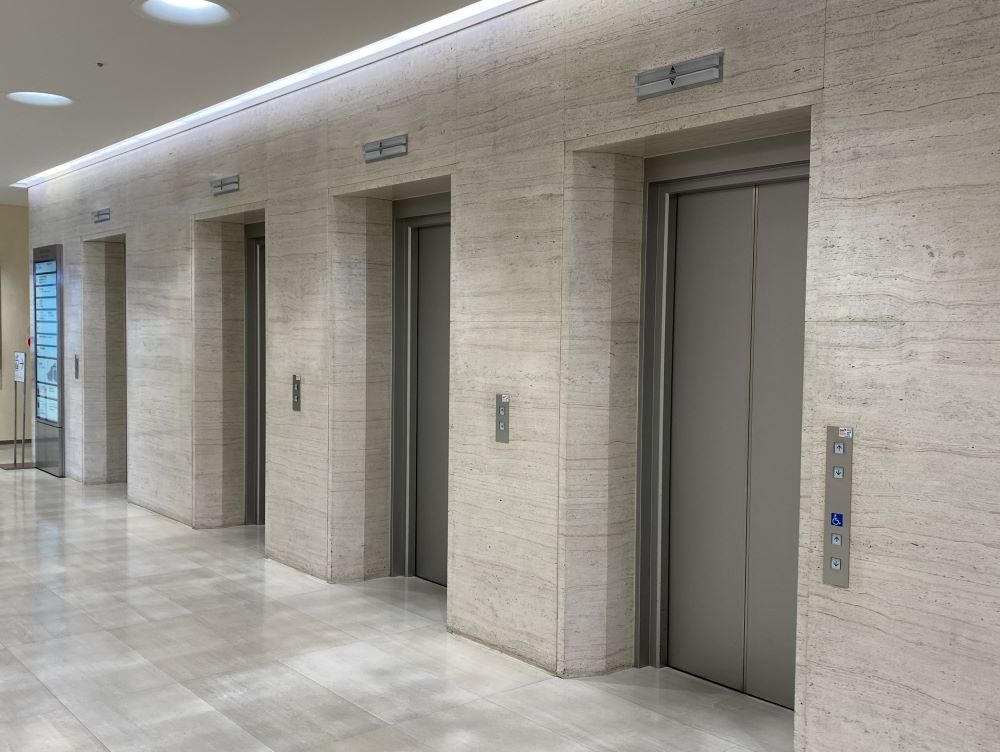
Elevator etiquette in Japan is a set of unwritten rules about who works the buttons, where each person stands and how quietly everyone rides. The person closest to the control panel acts as the operator, holding the open button (開) while others get on and off and pressing close (閉) once everyone is inside. In business settings, guests and senior colleagues are guided to the back of the car.
| Door buttons | 開 opens the doors and 閉 closes them. Holding 開 keeps the doors open |
|---|---|
| Who works the buttons | The person standing closest to the control panel |
| Guests and senior staff | Guided to the back of the car in business settings |
| Talking | Kept to a minimum, especially in business and public settings |
| Wrong floor | Press the same floor button twice to cancel it. Not every model has the function |
| When it is crowded | Give way to elderly passengers and people with children |
Checked in October 2026 against mebs.co.jp, n-elekyo.or.jp.
Locals follow this etiquette almost instinctively. While most travelers won’t need to worry too much about these details, this guide is for those who want to dive deeper into Japanese culture or understand business etiquette in Japan.
If that sounds like you, keep reading to learn the unspoken rules and tips for handling common situations.
The Role of the Elevator Operator
In Japan, it’s common for the person closest to the control panel to take on the role of the “operator.” This means they are responsible for opening and closing the doors, selecting floors, and ensuring everyone is accommodated.
If you find yourself in this position, don’t panic, just follow these simple steps:
- Hold the Door for Others: Press and hold the “open” button (開) to keep the doors open as people enter or exit.
- Close the Door Gently: Once everyone is inside, press the “close” button (閉). Avoid rushing or slamming the doors shut.
Standing Positions Matter
Japanese elevators are often compact, so space is limited. Where you stand can make a difference:
- Priority for Exiting: Those getting off first should stand near the door. If you’re staying in the elevator, stand to the side of the doors when they open to let others exit easily. If the elevator becomes crowded, step aside or temporarily exit to allow those near the door to leave without obstruction.
- Move to the Back: If you’re traveling to a higher floor, step toward the back to make room for others.
- Keep It Quiet: Conversations in elevators are typically kept to a minimum, especially in business or public settings. Silence is considered polite in Japan and allows everyone to travel comfortably.
Buttons and Common Mistakes
Operating elevator buttons in Japan comes with a few tricks and tips:
- Cancel a Selection: Accidentally pressed the wrong floor? No problem. Most Japanese elevators allow you to cancel a floor selection by double-clicking or triple-clicking the button.
- Press Responsibly: Avoid touching buttons unnecessarily. Overcrowding the control panel can confuse the operator or delay the elevator.
- Emergency Button: Only press the emergency button in true emergencies. It alerts building staff or emergency services.
Priority for Elderly and Disabled
If someone with mobility challenges, the elderly, or parents with strollers enter, it’s customary to step aside and give them priority access.
Many elevators have designated spaces for wheelchairs or strollers, often near the control panel.
Exiting the Elevator
When leaving the elevator, there’s no need to rush.
However, if you’re at the back, it’s polite to say sumimasen (excuse me) as you navigate past others. Hold the door open for those exiting after you, especially if you’re near the controls.
Business and Formal Settings
In professional environments, elevators are not just a means of transport. They’re a subtle stage for hierarchy and etiquette. Here’s how it works:
Elevator Hierarchy: Who Stands Where?
The position you take in an elevator can reflect your role or status in a group. Important guests or senior members are usually guided to the back of the elevator, which is considered the most prestigious spot. The person nearest to the control panel, often a junior team member or host, takes on the role of managing the elevator. They are responsible for pressing the buttons and ensuring everyone exits smoothly.
For example:
- Back Center: Reserved for the highest-ranking individual or guest.
- Front Near the Door: Typically for the junior staff or host who can easily operate the buttons and step aside for others to exit.
If you’re in doubt, let others choose their positions first, and avoid rushing to the back unless you’re explicitly invited.
Greetings and Acknowledgements
In Japan, even in the confined space of an elevator, formalities matter. When entering the elevator, a slight bow or polite greeting (“Otsukaresama desu” or “Shitsurei shimasu”) is often exchanged, especially in business contexts.
Similarly, when exiting the elevator, it’s common to bow again slightly and offer a polite acknowledgment, such as “Arigatou gozaimashita.”
If you’re accompanying a group, you might also hear junior members express thanks on behalf of everyone as the elevator ride ends. This practice showcases respect and attentiveness to hierarchy.
Pro Tip: Timing is Key
If you’re the one operating the control panel, it’s polite to hold the “door open” button to prioritize others when they are entering or exiting. Let your group or senior members step in or out first before following suit.
While this custom is less strictly followed nowadays and many people don’t pay much attention to it, it’s still observed in some settings. Keeping it in mind might be helpful, even if it feels tedious at times. It’s a small gesture that can go a long way.
Conclusion: Mastering the Elevator Dance
Japanese elevator etiquette might seem intricate, but it’s all about being mindful of others. By holding the door, standing in the right spot, and knowing how to cancel a floor selection, you’ll navigate elevators like a pro.
Next time you step into a Japanese elevator, remember these tips to ensure a smooth and polite ride!
Frequently Asked Questions
What do 開 and 閉 mean on Japanese elevator buttons?
On Japanese elevator buttons, 開 means open and 閉 means close. Holding 開 keeps the doors open for as long as it is pressed, which is how the person standing by the panel lets others get on and off. Mitsubishi’s AXIEZ-LINKs manual lists a recorded announcement for its door-hold button, “Doa ga shimarimasu” (ドアが閉まります), meaning the doors will close.
How do you cancel a wrong floor in a Japanese elevator?
A wrong floor can be canceled on many Japanese elevators by pressing the same floor button twice in a row. Mitsubishi, Hitachi and Toshiba each document this double press, and Mitsubishi’s AXIEZ-LINKs owner manual says to press twice quickly. Not every model has the function. Toshiba says it is fitted only on some models and that methods differ between makers.
Why do Japanese elevators have mirrors?
Mirrors in Japanese elevators are there for wheelchair users. The Japan Elevator Association explains that a wheelchair user who cannot turn around inside the car uses the mirror to check behind when backing out. Elevators equipped for wheelchairs also have a lower button panel. Mitsubishi says pressing a button on that panel keeps the doors open longer and closes them more slowly.
What should you do in a Japanese elevator during an earthquake?
In a Japanese elevator during an earthquake, press every floor button and get off at the first floor where the car stops, the Japan Elevator Association advises. Passengers who are trapped inside should use the intercom to report the situation and wait for rescue. Trying to force a way out is dangerous. Emergency lighting comes on if the power fails.
Share