
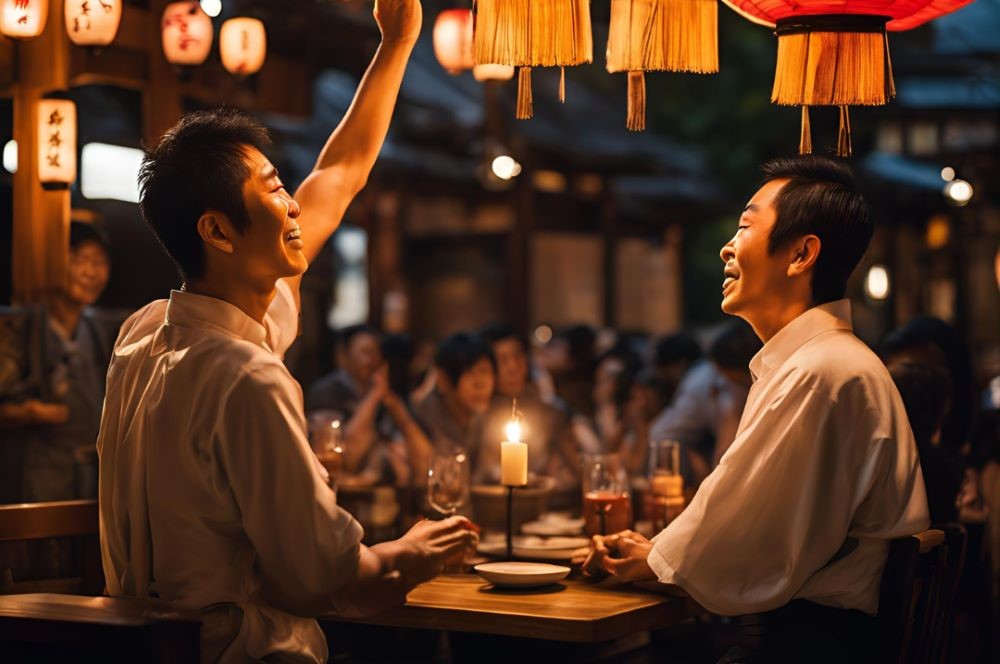
Ordering food in Japanese is a short exchange of set phrases used in restaurants across Japan. Three phrases cover the basics: “sumimasen” (excuse me) to call a server, “[dish name] wo kudasai” (please give me) to order, and “okaikei onegaishimasu” (check, please) to ask for the bill. In casual places such as izakayas and ramen shops, calling out “sumimasen” is normal and not rude.
| Call a server | Sumimasen (すみません), meaning “excuse me” |
|---|---|
| Order a dish | [Dish name] wo kudasai (〇〇をください), meaning “please give me [dish name]” |
| Ask for water | Mizu wo kudasai, meaning “please give me water” |
| Ask for a smaller portion | Sukuname de onegaishimasu, meaning “less, please”, for rice or noodles |
| Ask for the bill | Okaikei onegaishimasu, meaning “check, please” |
| Ask for separate bills | Betsubetsu de onegaishimasu, to split the bill into separate checks |
Japanese restaurant culture is generally very polite, and understanding the key phrases, along with some cultural customs, will help you navigate the experience smoothly. Here are some essential phrases and tips for ordering food in Japan.
Calling a Server
“Sumimasen” (すみません)
In many restaurants, especially casual ones, it’s common to call out “sumimasen” (すみません), which means “excuse me” or “pardon me,” to get a server’s attention. This practice is perfectly acceptable and not considered rude. Don’t hesitate to politely call out “sumimasen” when you’re ready to order.
*Cultural Tip: In some other countries, servers may approach you after noticing eye contact, but in Japan, they’re more accustomed to being called out by voice. This means that waiting silently may cause delays as the server might not realize you need assistance.
Ordering Food
“XXX Wo Kudasai” (〇〇をください)
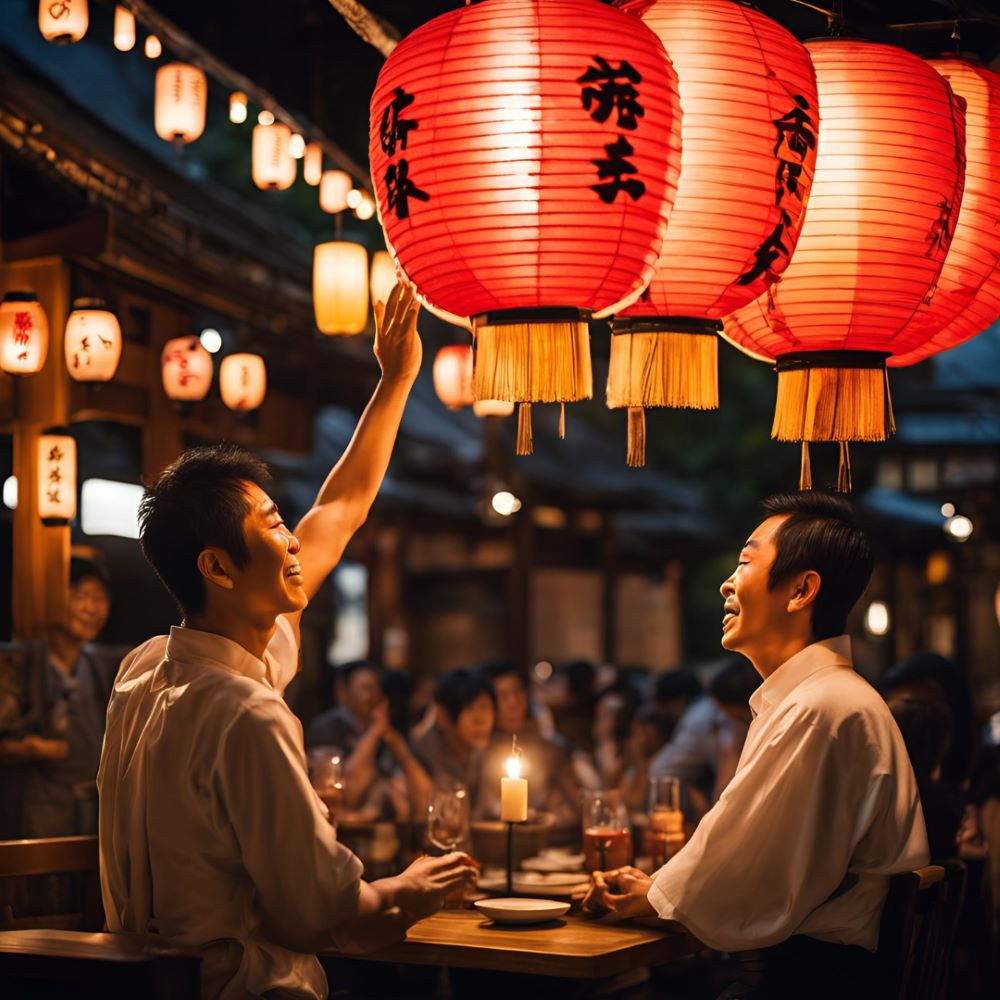
Once you have the server’s attention, here are some helpful phrases for ordering:
- “[Dish name] Wo Kudasai”: This means “Please give me [dish name].” For example, if you want to order ramen, you can say “Ramen Wo Kudasai.”
- “[Drink name] Wo Onegaishimasu”: A more formal way to request something, often used for drinks. For example, “Beer Wo Onegaishimasu” to order a beer.
- “Mizu Wo Kudasai”: “Please give me water.” Most Japanese restaurants will serve water for free when you sit down, but you can ask for it if needed, or ask for another glass.
Customizing Your Order
While Japanese restaurants typically offer set menu items with limited customization, there are a few phrases that can help if you need to make small adjustments or requests.
- “Sukuname De Onegaishimasu”: “Less, please.” If you prefer a smaller portion, especially with rice or noodles, this phrase is handy.
- “Okawari Onegaishimasu”: “Another serving, please.” Perfect for ordering an additional round of rice, drinks, or even side dishes.
- “Atatakai Nomimono Ga Arimasu Ka?”: “Do you have any hot drinks?” Especially helpful in winter when you might want something warm like tea.
- “Kore Wa Nan Desu Ka?”: “What is this?” A simple but very useful phrase for unfamiliar dishes.
*However, ‘please give me water,’ ‘do you have any hot drinks,’ and ‘what is this?’ are phrases that most Japanese people will understand in English.
Expressing Gratitude
“Arigatou Gozaimasu” (ありがとうございます)
After placing your order, it’s polite to say “Arigatou Gozaimasu”, which means “thank you.” This is a simple way to show appreciation.
Asking for the Check
When you’re finished with your meal and ready to pay, you can say:
- “Okaikei onegaishimasu”: “Check, please.” You can also make a gesture like drawing a rectangle in the air, which is widely understood as asking for the bill.
- “Betsubetsu De Onegaishimasu”: If you’re splitting the bill, say this to indicate you want separate checks.
Additional Cultural Notes
In high-end restaurants, calling the server by voice might be considered inappropriate, and instead, you can wait for them to approach. However, in casual settings such as izakayas or ramen shops, it’s entirely normal to call out “sumimasen” to get the server’s attention.
While tipping is not customary in Japan, polite language and following these simple customs go a long way in ensuring a positive dining experience.
By familiarizing yourself with these key phrases and practices, you’ll find dining in Japan a smooth and enjoyable experience!
Frequently Asked Questions
How do you say less rice in Japanese?
Less rice in Japanese is “gohan sukuname” (ご飯少なめ). The full request is “gohan wa sukuname de onegaishimasu” (ご飯は少なめでお願いします), or “less rice, please”, the wording Akita Prefecture uses as an example in its advice on ordering only what you can finish. “Gohan” means cooked rice. “Sukuname de onegaishimasu” alone means “less, please” and also works for noodles.
How do you ask for water in a Japanese restaurant?
Water in a Japanese restaurant is requested with “mizu wo kudasai”, which means “please give me water”. The Japan National Tourism Organization says most restaurants offer tap water for no extra charge and advises visitors to ask the staff. For another glass, “okawari onegaishimasu” means “another serving, please” and is used for rice, drinks and side dishes.
How do you ask for an English menu in Japanese?
An English menu is requested in Japanese with “Eigo no menyuu wa arimasu ka” (英語のメニューはありますか), which asks whether the restaurant has one. The Japan National Tourism Organization prints this question in English and Japanese in its Tourist’s Language Handbook, so travelers can also point to it.
Is it wo kudasai or o kudasai?
“Wo kudasai” and “o kudasai” are two spellings of the same Japanese phrase, をください, meaning “please give me”. The particle を is typed “wo” on a keyboard, but standard Japanese treats it as the same sound as “o”. Japan’s 2025 Cabinet notification on romanization writes the particle as “o”, and the Japan National Tourism Organization’s phrase handbook prints “o kudasai”.
Share