
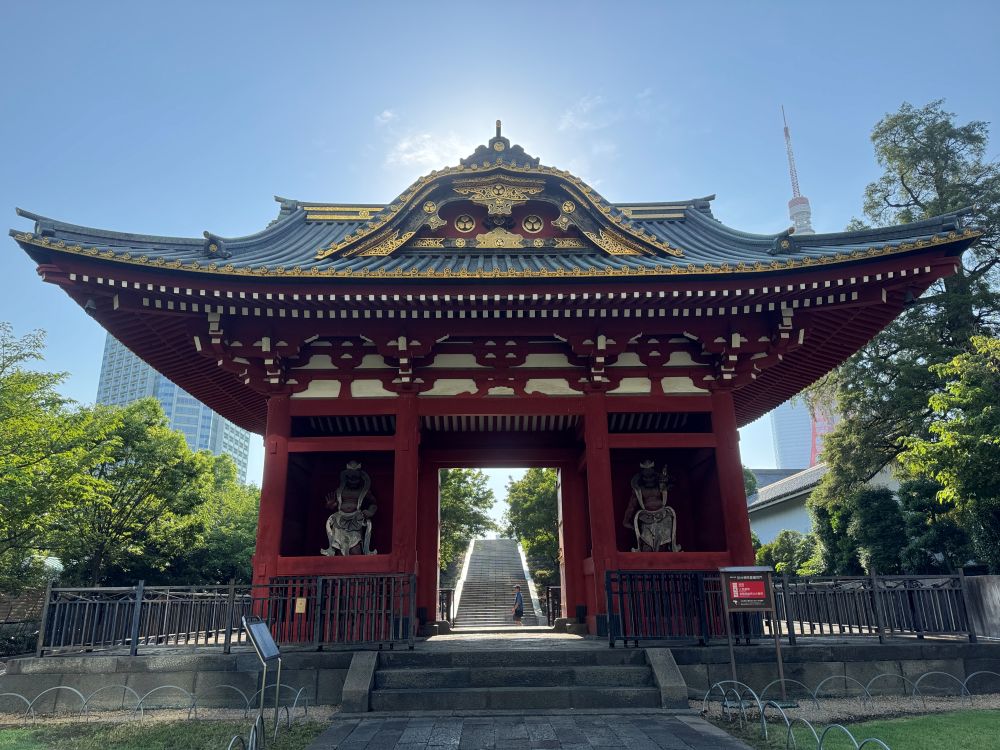
Zojoji Temple is a head temple of the Jodo sect of Buddhism in Minato Ward, Tokyo, standing next to Tokyo Tower. Founded in 1393 and moved to its present site in 1598, it became a family temple of the Tokugawa shoguns. Six of the fifteen shoguns are buried in its grounds, and its Sangedatsumon Gate dates from 1622.
| Location | 4-7-35 Shibakoen, Minato Ward, Tokyo |
|---|---|
| Nearest stations | Onarimon or Shibakoen (Mita Line) 3 min, Daimon 5 min, JR Hamamatsucho 10 min on foot |
| Hours | Main hall 6:00 AM to 5:30 PM. Ankokuden hall (goshuin and charms) 9:00 AM to 5:00 PM. |
| Tokugawa Mausoleum | Weekdays 11:00 AM to 3:00 PM, weekends and holidays 10:00 AM to 4:00 PM. 500 yen. |
| Mausoleum closed | Tuesdays except national holidays, and from October 27 to December 1, 2026 |
| Sangedatsumon Gate | Under repair inside a temporary cover until 2032. The passage under the gate is open. |
| Official site | zojoji.or.jp |
Checked in October 2026 against zojoji.or.jp.
Tokyo pulses with a unique energy, a city where centuries of tradition coexist with relentless innovation. There is no better place to witness this spectacular contrast than at Zojoji Temple. Standing proudly with the iconic Tokyo Tower as its backdrop, Zojoji is far more than a beautiful photo-op; it’s a sacred sanctuary, a treasure trove of samurai history, and a peaceful escape from the city’s exhilarating pace.
This guide will walk you through everything you need to know to make your visit to this essential Tokyo temple unforgettable.
Why Zojoji Temple Deserves a Top Spot on Your Tokyo Itinerary
Planning a trip to Tokyo can be overwhelming. Here’s why Zojoji Temple is a non-negotiable stop:
- Deep Samurai History: Walk in the footsteps of the legendary Tokugawa shoguns at their official family temple.
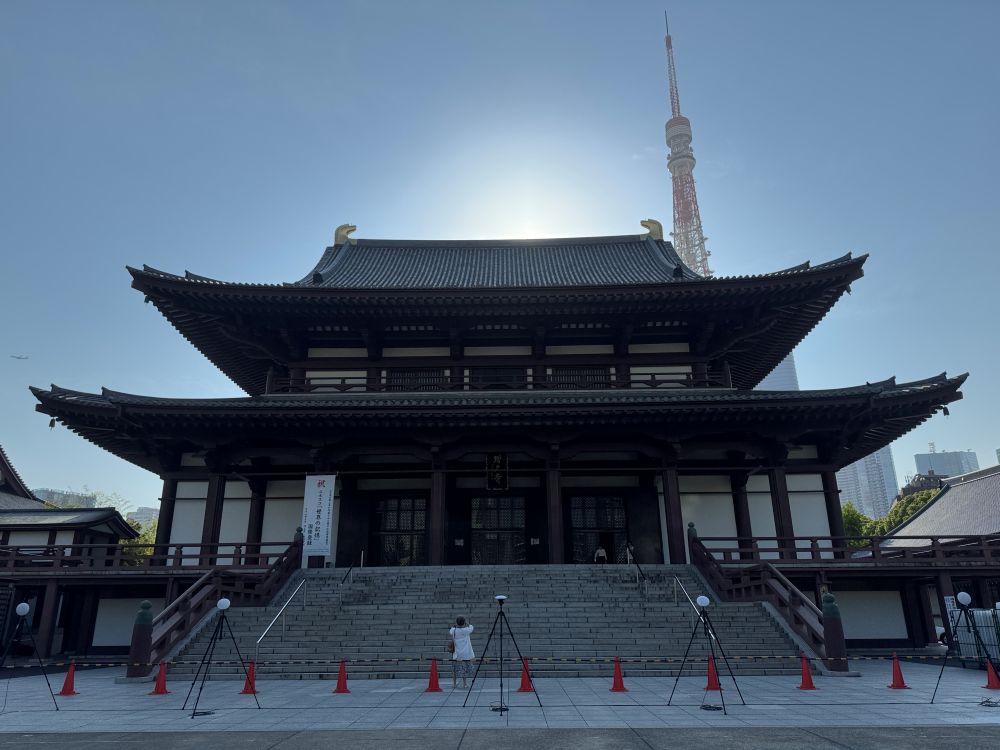
- The Ultimate Photo Op: Capture the iconic shot of ancient temple architecture framed by the modern Tokyo Tower.
- A Haven of Peace: Find a moment of true tranquility amidst the serene temple grounds, a stark contrast to the nearby bustle.
- A Magical Annual Event: Experience the unforgettable “Candle Night” if you’re visiting in late June.
The Storied History of Zojoji: From Shogun Power to Modern Resilience
The Chosen Temple of the Tokugawa Shogunate
While founded in 1393, Zojoji’s destiny was forever changed in 1598 when it was relocated to its current location by Tokugawa Ieyasu, the founder of the Tokugawa shogunate.
Tokugawa Ieyasu designated Zojoji as the family’s official temple, transforming it into a vast complex and a major center of religious learning and power during the Edo Period (1603-1868). At its peak, the grounds featured over 120 buildings and housed thousands of priests and novices.
Surviving the Ages
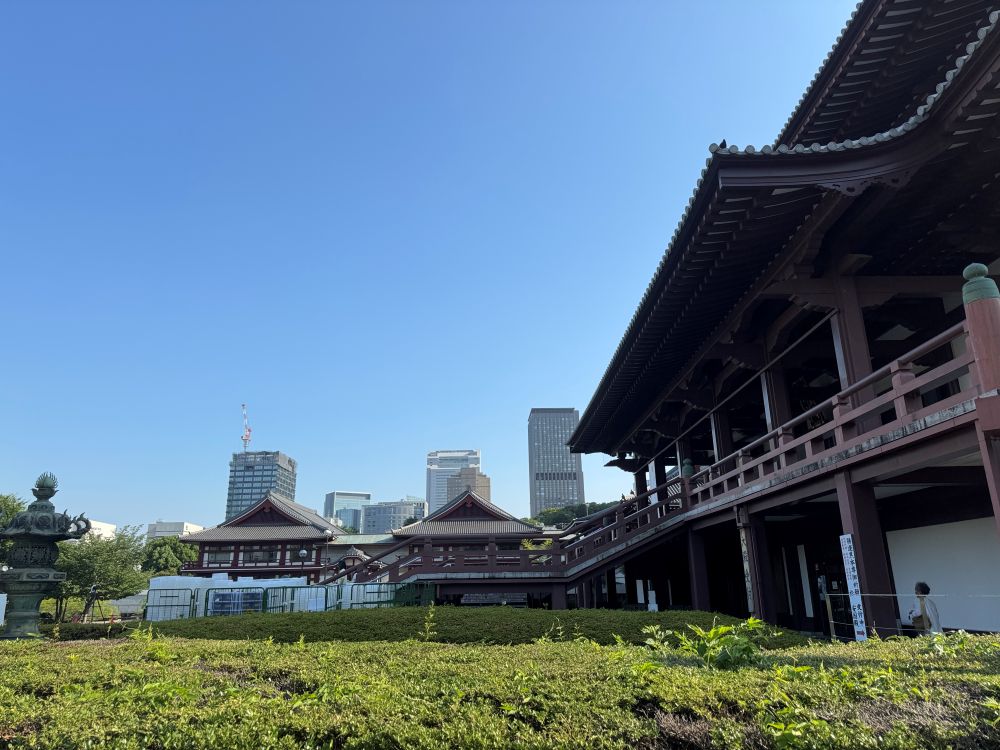
Like much of Tokyo, Zojoji suffered immense damage during World War II air raids. Most of its historic wooden structures were lost. However, the temple has been painstakingly rebuilt, and its enduring spirit, along with a few precious original structures, stands as a symbol of Tokyo’s resilience.
A Complete Guide to Exploring Zojoji’s Sacred Grounds
Zojoji is a sprawling complex. Here are the key sights you absolutely cannot miss.
The Sangedatsumon Gate: A Portal to 1622
As you approach, the first thing you’ll notice is the colossal main gate, which is under repair until 2032 inside a temporary cover, though you can still walk through it. This is the Sangedatsumon Gate, and it is truly special. Built in 1622, this is one of the very few original structures to survive the centuries. The name “Sangedatsumon” refers to the “gate of three liberations,” signifying that passing through it frees one from the three worldly afflictions: greed, anger, and foolishness. It stands today as one of Tokyo’s oldest wooden buildings and a designated Important Cultural Property.
The Daiden (Main Hall) and the “Victorious” Kurohonzon
The current Daiden, or main hall, is a magnificent modern reconstruction completed in 1974. It seamlessly blends traditional Buddhist architecture with modern building techniques. Inside, you’ll find the main object of worship, a large statue of Amida Buddha.
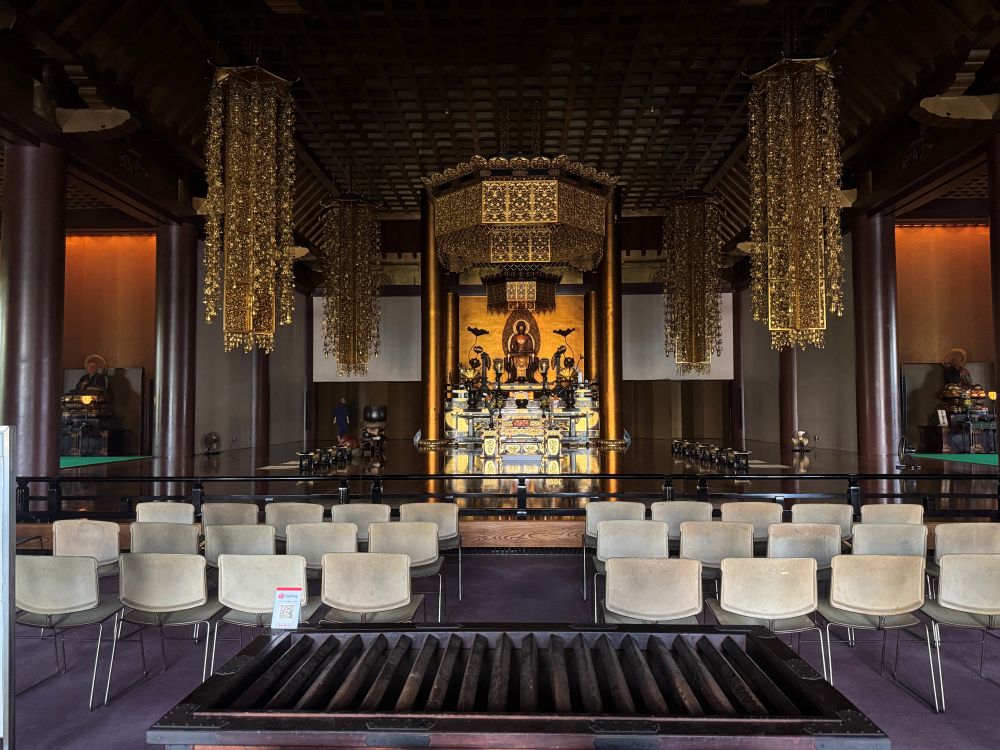
Enshrined in the separate Ankokuden hall is the Kurohonzon, another statue of Amida Buddha deeply revered by Tokugawa Ieyasu himself. It is said that Ieyasu carried this statue into battle, and it brought him many victories. To this day, it is worshipped as a source of kachi-un (winning luck) and a ward against evil.
The Mausoleum of the Tokugawa Shoguns
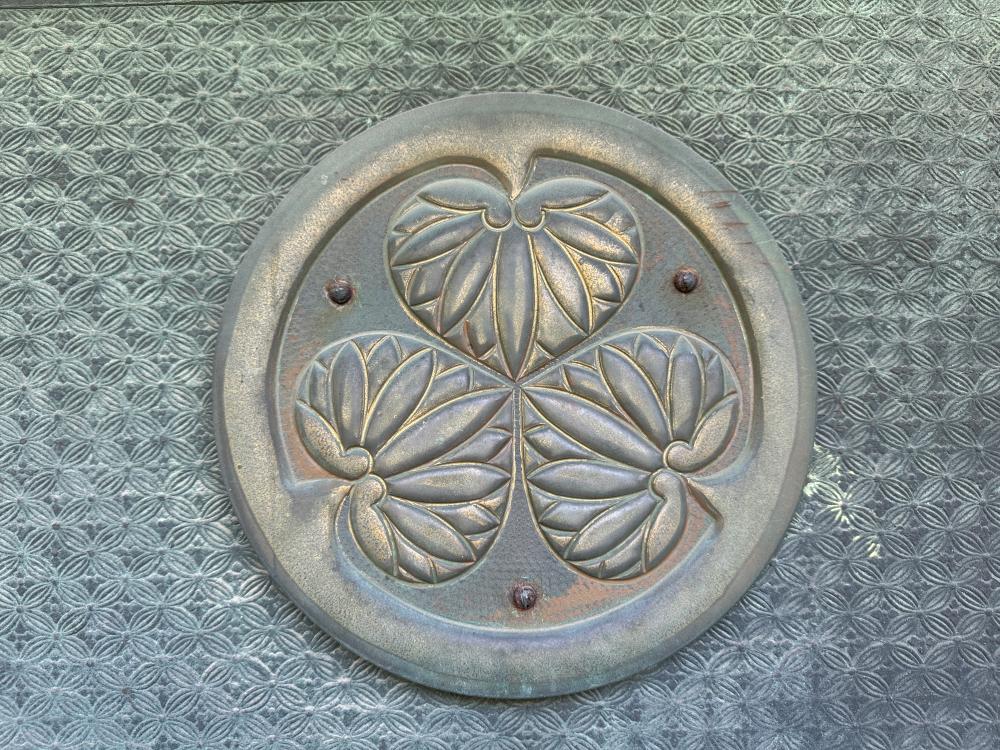
For any fan of samurai history, this is sacred ground. Tucked away on the temple grounds is the final resting place for six of the fifteen Tokugawa shoguns, along with their wives and children.
After being destroyed in the war, the tombs were excavated and re-interred in their current location. Standing here offers a profound connection to the powerful rulers who shaped Japan for over 250 years.
A Sea of Jizo Statues
One of the most visually striking and poignant areas of the temple is the garden filled with rows of small stone statues adorned with colorful bibs and pinwheels.
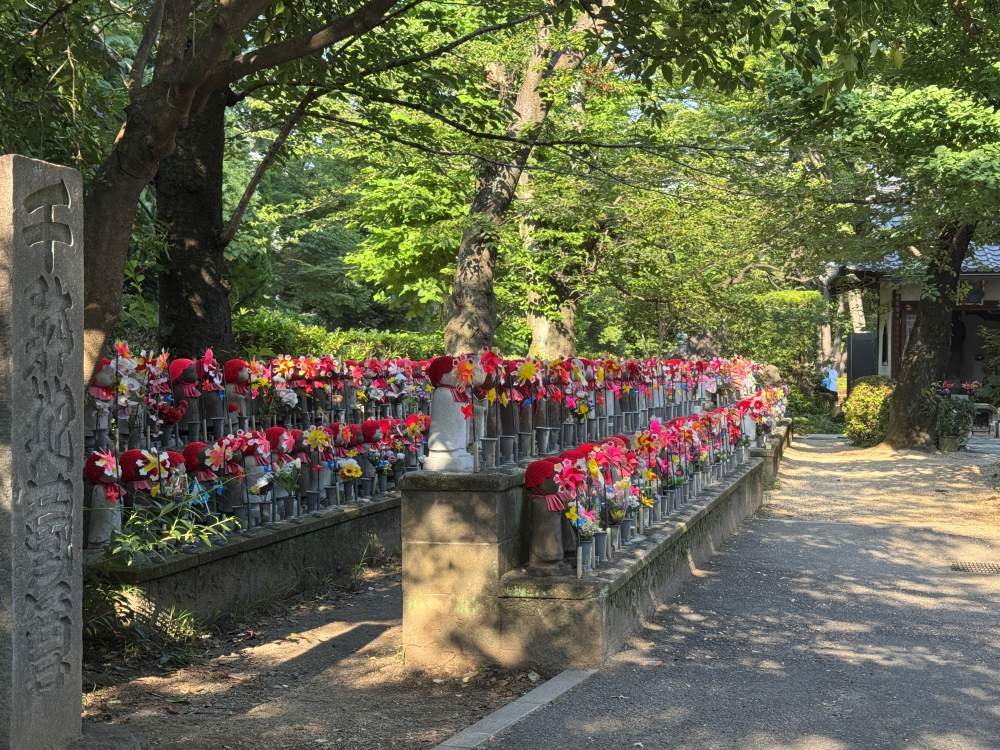
These are the Sentai Kosodate Jizo, statues dedicated to the protection of children, particularly those who were stillborn or died at a young age. The spinning pinwheels represent a prayer for their safe passage. It’s a touching and beautiful sight.
(Limited) Special Event Spotlight: Zojoji Candle Night
The 2025 event has ended, and the 2026 edition was held on Friday, June 19, 2026.
If your visit to Tokyo aligns with the summer solstice, you are in for an incredibly special treat. On Friday, June 20, 2025, Zojoji Temple once again hosted the “1 Million People’s Candle Night.”
What is the Candle Night?
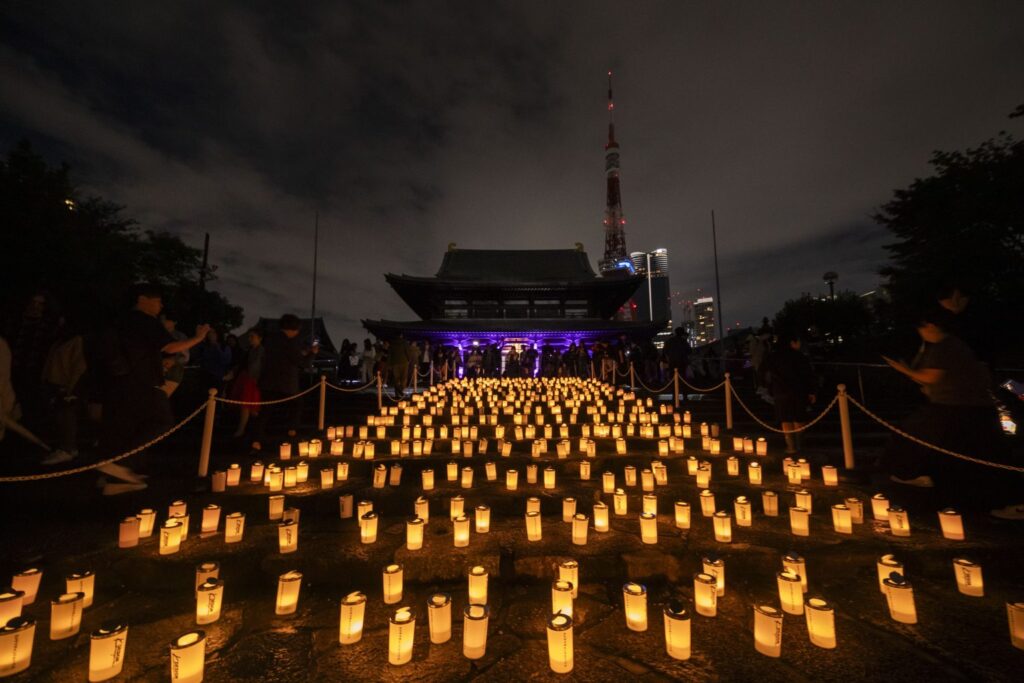
From evening until 9:00 PM, the temple turns off its electric lights. In their place, thousands of candles are lit, transforming the entire complex into a gentle, flickering sea of light.
The event is a nationwide movement encouraging people to turn off their lights for two hours to think about peace, the environment, and our connections to each other. The atmosphere is serene, contemplative, and utterly magical.
Event Details for Friday, June 20, 2025
- What: 1 Million People’s Candle Night
- Where: Zojoji Temple Grounds
- When: Friday, June 20, 2025. Main event from 6:00 PM to 9:00 PM (times may vary slightly).
- Cost: Free admission
- What to Expect: A breathtaking candle-lit landscape, often accompanied by live, gentle music and small organic markets.
This is a unique and deeply moving cultural experience. Don’t miss the chance to see Zojoji and Tokyo Tower in this spectacular, otherworldly light.
Planning Your Perfect Visit to Zojoji Temple
How to Get There
Zojoji is centrally located and easy to reach.
- By Subway (Recommended):
- 3-minute walk from Onarimon Station (Mita Line, I-06)
- 5-minute walk from Daimon Station (Asakusa Line, A-09 / Oedo Line, E-20)
- 7-minute walk from Akabanebashi Station (Oedo Line, E-21)
- By JR: 10-minute walk from Hamamatsucho Station (Yamanote Line / Keihin-Tohoku Line)
Hours & Admission
- Grounds: Open 24 hours, but visiting is recommended between sunrise and sunset.
- Main Hall (Daiden): Generally open 6:00 AM to 5:30 PM
- Tokugawa Mausoleum: 11:00 AM to 3:00 PM on weekdays and 10:00 AM to 4:00 PM on weekends and holidays, closed on Tuesdays except national holidays (requires a separate admission fee, check official site for latest info)
- Admission: Entry to the main temple grounds is free.
What’s Nearby?
Make a day of it! Zojoji is right next to:
- Tokyo Tower: You’re already there! Go up the tower for a bird’s-eye view of the temple you just explored.
- Shiba Park: Zojoji is technically located within this large, pleasant park. It’s a great spot for a relaxing walk.
- Hamarikyu Gardens: A beautiful traditional Japanese garden is a short walk or one subway stop away.
Frequently Asked Questions
How much time should I spend at Zojoji Temple?
Plan for at least 60-90 minutes to see the main sights without rushing. If you plan to enter the mausoleum and truly soak in the atmosphere, allow for two hours.
Is photography allowed?
Yes, photography is generally allowed on the temple grounds. However, be respectful and avoid taking photos inside the main hall (Daiden) or other areas where signs prohibit it.
What is the best time of day to visit?
Early morning offers a quiet, contemplative experience. Late afternoon, during the “golden hour,” provides beautiful light for photographing the temple with Tokyo Tower.
Which Tokugawa shoguns are buried at Zojoji Temple?
Six Tokugawa shoguns are buried at Zojoji Temple: Hidetada (2nd), Ienobu (6th), Ietsugu (7th), Ieshige (9th), Ieyoshi (12th) and Iemochi (14th). Princess Kazunomiya, the wife of Iemochi, and other wives and children of the shoguns rest in the same graveyard. The temple counts 38 people in all.
How much does the Tokugawa Mausoleum at Zojoji Temple cost?
The Tokugawa Mausoleum at Zojoji Temple costs 500 yen for adults and is free for high school students and younger. Hours are 11:00 AM to 3:00 PM on weekdays and 10:00 AM to 4:00 PM on weekends and holidays, and the site closes on Tuesdays unless the day is a national holiday. The temple lists a closure from October 27 to December 1, 2026.
Is the Sangedatsumon Gate at Zojoji Temple under construction?
The Sangedatsumon Gate at Zojoji Temple is under major repair and stands inside a temporary roofed cover while the work goes on. Visitors can still walk through the passage under the gate. The project includes retiling the roof and recoating the lacquer, and the temple plans to finish it in 2032.
Are there night events at Zojoji Temple?
Zojoji Temple has candle-lit evening events in June and July. The Candle Night is held near the summer solstice, and the 2026 edition was listed for Friday, June 19, with candles from 6:00 PM to 9:00 PM. The Washi Candle Night accompanies the temple’s Tanabata festival and was listed for July 6 and 7, 2026, from 6:00 PM to 9:00 PM.
Share