
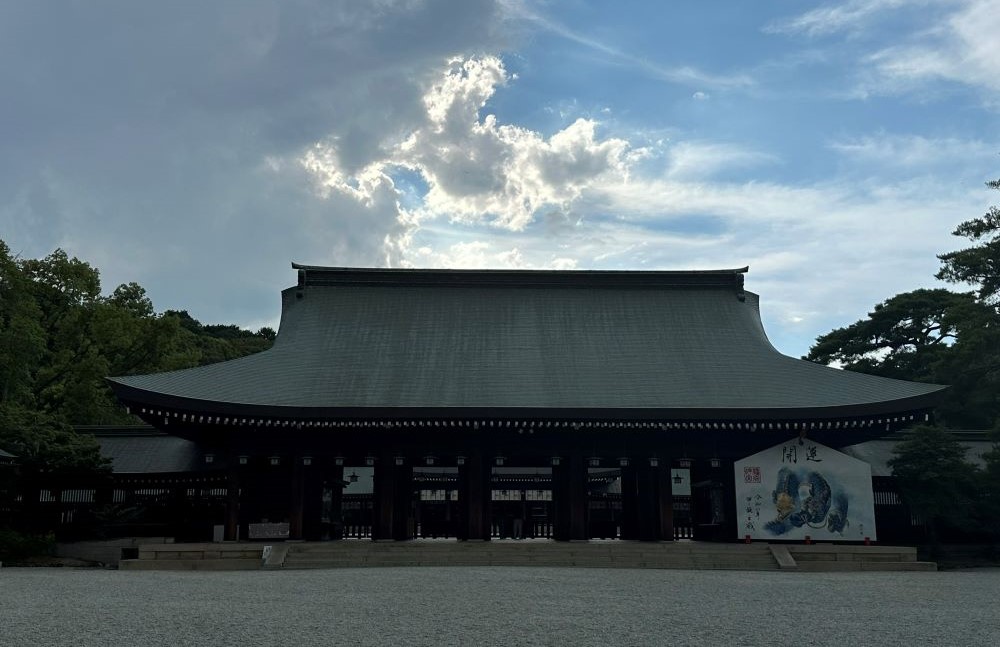
Kashihara Jingu is a Shinto shrine in Kashihara, Nara Prefecture, dedicated to Emperor Jimmu, Japan’s legendary first emperor, and his empress. Founded in 1890, it stands at the southeast foot of Mount Unebi. The main hall, moved from the Kyoto Imperial Palace, is an Important Cultural Property, and the wooded grounds cover about 530,000 square meters.
| Location | 934 Kume-cho, Kashihara, Nara Prefecture |
|---|---|
| Access by train | Kashiharajingu-mae Station (Kintetsu), about 10 minutes on foot from the Central Exit |
| Gate hours | Gates open between 5:30 AM and 6:30 AM and close between 5:00 PM and 6:00 PM, by month |
| Founded | April 2, 1890 |
| Enshrined deities | Emperor Jimmu and Empress Hime-Tatara-Isuzu-Hime no Mikoto |
| Parking | About 800 spaces. Standard cars 500 yen per day (rates differ at New Year and festivals) |
| Official site | kashiharajingu.or.jp |
Checked in October 2026 against kashiharajingu.or.jp.
If you’re interested in Japan’s ancient history, a visit to Kashihara Jingu offers a unique opportunity to explore the legendary beginnings of Japan. According to one of Japan’s oldest chronicles, the Nihon Shoki (Chronicles of Japan), Emperor Jimmu founded the country in the region where Kashihara Jingu now stands. Kashihara is often referred to as the “birthplace of Japan” or the “land where Japan began.”
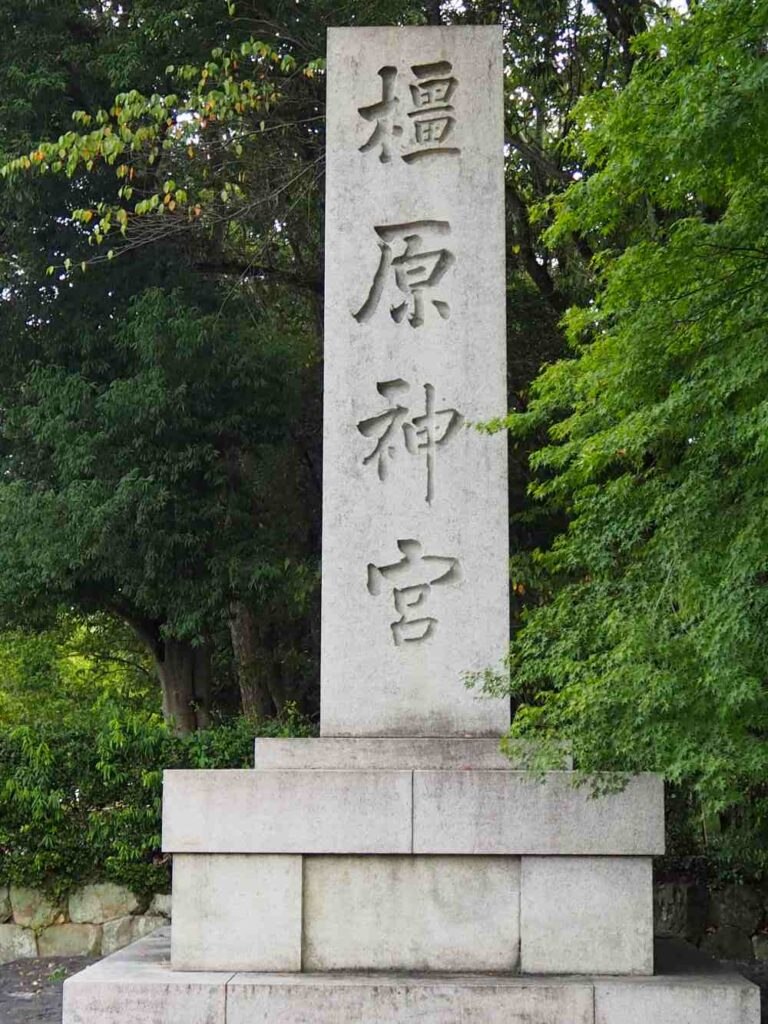
The Deities of Kashihara Jingu
Kashihara Jingu enshrines two deities:
- Emperor Jimmu: Japan’s legendary first emperor who is said to have established the Japanese nation in 660 BCE.
- Empress Hime-Tatara-Isuzu-Hime no Mikoto: The wife of Emperor Jimmu, also enshrined at the shrine.
These figures are revered in Japanese mythology for their role in founding the country. The Nihon Shoki recounts that Emperor Jimmu was a descendant of the sun goddess Amaterasu, and after a long journey eastward known as the Jimmu Tōsei (Eastern Conquest), he established his rule in Yamato (present-day Nara Prefecture).
Jimmu’s Journey and the Foundation of Japan
The story of Jimmu Tōsei describes how Emperor Jimmu, originally born in Himuka no Kuni (modern-day Miyazaki Prefecture on the island of Kyushu), led his people eastward to find a prosperous land to establish his kingdom. His journey wasn’t easy, facing resistance along the way from local leaders such as Nagasunehiko. During a key battle, Emperor Jimmu realized that fighting with the sun (which represents the sun goddess Amaterasu) behind the enemy was a disadvantage, as it opposed the natural order of his divine ancestry.
He changed his strategy and sailed south, landing in Kumano on the Kii Peninsula (modern-day Wakayama Prefecture) and then made his way north to Yamato. On this journey, a Yatagarasu (a three-legged crow sent by Amaterasu) appeared to guide him, showing that the gods were supporting his mission. This sacred bird is also the symbol of Japan’s national soccer team.
After a decisive battle, where a golden kite (a mythical bird) landed on Emperor Jimmu’s bow, blinding the enemy, Jimmu finally achieved victory and established his rule in Yamato, becoming Japan’s first emperor.
The site where he was said to have ascended to the throne is where Kashihara Jingu stands today.
Kashihara Jingu and Japan’s National Holiday
The importance of Emperor Jimmu’s legacy is still celebrated in Japan. The date of his ascension, February 11th, was converted to the modern calendar during the Meiji era and is now observed as Kenkoku Kinen no Hi (National Foundation Day), a national holiday that commemorates the establishment of Japan.
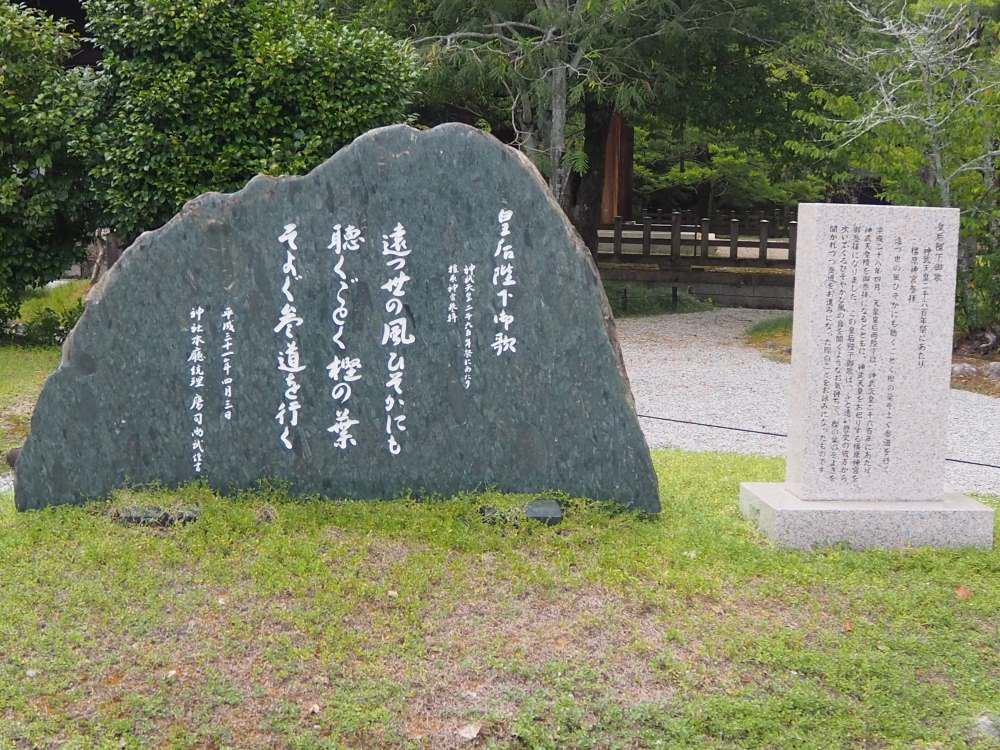
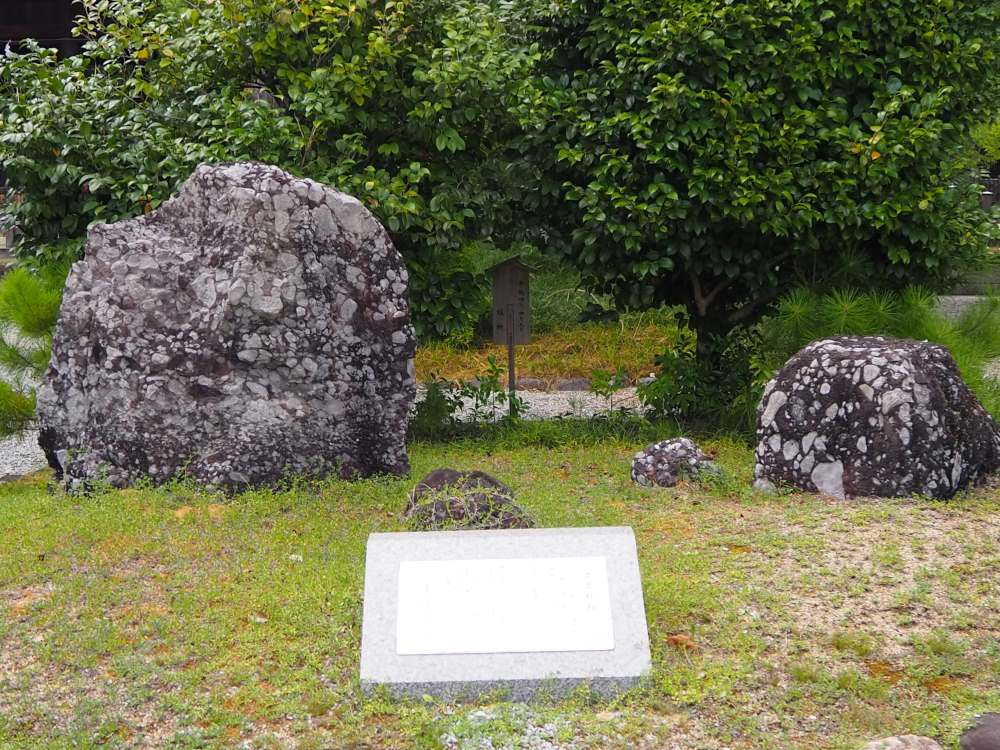
The Sacred “Sazare-Ishi” Rock
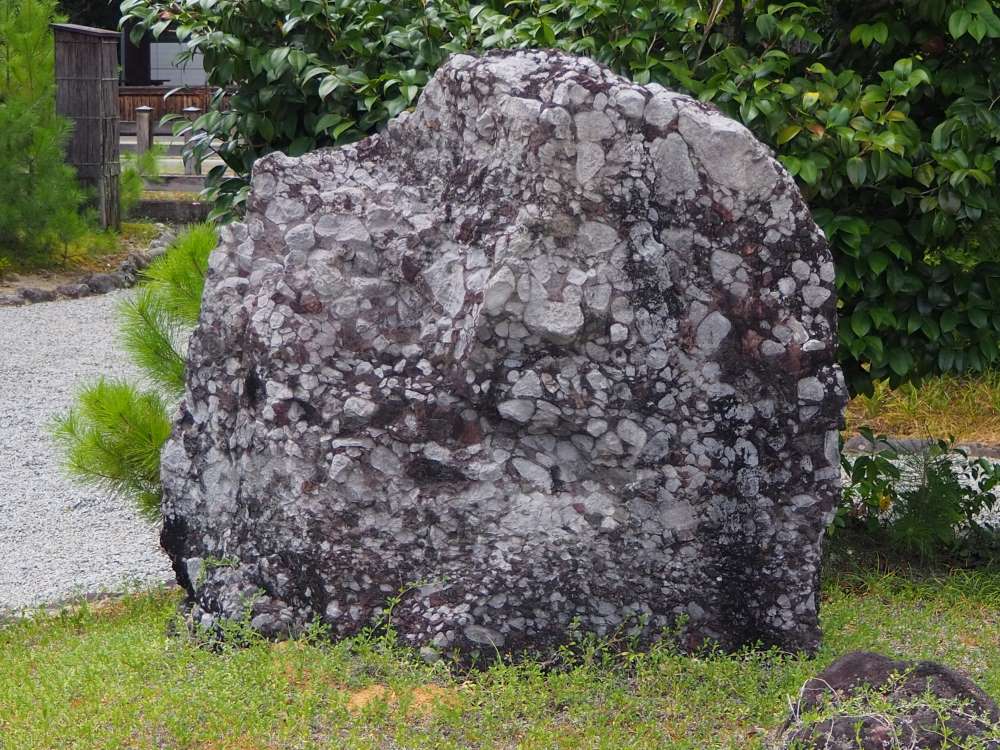
As you explore the shrine grounds, you will come across the Sazare-Ishi, a sacred rock located to the right of the outer hall (Gehaiden). This unique rock is made up of small stones that, over many centuries, fused together to form one large rock. The Sazare-Ishi is referenced in Japan’s national anthem, “Kimigayo,” symbolizing the longevity and strength of Japan.
New Year Visits and Major Attractions
Kashihara Jingu is especially popular during the New Year’s holiday, when approximately 1 million visitors come to the shrine for hatsumode, the first shrine visit of the year. People come to pray for good fortune, health, and success in the coming year.
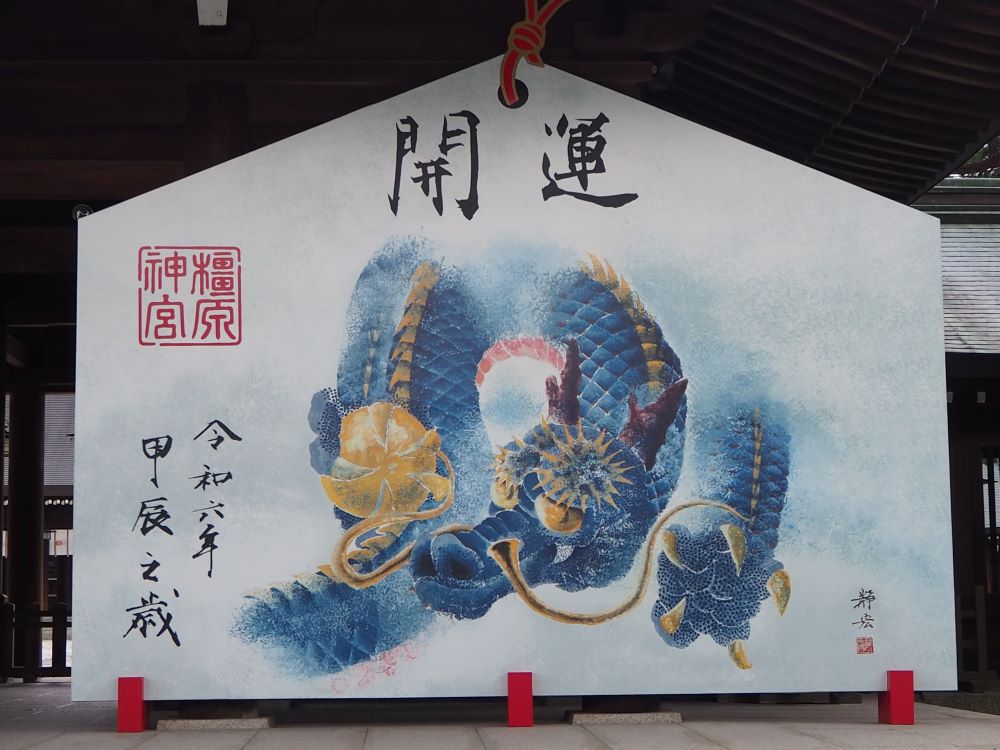
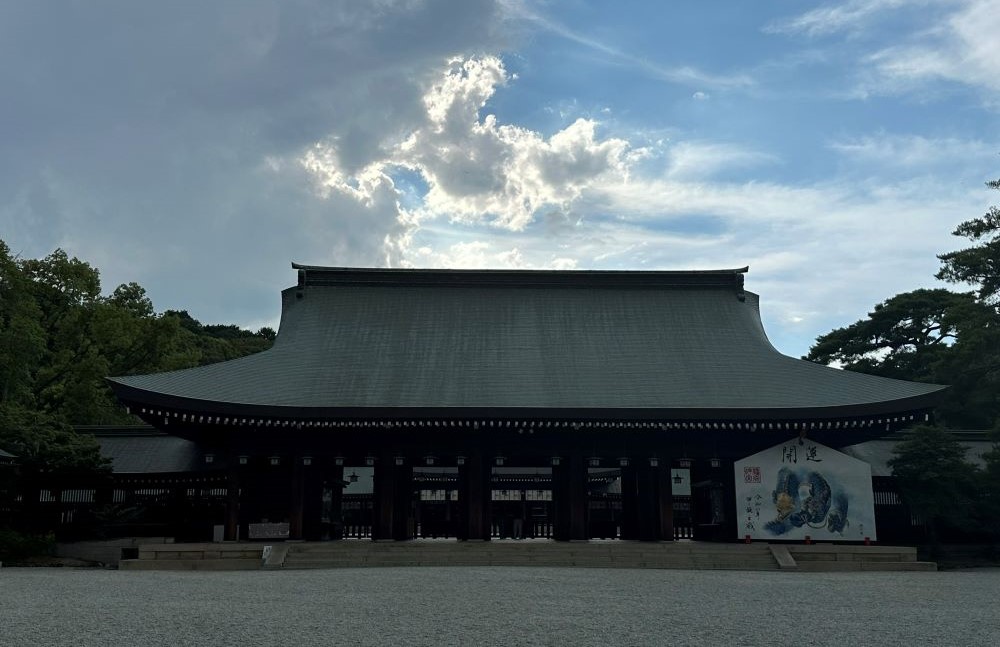
One of the shrine’s iconic features during this time is the giant ema (wooden plaques used for writing prayers), which features the zodiac animal of the year. This large ema makes for a great photo opportunity and is a favorite among visitors.
Main Structures of the Shrine
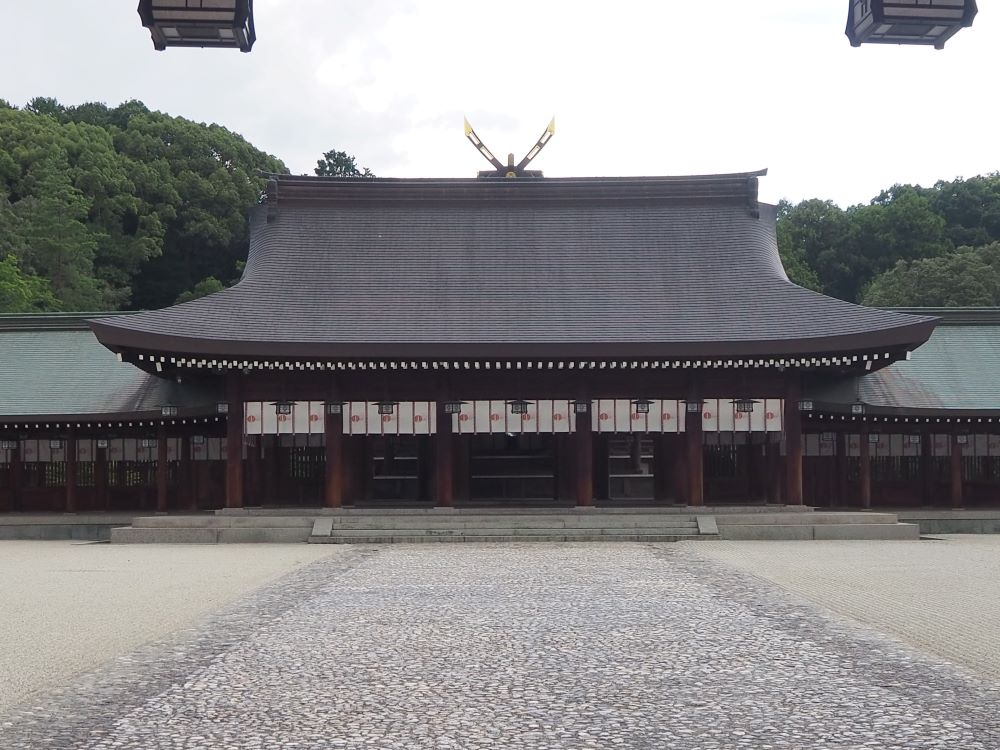
The distance from the torii gate to the hall of worship is quite long at Kashihara Jingu Shrine.
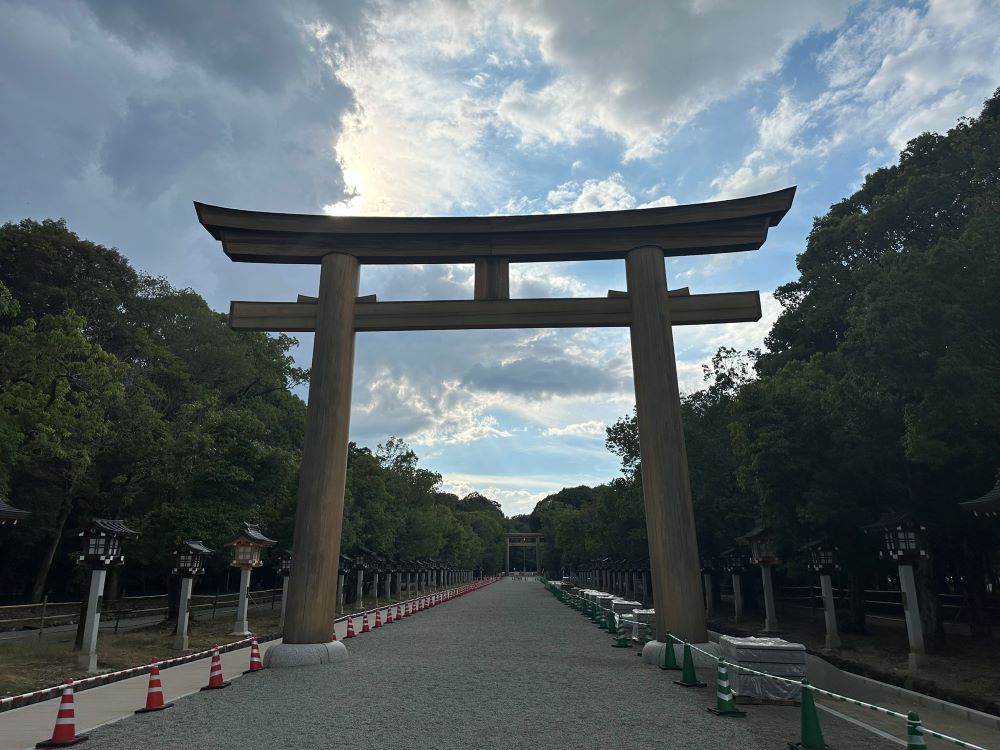
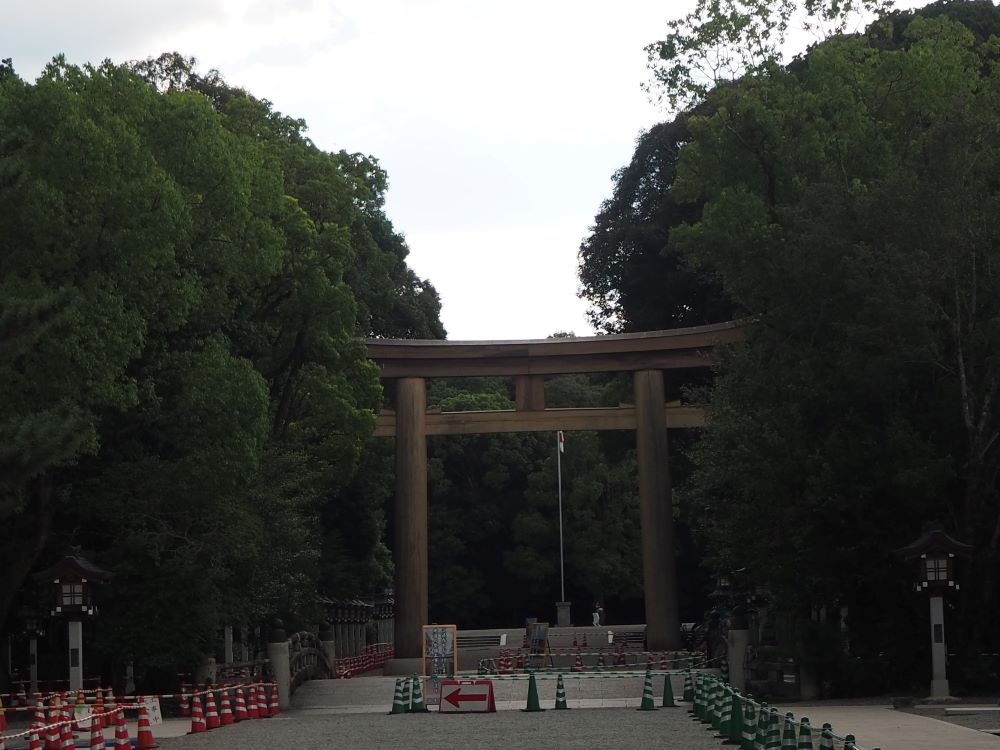
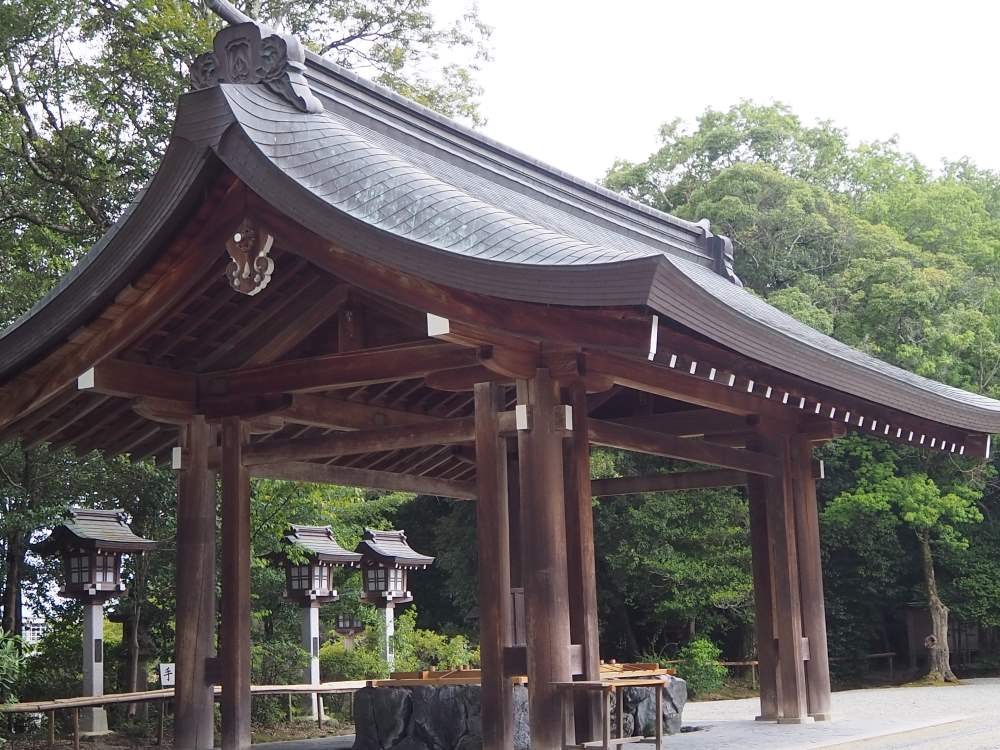
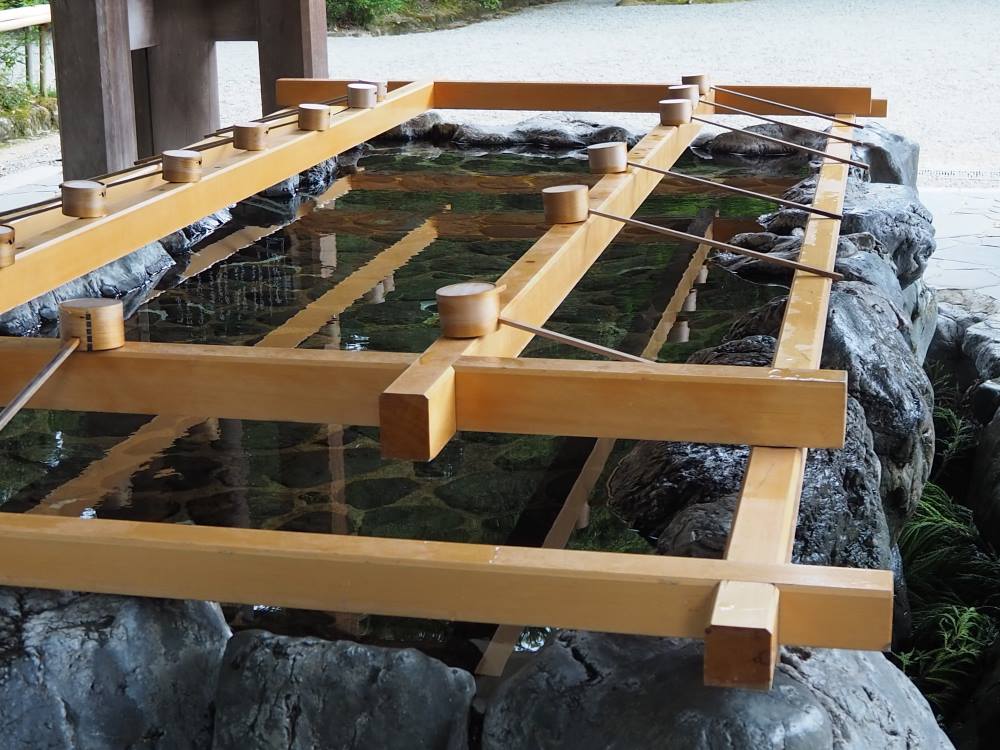
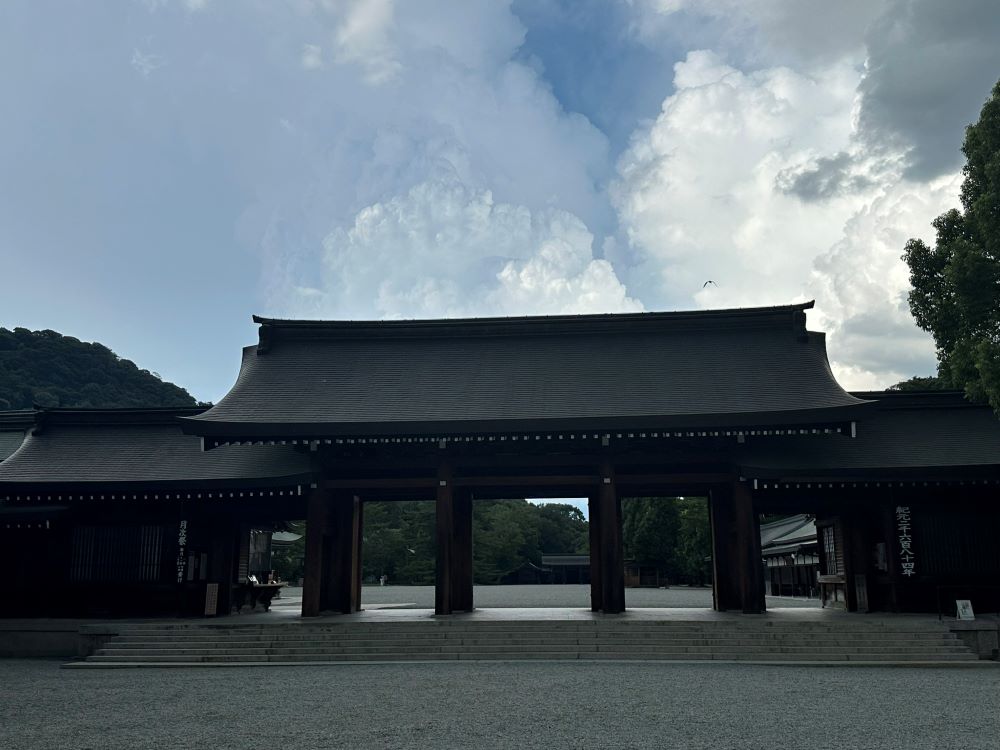
It is a very large-scale shrine.
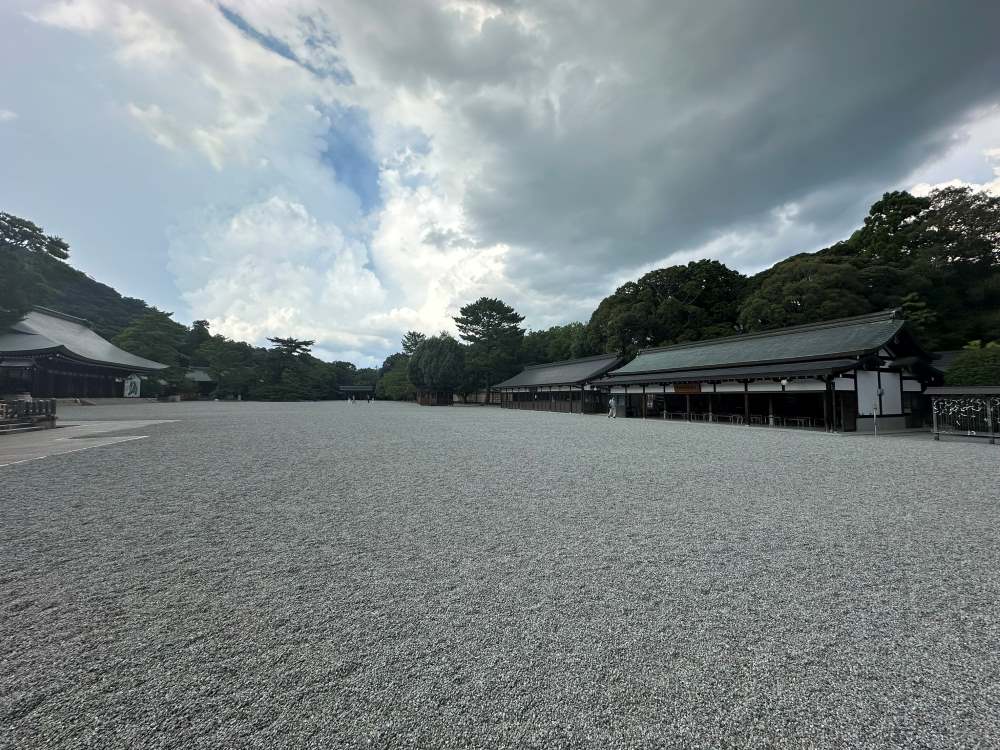
How to Access Kashihara Jingu
Kashihara Jingu is easily accessible by train and is served by Kashiharajingu-mae Station, which is connected to three major rail lines:
- Kintetsu Kashihara Line
- Kintetsu Minami-Osaka Line
- Kintetsu Yoshino Line
From the station, it’s just a short walk to the shrine, and all trains on these lines stop at the station, making it convenient for visitors.
I recommend renting a car, as there are many other famous shrines nearby that are worth visiting.
Conclusion
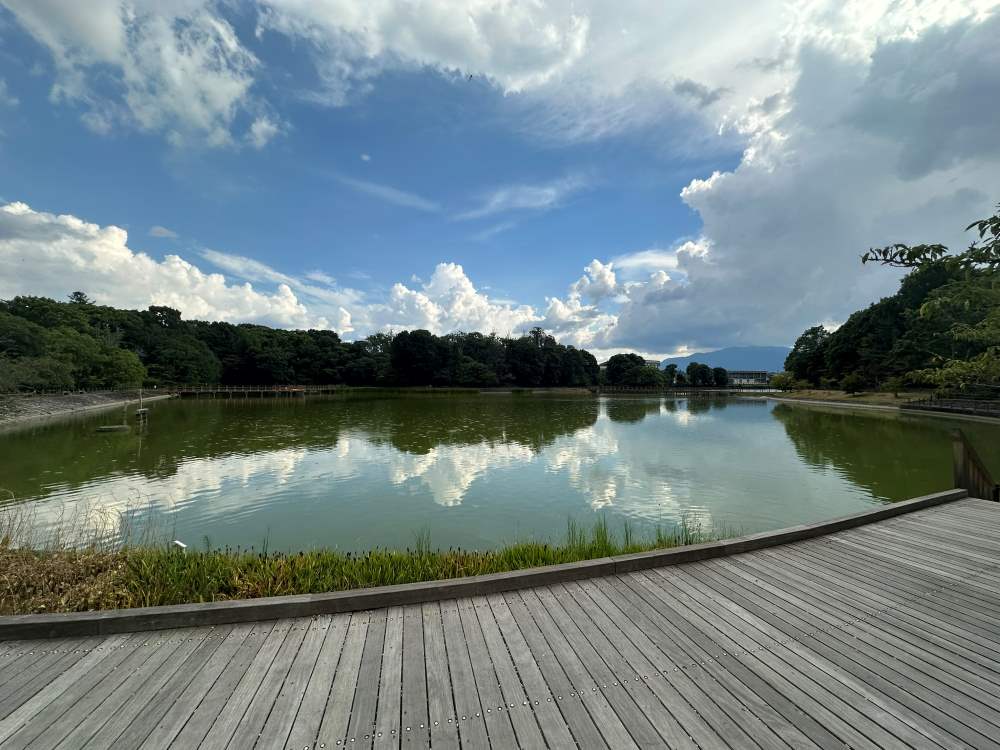
Kashihara Jingu is a must-visit destination for those interested in Japan’s ancient history and mythology. The shrine stands as a symbol of the country’s founding and its spiritual roots, making it a deeply meaningful place for both locals and visitors. Whether you’re visiting for the New Year or simply exploring Nara, the shrine’s connection to Japan’s first emperor and its serene surroundings make it a place worth discovering. Additionally, the vast grounds offer plenty of opportunities to enjoy nature, making it a peaceful retreat amidst the rich historical setting.
Official website: Kashihara Jingu
Planning a shrine visit? If you’re unsure how to bow, clap, or make an offering once you’re at the shrine, read our step-by-step guide on how to pray at a Japanese shrine, explained by a Shinto priest at Yushima Tenjin in Tokyo.
Frequently Asked Questions
What are the opening hours of Kashihara Jingu?
Kashihara Jingu’s gates are open from 5:30 AM to 6:00 PM in June and July and from 6:30 AM to 5:00 PM in December and January. In April, May, August and September the hours are 6:00 AM to 6:00 PM, and in February, March, October and November they are 6:30 AM to 5:30 PM. Hours differ from December 31 to January 7 and can change for festivals.
When was Kashihara Jingu founded?
Kashihara Jingu was founded on April 2, 1890, in the Meiji era. Private citizens had petitioned for a shrine on the site of Emperor Jimmu’s palace, and Emperor Meiji granted two buildings from the Kyoto Imperial Palace. One of them, built in 1855, is now the main hall and an Important Cultural Property.
Is Emperor Jimmu’s tomb at Kashihara Jingu?
No. Emperor Jimmu’s mausoleum is a separate site next to Kashihara Jingu, managed by the Imperial Household Agency. Its official name is Unebiyama no Ushitora no Sumi no Misasagi, and it stands in Okubo-cho, Kashihara, about 12 minutes on foot from Kintetsu Unebigoryomae Station. Visits are possible all year, in principle from 8:30 AM to 5:00 PM.
What festival does Kashihara Jingu hold on February 11?
Kashihara Jingu holds Kigensai, its most important annual festival, at 11:00 AM on February 11, the modern calendar date of Emperor Jimmu’s enthronement in the Nihon Shoki. An imperial envoy attends and offerings are presented. More than 4,000 worshippers from across Japan gather in the 3,200 square meter courtyard between the outer and inner worship halls.
How big is the giant ema at Kashihara Jingu?
The giant ema at Kashihara Jingu is 4.5 meters high and 5.4 meters wide, 1,600 times the size of a regular ema. It has been displayed at the outer worship hall since 1960. The painting shows the zodiac animal of the year and changes to the next animal at the end of every November.
Share