
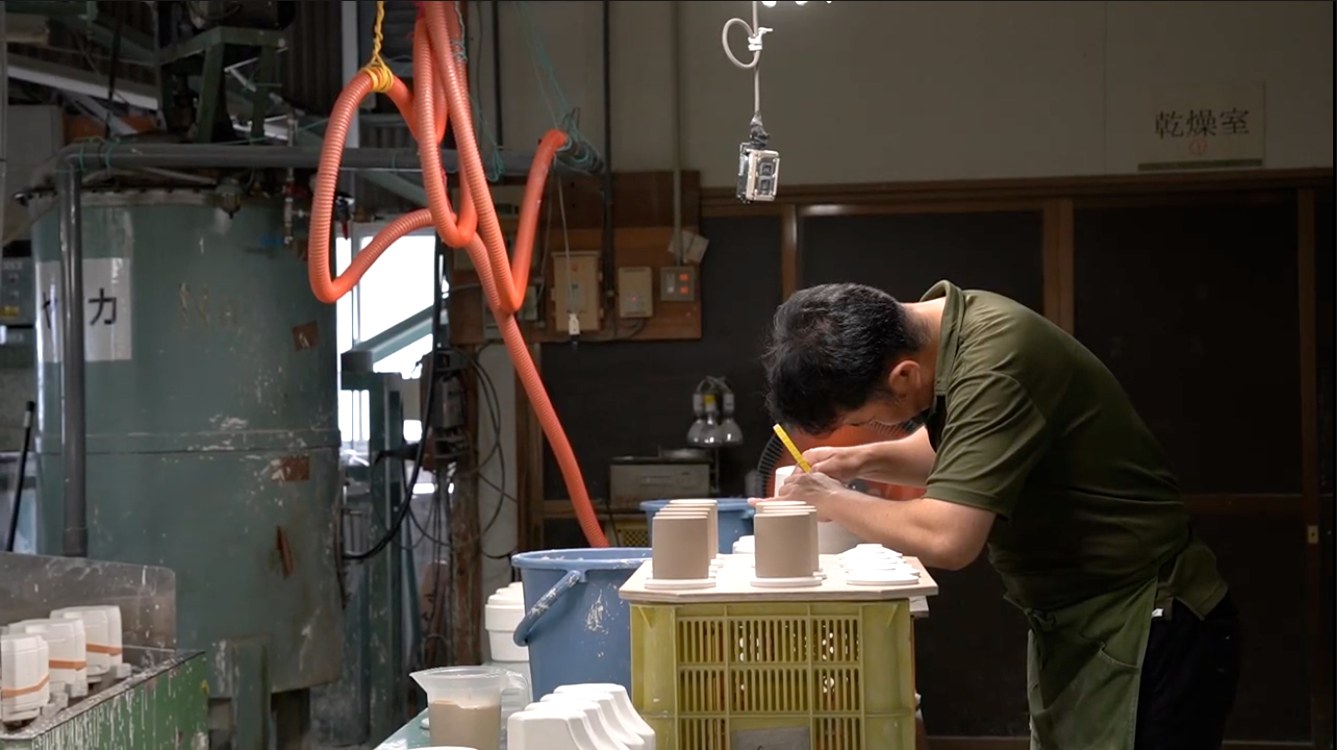
Clay is a living thing. It is like watching a small child.
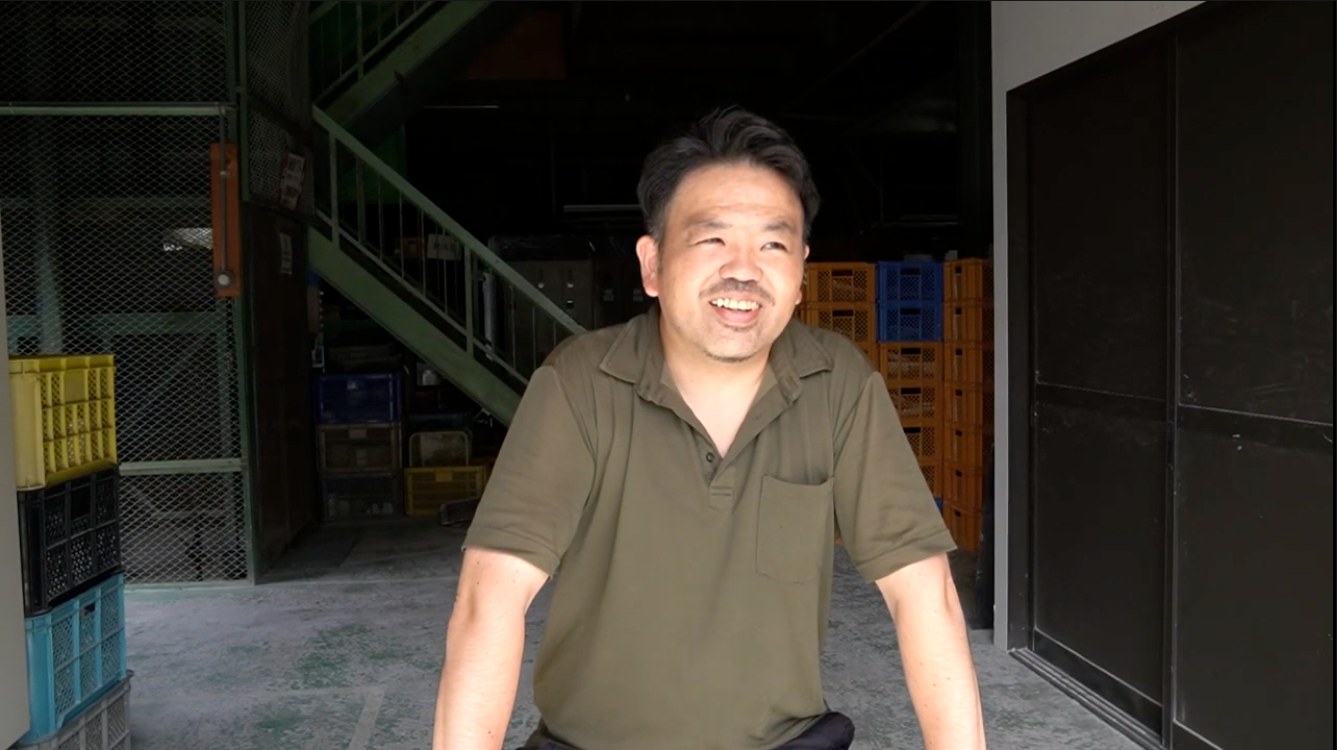
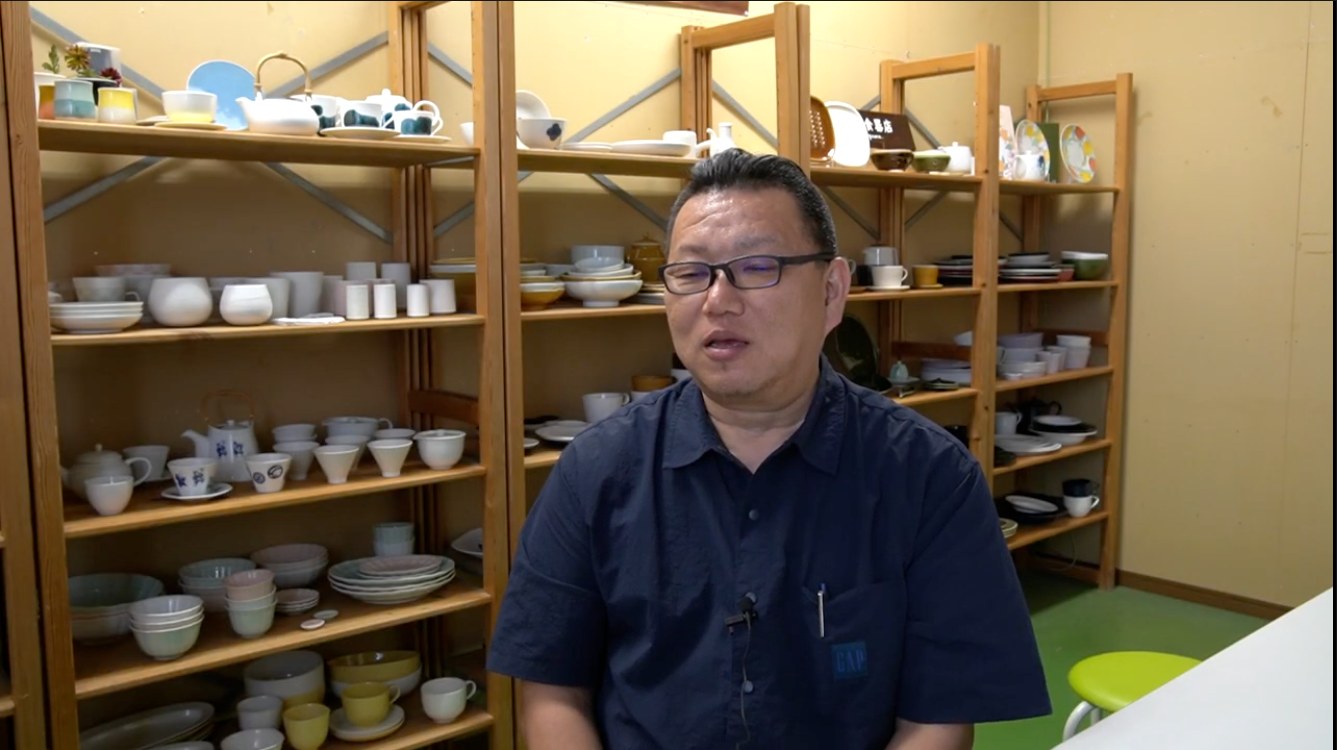
Kumazawa does not talk about porcelain the way a craftsman in a brochure might. He talks about it the way a parent talks about a toddler. In Mizunami, a small city in Gifu Prefecture at the heart of the Mino ware region, he pours liquid clay into plaster molds for Miyama, a porcelain workshop founded in 1977. In a sample room lined floor to ceiling with cups and teapots, Shotaro Shibata designs what those molds will become. One man shapes the clay, the other decides what it should be, and between them sits a set of white tableware that Sori Yanagi first drew in 1975.
“Clay Is a Living Thing”
Kumazawa works in slip casting, the method Miyama uses to form its tableware. Liquid porcelain clay, called slip, is poured into a plaster mold. The plaster drinks the water from the outside in, a wall of clay forms against the mold, and the rest is poured out. What stays behind becomes a cup, a bowl, or a teapot.
It sounds mechanical, but he says it is the exact opposite.
What makes the work hard?
We are a maker that handles clay, and clay is a living thing. It is like watching a small child. A small child changes mood every day. They cry, they laugh, they get angry. Clay is the same. If you do not watch it properly, its character changes.
How fast does it change?
If you compare clay in the morning and clay in the evening, the character can be completely different. We prepare the clay so we can work it the same way every time, but it still changes. Adjusting to that while you watch it is the hard part. You have to go by feel.
When the clay shifts, so does the thickness of the wall forming inside the mold. If a wall is a fraction too thin or too thick on one side, the piece will warp in the kiln.
We are a maker that handles clay, and clay is a living thing. It is like watching a small child.
Kumazawa, slip caster at Miyama
The Salesman Who Ended Up at the Casting Bench
Kumazawa did not train as a potter. He was born and raised in Mizunami, and for years he worked in sales for another company. Miyama was one of his clients then.
How did you come to Miyama?
Through that business I got to know Matsuzaki at Miyama, and he invited me to join. I actually came in as a salesman, not as someone who makes things. However, there were some large pieces that needed making, and when I looked around, there was nobody to do it. So I suppose they thought I would do. I was assigned to the factory, and that is where I started making things. It is no exaggeration to say my career in making began when I came to Miyama.
What do you think about while you work?
I think about how what I make will reach the customer at the very end of the line. I picture that person smiling and thinking that they are glad they used it, and glad it came to them. I work with that image in mind.
For someone who grew up in Mizunami, Mino ware was never an abstract idea. It was just the plates on the table.
Mino ware is the everyday tableware we use. To me, it is something right next to you. It is the local industry, and a lot of people I know work in it. This includes not just the pottery itself, but the clay, the glazes, and even the packaging. Somebody near you is always connected to it somehow. It is, without question, the biggest ceramics region in Japan.
Simple Is the Hardest Shape
Miyama now produces the white porcelain pieces of Sori Yanagi’s Japanese tableware series, which was first designed in 1975. For Kumazawa, the name on the box adds weight to every pour.
What is it like to make Sori Yanagi’s tableware?
We are making Yanagi-sensei’s work, so you feel you have to treat each piece with care from the very start. There is a kind of pressure to it. If you lose focus even a little, the piece deforms, or you get losses, and the yield drops. Especially with Yanagi’s pieces, I am always thinking about how to keep them from warping.
Why are they so easy to distort?
The form is simple. To tell you the truth, simple is exactly what makes it hard. People see a plain round shape and think it must be easy, but it is not. If the thickness of the clay wall is even slightly different, a circle stops being a circle. Because it is simple, it is difficult.
Anyone who has held one of these bowls knows what he means. There is no pattern, no glaze effect, and no flourish to hide behind. The only thing the eye can judge is the shape, so the shape has to be exactly right.
The Son of a Painter Who Didn’t Want to Make Pottery
Shotaro Shibata was 51 when we met him. He was born in Takiro, a district of Tajimi, another city in the Mino ware region. His parents painted decoration onto Western-style tableware made for export, and his younger brother still runs the family business.
Did you always want to work in ceramics?
My parents worked incredibly hard, and I never wanted for anything, but they were always covered in clay. Tajimi is also a bit of a commuter town for Nagoya, so some kids had dads who were office workers. Just from the outside, a dad in a sharp suit looked cool. Those kids got new toys whenever they wanted, while I was helping out at home. I liked making things, but honestly, I thought pottery was not for me.
After university he joined a furniture maker. He says it was five interesting years, but he was only ever responsible for one small part of the making. He wanted to do all of it, so he came home. The only thing he knew from the family trade was painting, so he enrolled at a ceramics training institute in Tajimi.
What surprised me was that there were twenty of us in my year, and I was the only local. People came from everywhere, from Yamagata in the north to Okinawa in the south. Some had just finished high school, some came from art universities, and some from very good universities. I thought, why would people like this come all this way to make pottery? That was the first time I realized ceramics might actually be attractive.
Once he started looking from that angle, he saw it everywhere. Ceramics, he says, make rice taste better, and they are an extraordinarily strong material and product. Being local had hidden that from him. It took outsiders to show him the value of it.
Why Mino Has No Signature Style
Ask Shibata what Mino ware looks like and he gives an answer that sounds like a dodge. It is not.
Mino ware goes back a long way, to the Heian period, but it became Mino ware around 1600, just before the Edo period. Furuta Oribe was a disciple of Sen no Rikyu, the tea master who served Oda Nobunaga. Rikyu’s aesthetic held that black was the highest form. Oribe’s attitude was that black is fine, but there are so many freer, more interesting things. I think that free and open spirit is the root of the variety in Mino today.
By his account, the region began making porcelain about two centuries later, which was some two hundred years after Arita. In the Meiji era, Mizunami turned to Western-style tableware for export, while Tajimi and Toki leaned toward pottery and Japanese tableware for the home market.
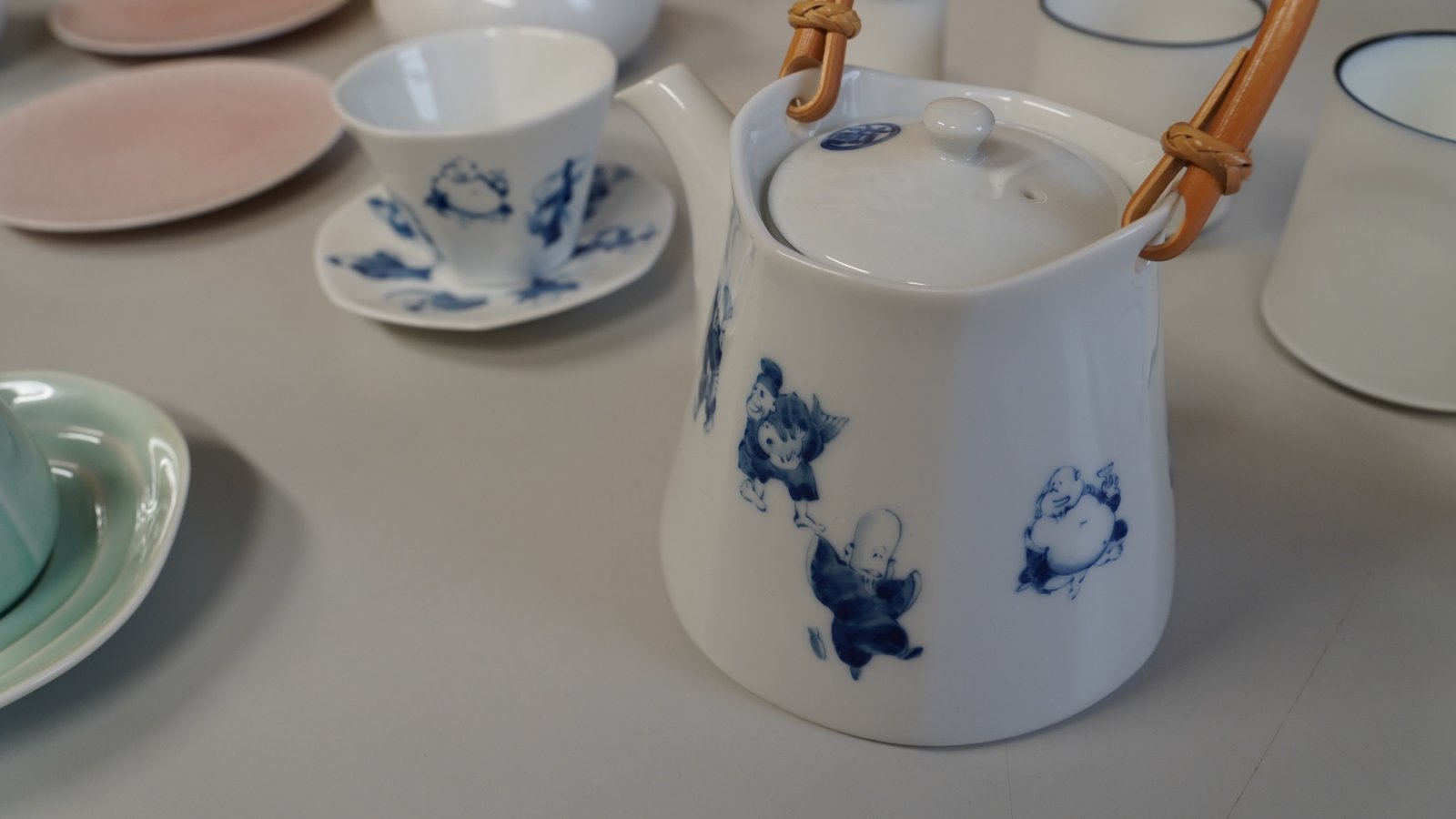
Other famous regions have a signature. Arita has white porcelain with blue underglaze painting. Bizen has iron-rich clay fired with a natural ash glaze. Mino does not have that. The reason is that Arita and Bizen each had one wonderful clay, and that clay became their symbol. Mino’s clays might not be as remarkable on their own, but we have many kinds of distinctive clays and glassy minerals. At Miyama, we blend highly transparent glassy materials (feldspar and silica) with the whitest, finest clay so we can make white, hard, beautiful porcelain. Another kiln that wants a rough, dark, earthy feel will blend in coarse, iron-rich clay and use very little of the glassy material. Every maker can make what they believe in.
So there is no “real” Mino ware?
Rather than forcing a definition, I think it is more like Mino ware when you find an interesting piece and realize, oh, this is Mino too. And this is Mino too.
Rather than forcing a definition, I think it is more like Mino ware when you find an interesting piece and realize, oh, this is Mino too.
Shotaro Shibata, product designer at Miyama
“We Already Know Your Materials Are Excellent”
About ten years into his career, Shibata joined a development team for an American tableware brand that wanted to produce with Miyama. On the first factory tour, he did what many suppliers do. Miyama made pieces for other brands under contract, so he listed them: we make for this brand, and we make for that brand.
Their designer, an older gentleman, almost a grandfather, stopped me. He said that does not matter. Who has used you is irrelevant. We already know your materials and your technique are excellent. You do not need to explain your value with other people’s names.
How did that change things?
It made me realize we should not compete on someone else’s name. We should properly explain our own making and our own background, and do good business with the people who understand it. That was the moment I made up my mind.
Giving Old Designs a Second Life
Shibata says he has been developing products at Miyama for twenty-six years. In the early years, the catalog had gaps, so the studio developed many new products every year. As a manufacturer, there is pressure to keep announcing something new. Lately, he has started to push back on that.
Forcing out new products every year started to feel like consuming design. It felt like using up products we had worked hard to develop. So now, rather than making a new product that is only slightly different just to have something new, we look back at what we have already made. We choose pieces that work together, add a small plate if something is missing, change a color, and bring them up to date for how people live now. I have a name for it that means rebirth. It is less a project than an attitude toward product development.
Bringing Back Sori Yanagi’s First Shapes
Sori Yanagi was one of Japan’s most influential industrial designers. His father, Soetsu Yanagi, led the mingei folk craft movement. Shibata describes the son’s work as design and craft brought close together.
His products are not made only for price or convenience. They are tools for everyday life, and you can feel the presence of a person in them. They are tools that feel good to use. Many people do not know the name Sori Yanagi, but when we tell them his stainless steel bowls are his, they say, oh, I have those. They sell in huge numbers and show up in gift catalogs everywhere. For a product of daily life, that is a wonderful way to spread. Even people with no interest in design have his work in their kitchen.
Miyama’s connection to the revival began years before it happened. In conversation, Shibata learned that some of Yanagi’s products could no longer be produced. He also learned that over time, for reasons of production or factory convenience, some had been made in shapes that were not Yanagi’s original design. The hope was to bring them back in their very first form.
Years later, it became possible to release them again. This time, the idea was to have each item made by the maker best suited to its material. For the white porcelain series, they said Miyama was the best at it and asked us to develop and revive it. The core of the project was to faithfully revive Yanagi’s original intent. The form from fifty years ago carries his philosophy. We tried never to ask if we could change a detail to make it easier for us to produce. We revived it exactly as it was.
The series includes a teapot, teacups, rice bowls, a soy sauce pitcher, and plates in two sizes (about 10 cm and 15 cm across). Some of the original shapes were difficult to produce, which is why they had drifted over the decades. Miyama’s own notes on the revival describe the work in detail. The original drawings no longer existed, so the team worked from original pieces held by Yanagi Design and Kanazawa College of Art. The rice bowl’s flared foot cannot be made by ordinary casting, so Miyama used a pressure casting method with a split mold to form it without carving. The teapot’s spout was brought back to its original level angle. The body and lid are now glazed almost all over and fired separately, which makes the teapot easier to keep clean. To stop it from warping in the kiln, the mold is spun while the slip is drained so the wall comes out even, and the rim is supported during firing.
Even the color was revived. The originals were made in Hasami, near Arita, where the porcelain has a faint blue cast. Mino porcelain is naturally whiter. Miyama adjusted the glaze to match the slightly bluish white of the 1975 pieces and gave it a new name: kohakuji, meaning “old white porcelain.”
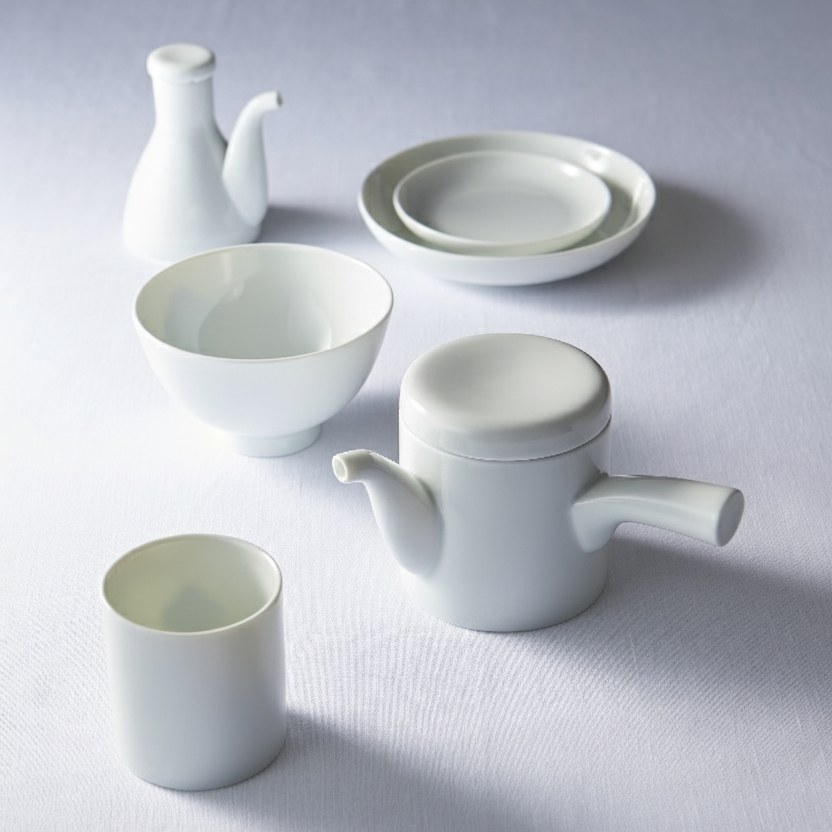
You could say, a bit grandly, that these are the shapes a person finds easiest to use, made straight down the middle. That is why a product from fifty years ago is still perfectly usable today. It lasts.
What They Hope Travels
Does tableware like this work outside Japan?
Shibata: Eating rice from a rice bowl is not a culture everywhere, but tea is, even if it is black tea. Miyama is very good at tea ware, and Japanese tea is now sold in tea shops around the world as one more kind of tea. The teapot, the cups, and the plates may be used a little differently from Japan, but they become everyday tools.
Kumazawa’s hope is less about products than about how Japan is received.
Kumazawa: More and more people are visiting Japan now. I would like them to take in Japanese culture exactly as it is. If it changes shape and reaches people overseas with a different meaning, that would be sad. I have loved Japanese culture since I was young, like the festivals in every region and so on. I would be happy if the real, traditional culture reached people just as it is. I hope that Mino ware becomes a brand known to many more people around the world, and that Miyama is one of the names that carries it.
Then, almost as an afterthought, he added the part he cares about most: that someone, somewhere, holds a piece he cast and feels glad it came to them.
Frequently Asked Questions
What is Mino ware?
Mino ware (Mino-yaki) is pottery and porcelain made in the southeastern part of Gifu Prefecture, including Tajimi, Toki, and Mizunami. It is the largest ceramics-producing region in Japan. Unlike Arita or Bizen, it has no single signature style because the area yields many different clays and minerals that each maker blends in its own way.
What is slip casting?
Slip casting is a way of forming ceramics by pouring liquid clay (slip) into a plaster mold. The plaster absorbs water, a layer of clay forms on the inside of the mold, and the excess is poured out. Miyama forms its tableware this way, including the Sori Yanagi white porcelain series.
What is kohakuji?
Kohakuji, or “old white porcelain,” is the name Miyama gave to the glaze it developed to reproduce the faintly bluish white of the original 1975 Sori Yanagi tableware. The word was coined for this revival.
Which Sori Yanagi pieces does Miyama make?
Miyama makes the white porcelain pieces of Sori Yanagi’s Japanese tableware series: a teapot, teacups, rice bowls, a soy sauce pitcher, and small and medium plates.
Can I buy Miyama porcelain outside Japan?
Yes. Japan Documented ships Miyama porcelain and Sori Yanagi tableware from Japan with tracking. Orders of these pieces over US$200 ship free, and we cover import duties.
Shop the Collection
Explore Miyama’s porcelain, from blue-and-white tea ware to reactive cobalt cups, in our Miyama collection, or see the revived Sori Yanagi tableware.
Want more stories from the people shaping contemporary Japan? Read the rest of our Humans of Japan series.
Read Next
Share