
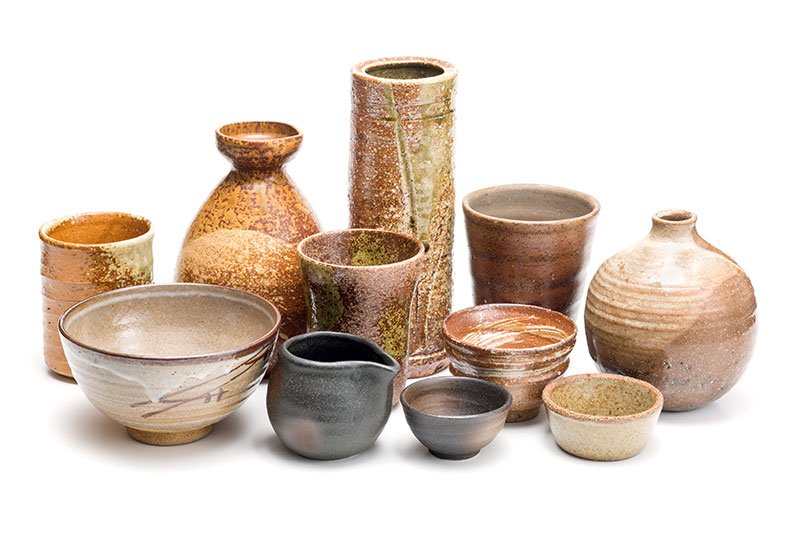
Japanese pottery is not one single style. Across Japan, different regions have developed their own clay, firing methods, glazes, colors, and shapes. That is why you will often see names such as Mino ware, Arita ware, Bizen ware, Hagi ware, and Tokoname ware: each one referring to a distinct ceramic tradition tied to a specific place.
This guide compares the 20 most important Japanese pottery types by region, appearance, common uses, and beginner-friendliness, so you can understand the differences before visiting Japan, buying tableware, or choosing your first piece. We have walked the streets of Mino, Arita, Bizen, Tokoname, and Hagi, spoken with potters and gallery owners, and handled the pieces ourselves to put this guide together.
Quick Answer: What Are the Main Types of Japanese Pottery?
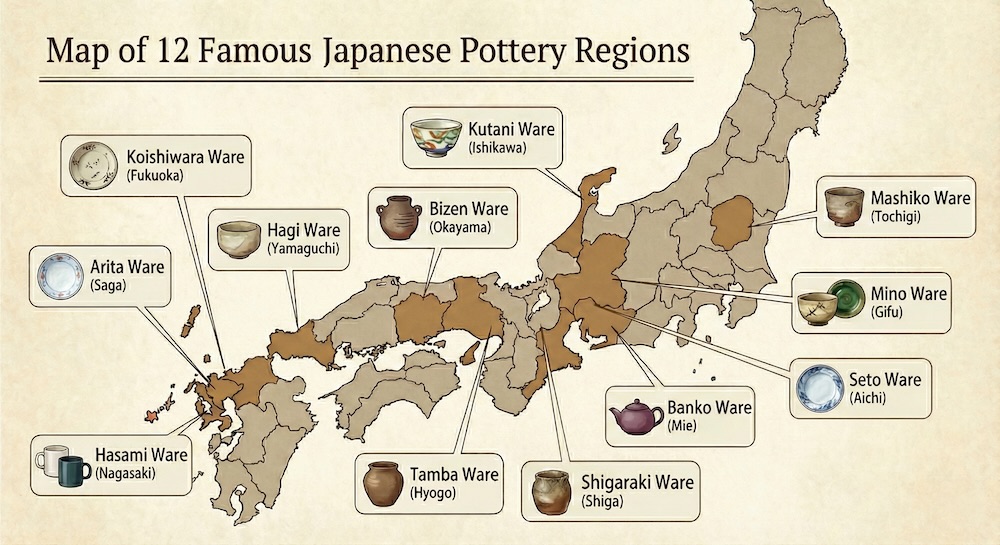
Japan has dozens of regional ceramic traditions, but the 20 most widely recognized Japanese pottery and porcelain types are:
- Mino Ware (Gifu): Japan’s largest production center; versatile everyday tableware.
- Arita Ware (Saga): Japan’s first porcelain; delicate blue or polychrome painting.
- Kutani Ware (Ishikawa): Vivid five-color overglaze painting.
- Bizen Ware (Okayama): Unglazed, earthy stoneware; one of the Six Ancient Kilns.
- Hagi Ware (Yamaguchi): Soft, absorbent tea ware that changes color over time.
- Tokoname Ware (Aichi): Reddish clay teapots (kyusu); one of the Six Ancient Kilns.
- Seto Ware (Aichi): Said to be the origin of the word “Setomono” (ceramics).
- Shigaraki Ware (Shiga): Coarse, warm-toned stoneware; famous tanuki statues.
- Tamba Ware (Hyogo): Natural ash-glaze stoneware from the Six Ancient Kilns.
- Echizen Ware (Fukui): Rugged, ash-glazed stoneware; one of the Six Ancient Kilns.
- Raku Ware (Kyoto): Hand-shaped tea bowls used in the Japanese tea ceremony.
- Karatsu Ware (Saga): Rustic tea ceramics with iron-painted decoration.
- Mashiko Ware (Tochigi): Thick, folk-craft pottery championed by Hamada Shōji.
- Hasami Ware (Nagasaki): Modern, affordable porcelain popular for daily use.
- Koishiwara Ware (Fukuoka): Rhythmic tobikanna (chatter-mark) patterns.
- Banko Ware (Mie): Heat-resistant purple clay teapots and donabe.
- Satsuma Ware (Kagoshima): Ivory porcelain with intricate gold and color painting.
- Imari Ware (Saga): Historic export porcelain shipped from the port of Imari.
- Kyo / Kiyomizu Ware (Kyoto): Refined Kyoto-style ceramics and porcelain.
- Jomon Pottery (Nationwide): The world’s oldest cord-marked earthenware.
Pottery, Porcelain, Ceramics, and “Yaki”: What Do These Words Mean?
Before diving into the 20 styles, it helps to clear up the vocabulary. English speakers often use “pottery,” “porcelain,” and “ceramics” interchangeably, but in Japan each word refers to something a little different.
Pottery (tōki, 陶器)
Pottery (tōki) is made from natural clay and fired at relatively lower temperatures, usually around 1,100 to 1,250°C. It tends to be opaque, slightly porous, and has a warm, earthy feel. Hagi ware, Mashiko ware, and many Mino ware pieces are classic Japanese pottery.
Porcelain (jiki, 磁器)
Porcelain (jiki) is made from refined porcelain stone or kaolin and fired at very high temperatures (around 1,300°C). It is white, hard, smooth, and slightly translucent when held to the light. Arita ware, Imari ware, Kutani ware, and Hasami ware are all porcelain.
Stoneware (sekki, 炻器)
Stoneware sits between pottery and porcelain. It is dense, non-porous, and fired at high temperatures, but it is not translucent. Bizen ware, Shigaraki ware, Tokoname ware, Tamba ware, and Echizen ware are stoneware traditions.
Ceramics (tōjiki, 陶磁器)
Ceramics is the umbrella term that covers all of the above, pottery, porcelain, stoneware, and earthenware. When English-language guides say “Japanese ceramics,” they usually mean every clay-based tradition together.
Ware and “Yaki” (焼)
The suffix -yaki (焼) literally means “fired” or “baked,” and it is the Japanese way of naming a regional ceramic style. Mino-yaki becomes “Mino ware,” Arita-yaki becomes “Arita ware,” and so on. So whenever you see “ware” in this guide, you can mentally replace it with “yaki”. They mean the same thing.
The Six Ancient Kilns of Japan (Nihon Rokkoyo)
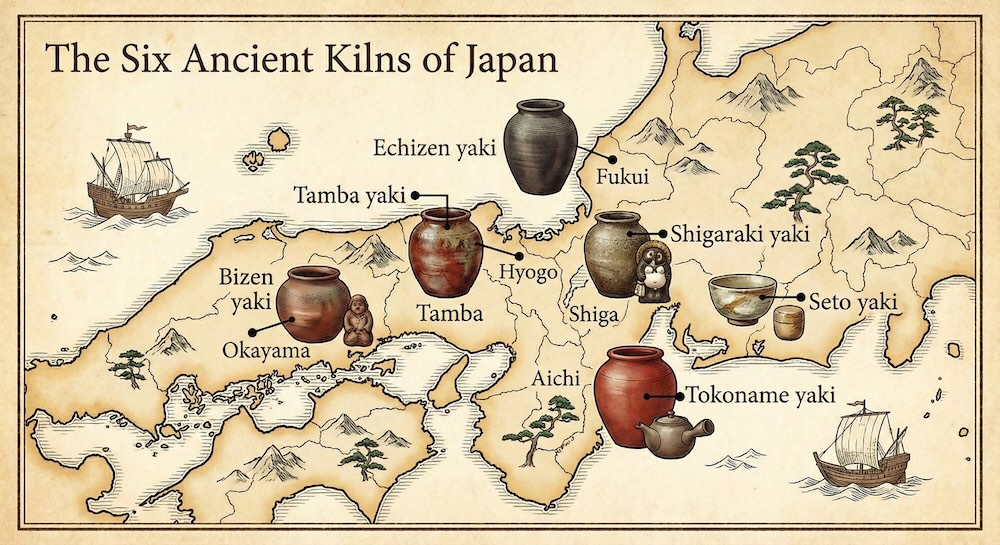
The Six Ancient Kilns (Nihon Rokkoyo) are six historic pottery regions that have continuously produced ceramics from the medieval period to today, for more than 800 to 1,000 years. The term was proposed in 1948 by ceramic scholar Fujio Koyama, and in 2017 the group was officially recognized as a Japan Heritage. The six kilns are:
- Echizen (Fukui): Rugged, ash-glazed jars and storage vessels.
- Seto (Aichi): The only one of the six historically known for using glaze; called the “capital of Japanese ceramics.”
- Tokoname (Aichi): Reddish unglazed clay; famous for kyusu teapots.
- Shigaraki (Shiga): Coarse clay, warm tones, and iconic tanuki statues.
- Tamba (Hyogo): Natural ash-glazed stoneware in deep, earthy colors.
- Bizen (Okayama): Unglazed, fire-marked stoneware prized in the tea world.
If you want to understand Japanese pottery from the inside out, these six regions are the foundation. All six appear in the comparison table and detailed sections below.
Comparison Table: 20 Japanese Pottery Types by Region, Look, and Use
| Type | Region | Category | Look | Common Items | Best For | Beginner-Friendly |
|---|---|---|---|---|---|---|
| Mino Ware | Gifu | Pottery / Porcelain | Diverse, modern, versatile | Bowls, plates, cups | Daily tableware | ★★★★★ |
| Arita Ware | Saga | Porcelain | White base with blue or polychrome painting | Plates, cups, vases | Formal tableware, gifts | ★★★★☆ |
| Kutani Ware | Ishikawa | Porcelain | Bold five-color overglaze | Decorative plates, sake cups | Display, special gifts | ★★★☆☆ |
| Bizen Ware | Okayama | Stoneware | Unglazed reddish-brown, fire-marked | Sake cups, vases, tea utensils | Wabi-sabi interiors, sake | ★★★☆☆ |
| Hagi Ware | Yamaguchi | Pottery | Soft pink-cream glaze, crackled | Tea bowls, yunomi cups | Tea ceremony, slow living | ★★★★☆ |
| Tokoname Ware | Aichi | Stoneware | Reddish clay, smooth surface | Kyusu teapots, mugs | Japanese tea brewing | ★★★★☆ |
| Seto Ware | Aichi | Pottery / Porcelain | Wide range from glazed to painted | Tableware, tea ware | Everyday use | ★★★★★ |
| Shigaraki Ware | Shiga | Stoneware | Coarse warm clay with feldspar specks | Vases, garden pieces, tanuki | Garden, hearty tableware | ★★★☆☆ |
| Tamba Ware | Hyogo | Stoneware | Natural ash-glaze, earthy tones | Jars, tokkuri, tableware | Rustic interiors | ★★★☆☆ |
| Echizen Ware | Fukui | Stoneware | Reddish-brown with natural glaze | Jars, vases, tableware | Wabi-sabi interiors | ★★★☆☆ |
| Raku Ware | Kyoto | Pottery (low-fired) | Hand-shaped, deep black or red | Chawan tea bowls | Tea ceremony | ★★☆☆☆ |
| Karatsu Ware | Saga | Pottery / Stoneware | Rustic, iron-painted, ash-glazed | Tea bowls, plates, sake ware | Tea ceremony, sake | ★★★☆☆ |
| Mashiko Ware | Tochigi | Pottery | Thick, earthy, folk-craft style | Mugs, bowls, plates | Casual daily use | ★★★★★ |
| Hasami Ware | Nagasaki | Porcelain | Clean, modern designs at low prices | Mugs, bowls, plates | Everyday porcelain | ★★★★★ |
| Koishiwara Ware | Fukuoka | Pottery | Rhythmic tobikanna chatter marks | Bowls, plates | Folk-style tableware | ★★★★☆ |
| Banko Ware | Mie | Pottery / Stoneware | Purple-brown heat-resistant clay | Teapots, donabe pots | Cooking, tea brewing | ★★★★☆ |
| Satsuma Ware | Kagoshima | Pottery / Porcelain | Ivory crackle glaze with gold painting | Vases, decorative pieces | Display, antiques | ★★☆☆☆ |
| Imari Ware | Saga | Porcelain | Rich blue, red, and gold painting | Plates, bowls, vases | Formal dining, collecting | ★★★☆☆ |
| Kyo / Kiyomizu Ware | Kyoto | Pottery / Porcelain | Refined, elegant, varied designs | Tea ware, tableware | Gifts, tea ceremony | ★★★☆☆ |
| Jomon Pottery | Nationwide (historic) | Earthenware | Cord-marked, sculptural | Ritual vessels (museum) | Historical interest | : |
20 Famous Japanese Pottery and Porcelain Styles
1. Mino Ware (Mino-yaki, 美濃焼), Gifu Prefecture
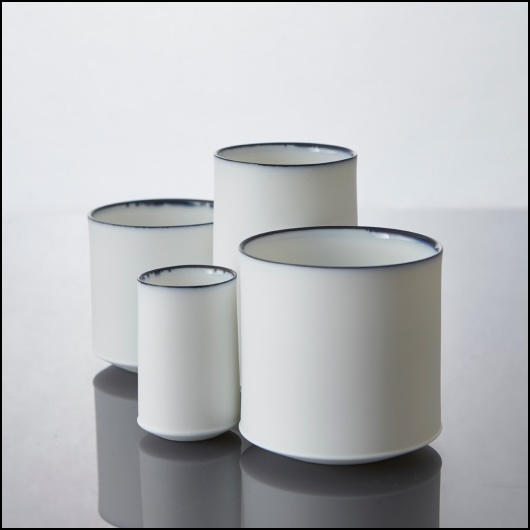
Mino ware comes from the Tono region of Gifu Prefecture and is by far the most widely produced ceramic in Japan, accounting for more than half of all domestic tableware. Unlike traditions defined by a single look, Mino ware is famous for its variety: it includes classic styles such as Shino (creamy white), Oribe (deep green), Kizeto (yellow), and Setoguro (matte black), as well as countless modern, minimalist designs.
How to recognize it: a huge range of shapes and finishes, often with practical, food-friendly forms. Common items: rice bowls, plates, mugs, donburi bowls. Best for: everyday tableware and people who want one set of dishes that works with both Japanese and Western food. If you are buying your first piece of Japanese pottery, Mino ware is the easiest place to start.
2. Arita Ware (Arita-yaki, 有田焼), Saga Prefecture
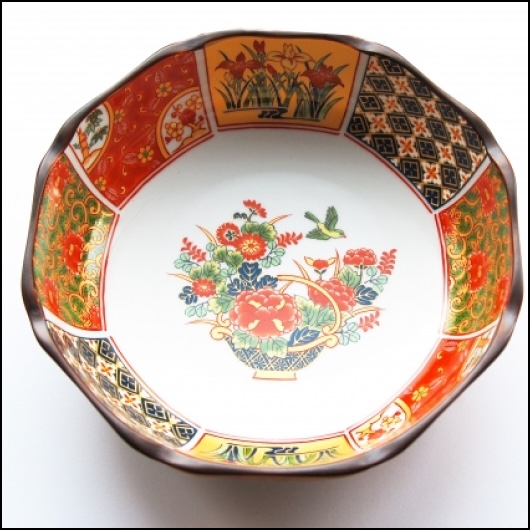
Arita ware is Japan’s first true porcelain, produced in the town of Arita in Saga Prefecture since the early 17th century. Its hallmark is a pure white porcelain body painted with cobalt blue (sometsuke) or vivid overglaze enamels in red, green, and gold. Walk through Arita today and you will see kilns that have operated for more than 400 years.
How to recognize it: bright white porcelain, smooth glassy surface, fine hand-painted designs. Common items: plates, tea cups, small bowls, sake cups, vases. Best for: formal tableware, gifts, and anyone who loves crisp blue-and-white ceramics.
3. Kutani Ware (Kutani-yaki, 九谷焼), Ishikawa Prefecture
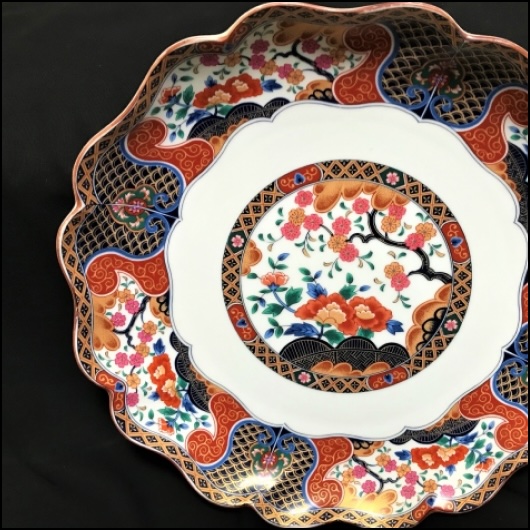
Kutani ware is one of the most visually striking ceramic styles in Japan. Born in the 17th century in what is now Ishikawa Prefecture, it is defined by kutani gosai: the five overglaze colors of green, yellow, purple, dark blue, and red, used to paint everything from landscapes and birds to bold abstract patterns.
How to recognize it: dense, jewel-like painting that often covers most of the surface. Common items: decorative plates, sake cups, vases. Best for: collectors, statement gifts, and people who love color.
4. Bizen Ware (Bizen-yaki, 備前焼), Okayama Prefecture
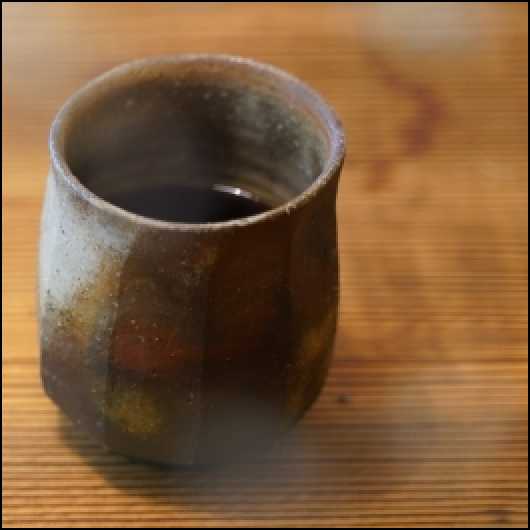
Bizen ware is an unglazed stoneware from Imbe in Okayama Prefecture and one of Japan’s Six Ancient Kilns. Rather than painted decoration, Bizen relies entirely on the natural effects of high-temperature firing, where ash, flame, and clay react inside the kiln over a week or more. The result is a surface no two pieces share.
How to recognize it: earthy reddish-brown tones, no glaze, natural kiln markings (hidasuki straw marks, goma sesame-ash speckles), and a heavy, grounded feel in the hand. Common items: sake cups, vases, tea utensils. Best for: sake lovers, wabi-sabi interiors, and anyone drawn to quiet, sculptural ceramics.
5. Hagi Ware (Hagi-yaki, 萩焼), Yamaguchi Prefecture
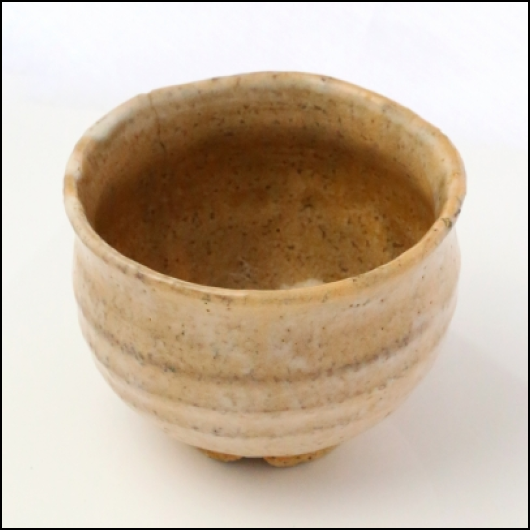
Hagi ware is a soft, porous pottery from Yamaguchi Prefecture, especially treasured in the tea ceremony world. A famous saying in tea circles is “Ichi Raku, ni Hagi, san Karatsu”: Raku first, Hagi second, Karatsu third. Hagi’s loose clay body absorbs a small amount of tea with each use, so the color of the piece gradually shifts over years, a phenomenon called nanabake, “the seven transformations.”
How to recognize it: warm pink-cream or loquat-colored glaze, fine crackles, and a slightly rough foot. Common items: tea bowls (chawan), yunomi cups, sake vessels. Best for: tea ceremony, slow living, and anyone who enjoys watching an object age.
6. Tokoname Ware (Tokoname-yaki, 常滑焼), Aichi Prefecture
Tokoname ware is one of the Six Ancient Kilns and Japan’s most famous home of the kyusu (side-handled teapot). Tokoname’s iron-rich clay turns a deep reddish-brown when fired, and unglazed Tokoname teapots are believed to mellow the taste of green tea by reacting with the tannins in the brew.
How to recognize it: smooth reddish or charcoal-gray clay, simple shapes, very fine spouts. Common items: kyusu teapots, mugs, vases, drainage pipes (historically). Best for: Japanese tea brewing: especially sencha and gyokuro. If you are buying one good teapot, Tokoname is the classic choice.
7. Seto Ware (Seto-yaki, 瀬戸焼), Aichi Prefecture
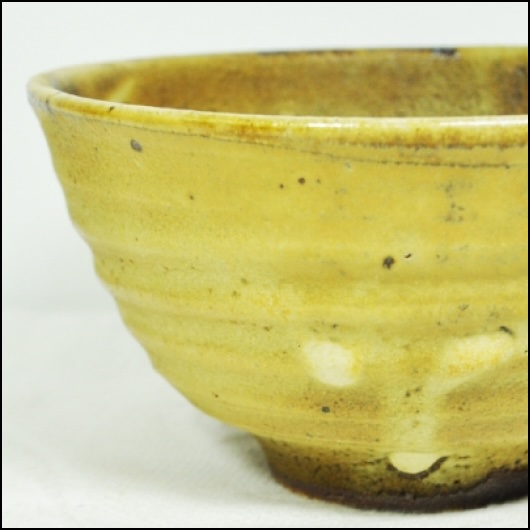
Seto ware comes from Seto City in Aichi and is one of the Six Ancient Kilns. Historically, it was the only one of the six to use glaze widely, which is why “Setomono” became a generic Japanese word for ceramics, much like saying “china” in English. Seto produces both pottery and porcelain in an enormous range of styles.
How to recognize it: very diverse: from ash-glazed pottery to crisp white porcelain. Common items: tableware, tea ware, vases, dolls. Best for: everyday use and people who want approachable, well-made ceramics.
8. Shigaraki Ware (Shigaraki-yaki, 信楽焼), Shiga Prefecture
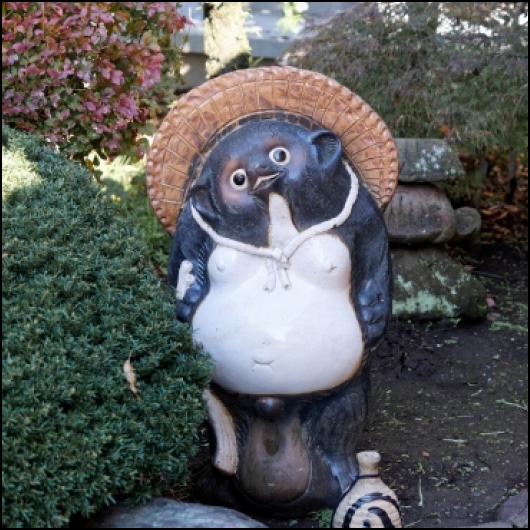
Shigaraki ware is one of the Six Ancient Kilns, located in the hills of southern Shiga Prefecture. Its coarse, iron-rich clay contains feldspar particles that burst through the surface during firing, leaving the characteristic white specks and warm orange tones called hi-iro (fire color). Internationally, Shigaraki is best known for the cheerful tanuki (raccoon dog) statues placed outside restaurants and shops across Japan.
How to recognize it: rough, warm clay body, natural ash glaze, occasional green glassy patches. Common items: vases, planters, large jars, garden pieces. Best for: rustic interiors, ikebana, and statement vases.
9. Tamba Ware (Tamba-yaki, 丹波焼), Hyogo Prefecture
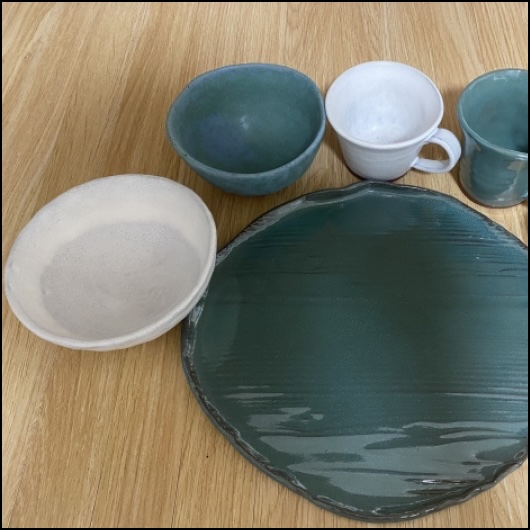
Tamba ware, sometimes called Tachikui ware, is fired in Sasayama, Hyogo and is another of the Six Ancient Kilns. For centuries it was fired in long anagama climbing kilns where pine ash falls naturally onto the clay, fusing into a glossy, unpredictable “natural glaze” with deep browns, greens, and reds.
How to recognize it: dark earthy tones, natural ash glaze running down one side, simple sturdy shapes. Common items: jars, tokkuri (sake bottles), tea ware, tableware. Best for: rustic dining tables, sake, and country-style interiors.
10. Echizen Ware (Echizen-yaki, 越前焼), Fukui Prefecture
Echizen ware is the northernmost of the Six Ancient Kilns, made in the coastal town of Echizen in Fukui Prefecture. Historically it produced large jars and storage vessels for fishermen and farmers along the Sea of Japan. Like Bizen and Shigaraki, Echizen is unglazed in the traditional style, relying on natural ash glaze from the firing.
How to recognize it: dense reddish-brown body, natural greenish ash runs, plain practical shapes. Common items: jars, vases, tableware, modern interior pieces. Best for: minimalist interiors and people who appreciate quiet, utilitarian beauty.
11. Raku Ware (Raku-yaki, 楽焼), Kyoto
Raku ware is hand-shaped pottery made without a wheel, fired at low temperatures and pulled from the kiln while still red-hot. It was developed in Kyoto in the 16th century by the potter Chōjirō under the guidance of tea master Sen no Rikyū, specifically for the chanoyu (Japanese tea ceremony). Today, Raku tea bowls are among the most prized objects in Japanese tea culture.
How to recognize it: hand-formed, slightly irregular shape; deep black (kuro-raku) or red (aka-raku) glaze; warm, light feel. Common items: chawan tea bowls, water jars, incense holders. Best for: tea ceremony practitioners and collectors of contemplative ceramics.
12. Karatsu Ware (Karatsu-yaki, 唐津焼), Saga Prefecture
Karatsu ware is a Kyushu pottery tradition closely tied to the tea ceremony. Brought to Japan by Korean potters in the late 16th century, Karatsu introduced techniques such as the climbing kiln and slip painting that would influence ceramics across the country. The tea world ranks it third in importance behind Raku and Hagi.
How to recognize it: earthy clay body, simple iron-oxide (“e-Karatsu”) brushwork, soft ash or straw-ash glazes. Common items: tea bowls, plates, sake cups, mukozuke dishes. Best for: tea ceremony, sake, and rustic kaiseki-style tables.
13. Mashiko Ware (Mashiko-yaki, 益子焼), Tochigi Prefecture
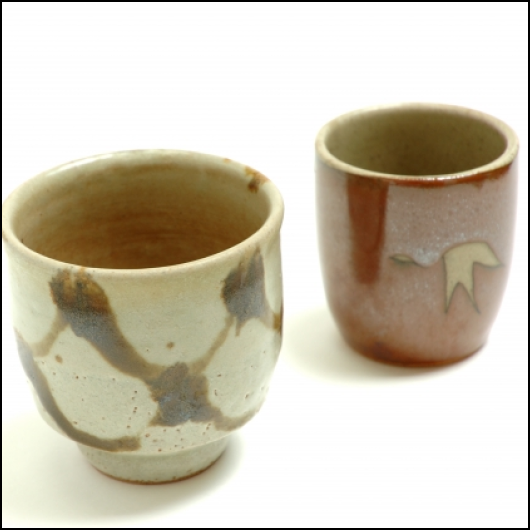
Mashiko ware comes from the town of Mashiko in Tochigi Prefecture and has been one of Japan’s leading folk-craft (mingei) regions since the 20th century, largely thanks to potter Hamada Shōji, who was designated a Living National Treasure. Mashiko clay is heavy and gritty, so pieces are thick-walled and have a friendly, hand-made character.
How to recognize it: thick walls, earthy browns and creams, simple glaze patterns (especially kaki-yū persimmon glaze). Common items: mugs, bowls, plates, teapots. Best for: casual everyday use and people who love a “made by hand” feel.
14. Hasami Ware (Hasami-yaki, 波佐見焼), Nagasaki Prefecture
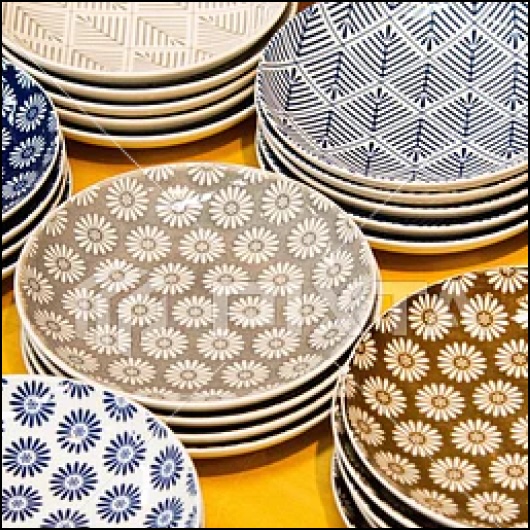
Hasami ware is porcelain produced in the town of Hasami in Nagasaki Prefecture, with a 400-year history. For most of that time, Hasami porcelain was sold under the Arita and Imari names; today it has stepped out on its own and become one of the most popular brands of modern Japanese porcelain, especially among younger buyers who want clean, simple, affordable tableware.
How to recognize it: crisp white porcelain, contemporary shapes, matte or gloss finishes in soft pastel or monochrome colors. Common items: mugs, rice bowls, plates, soba cups. Best for: everyday porcelain, dishwasher-friendly daily use, and gifts under your first budget.
15. Koishiwara Ware (Koishiwara-yaki, 小石原焼), Fukuoka Prefecture
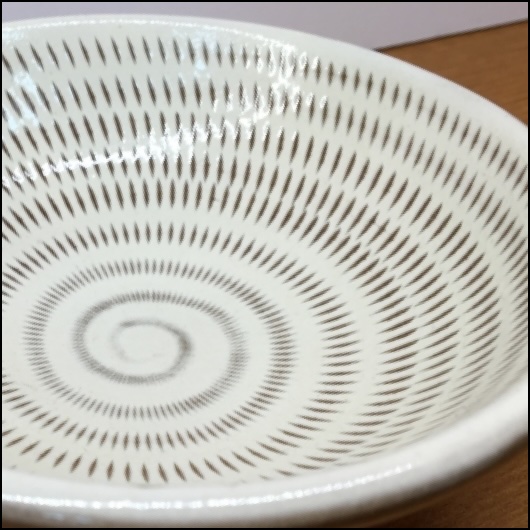
Koishiwara ware is a folk-craft pottery from the mountains of Fukuoka, famous for its rhythmic surface patterns. The signature technique is tobikanna (“flying blade”), in which a flexible metal tool bounces across the spinning clay to leave a row of small, evenly spaced chatter marks. Other patterns include brush marks (hakeme) and finger swirls (yubikaki).
How to recognize it: rings of evenly spaced chatter marks, earthy two-tone glazes. Common items: bowls, plates, mugs. Best for: folk-style tableware and lovers of the mingei aesthetic.
16. Banko Ware (Banko-yaki, 萬古焼), Mie Prefecture
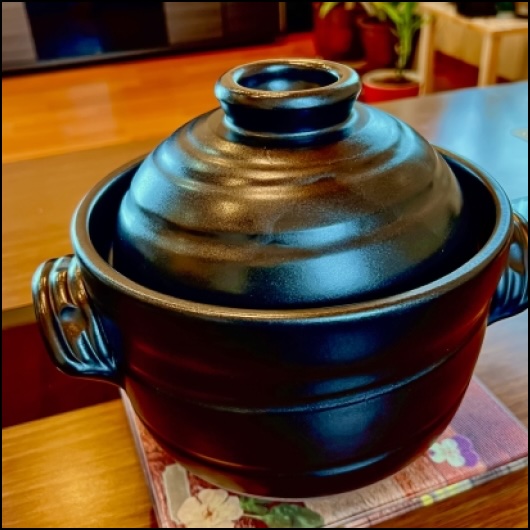
Banko ware is made in Yokkaichi, Mie Prefecture, and is best known for its heat-resistant purple clay. Banko produces roughly 80% of Japan’s kyusu teapots and the majority of its donabe (clay cooking pots), making it the most important everyday cookware ceramic in the country.
How to recognize it: deep purplish-brown unglazed clay (shidei), thin walls on teapots, sturdy walls on donabe. Common items: teapots, donabe, rice cookers, tagine-style pots. Best for: daily tea brewing and Japanese home cooking, especially nabe and rice.
17. Satsuma Ware (Satsuma-yaki, 薩摩焼), Kagoshima Prefecture
Satsuma ware is produced in Kagoshima at the southern tip of Kyushu. It comes in two main types: shiro-satsuma (white Satsuma), an ivory-colored crackle-glazed pottery decorated with extraordinarily fine gold and enamel painting, and kuro-satsuma (black Satsuma), a sturdy dark stoneware used for everyday vessels and shōchū flasks. Export Satsuma was a sensation in Europe and America in the late 19th century and is still a major presence in the international antiques market.
How to recognize it: ivory crackle glaze covered in detailed gold-and-color painting, or matte black stoneware. Common items: vases, decorative jars, tea bowls, shōchū bottles. Best for: display, collecting antiques, and special-occasion gifts.
18. Imari Ware (Imari-yaki, 伊万里焼), Saga Prefecture
Imari ware is closely related to Arita ware: in fact, “Imari” historically referred to porcelain made in Arita and exported through the port of Imari. From the 17th century onward, “Old Imari” (ko-Imari) became prized in Europe for its dense decoration of cobalt blue underglaze, iron-red enamel, and gold. Today, the name often points to that ornate, opulent style.
How to recognize it: richly painted porcelain in red, blue, and gold; often plates and chargers with dense floral or scenic motifs. Common items: large plates, bowls, vases, ginger jars. Best for: formal dining, antique collecting, and lovers of opulent decoration.
19. Kyo Ware / Kiyomizu Ware (Kyo-yaki, Kiyomizu-yaki, 京焼・清水焼), Kyoto
Kyo ware is an umbrella term for ceramics made in Kyoto, while Kiyomizu ware refers more specifically to pieces from the workshops around Kiyomizu Temple. Because Kyoto was Japan’s cultural capital for over a thousand years, Kyo/Kiyomizu ceramics absorbed influences from every other major pottery region and developed an especially refined, decorative aesthetic. Famous Kyoto-trained masters include Nonomura Ninsei and Ogata Kenzan.
How to recognize it: elegant shapes, finely painted motifs, often combining porcelain and pottery techniques. Common items: tea ware, sake sets, small plates, incense holders. Best for: tea ceremony, gifts, and visitors looking for a meaningful souvenir from Kyoto.
20. Jomon Pottery (Jomon doki, 縄文土器), Nationwide (Prehistoric)
Jomon pottery is the oldest ceramic tradition in Japan, and among the oldest in the world. Made from around 14,000 BCE during Japan’s Jomon period, these earthenware vessels are decorated with cord patterns pressed into the wet clay (jomon literally means “cord-marked”). Late-period “flame-style” Jomon pots from central Japan, with their dramatic sculpted rims, are some of the most striking ceramic objects ever produced.
How to recognize it: low-fired earthenware, cord-impressed patterns, sculptural rims. Common items: historical cooking and storage vessels, ritual figures (dogū); today, mostly seen in museums. Best for: understanding the deep roots of Japanese ceramics. Visit the Tokyo National Museum or the Niigata Prefectural Museum of History to see real examples.
Which Japanese Pottery Should You Choose?
With 20 traditions to choose from, picking your first piece can feel overwhelming. Here is a short guide based on how you actually plan to use it.
Best for everyday tableware
Mino ware, Hasami ware, and Mashiko ware are the easiest entry points. They are durable, affordable, easy to find in Japan and abroad, and work with both Japanese and Western food. Mino and Hasami are typically dishwasher- and microwave-safe, check with the maker.
Best for tea
For brewing Japanese green tea, choose a Tokoname or Banko kyusu: both are designed specifically for the temperature and tannin profile of sencha and gyokuro. For drinking matcha in the tea ceremony, look for Raku, Hagi, or Karatsu chawan, which together form the classic ranking of tea bowls.
Best for rustic, wabi-sabi interiors
Bizen, Shigaraki, Tamba, and Echizen: four of the Six Ancient Kilns, are unglazed or naturally ash-glazed stoneware. Their quiet, irregular surfaces are the textbook expression of wabi-sabi: appreciating the beauty of imperfection, asymmetry, and the passage of time. An uneven rim, a distorted shape, or a glaze that flows unpredictably is not a flaw. It is the point.
Best for colorful decorative pieces
If you want a statement piece, Kutani, Imari, Satsuma, and Kyo/Kiyomizu are unmatched in their use of color, gold, and detailed painting. These are the styles to look at if you are decorating a display shelf rather than setting a dinner table.
Best for gifts
For a gift that feels distinctly Japanese without being intimidating, an Arita or Hasami porcelain set is hard to beat. For a special occasion, a wedding, a milestone birthday, a Kutani sake set or a Kyo/Kiyomizu tea cup carries more weight. For someone deep into tea culture, a Hagi yunomi or a Tokoname kyusu is the kind of gift they will use for years.
Why Japanese Pottery Looks the Way It Does: Wabi-Sabi and the Beauty of Imperfection
Once you know the regions and the techniques, one question still remains: why do so many Japanese ceramics look deliberately rough, uneven, or unfinished? The answer is wabi-sabi, an aesthetic philosophy with deep roots in Zen Buddhism and the tea ceremony.
Unlike Western porcelain, which historically pursued symmetrical, flawless beauty, the soul of much Japanese pottery lies in natural, asymmetrical forms. An uneven rim on a Hagi tea bowl, a fire-marked surface on a Bizen sake cup, or a glaze that drips off-center on a Tamba jar. These are not mistakes. They are evidence that the piece was made by human hands and shaped by fire, and they invite you to slow down and look closely.
This is also why Japanese ceramics age beautifully. The warmth of the hand-crafted touch, the unique texture of local clays, and the way the colors deepen with use turn each vessel into a companion that grows alongside its owner. It is one of the main reasons Japanese pottery is loved around the world.
Where to See or Buy Japanese Pottery in Japan
If you are planning a trip, several pottery towns are easy to reach and reward a one- or two-day visit:
- Arita and Hasami (Kyushu): Walk between century-old porcelain kilns and visit the Kyushu Ceramic Museum. The Arita Ceramics Fair in early May is the largest in Japan.
- Mino / Tajimi (Gifu): Browse Mino ware at outlet markets and the Museum of Modern Ceramic Art, Gifu.
- Tokoname (Aichi): Wander the Pottery Footpath (Yakimono Sanpomichi) past kilns, chimneys, and teapot studios.
- Shigaraki (Shiga): Visit the Miho Museum and pottery studios surrounded by tanuki statues.
- Bizen / Imbe (Okayama): Watch firings at the Bizen Pottery Traditional Industry Hall and shop directly from kilns.
- Mashiko (Tochigi): A 2-hour day trip from Tokyo, especially lively during the spring and autumn pottery fairs.
- Kyoto: Climb the Kiyomizuzaka slope toward Kiyomizu Temple to find Kyo/Kiyomizu shops side by side.
In Tokyo, the Japan Folk Crafts Museum (Mingeikan) in Komaba and the ceramics galleries at the Tokyo National Museum in Ueno are excellent introductions before you travel further.
If you want to start with a curated selection of pieces that are easy to use every day, you can browse our Sori Yanagi Washokki Collection, made in the Mino region, a good way to bring the most popular type of Japanese pottery into your home.
Related Reading on Japanese Pottery
- Japanese Pottery vs Porcelain vs Ceramics: What’s the Difference?
- What Is Kintsugi? The Japanese Art of Repairing Pottery with Gold
- Wabi-Sabi Pottery: Why Japanese Ceramics Embrace Imperfection
- Nerikomi Pottery: Japan’s Layered Clay Art
- Mino Ware Guide: Japan’s Most Popular Tableware
- Arita vs Imari vs Hasami: How These Three Porcelain Traditions Differ
- Where to Experience Pottery in Japan: Studios, Towns, and Workshops
FAQ About Japanese Pottery Types
What are the main types of Japanese pottery?
The most widely recognized Japanese pottery types include Mino, Arita, Kutani, Bizen, Hagi, Tokoname, Seto, Shigaraki, Tamba, Echizen, Raku, Karatsu, Mashiko, Hasami, Koishiwara, Banko, Satsuma, Imari, Kyo/Kiyomizu, and the prehistoric Jomon pottery. Each is named after the region where it is made.
What is the difference between Japanese pottery and porcelain?
Pottery (tōki) is made from natural clay and fired at lower temperatures, leaving an opaque, warm, slightly porous surface. Porcelain (jiki) is made from refined porcelain stone or kaolin, fired at very high temperatures, and comes out hard, white, and slightly translucent. Arita, Imari, Kutani, and Hasami are porcelain; Hagi, Mashiko, and most Mino ware are pottery.
What does “yaki” mean in Japanese ceramics?
“Yaki” (焼) literally means “fired” or “baked” and is the Japanese suffix used to name a regional ceramic style. Mino-yaki = Mino ware, Arita-yaki = Arita ware, and so on.
Which Japanese pottery is best for beginners?
Mino ware, Hasami ware, and Mashiko ware are the easiest to start with. They are widely available, reasonably priced, durable, and work with both Japanese and Western food.
What is the most famous Japanese pottery?
By production volume, Mino ware is the most widely produced, accounting for more than half of all ceramic tableware made in Japan. By international name recognition, Arita ware, Imari ware, and Satsuma ware are the most famous because of their long history as export ceramics.
What is the difference between Arita ware and Imari ware?
Arita ware and Imari ware are made in the same area of Saga Prefecture. Historically, porcelain produced in Arita was exported through the nearby port of Imari, so European buyers called it “Imari.” Today, “Arita ware” usually refers to porcelain made in the town of Arita, while “Imari ware” often refers to the densely painted blue-red-gold style associated with the export trade.
What are the Six Ancient Kilns of Japan?
The Six Ancient Kilns (Nihon Rokkoyo) are Echizen, Seto, Tokoname, Shigaraki, Tamba, and Bizen. The grouping was proposed in 1948 by scholar Fujio Koyama to highlight six regions that have produced ceramics continuously since the medieval period, and the six were officially recognized as a Japan Heritage in 2017.
Share