
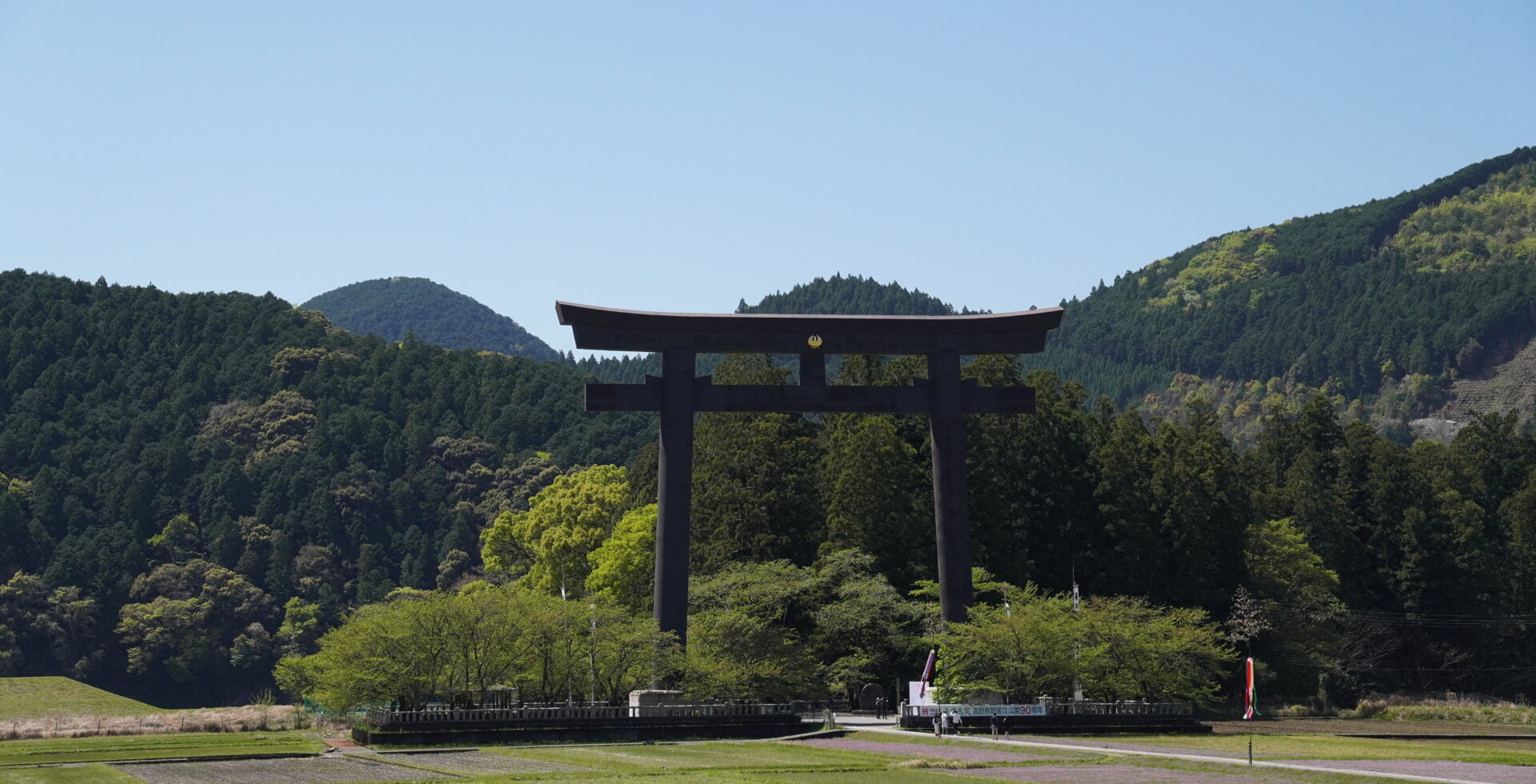
Kumano Hongu Taisha (熊野本宮大社) is the head shrine of the more than 3,000 Kumano shrines across Japan, hidden deep in the forested Kii Mountains of Wakayama Prefecture. It is one of the three grand shrines of Kumano (the Kumano Sanzan) and the spiritual heart of the Kumano Kodo, the ancient pilgrimage routes recognized as a UNESCO World Heritage Site. A short walk away stands its most photographed landmark: the giant Ōyunohara torii, the largest shrine gate in the world.
We travelled the full length of the Kii Peninsula to reach Hongu — down the coast by local train and up into the mountains — and photographed the shrine, the great torii, and the two sister shrines at Shingu and Nachi on the same trip. This is a first-hand guide to what Kumano Hongu Taisha actually is, what you see when you get there, and how to plan the journey.
Everything below is based on our own visit; all photographs on this page were taken by the Japan Documented team on location.
Kumano Hongu Taisha at a glance
- What it is: The head shrine of all Kumano shrines in Japan; one of the three Kumano Sanzan grand shrines.
- Where: Hongū, Tanabe City, Wakayama Prefecture, in the mountains of the southern Kii Peninsula.
- Main deity: Ketsumiko-no-Ōkami (the Kumano Gongen), enshrined alongside other Kumano deities.
- Famous for: The atmospheric mountain shrine, the Yatagarasu three-legged crow, and the world’s largest torii gate at Ōyunohara.
- Pilgrimage: The final destination and hub of the Kumano Kodo, a UNESCO World Heritage pilgrimage route.
- Cost: Free to enter the shrine grounds.
What is Kumano Hongu Taisha?
Kumano Hongu Taisha is the most senior of the three Kumano grand shrines and the origin point of Kumano worship, a faith that spread across Japan until Kumano shrines numbered in the thousands. For over a thousand years, retired emperors, aristocrats and ordinary pilgrims walked here through the mountains in such numbers that the pilgrimage was described as a procession “like ants” — a journey of purification and rebirth rather than a single day trip.
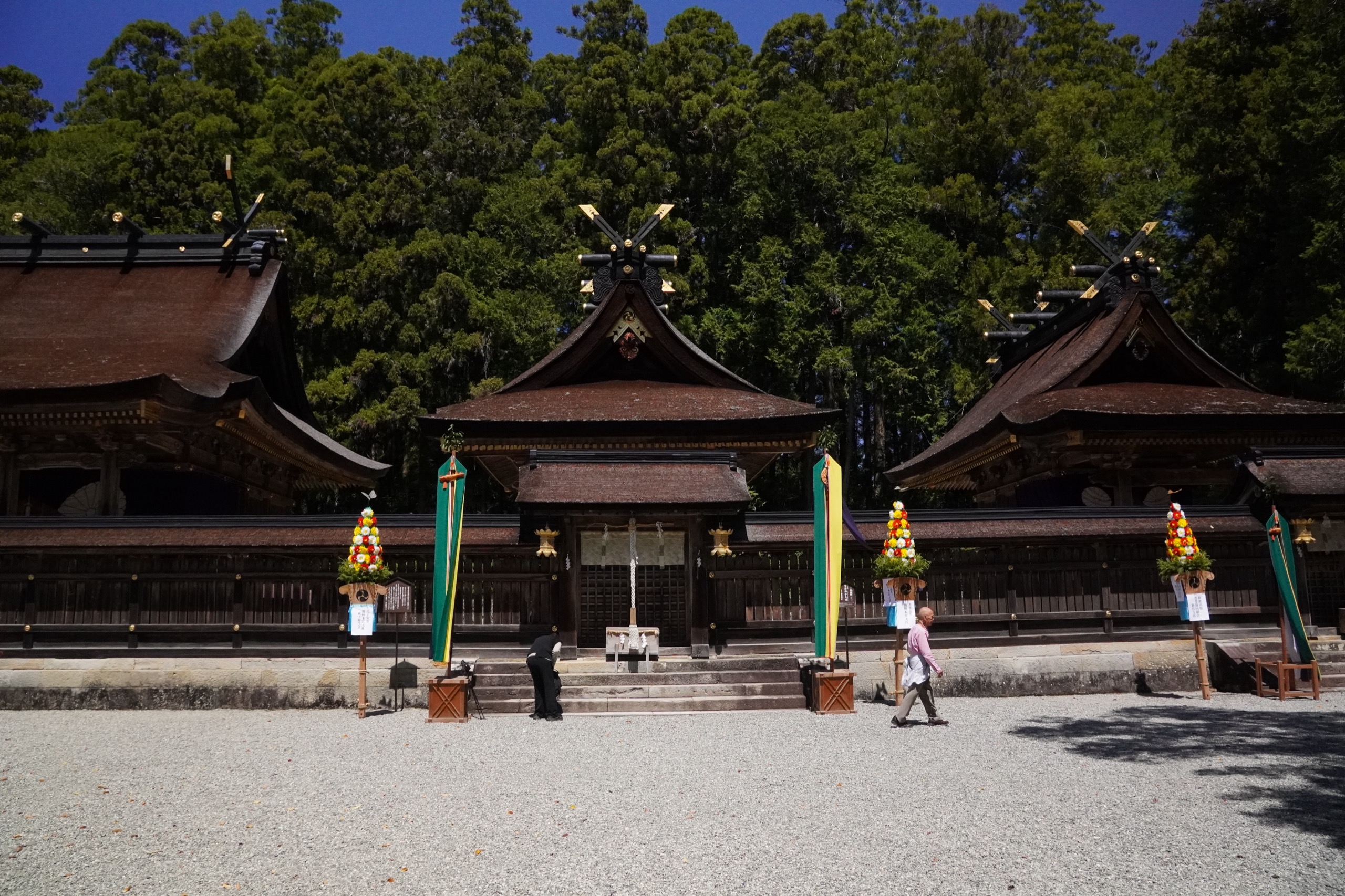
Unlike the bright vermilion shrines many visitors picture, Hongu’s main halls are built of plain, unpainted cypress with steep cypress-bark roofs, crowned with gold crossed finials (chigi). Set among towering cedars, the effect is solemn and quiet rather than showy — a shrine that feels genuinely ancient, on a par with Japan’s oldest sacred sites such as Ōmiwa Shrine.
The Yatagarasu: Kumano’s three-legged crow
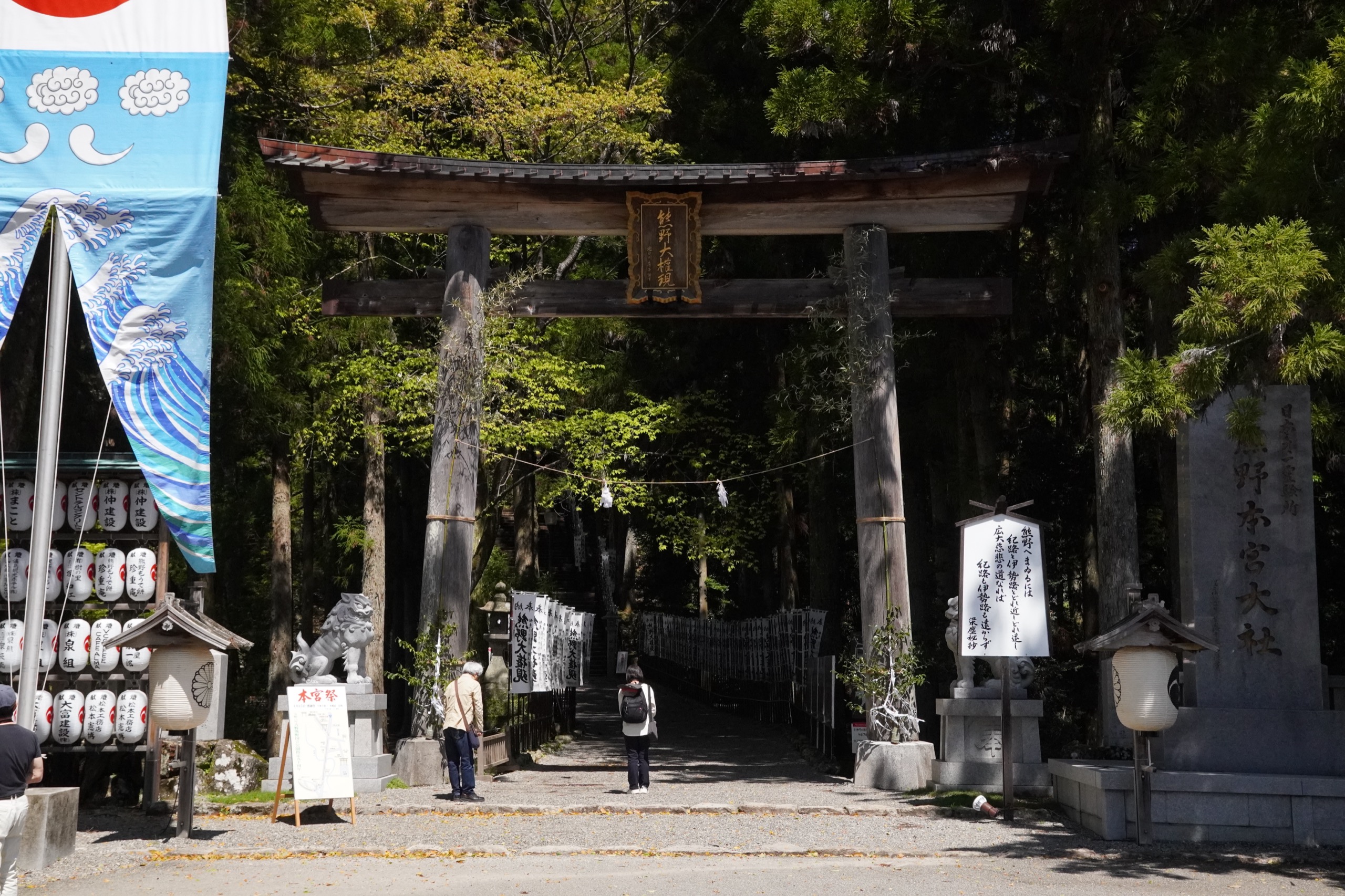
Everywhere at Hongu you see the Yatagarasu, a three-legged crow that is the sacred messenger of Kumano. In legend it guided Japan’s first emperor, Jimmu, through these very mountains. Today it appears on the shrine’s banners and charms — and, more famously, on the badge of the Japan national football team, which adopted the Kumano crow as its emblem. Look for it on the flags lining the approach and at the main gate.
Visiting the main shrine
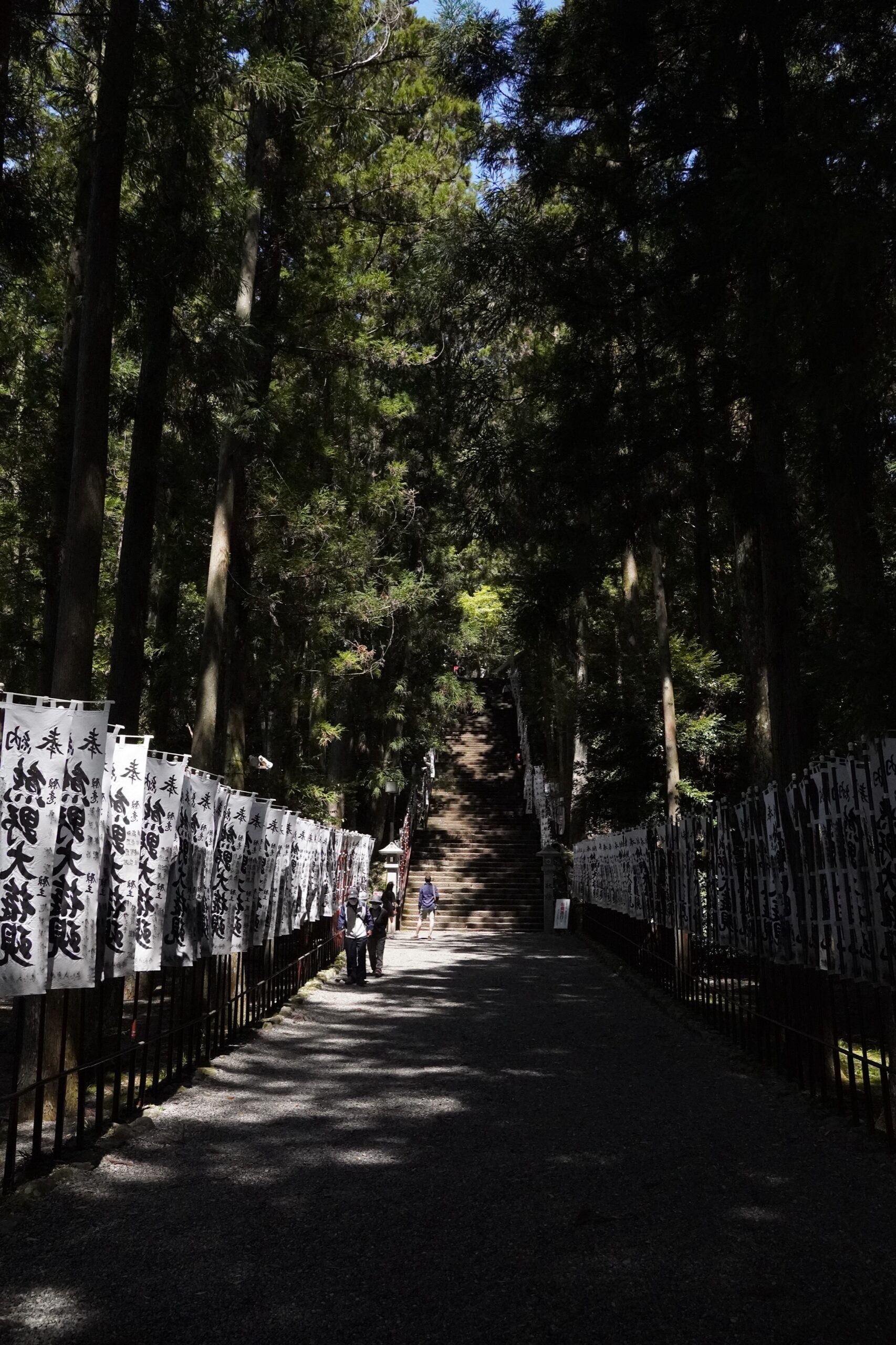
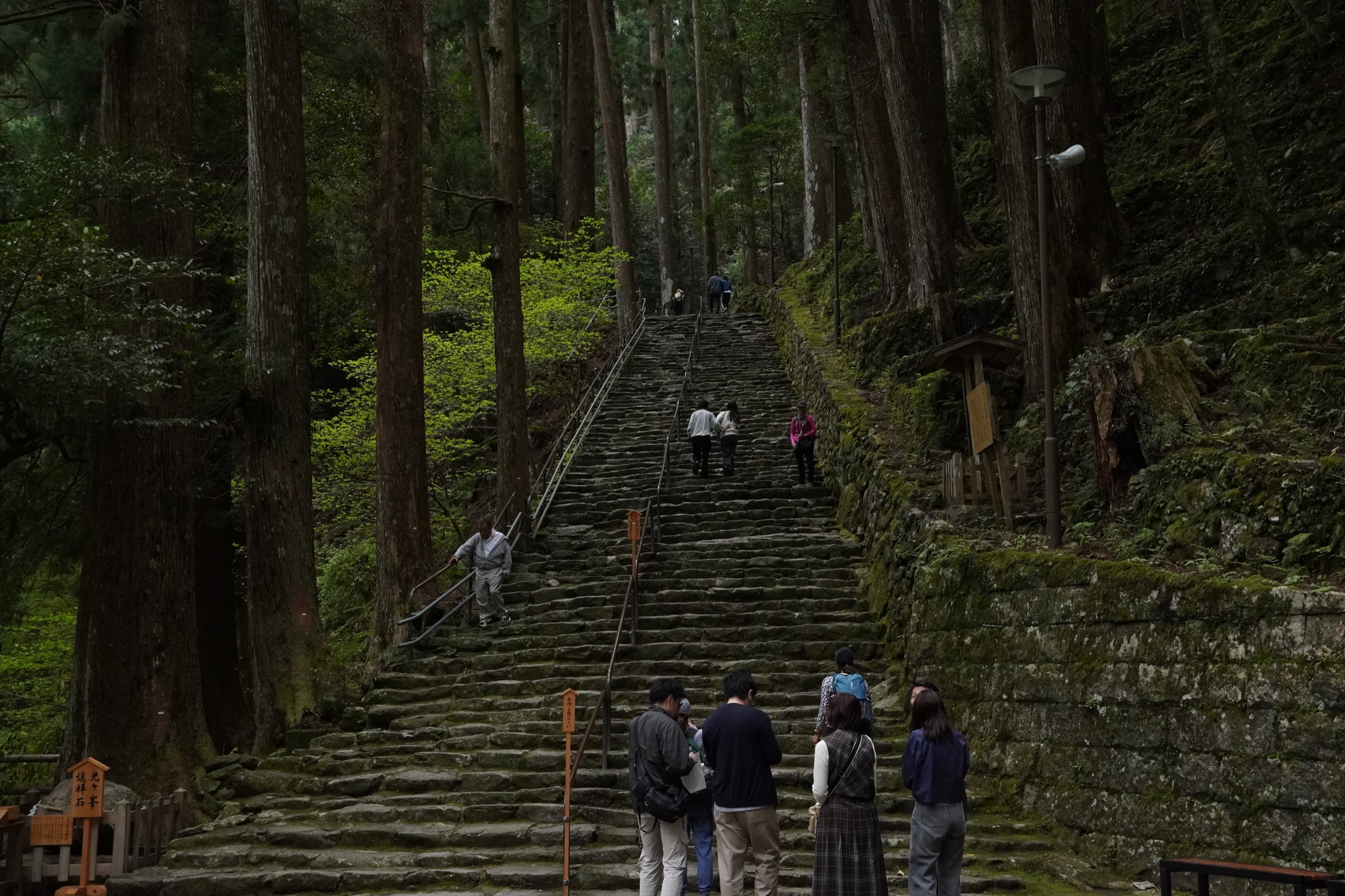
From the road, a wide stone staircase of 158 steps climbs through cedar forest to the shinmon (sacred gate), lined during festival season with white banners. Beyond the gate stand the shrine’s main pavilions, side by side under their dark cypress-bark roofs. When we visited, the halls were dressed for the spring Reitaisai festival, with tall flower offerings and green-and-yellow banners flanking the prayer hall.
The current buildings are not on the shrine’s original site. Until 1889 the shrine stood on a sandbar in the river below, at a place called Ōyunohara. A catastrophic flood that year destroyed much of the complex, and the surviving halls were rebuilt on this higher, safer hillside — which is why the shrine and its old sacred ground are now a short walk apart.
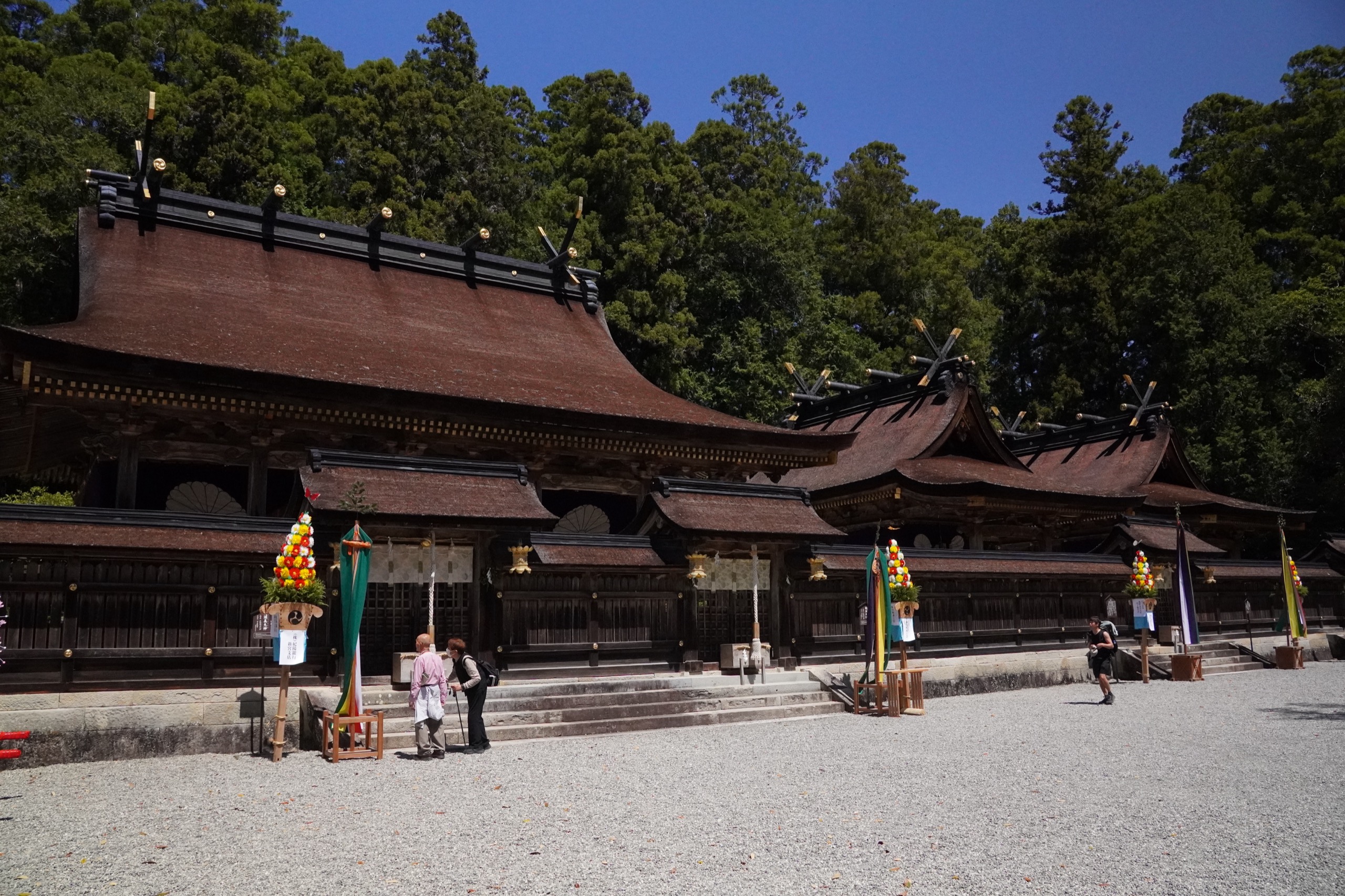
A practical tip from our visit: give yourself time to simply stand in the precinct. After the effort of getting here, the stillness under the cedars is the point — this is a shrine that rewards slowing down rather than rushing between photo spots. New to visiting Japanese shrines? Our guide to shrine etiquette and how to pray covers the simple steps.
Ōyunohara and the world’s largest torii
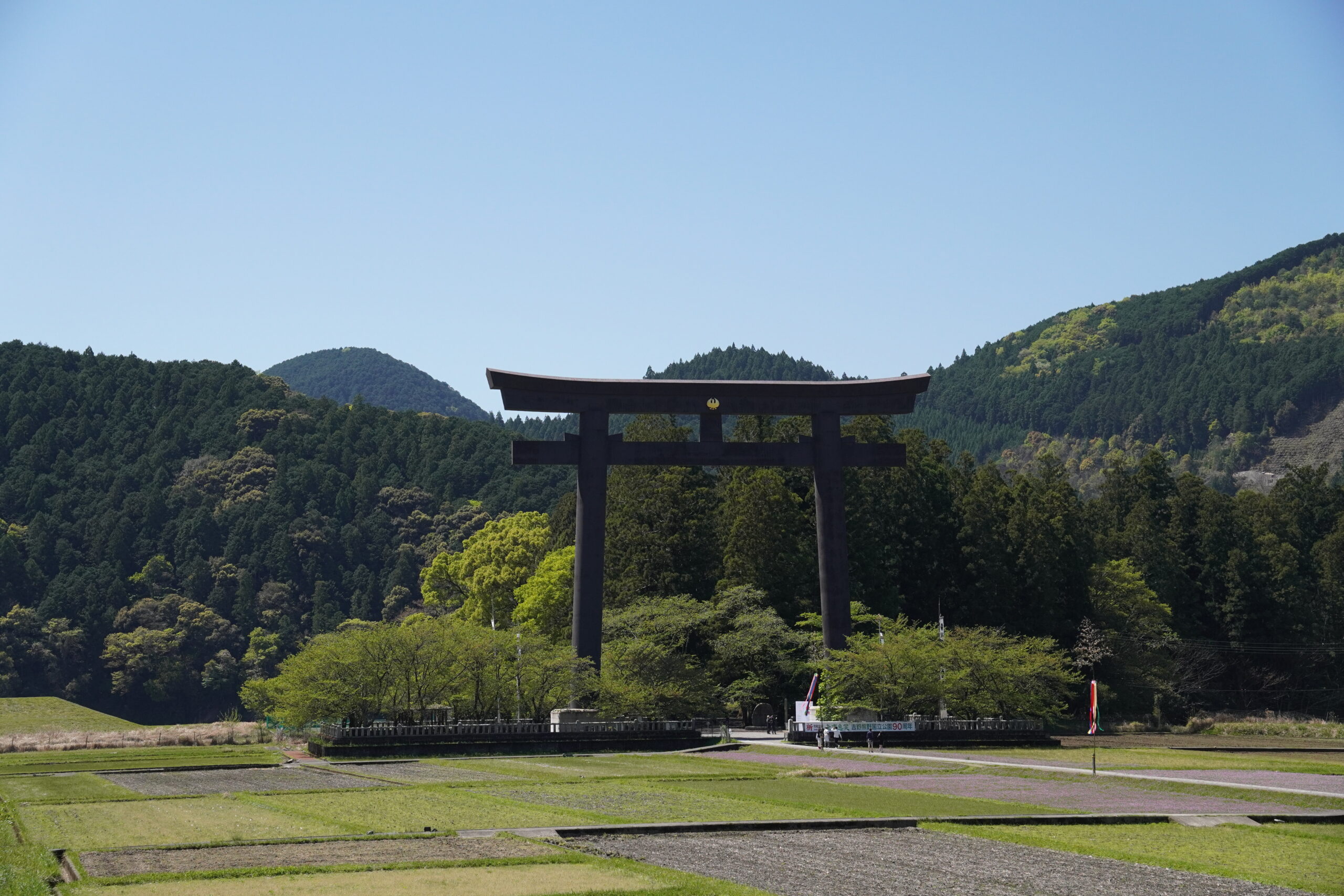
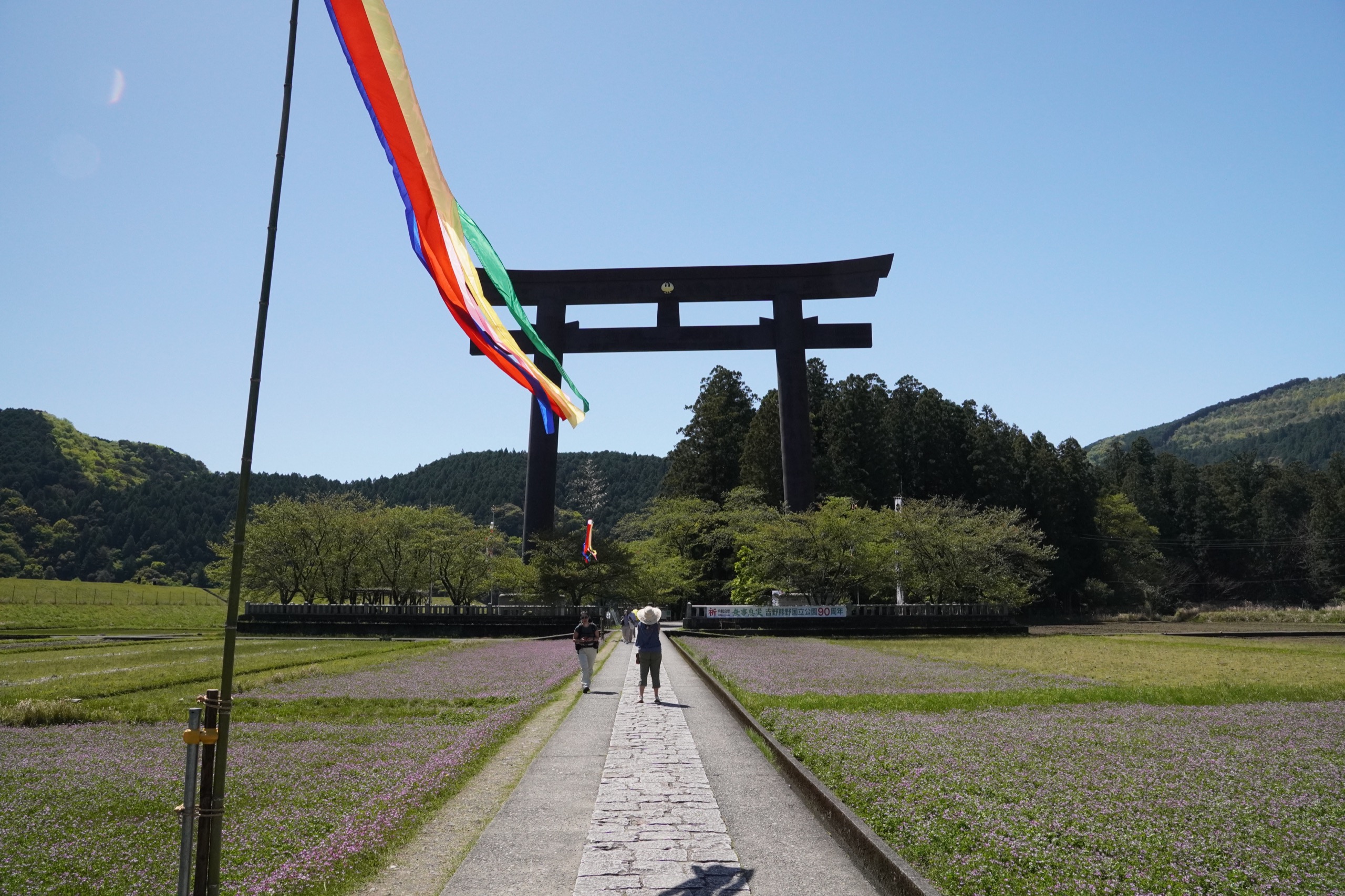
Ōyunohara (大斎原) is the original site of Kumano Hongu Taisha, and it is home to the largest torii gate on Earth. Standing roughly 34 metres tall and 42 metres wide, the steel gate — completed in 2000 — is so big that the pilgrims and rice paddies beneath it look tiny. It marks the entrance to the quiet, tree-shaded sandbank where the shrine stood for centuries before the 1889 flood.
Walking out to Ōyunohara from the main shrine takes only about ten minutes, across the fields, and it is the highlight of many visitors’ trip. The scale of the torii against the mountains and the open sky is genuinely hard to convey in photos — it is worth timing your visit so you can see both the shrine and the great gate.
Hongu and the Kumano Sanzan (three grand shrines)
Kumano Hongu Taisha is one of three shrines that together form the Kumano Sanzan. Pilgrims traditionally visit all three, and if you have made the journey to Hongu it is well worth continuing to the other two:
- Kumano Hayatama Taisha (in Shingu, on the coast) — a striking vermilion shrine near the mouth of the Kumano River.
- Kumano Nachi Taisha — set beside Nachi Falls, Japan’s tallest single-drop waterfall, with the vermilion three-storied pagoda of Seiganto-ji framing the cascade in one of the most iconic views in all of Japan.
The three shrines sit at the points of a rough triangle across the southern Kii Peninsula, connected historically by the Kumano Kodo trails and today by road and rail. Hongu is the mountain shrine; Hayatama and Nachi are closer to the sea.
How to get to Kumano Hongu Taisha
Getting to Hongu is part of the experience — there is no train to the shrine itself, and the last leg is always by bus or car through the mountains. The two usual approaches are:
- From the Kii Peninsula coast: Take the JR Kisei Main Line, a scenic local railway that hugs the Pacific coast, to Kii-Tanabe (west side) or Shingu/Kii-Katsuura (east side), then a Kumano Kotsu bus up the river valley to Hongu Taisha-mae.
- On foot: Walk a section of the Kumano Kodo. The Nakahechi route ends at Hongu, and even a short half-day walk on the old trail into the shrine is a memorable way to arrive.
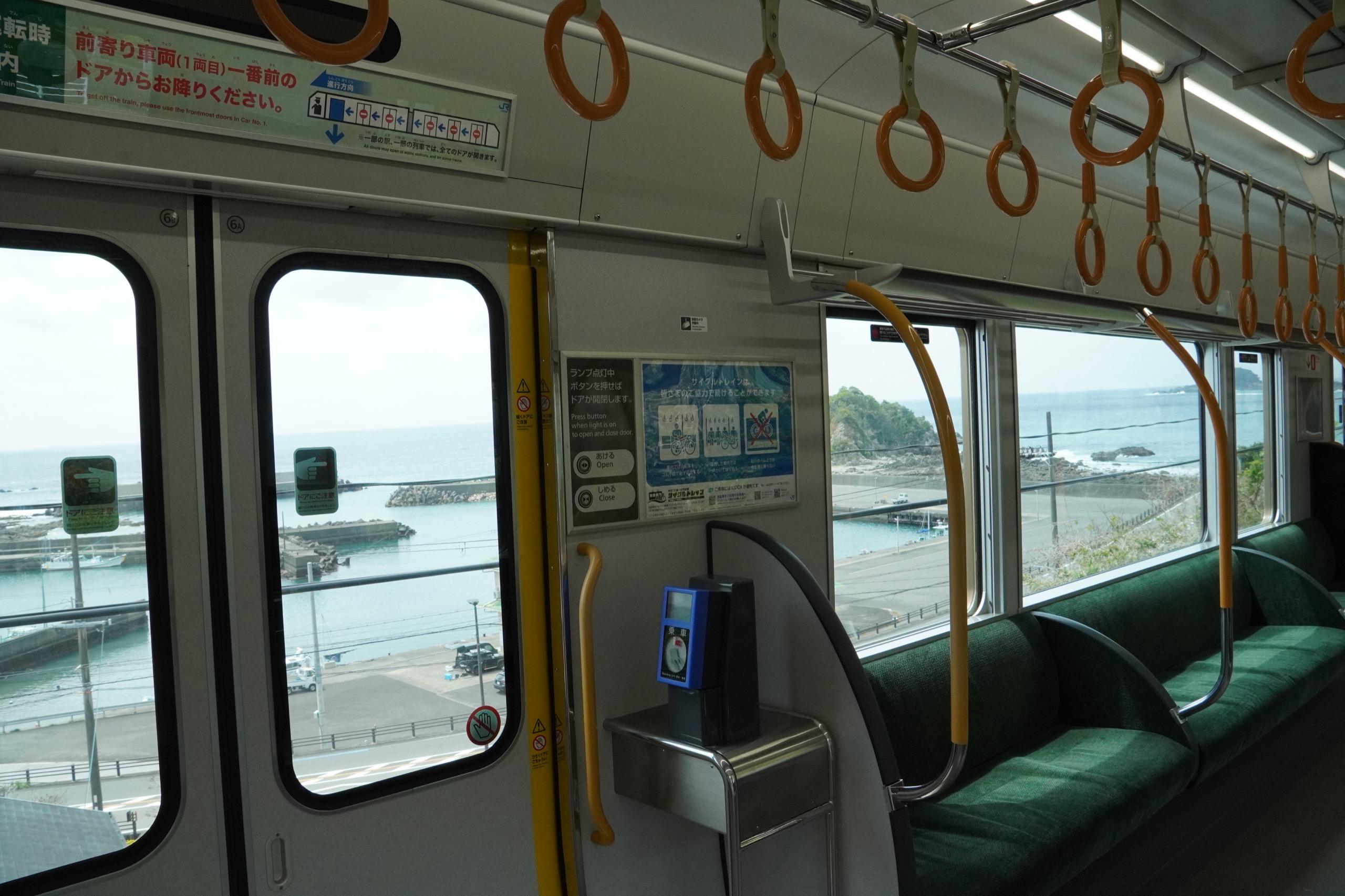
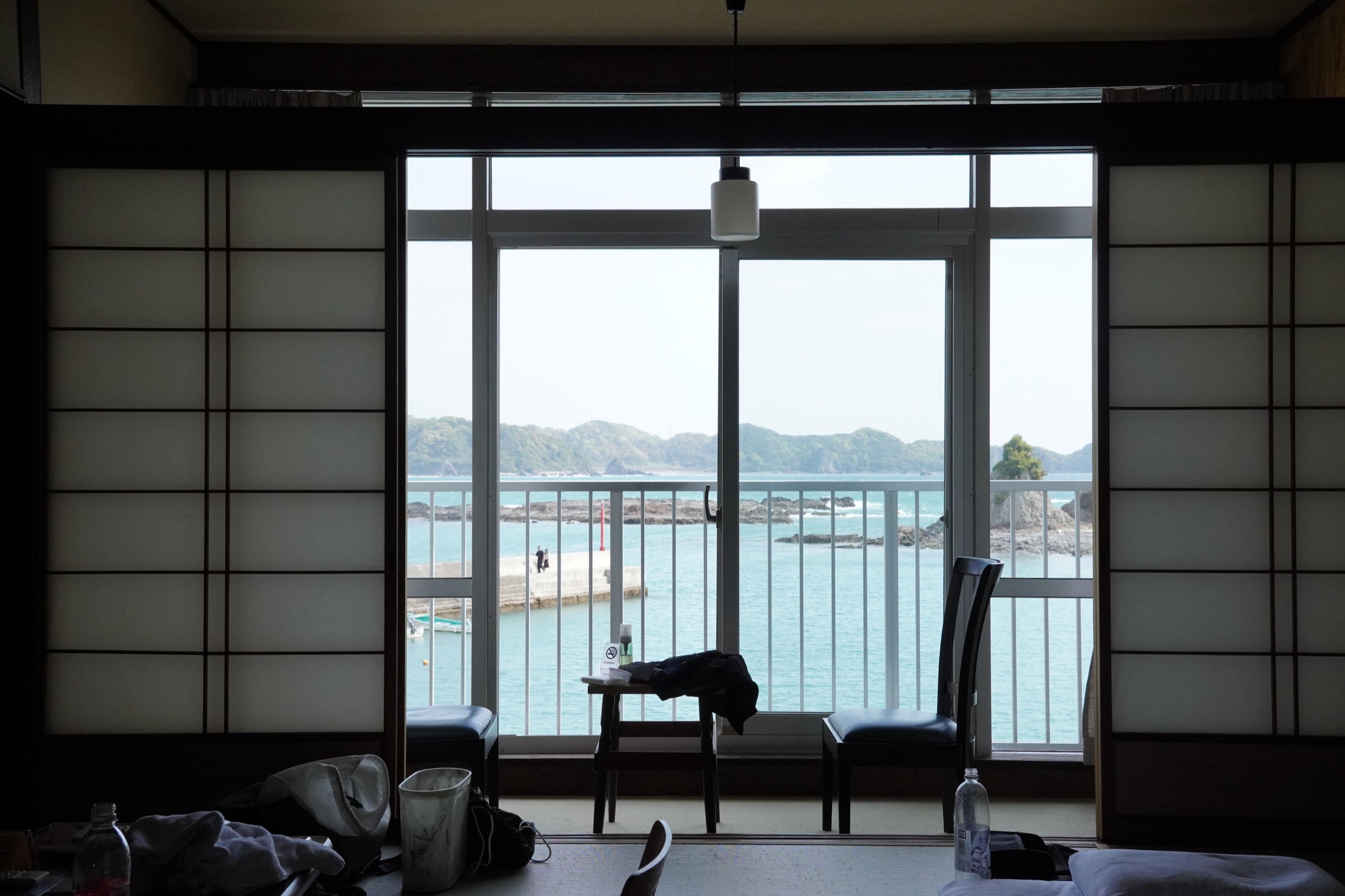
Because the region is remote, most visitors stay at least one night nearby. We based ourselves on the coast, in an ocean-view ryokan, and made the shrines a two-day trip — which we’d recommend over trying to see everything in a single rushed day.
Practical information
- Address: 1110 Hongū, Hongū-chō, Tanabe City, Wakayama 647-1731
- Grounds open: Daily, roughly 8:00–17:00 (the precinct is open; the office for goshuin and charms keeps daytime hours).
- Admission: Free.
- Goshuin: Available at the shrine office — Hongu offers a well-known goshuin (shrine seal) featuring the Yatagarasu crow.
- Nearby: Yunomine and Kawayu Onsen, two historic hot-spring villages, are a short bus ride away and make an ideal overnight base.
- Best combined with: Kumano Hayatama Taisha, Kumano Nachi Taisha and Nachi Falls to complete the Kumano Sanzan.
Frequently asked questions
What is Kumano Hongu Taisha famous for?
It is the head shrine of Japan’s 3,000-plus Kumano shrines and a UNESCO-listed stop on the Kumano Kodo pilgrimage. It is best known for its solemn, unpainted mountain shrine, the Yatagarasu three-legged crow, and the giant Ōyunohara torii nearby — the largest shrine gate in the world.
Where is Kumano Hongu Taisha located?
In Hongū, Tanabe City, Wakayama Prefecture, deep in the mountains of the southern Kii Peninsula in western Japan. There is no direct train; the final approach is by bus or car, or on foot along the Kumano Kodo.
How do you get to Kumano Hongu Taisha?
Take the JR Kisei Main Line along the coast to Kii-Tanabe, Shingu or Kii-Katsuura, then a Kumano Kotsu bus into the mountains to the Hongu Taisha-mae stop. Many pilgrims instead walk in on the Nakahechi route of the Kumano Kodo, which ends at Hongu.
What is the giant torii at Kumano Hongu Taisha?
It is the Ōyunohara Ōtorii, a steel gate about 34 metres tall completed in 2000 — the largest torii in the world. It stands at Ōyunohara, the shrine’s original riverside site, a ten-minute walk from the current main shrine.
What are the three Kumano shrines?
The Kumano Sanzan are Kumano Hongu Taisha, Kumano Hayatama Taisha (Shingu) and Kumano Nachi Taisha (beside Nachi Falls). Pilgrims traditionally visit all three, linked by the Kumano Kodo trails.
Is Kumano Hongu Taisha worth visiting?
Yes — for anyone interested in Japan’s sacred landscapes it is one of the most atmospheric shrines in the country. Because it takes real effort to reach, it feels far less touristy than shrines in Kyoto or Tokyo, and it pairs naturally with the Kumano Kodo and the coastal onsen towns.
Final thoughts
Kumano Hongu Taisha rewards the journey it demands. Reaching this quiet shrine deep in the Kii Mountains — and standing beneath the enormous torii at Ōyunohara — is a very different experience from Japan’s famous city shrines, and it connects you to a pilgrimage tradition more than a thousand years old. If you can spare two days, pair it with Hayatama and Nachi to walk in the footsteps of the Kumano pilgrims and see the sacred heart of the Kii Peninsula for yourself.
Share