
Anamori Inari Shrine is a historic red-torii Inari shrine in Ota City, Tokyo, about 4 minutes from Haneda Airport Terminal 3 Station on the Keikyu Airport Line, plus a 3-minute walk. Its rows of vermilion torii gates draw comparisons to Kyoto’s Fushimi Inari, but its real advantage is location: very few Tokyo shrines sit this close to the airport, which makes it an easy first stop, last stop, or layover detour. Visitors come to walk the torii corridor, receive a goshuin, and collect the shrine’s famous “Anamori no Suna” sacred sand, believed to bring protection and good fortune.
| Location | 5-2-7 Haneda, Ota City, Tokyo 144-0043 |
|---|---|
| Nearest station | Anamori-Inari Station (Keikyu Airport Line), 3-minute walk |
| From Haneda Airport | About 4 minutes (2 stops) by Keikyu from Terminal 3 Station to Anamori-Inari Station |
| Hours | Grounds open 24 hours. Goshuin and amulets 8:30 AM to 5:00 PM. Open all year |
| Admission | Free to enter the grounds |
| Founded | Bunka-Bunsei period (1804 to 1830) by shrine tradition. Current site since February 1948 |
| Official site | anamori.jp |
Checked in October 2026 against anamori.jp.
Anamori Inari Shrine (穴守稲荷神社) has long been revered as a power spot, today drawing worshippers and visitors of all generations, from locals praying for safety and success to travelers seeking one of Tokyo’s most photogenic shrine scenes.
A Brief History of Anamori Inari Shrine
Anamori Inari Shrine dates back to the late Edo period. It was originally established to honor Inari Okami, the deity of agriculture and rice, and to protect the fields and homes in the area.
During the reclamation of Suzuki Shinden, now part of Haneda Airport, a breach in the embankment caused significant damage.
To safeguard the lands and ensure prosperity, the residents built the shrine. The main deity enshrined at Anamori Inari is Toyouke-hime-no-mikoto, a goddess of food from Japanese mythology.
What is Toyouke-hime-no-mikoto?
Toyouke-hime-no-mikoto is a noble deity, historically known for serving as the provider of food to Amaterasu Omikami, the sun goddess.
She is enshrined at Anamori Inari Shrine and also at the Outer Shrine of Ise Grand Shrine, one of the most important and sacred Shinto shrines in Japan, located in Mie Prefecture.
This highlights her significance in Japanese history and culture.
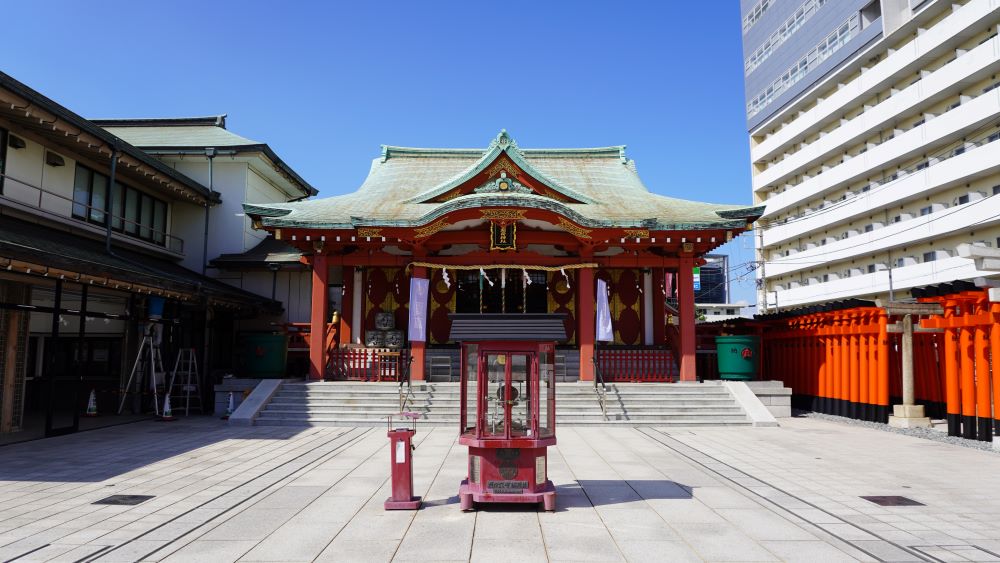
Anamori Inari Shrine was originally located within the current grounds of Haneda Airport. In 1945, it was requisitioned by the US military and merged with Haneda Shrine.
Due to the devotion of its followers, land was donated for its relocation, and the current shrine building was reconstructed in 1965. Further renovations were completed in April 2020, ensuring that Anamori Inari Shrine remains a beautiful and serene place of worship.
Highlights of Anamori Inari Shrine
The Grand Torii Gate:
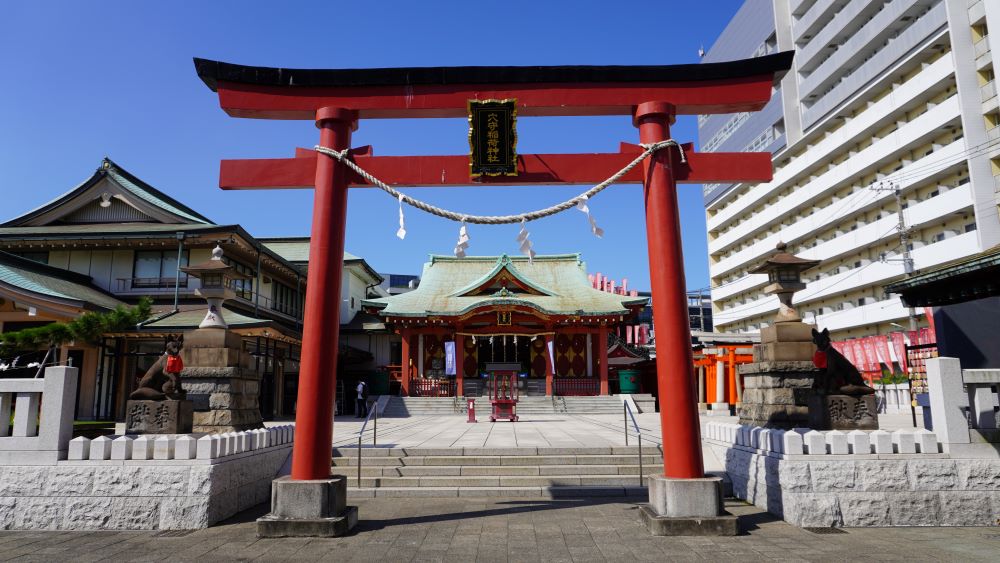
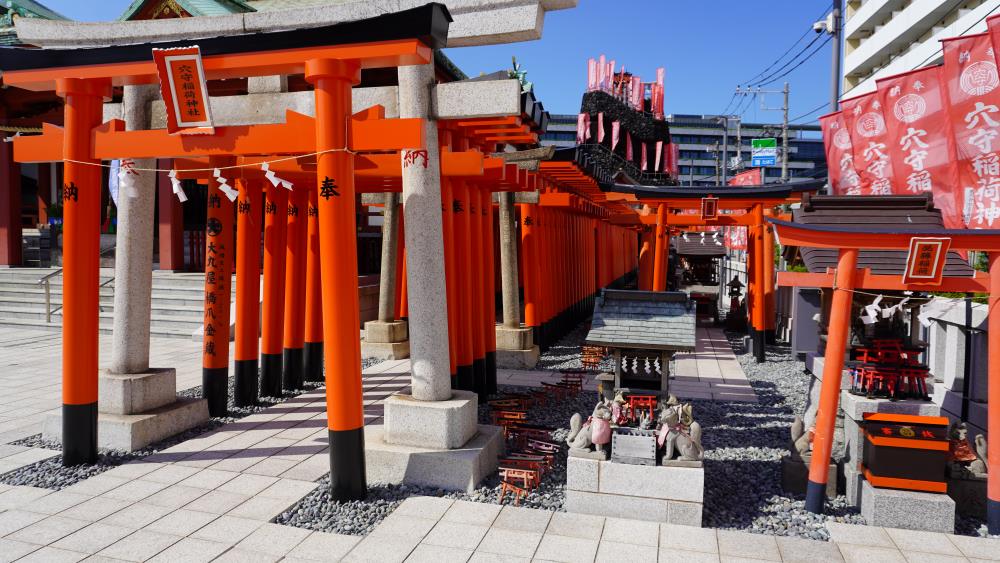
One of the most striking features of the shrine is its large torii gate.
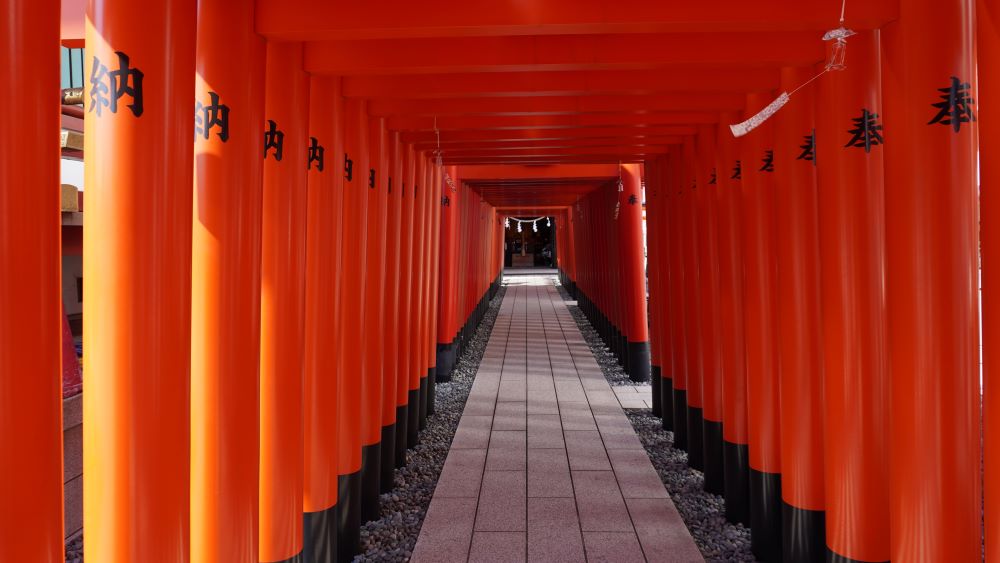
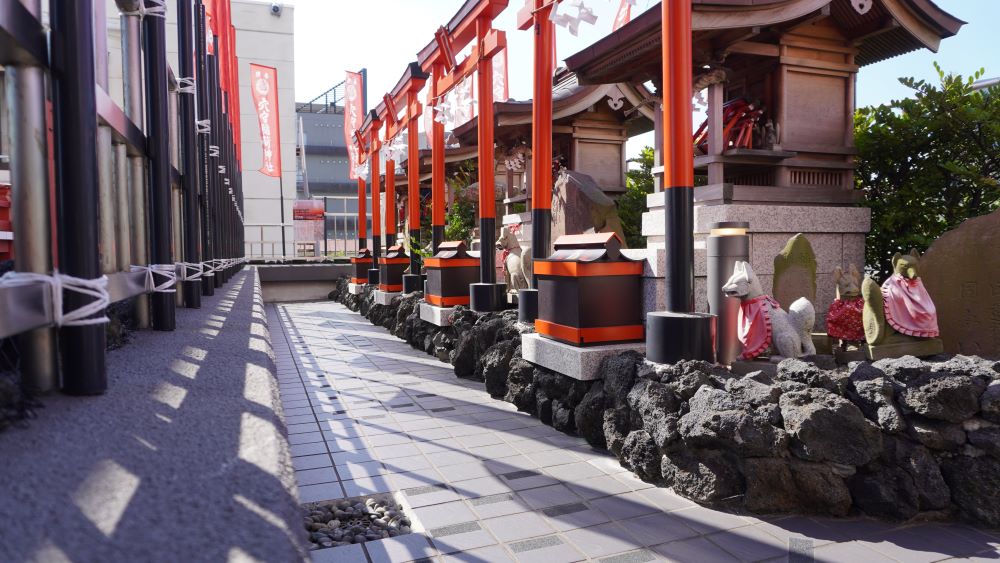
The numerous torii gates lined up create a mystical atmosphere and have become a popular photo spot for social media in recent years.
Speaking of torii gates, the Fushimi Inari Shrine in Kyoto is renowned for its thousands of red gates, often topping the list of shrines that foreigners want to visit.
While Anamori Inari’s gates span only about 20 meters, they still evoke the feeling of being at a traditional Inari shrine.
The Sacred Sand (Anamori no Suna):
The most famous blessing at Anamori Inari is the sacred sand, known as “Anamori no Suna.”
It is believed that taking this sand home and sprinkling it around your house or carrying it with you brings protection and fulfillment of wishes.
Sub-Shrines:
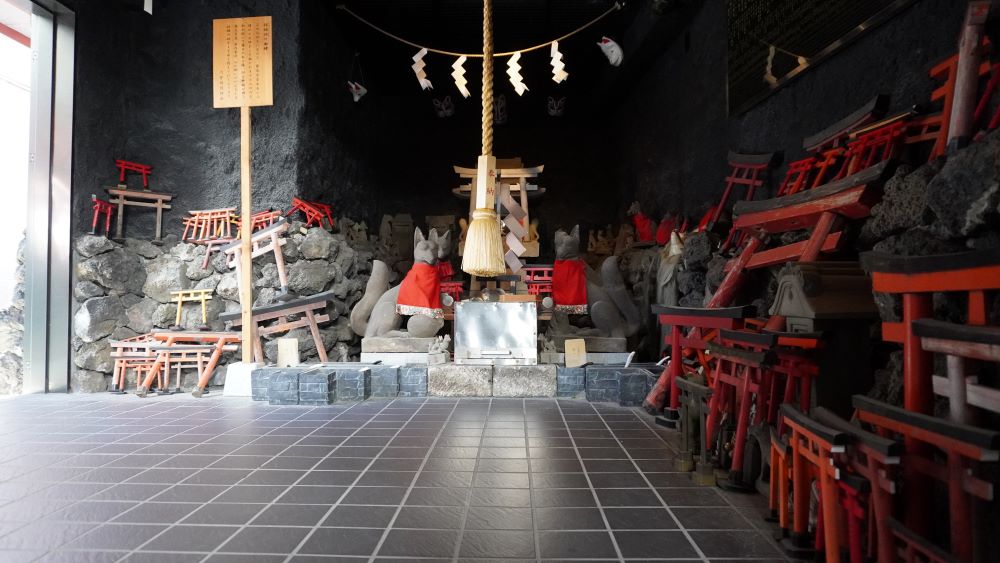
In addition to the main hall, there are several sub-shrines on the grounds, each offering different blessings such as success, prosperity, and good fortune.
Visitors can often pray at these sub-shrines for specific personal wishes.
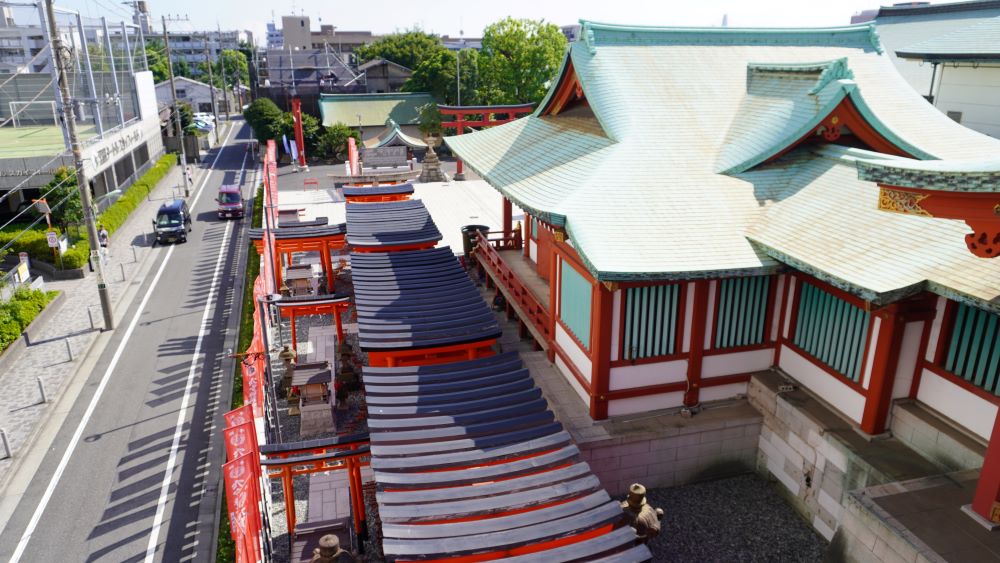
You can see a panoramic view of the entire shrine by going up the stairs.
The Legend of the Torii Gate
Anamori Inari Shrine’s grand torii gate is surrounded by a fascinating legend. During the construction of Haneda Airport, efforts were made to remove the torii gate, which was originally located on the airport grounds. However, these attempts resulted in numerous accidents and strange occurrences.
One notable incident involved workers who tried to remove the gate by tying ropes around it and pulling it down. The ropes mysteriously snapped, causing injuries and even fatalities among the workers.
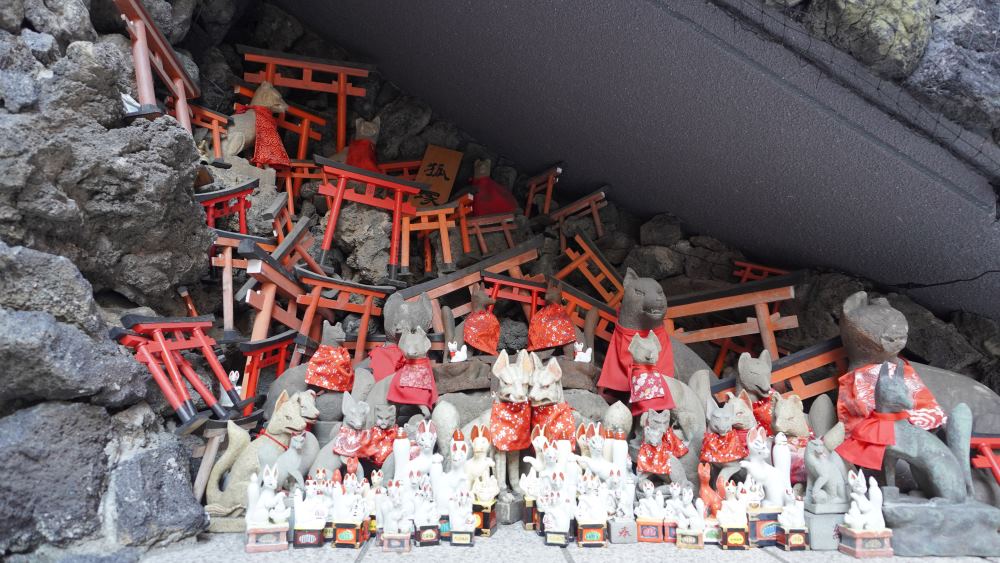
Additionally, there were reports of mechanical problems with aircraft on the days when attempts to remove the gate were made. Some even claimed to have seen countless foxes, considered messengers of the Inari deity, emerging from the gate, adding to the eerie atmosphere.
As a result of these incidents, the decision was made to leave the torii gate in place. In 1955, the airport’s terminal building was constructed on the site of the shrine’s former main hall, with the gate standing in front of it, and the runways were expanded. Despite these changes, the torii gate remained undisturbed, standing as a symbol of the shrine’s enduring presence and spiritual power.
Interestingly, during the airport expansion in 1999, the torii gate was finally relocated to its current spot in front of the Bentenbashi police box. Unlike previous attempts, this relocation was completed without any issues or accidents, and nothing unusual happened at that time.
The legend continues to capture the imagination of visitors and adds an intriguing layer of mystery to Anamori Inari Shrine. The torii gate served as a reminder of the shrine’s resilience and the respect it commanded, even in the face of modern development.
Final Thoughts
Anamori Inari Shrine is a place of historical significance and spiritual power.
Whether you are using Haneda Airport or exploring Ota City, a visit to this shrine might bring you good fortune and a unique glimpse into Japan’s rich cultural heritage.
Don’t miss the opportunity to experience the serene and mystical atmosphere of Anamori Inari Shrine.
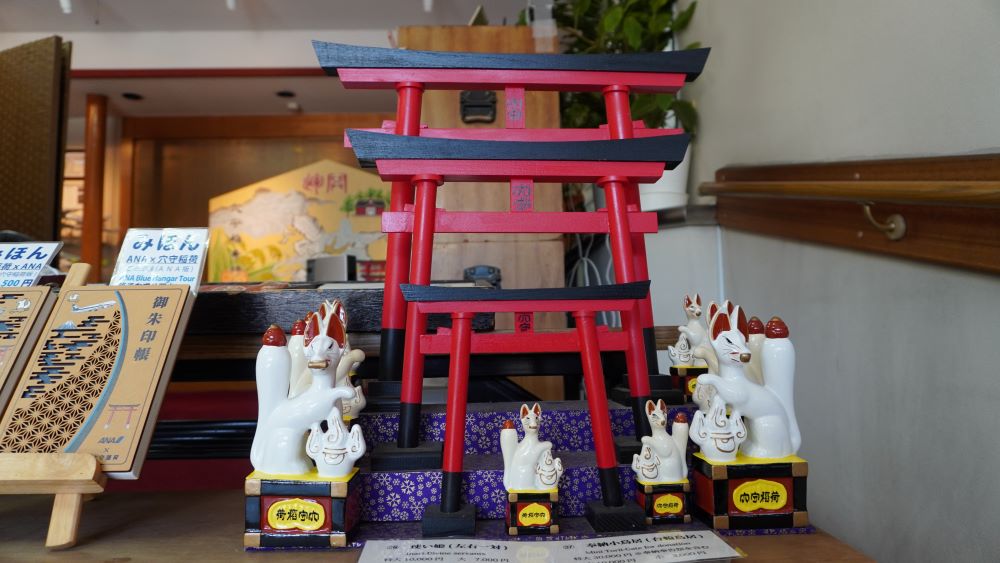
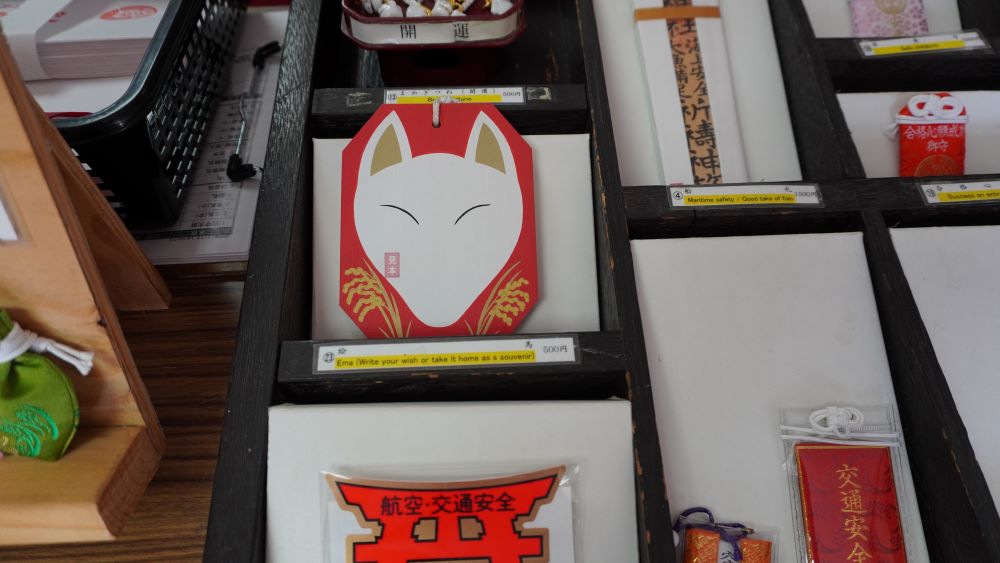
Explanations are written in English, so it’s easy to buy souvenirs!
Visiting on a Haneda Layover
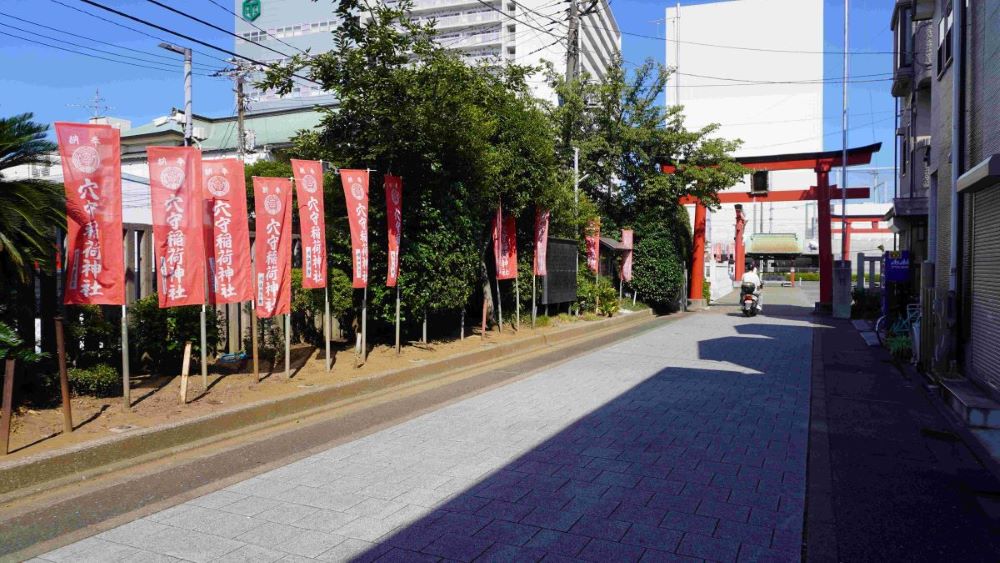
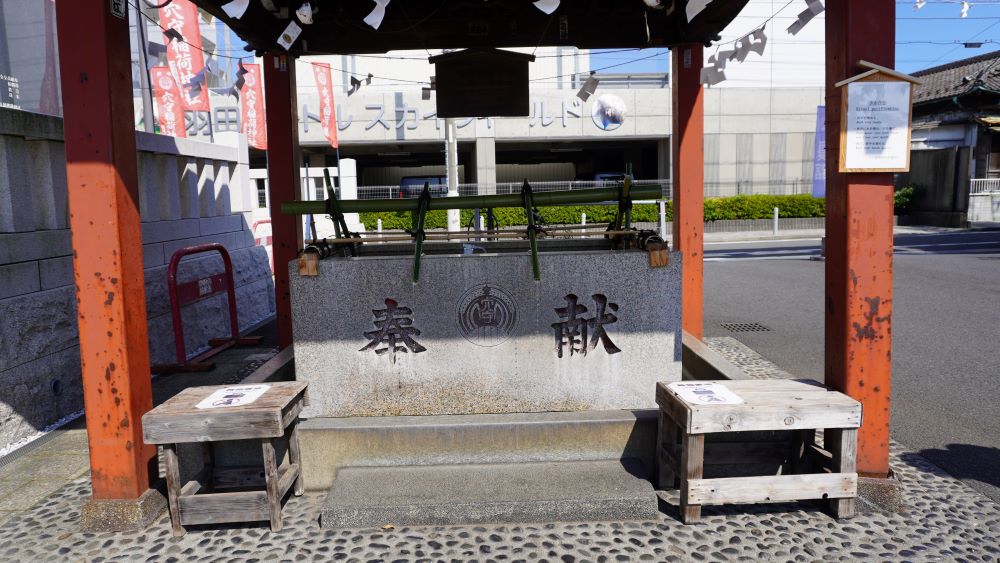
One of the best things about Anamori Inari is how easy it is to reach from the airport. From Haneda Airport Terminal 3 Station, it’s just two stops, about 4 minutes, on the Keikyu Airport Line to Anamori-Inari Station, followed by a 3-minute walk. On our own layover we made it there and back well within a couple of hours, with plenty of time to walk the torii gates, take photos, and receive a goshuin.
If you have a long connection at Haneda, or you’re heading into the city at the start or end of your trip, it’s a low-stress way to fit a genuine Japanese shrine, and those red-torii photos, into your day. Just note that the amulet and goshuin desk is open 8:30 AM to 5:00 PM, so time your visit within those hours if you want a red seal or the shrine’s famous sacred sand.
Access Information
By Train:
From Anamori-Inari Station: 3-minute walk from Anamori-Inari Station on the Keikyu Airport Line.
From Tenkubashi Station: 5-minute walk from Tenkubashi Station on the Keikyu Airport Line and Tokyo Monorail Line.
Time to Anamori-Inari Station:
From Shinagawa Station: Approximately 15 minutes on the Keikyu Airport Line bound for Haneda Airport (Limited Express).
From Yokohama Station: Approximately 20 minutes on the Keikyu Line (transfer to the Airport Line at Keikyu Kamata).
From Haneda Airport Terminal 3 Station: Approximately 4 minutes on the Keikyu Airport Line (2 stations).
Opening and Closing Hours:
Amulets and Goshuin (Red Seals): 8:30 AM to 5:00 PM.
Worship from Outside the Main Hall: 24 hours (The shrine grounds are always open to the public).
Worship and Prayers Inside the Main Hall: 9:00 AM to 4:00 PM.
Check out other Shinto shrines
Planning a shrine visit? If you’re unsure how to bow, clap, or make an offering once you’re at the shrine, read our step-by-step guide on how to pray at a Japanese shrine, explained by a Shinto priest at Yushima Tenjin in Tokyo.
Planning a Haneda Layover Visit
Anamori Inari Shrine is one of the few genuine shrines you can reach on a short break at Haneda Airport, but a little planning makes the trip stress-free.
If your layover is an international connection, remember that you must clear immigration to leave the airport, then pass through security and immigration again on your return. Only attempt the visit if your layover is long enough to cover that on top of the round trip, and check that your ticket and visa status allow you to exit the terminal. Domestic connections and travelers starting or ending their trip in Tokyo have the easiest time.
A few practical tips for a smooth visit:
- Give yourself about one hour door to door, and a comfortable buffer before your next flight closes.
- Store larger bags in a coin locker at Haneda Airport or at a Keikyu station before you go, or use the suitcase storage space in the shrine office, where you can fasten your case to a pillar with the chain lock provided.
- The ride is two stops on the Keikyu Airport Line to Anamori-Inari Station, then a 3-minute walk.
- Time your visit before 5:00 PM if you want a goshuin, an amulet, or the shrine’s sacred sand.
- Carry some cash, as the shrine office and small offerings are cash based.
For flyers, it is also worth reviewing Japan’s current carry-on rules before you pack, including the latest limits on portable power banks on Japanese airlines.
Frequently Asked Questions
How do I get to Anamori Inari Shrine from Haneda Airport?
From Haneda Airport Terminal 3 Station, take the Keikyu Airport Line two stops (about 4 minutes) to Anamori-Inari Station; the shrine is a 3-minute walk from there. From central Tokyo it is roughly 15 minutes from Shinagawa Station on the same line.
Is Anamori Inari Shrine worth visiting on a layover?
Yes. It is one of the few shrines you can reach from Haneda Airport Terminal 3 Station in about 4 minutes by train plus a 3-minute walk, so even a short layover leaves time to walk the red torii gates, take photos, and receive a goshuin before heading back to the airport.
Can you get a goshuin at Anamori Inari Shrine?
Yes. Goshuin (red seals) and amulets are available at the shrine office from 8:30 AM to 5:00 PM. The shrine’s famous “Anamori no Suna” sacred sand, believed to bring protection and good fortune, can also be received here.
What is the legend of the Anamori Inari torii gate?
When Haneda Airport was expanded, workers repeatedly tried to remove the shrine’s torii gate but met with accidents and aircraft trouble, so it was left standing for decades. It was finally moved in 1999 to its current spot in front of the Bentenbashi police box, this time without any incident.
Is Anamori Inari like Fushimi Inari in Kyoto?
Both are Inari shrines lined with red torii gates, but Kyoto’s Fushimi Inari is far larger, with thousands of gates winding up a mountain. Anamori Inari’s torii corridor is short (about 20 meters), yet it is far more accessible, right beside Haneda Airport in Tokyo, making it the easiest place to see red torii gates in the capital.
What does “Anamori” mean?
The name Anamori (穴守) means “guardian of the hole,” a reference to the shrine’s origin. When an embankment protecting the reclaimed Suzuki Shinden farmland was breached, locals built the shrine to guard against future breaches and to pray for the safety and prosperity of the land. The “hole” in the name is that embankment breach, and the shrine has protected the area ever since.
Is there an entrance fee at Anamori Inari Shrine?
No. Entry to the shrine grounds and the red torii corridor is free, and the outdoor grounds can be visited 24 hours a day. Small fees apply only if you receive a goshuin, an amulet, or the shrine’s sacred sand, which are available at the shrine office between 8:30 AM and 5:00 PM.
Can I visit Anamori Inari Shrine with my luggage on a layover?
It is possible but easier without bags. Coin lockers are available inside Haneda Airport and at nearby Keikyu stations, so many layover visitors store their luggage before the short two-stop ride to Anamori-Inari Station. The shrine office also has a suitcase storage space where visitors can chain their cases to a pillar, and the torii corridor and steps are more comfortable to explore hands-free.
How much time should I set aside for Anamori Inari Shrine?
Plan for about one hour door to door from Haneda Airport. The train ride is roughly 4 minutes each way plus a 3-minute walk, and 30 to 45 minutes on the grounds is enough to walk the torii gates, take photos, pray, and receive a goshuin. Add extra time on weekends and around New Year, when the shrine is busier.
When is the best time to visit Anamori Inari Shrine for photos?
Early morning on a weekday is the quietest time and gives the softest light on the vermilion torii gates. The corridor is compact, so fewer visitors means clearer photos without waiting. If you are on a layover, aim to arrive before the goshuin desk closes at 5:00 PM so you can combine photos with a red seal in one trip.
What is the connection between Anamori Inari Shrine and Haneda Airport?
Anamori Inari Shrine originally stood on land that is now Haneda Airport, near the south end of the present Runway B. In 1945 the Allied Forces ordered the shrine to leave within 48 hours so the airfield could be expanded. The shrine moved to its current site in Haneda 5-chome in February 1948, and people in the aviation industry and travelers still pray there for safe flights.
How do you use the sacred sand from Anamori Inari Shrine?
Anamori no Suna, the sacred sand of Anamori Inari Shrine, is sprinkled in a different place for each wish. For good fortune in commerce, industry, farming, fishing and family safety, the shrine says to sprinkle it at the front entrance. For recovery from illness it goes under the bed, against misfortune toward the direction of that misfortune, and for a new building or extension at the center of the site.
Share