
Few questions in Japanese cultural history sound simple but become complicated the moment you look closely.
What is the oldest shrine in Japan?
The most honest answer is this: there is no single official answer. Shinto, Japan’s native spiritual tradition, is older than written Japanese history. Long before shrine buildings existed, people worshipped mountains, rocks, waterfalls, trees, and other sacred presences in nature. That means the “oldest shrine” depends on what you are actually asking.
- Do you mean the oldest sacred place of worship?
- The oldest shrine mentioned in Japan’s ancient texts?
- The oldest surviving shrine building?
- Or the shrine that best preserves the earliest form of Shinto worship?
If you are looking for the strongest answer, Omiwa Shrine in Nara is probably the best place to start. It preserves one of the most ancient forms of Shinto: worship of a sacred mountain rather than a deity housed inside a main shrine building. But it is not the only serious candidate.
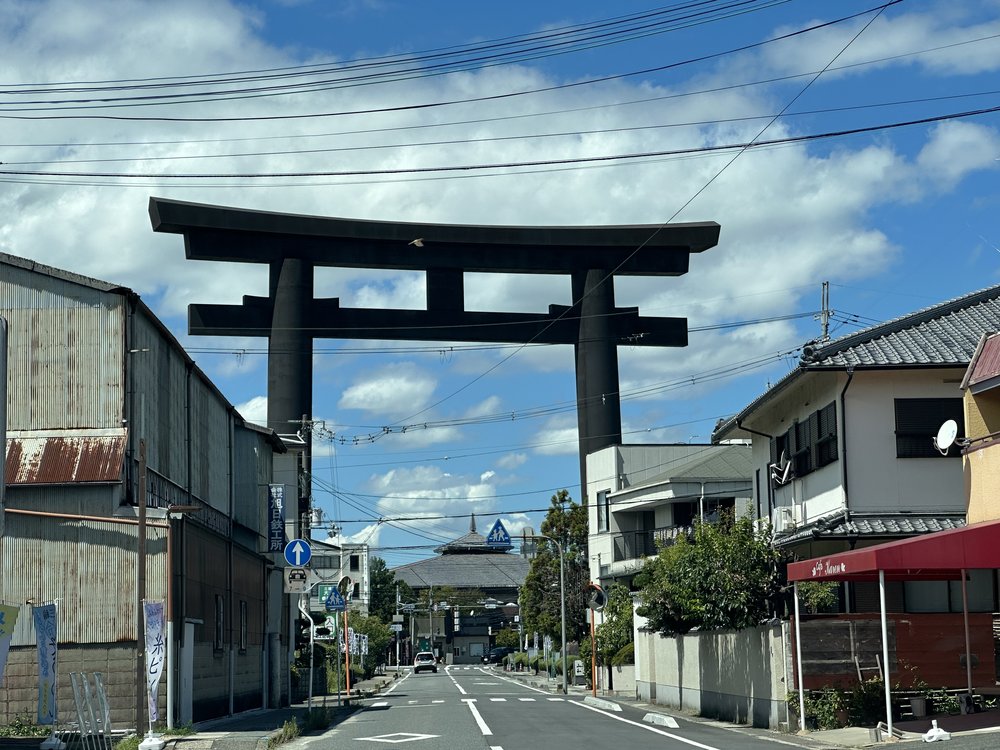
In this guide, we look at three of the most important contenders for Japan’s oldest shrine — Omiwa Shrine, Isonokami Jingu, and Suwa Taisha — and explain why each has a legitimate claim. You may also see other names — especially Izanagi Jingu, Ise Jingu, Izumo Taisha, and Ujigami Shrine. We will address those claims later in the article.
Before visiting any of them, you may also want to read our guide to how to pray at a Japanese shrine, based on a demonstration by a Shinto priest in Tokyo.
Why Japan Has No Single “Oldest Shrine”
To understand the problem, you first have to understand what a shrine was before it became a building.
Today, many people imagine a Shinto shrine as a place with a torii gate, a purification basin, a worship hall, and a main sanctuary. But the earliest forms of Shinto worship were not centered on architecture. They were centered on kami — sacred presences associated with nature, ancestors, land, weather, fertility, protection, and life itself.
- In ancient Japan, a mountain could be the deity.
- A forest could be the sanctuary.
- A rock could be the point of worship.
- A tree could mark the presence of the sacred.
That is why “the oldest shrine in Japan” can mean several different things.
Oldest form of worship
Meaning: A place preserving ancient nature worship before shrine buildings became standard.
Strong candidate: Omiwa Shrine
Oldest literary importance
Meaning: A shrine connected to Japan’s earliest chronicles and imperial mythology.
Strong candidate: Isonokami Jingu
Oldest regional sacred landscape
Meaning: A shrine complex rooted in myth, mountain worship, and ancient rituals.
Strong candidate: Suwa Taisha
Oldest surviving shrine building
Meaning: The oldest physical shrine structure still standing today.
Strong candidate: Ujigami Shrine in Kyoto
This article focuses on the first three, because they are the strongest candidates when people ask about the oldest sacred Shinto shrines in Japan.
The Strongest Answer: Omiwa Shrine in Nara
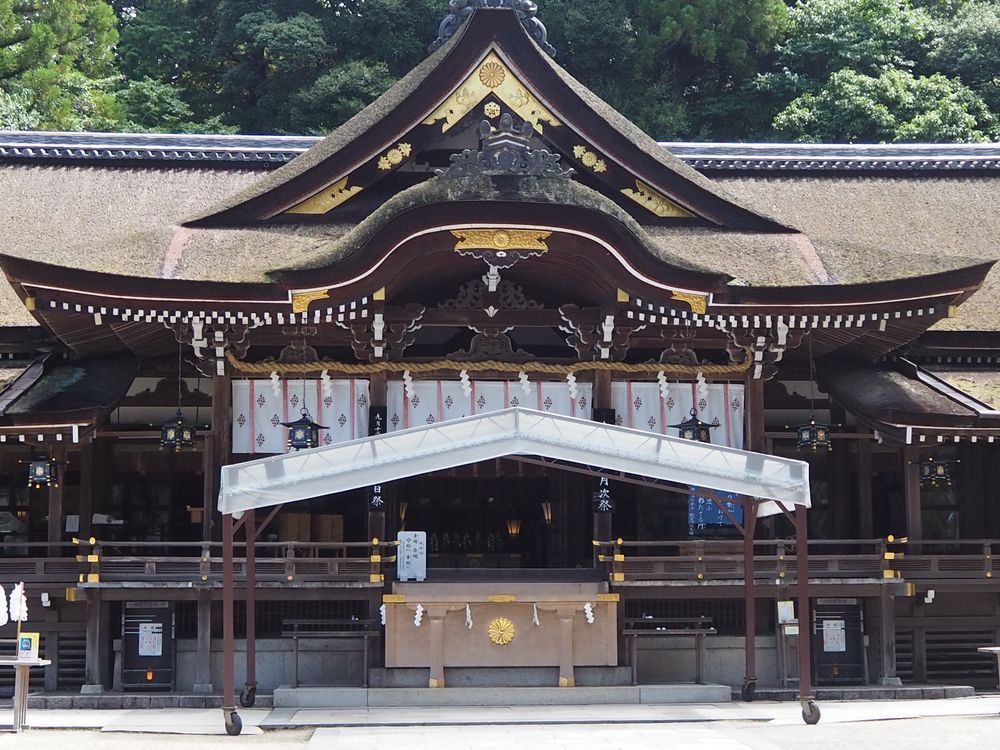
If you want one clear answer, Omiwa Shrine is often considered the strongest candidate for Japan’s oldest shrine.
Located at the foot of Mount Miwa in Sakurai City, Nara Prefecture, Omiwa Shrine is unlike most shrines in Japan. It has no honden, or main sanctuary hall. At most Shinto shrines, the kami is symbolically enshrined inside the honden. At Omiwa, there is no need for one.
Why?
Because Mount Miwa itself is the sacred body of the deity.
This is what makes Omiwa so important. The shrine preserves an older form of Shinto worship in which the natural landscape itself — not a human-made structure — is the object of reverence. The official shrine explanation also states that the whole of Mount Miwa has long been worshipped as a shintai-zan, or sacred mountain-body, and that this is why the shrine has no main sanctuary even today.
The principal deity of Omiwa Shrine is Omononushi-no-Okami, a kami associated with nation-building, agriculture, industry, medicine, brewing, healing, and human life. In Japan Documented’s first-hand guide to Omiwa Shrine, we describe how the worship hall faces the mountain directly, allowing visitors to experience a form of worship that feels older than shrine architecture itself.
For travelers interested in the deepest roots of Shinto, Omiwa is not just a historical site. It is a rare place where the architecture steps aside and the mountain remains the center of worship.
Why Omiwa Shrine May Be Japan’s Oldest Shrine
Omiwa Shrine’s claim rests on three points.
First, it preserves mountain worship, one of the oldest known forms of Shinto practice.
Second, it is connected to Japan’s earliest mythological and historical traditions, including the Kojiki and Nihon Shoki, the ancient chronicles compiled in the early 8th century.
Third, the absence of a honden is not a missing feature. It is the point. The shrine’s structure reflects an earlier religious worldview, before sacred presence was enclosed within a building.
For this reason, if the question is, “Which shrine best preserves the oldest form of Shinto worship?” the answer is likely Omiwa Shrine.
Visiting Omiwa Shrine
Omiwa Shrine is also practical to visit if you are traveling through Nara. It is located near JR Miwa Station and can be combined with other ancient sites along the Yamanobe-no-Michi, one of Japan’s oldest roads.
If you plan to go deeper and climb Mount Miwa, be careful: this is not treated as a normal hike. It is a religious ascent with strict rules, including registration, limited hours, and no photography on the mountain. For details, read our full Omiwa Shrine guide.
Isonokami Jingu: Ancient Swords, Imperial Memory, and the Yamato Court
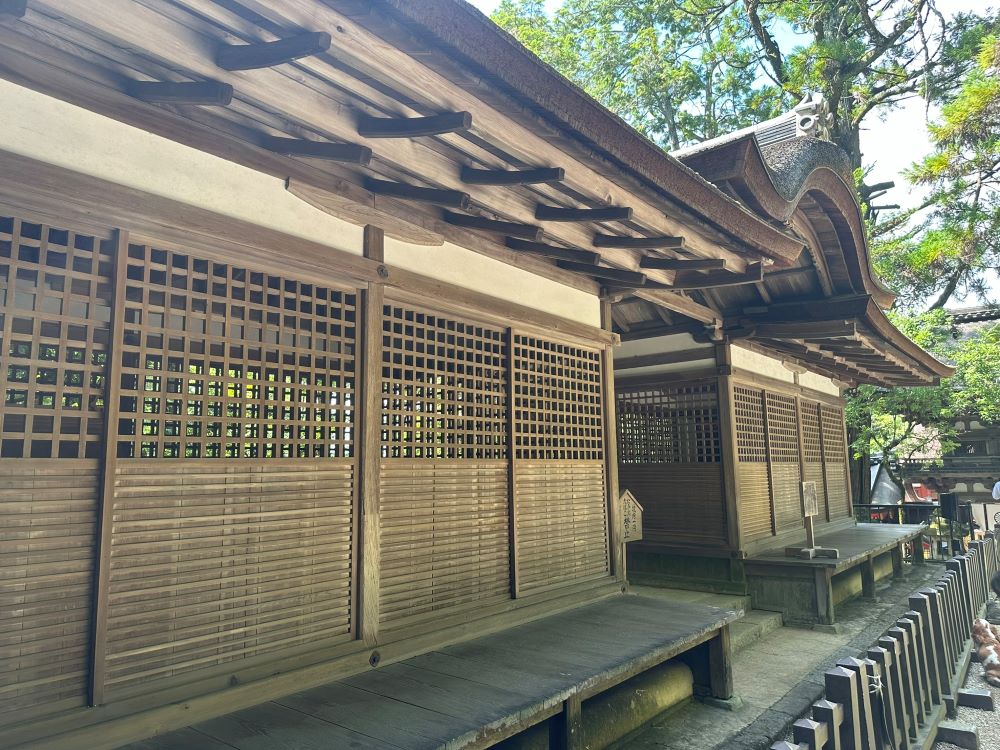
A short distance from Omiwa Shrine, also in Nara Prefecture, stands another major candidate: Isonokami Jingu.
Isonokami Jingu is one of Japan’s oldest and most historically important shrines. Its name appears in the Kojiki and Nihon Shoki, and the shrine itself describes it as one of the oldest shrines in Japan, with deep roots in the ancient Yamato region.
If Omiwa represents ancient mountain worship, Isonokami represents another side of early Shinto: the sacred protection of weapons, treasures, clans, and the political center of ancient Japan.
The shrine is closely connected with the Mononobe clan, a powerful ancient family associated with military affairs and ritual authority. It is also famous for its sacred treasures, especially the Seven-Branched Sword, or Shichishito.
According to Isonokami Jingu’s official materials, the Seven-Branched Sword has been preserved as a sacred treasure and is generally understood through its inscription as dating to the year 369. It is also associated with a sword mentioned in the Nihon Shoki as a gift from Baekje on the Korean Peninsula.
This makes Isonokami Jingu especially important for visitors interested in the intersection of mythology, archaeology, diplomacy, and early Japanese state formation.
Why Isonokami Jingu Matters in the “Oldest Shrine” Debate
Isonokami’s claim is different from Omiwa’s.
It is not mainly about preserving the oldest form of nature worship. Instead, it is about its status in Japan’s earliest written records and its connection to the ancient Yamato court.
The shrine sits near the Yamanobe-no-Michi, an ancient road that runs through one of the oldest cultural landscapes in Japan. Japan Documented’s guide to Isonokami Jingu also highlights the shrine’s sacred chickens, quiet forest atmosphere, and connection to legendary swords.
For many travelers, Isonokami is less visually famous than places like Fushimi Inari or Ise Jingu. But historically, it is far more important than its low international profile suggests.
If the question is, “Which shrine has one of the deepest connections to Japan’s earliest chronicles and ancient court history?” Isonokami Jingu is one of the strongest answers.
Suwa Taisha: Ancient Mountain Worship in Nagano
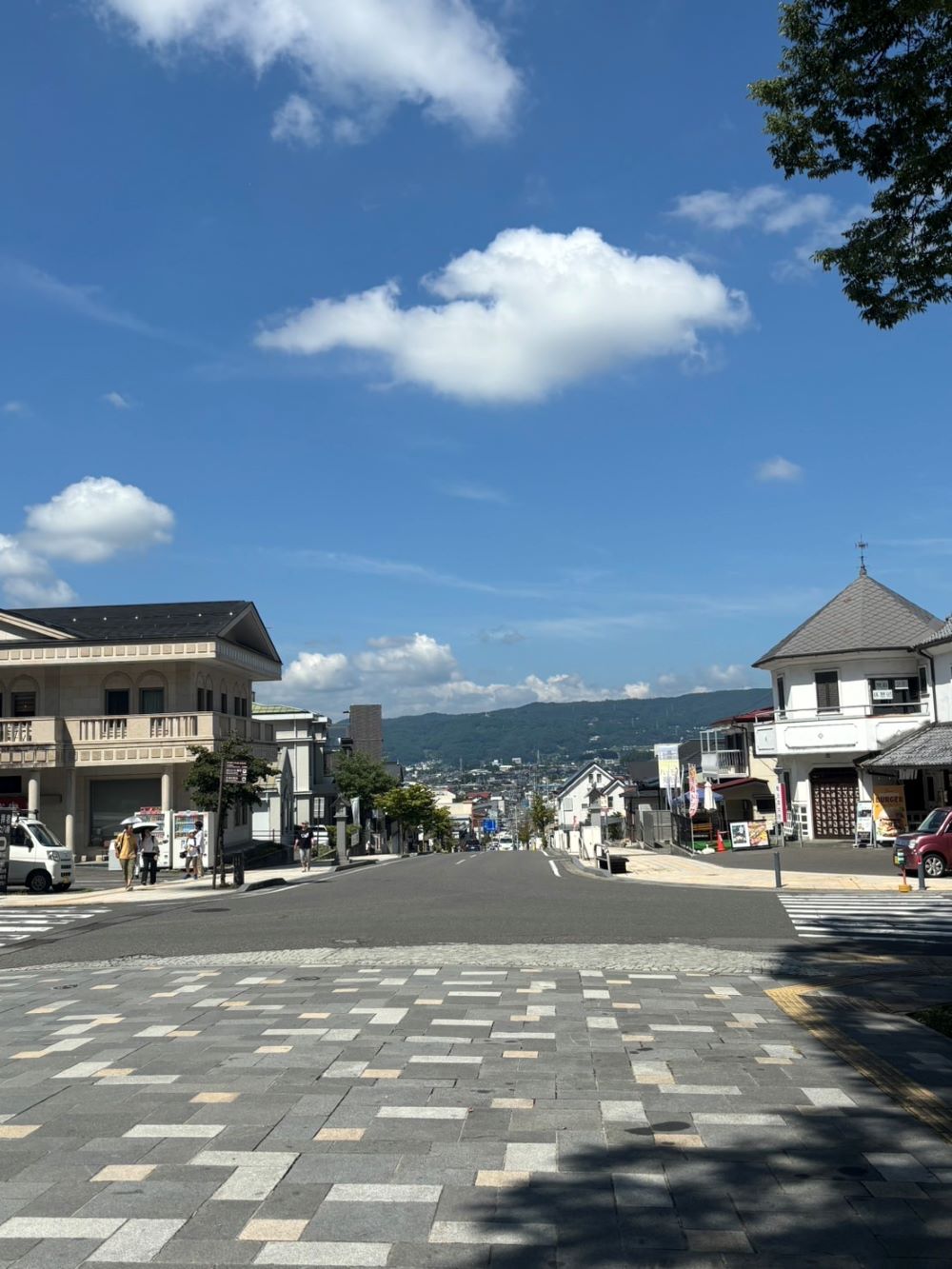
The third major candidate is Suwa Taisha in Nagano Prefecture.
Unlike Omiwa Shrine or Isonokami Jingu, Suwa Taisha is not a single shrine building. It is a complex of four main shrines located around Lake Suwa: Kamisha Maemiya, Kamisha Honmiya, Shimosha Harumiya, and Shimosha Akimiya.
The official Suwa Taisha site states that while the details of its origins are unknown, Suwa is counted among the oldest shrines in Japan and appears in ancient documents such as the Kojiki and Engi-shiki. By the Heian period, it was already considered the Ichi-no-miya, or highest-ranking shrine, of Shinano Province.
Suwa Taisha is especially important because it preserves an old style of sacred landscape worship. At the Kamisha Honmiya, the mountain is considered the shintai, or body of the deity. At the Shimosha shrines, sacred trees serve as the focus of worship. The official shrine explanation notes this contrast between mountain worship at the Kamisha and sacred-tree worship at the Shimosha.
In that sense, Suwa belongs in the same conversation as Omiwa. Both preserve ancient patterns of worship that are older than ordinary shrine architecture.
The Onbashira Festival
Suwa Taisha is also famous for the Onbashira Festival, one of Japan’s most dramatic shrine festivals. Massive fir logs are cut from the mountains, transported by local communities, and raised as sacred pillars at the shrine precincts.
The official Onbashira information site explains that the festival has continued for more than 1,200 years and is deeply tied to the passing down of local techniques and traditions.
This matters because Suwa Taisha is not only ancient in myth. It is ancient in living practice.
The shrine’s rituals still bind the local community, landscape, forest, and deity together. That is one reason Suwa feels less like a single tourist attraction and more like an entire sacred region.
For a deeper travel-oriented introduction, see our guide to Suwa Taisha in Nagano, which also covers Lake Suwa, hot springs, local sake, and nearby experiences.
Comparison: Omiwa Shrine vs. Isonokami Jingu vs. Suwa Taisha
Omiwa Shrine
Location: Sakurai, Nara
Strongest claim: Preserves one of the oldest forms of Shinto worship — Mount Miwa as the deity.
Best for: Travelers seeking the clearest “oldest shrine” experience.
Isonokami Jingu
Location: Tenri, Nara
Strongest claim: Appears in Japan’s earliest chronicles and preserves ancient sacred treasures.
Best for: History lovers interested in Yamato, swords, and early Japan.
Suwa Taisha
Location: Nagano
Strongest claim: Ancient shrine complex rooted in mountain worship, sacred trees, and living ritual.
Best for: Travelers interested in sacred landscapes, festivals, and regional culture.
If you have limited time and want the most direct answer, visit Omiwa Shrine.
If you are already in Nara and want to understand the ancient Yamato world more deeply, combine Omiwa Shrine and Isonokami Jingu.
If you are interested in living ritual, mountain faith, and a shrine tradition that still shapes an entire region, visit Suwa Taisha.
What About Izanagi Jingu? Japan’s “First Shrine” on Awaji Island
If you look at lists of “the oldest shrine in Japan” compiled by tourism authorities and heritage organizations, one name appears again and again: Izanagi Jingu on Awaji Island in Hyogo Prefecture.
The shrine enshrines Izanagi-no-Mikoto and Izanami-no-Mikoto, the two primordial deities who, according to the Kojiki and Nihon Shoki, created the islands of Japan. Awaji is described in the chronicles as the very first island brought into being in the “Kuniumi” — the birth-of-the-land myth — which gives Izanagi Jingu a unique mythological status that no other shrine can claim.
The Awaji Island Japan Heritage Committee, which administers the area’s nationally designated Japan Heritage program, explicitly describes Izanagi Jingu as “The oldest Shinto Shrine in Japan” and as “the legendary site of the dwelling of Izanagi-no-Mikoto, who accomplished all the godly feats beginning at the creation of Japan.” See the official heritage page: Izanagi-jingu Shinto Shrine — Awaji Island Japan Heritage.
The shrine has long been recognized as the Ichinomiya, or highest-ranked shrine, of the old Awaji Province. It is also tied to the Japan Heritage story “Kuniumi no Shima — Awaji,” whose authoritative reference site is operated from within the shrine precincts itself at Kuniumi no Shima Awaji (Japan Heritage).
Why Izanagi Jingu’s Claim Is Different
Izanagi Jingu’s case rests on mythological priority rather than archaeological evidence. While shrines like Omiwa, Isonokami, and Suwa preserve the oldest forms of worship still visible today, Izanagi Jingu is associated with the moment in the chronicles when Japan itself was created. In that sense, it represents the shrine at the symbolic beginning of the entire Shinto narrative.
For travelers building a journey around Japan’s most ancient sacred sites, Izanagi Jingu pairs naturally with Omiwa and Isonokami in Nara. Together they trace the mythological arc from the creation of the islands (Awaji) to the emergence of the Yamato heartland (Nara).
Visiting Izanagi Jingu
Izanagi Jingu is located at 740 Taga, Awaji City, Hyogo Prefecture. It is open to worshippers throughout the day; the shrine office is open from 8:30 to 17:00, according to the Awaji Island Japan Heritage Committee. Awaji Island is accessible from Kobe via the Akashi Kaikyo Bridge, which makes the shrine a feasible day trip from the Kansai region.
What About Ise Jingu?
No discussion of ancient Shinto shrines would be complete without Ise Jingu.
Ise Jingu is widely regarded as the most sacred shrine in Shinto. It is dedicated to Amaterasu-Omikami, the sun goddess and ancestral deity of the imperial line. Its spiritual importance is enormous.
But “most sacred” and “oldest” are not the same thing.
Ise Jingu is also famous for Shikinen Sengu, the ritual rebuilding of its shrine buildings every 20 years. The Associated Press has reported on this rebuilding tradition, noting that Ise’s 125 shrine buildings are reconstructed in a cycle that has continued for more than 1,300 years, with the next transfer ceremony scheduled for 2033.
This is one reason Ise should be treated carefully in the “oldest shrine” debate. Its tradition is ancient, but its buildings are intentionally renewed. Ise is not usually the strongest answer if the question is about the oldest physical shrine building or the most archaic form of worship still visible today.
Still, for understanding Shinto as a living tradition, Ise Jingu remains essential.
What About Izumo Taisha?
Izumo Taisha in Shimane Prefecture is another shrine often mentioned as one of Japan’s oldest and most mythologically important sites.
It is deeply connected to Okuninushi, the deity associated with nation-building, medicine, agriculture, and relationships. Izumo also plays a major role in the mythological world of the Kojiki and Nihon Shoki.
So why not call Izumo Taisha the oldest shrine in Japan?
Because, again, the evidence depends on what you mean by “oldest.” Izumo is unquestionably ancient and mythologically central. But if the question is about preserving the earliest form of nature worship, Omiwa’s mountain-as-deity structure gives it a stronger claim. If the question is about ancient court records and sacred treasures, Isonokami becomes more relevant. If the question is about a regional sacred landscape and living ritual, Suwa belongs in the discussion.
Izumo Taisha is not “wrong” as an answer. It is simply not the only answer.
What About the Oldest Surviving Shrine Building?
There is one more important distinction.
If by “oldest shrine” you mean the oldest surviving shrine building, then the answer is different. In that case, Ujigami Shrine in Uji, Kyoto, is often cited as having the oldest extant shrine architecture in Japan.
That is why it is important not to confuse three different questions:
- What is the oldest sacred Shinto site?
- What shrine best preserves the oldest form of worship?
- What is the oldest shrine building still standing?
For this article, the focus is the first and second questions — the ancient sacred sites and forms of worship that reveal how Shinto began.
So, What Is the Oldest Shrine in Japan?
The most honest answer is:
Omiwa Shrine is probably the strongest candidate for Japan’s oldest shrine if you are asking about the oldest form of Shinto worship still preserved today.
But it is not the only ancient shrine that matters.
Isonokami Jingu stands beside it as one of the most important shrines of the ancient Yamato world, deeply connected to Japan’s earliest chronicles and sacred treasures.
Suwa Taisha represents another ancient current of Shinto: mountain worship, sacred trees, powerful local ritual, and a shrine tradition that continues to shape a whole region.
So the best answer is not a single name, but a map of early Shinto itself.
- Omiwa shows the mountain as god.
- Isonokami shows the sacred power of weapons, clans, and ancient court memory.
- Suwa shows the living force of mountain, forest, festival, and community.
Together, they reveal something more meaningful than a simple ranking: they show how old Shinto really is.
Which Ancient Shrine Should You Visit?
Visit Omiwa Shrine if you want the clearest answer
Omiwa is the best choice if you want to feel what Shinto may have looked like before shrine architecture became standard. The experience of standing before the worship hall and facing Mount Miwa is quiet, direct, and unforgettable.
Read more: Omiwa Shrine: A First-Hand Guide to Japan’s Oldest Shinto Sanctuary
Visit Isonokami Jingu if you love ancient history
Isonokami is ideal for travelers interested in early Japan, sacred weapons, the Yamato court, and historical sites that are important but not overcrowded.
Read more: Isonokami Jingu: One of Japan’s Oldest Shrines in Nara
Visit Suwa Taisha if you want a regional sacred landscape
Suwa Taisha is best for travelers who want more than a single shrine visit. The four-shrine complex, Lake Suwa, hot springs, local sake, and the legacy of the Onbashira Festival make the entire area worth exploring.
Read more: Suwa Taisha: One of Japan’s Oldest Shrines in Nagano
How to Visit Japan’s Oldest Shrines Respectfully
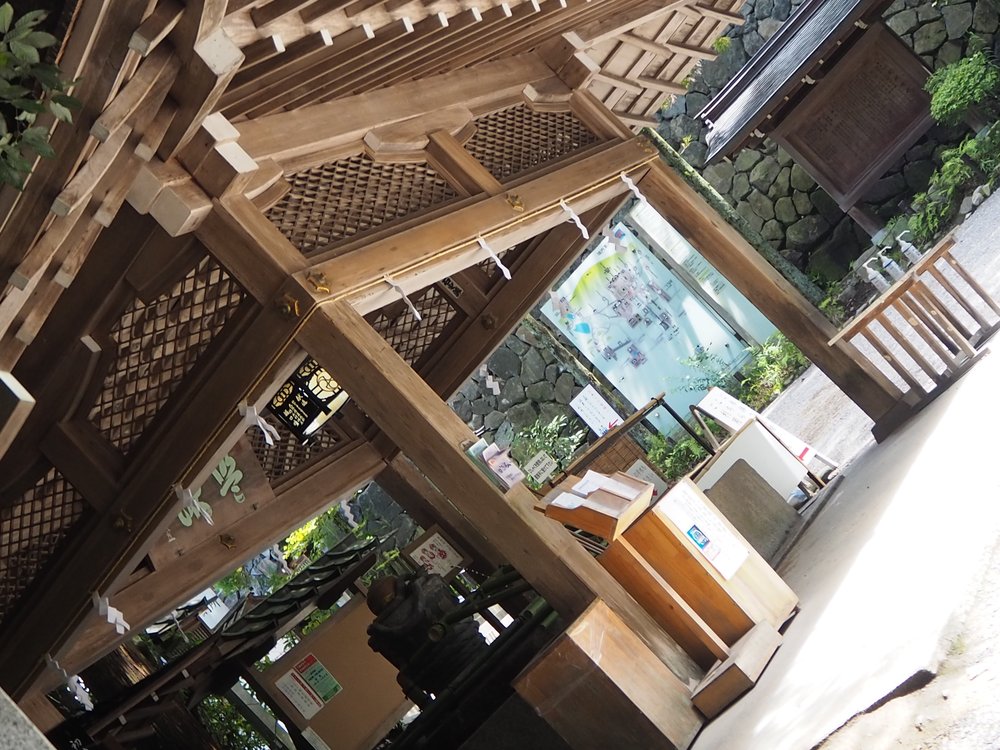
These shrines are not museums. They are active places of worship.
Visitors are welcome, but the basic rule is simple: behave with respect.
Before entering a shrine, bow lightly at the torii gate. Walk slightly to the side of the approach rather than directly down the center. Purify your hands and mouth at the temizuya if it is available. At the worship hall, offer a coin, bow twice, clap twice, pray silently, and bow once more.
This sequence is commonly known as two bows, two claps, one bow.
If you are unsure what to do, read our step-by-step guide to how to pray at a Japanese shrine, created with the cooperation of a Shinto priest at Yushima Tenjin in Tokyo. The article explains that shrine etiquette is not about performing every movement perfectly, but about entering a sacred place with respect.
At ancient shrines such as Omiwa, Isonokami, and Suwa, this attitude matters even more. You are not just visiting historical landmarks. You are entering places where people have prayed for more than a thousand years.
FAQ: The Oldest Shrine in Japan
What is the oldest shrine in Japan?
There is no single official answer. However, Omiwa Shrine in Nara is often considered the strongest candidate because it preserves one of the oldest forms of Shinto worship: reverence for a sacred mountain rather than a deity housed inside a main shrine building.
Is Omiwa Shrine the oldest shrine in Japan?
Omiwa Shrine is one of the strongest candidates for Japan’s oldest shrine. Its most important feature is that it has no honden, or main sanctuary. Mount Miwa itself is worshipped as the sacred body of the deity.
Why does Omiwa Shrine have no main hall?
Omiwa Shrine has no main hall because Mount Miwa itself is considered the deity’s sacred body. This reflects an ancient form of Shinto worship in which natural features such as mountains were revered directly.
Is Ise Jingu the oldest shrine in Japan?
Ise Jingu is the most sacred shrine in Shinto, but it is not usually the strongest answer to the question of Japan’s oldest shrine. Its religious importance is enormous, but its buildings are ritually rebuilt every 20 years.
Is Izanagi Jingu the oldest shrine in Japan?
Izanagi Jingu on Awaji Island is often cited as Japan’s oldest shrine because it enshrines Izanagi-no-Mikoto and Izanami-no-Mikoto, the deities who created the Japanese islands in the Kojiki and Nihon Shoki. The Awaji Island Japan Heritage Committee officially describes it as “the oldest Shinto Shrine in Japan.” Its claim rests on mythological priority — Awaji is the first island created in the Kuniumi myth — rather than on archaeological evidence.
Is Izumo Taisha older than Omiwa Shrine?
Izumo Taisha is one of Japan’s most ancient and mythologically important shrines. However, Omiwa Shrine is often treated as the stronger candidate when discussing the oldest preserved form of Shinto worship.
What is the oldest shrine building in Japan?
If you mean the oldest surviving shrine building, Ujigami Shrine in Uji, Kyoto, is often cited as the answer. This is a different question from asking which shrine preserves the oldest form of worship.
Can foreign visitors visit Japan’s oldest shrines?
Yes. Foreign visitors can visit Omiwa Shrine, Isonokami Jingu, and Suwa Taisha. These are active religious sites, so visitors should follow basic shrine etiquette, obey signs, and avoid entering restricted areas.
Which old shrine is easiest to visit from Nara?
Omiwa Shrine and Isonokami Jingu are both in Nara Prefecture. If you are interested in ancient Shinto, visiting both gives you a deeper understanding of the Yamato region and early Japanese religious history.
Editorial Note
This article avoids giving a single oversimplified answer because the phrase “oldest shrine in Japan” can mean different things. The explanation is based on Japan Documented’s own shrine guides, official shrine information, and historical context from Japan’s early chronicles.
The most useful answer is not just “which shrine is oldest,” but what kind of ancient Shinto each shrine preserves.
Sources Consulted
- Omiwa Shrine official website
- Isonokami Jingu official website
- Suwa Taisha official website
- Awaji Island Japan Heritage Committee — Izanagi-jingu
- Izumo Oyashiro (Izumo Taisha) official website
- Ise Jingu official website
- AP News report on Ise Jingu’s Shikinen Sengu rebuilding tradition
Share