
Kobe.
Say the name and most people instantly think “port city,” “old Western mansions,” and “Kobe beef.”
What a lot of people don’t realize is that all this is stacked up as roughly 1,800 years of history, squeezed into one incredibly walkable patch of the city.
Ancient faith at Ikuta Shrine. The Meiji-era homes foreign traders left behind in Kitano after the port opened. The grand modern architecture of the Former Foreign Settlement. And today’s harbor lights. It’s all within walking distance. Hit them in chronological order and you basically time-travel through Kobe’s history in a single day.
No trains, no car. I walked the whole route from Sannomiya Station in one day, and this is my actual log from the trip. Use it as a base for your own plan and you’ll get a proper taste of what makes Kobe, Kobe.
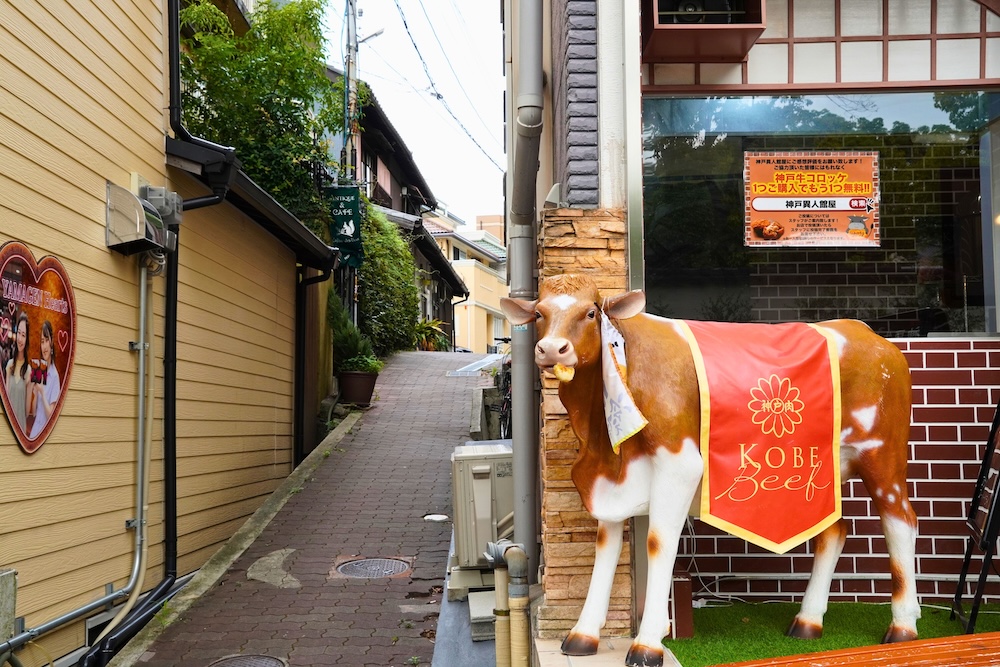
Who This One-Day Kobe Plan Is For
This plan is a perfect fit if:
- It’s your first time in Kobe and you want to hit the classics efficiently, but as one connected story instead of random dots on a map
- You’re into learning how cities evolved: ancient shrines, modern architecture, and port history
- You want to spend the whole day exploring on foot, no car needed
- You want your Kobe beef at a long-running local institution, not a typical tourist trap
- You want to end the day with a gorgeous night view
- You don’t mind a full day of walking, hills included
It also works beautifully if you’re staying in Osaka or Kyoto and want to squeeze in a day trip to Kobe.
I personally had two main reasons for wanting to do this walk:
- I grew up near Tokyo, and as I got older, I watched our local shopping streets and the character of my hometown slowly disappear. Kobe is a massive city sitting right next to Osaka, yet it still actively uses its old buildings and holds on tightly to its history. I really wanted to see what Kobe is doing differently.
- Kobe beef. I wanted to try the real deal right in its hometown. Back in Tokyo, the good spots are always booked solid, so eating it is never something I can just casually go and enjoy.
The Rough Itinerary: A One-Day Time Trip Through Kobe
The times below are simply a guide, not a fixed schedule. Feel free to shift things around to match your pace and the crowds.
Morning: From Ancient Times to the Meiji Era
- 09:00 Leave Sannomiya Station
- 09:15 Ikuta Shrine, where the name “Kobe” began
- 10:15 Head uphill to Kitano Ijinkan-gai
- 12:30 Kobe beef teppanyaki lunch around Sannomiya and Kitano-zaka
Afternoon to Evening: Port-Opening Streets and Harbor Lights
- 14:30 Modern architecture in the Former Foreign Settlement (including Kobe City Museum)
- 16:30 Walk past the landmark buildings of Kaigan-dori toward the harbor
- 17:30 Meriken Park, from sunset into the night view
Morning: Ikuta Shrine and Kitano Ijinkan-gai
📍 Morning route (Google Maps): Open the walking route
Start: Sannomiya Station
→ Ikuta Shrine
→ Kitano Ijinkan-gai
→ Kitano-zaka (lunch)
09:00 Leave Sannomiya Station
We kick off at Sannomiya Station, where the JR, Hankyu, Hanshin, and subway lines all meet. Ikuta Shrine is just a short walk northwest. From here all the way to Meriken Park at the end of the day, we’re entirely on foot.
09:15 Ikuta Shrine: Where the Name “Kobe” Began
It sits right in the middle of Sannomiya’s busiest streets, but the moment you step through the torii gate, the air changes. I picked this as my starting point because the name “Kobe” itself is actually tied to this shrine. The households that served and protected Ikuta’s deity were called “kanbe” (written 神戸), and that name eventually became the name of the city. → Feel KOBE: Ikuta Shrine
The shrine is said to date back to 201 AD, making it more than 1,800 years old. It enshrines a goddess called Wakahirume-no-Mikoto, it’s famous for bringing luck in love and relationships, and locals just affectionately call it “Ikuta-san.”
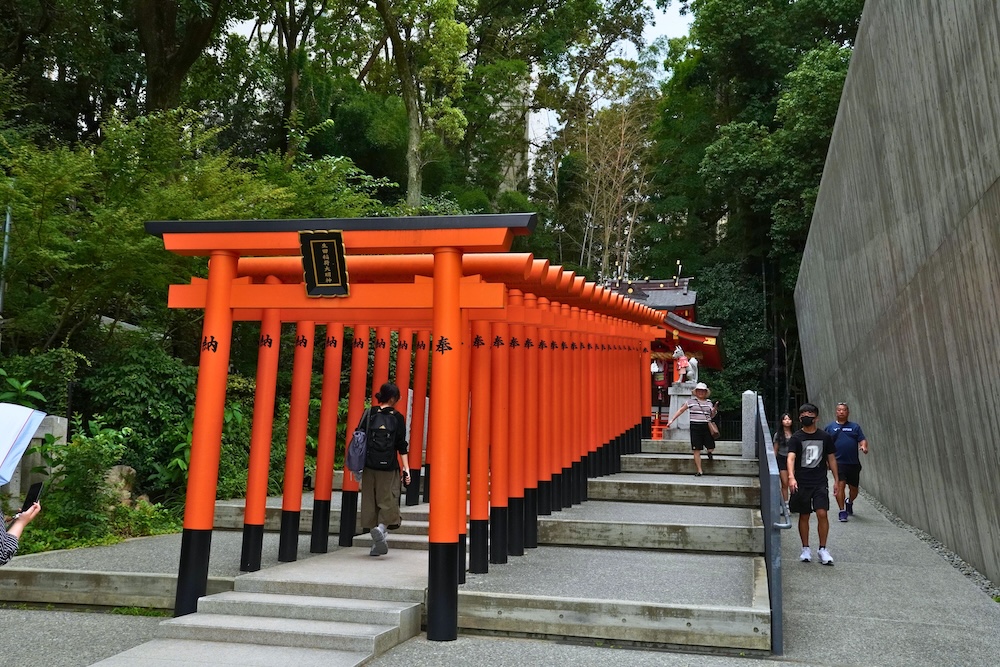
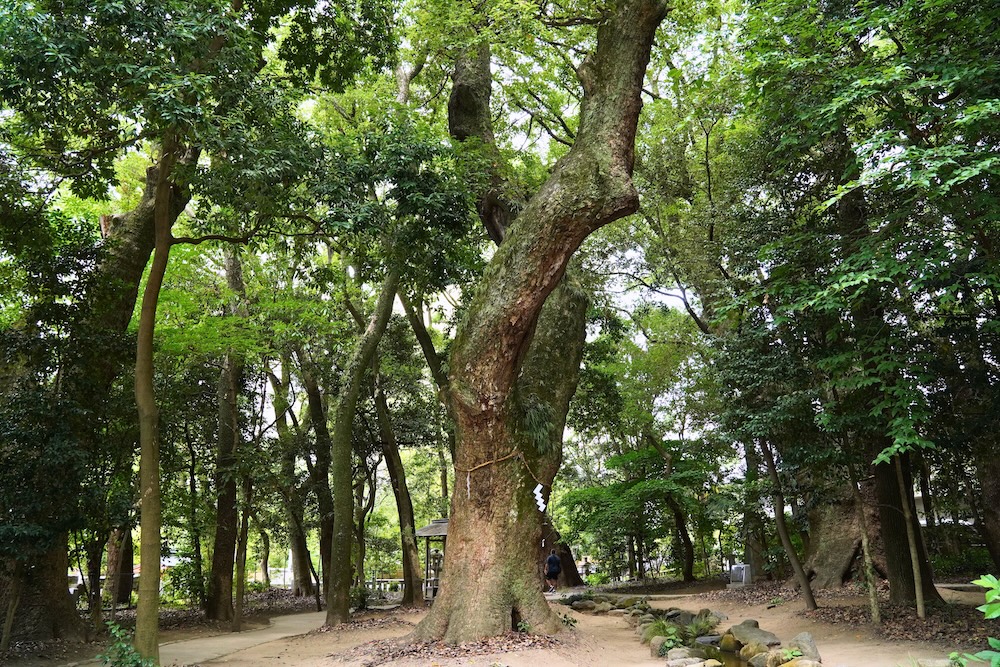
What I was hoping for: a traditional shrine planted right in the middle of downtown, with a forest of centuries-old trees tucked inside. I was really looking forward to feeling that spiritual energy.
And in person? The forest truly felt mystical. One tree in particular stopped me in my tracks: the sacred camphor tree (kusunoki) of Ikuta Forest, said to be around 500 years old. It burned during the 1945 air raids on Kobe but came back to life, so today it’s seen as a symbol of rebirth and recovery. Once you know that story, standing in front of it just hits different.
The grounds are wide and open, and there’s a spot where dozens of red torii gates line up one after another. Super photogenic. I couldn’t stop taking pictures.
It’s the kind of shrine where you can feel yourself instantly calm down.
I saw visitors of all ages. Right in the middle of the grounds there’s a big round ring, and everyone was bowing to it.
There was a long line of people waiting to do exactly that. Seeing it made me realize a lot of people come to this shrine specifically for that ring, which kind of surprised me.
10:15 Kitano Ijinkan-gai: Walking Through Meiji-Era East Meets West
From Ikuta Shrine, head north and uphill for about 10 minutes (around 1 km) and you’ll find yourself in Kitano Ijinkan-gai. After ancient faith, we jump straight to the Meiji era. Once Kobe’s port opened, this is where foreigners made their homes. Houses built in a colonial style, featuring design touches from all over Europe, are scattered beautifully along the slopes. → Feel KOBE: Kitano area guide
Most of the houses charge admission one by one. If you plan to visit several, definitely check for a combo ticket before you start. It’ll save you a lot of time.
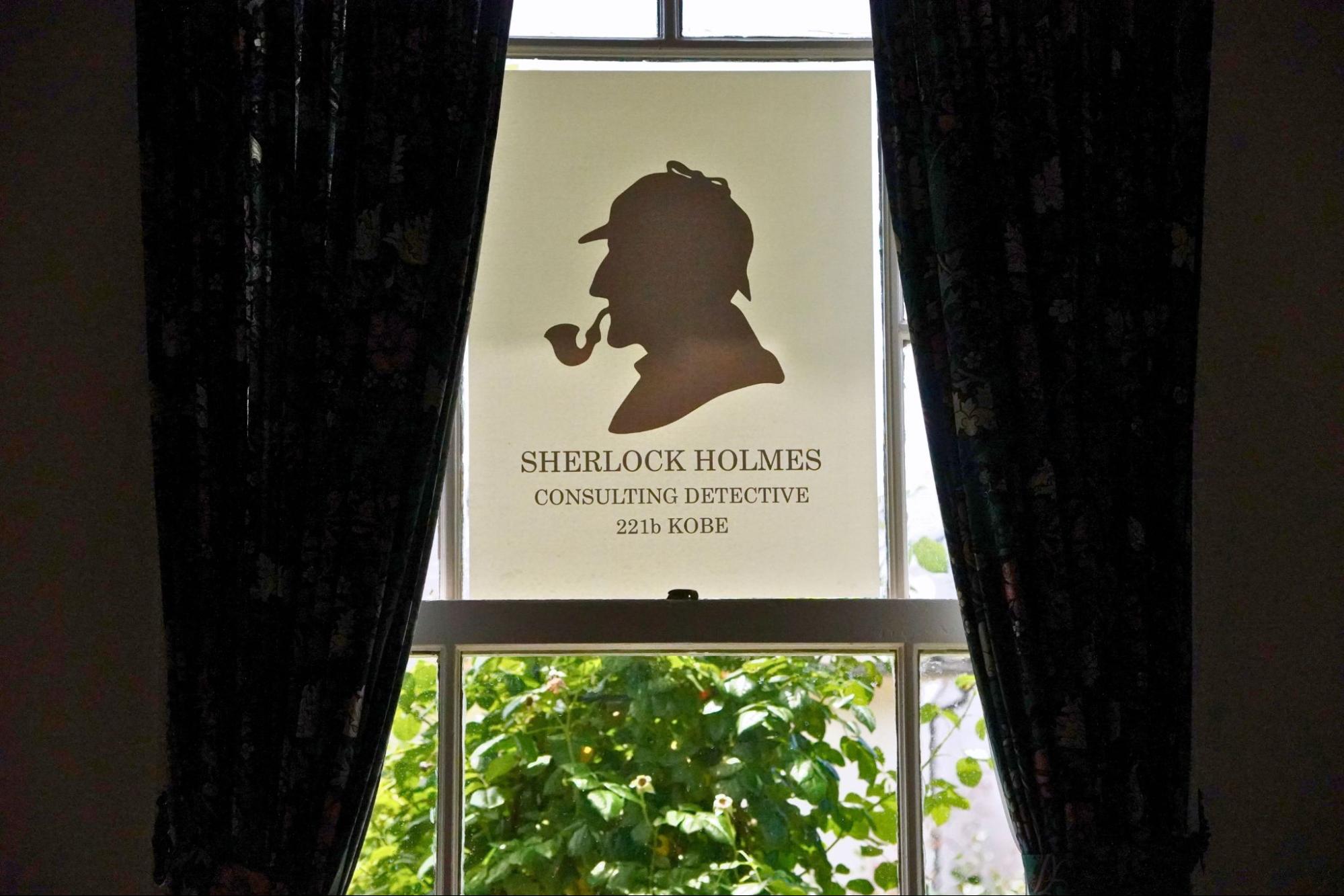
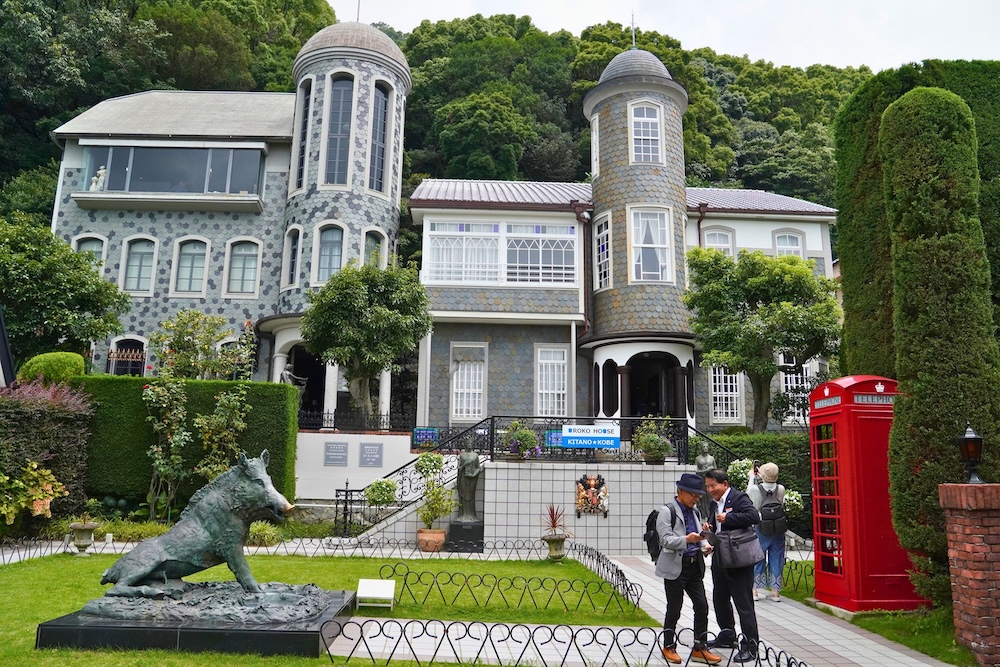
Before going, I pictured a classic tourist spot, thinking, “Okay, time to go see The Tourist Attraction.” But I went on a weekday, so it wasn’t crowded at all. And people really do still live here, even right inside the Ijinkan district. You climb a steep hill through an ordinary residential neighborhood, and plenty of the buildings on the way up look traditionally Japanese. Then suddenly, boom, the Ijinkan district just appears. That transition made me realize how incredibly well this whole area has been preserved.
The staff at the houses and the people inviting visitors in (probably locals) were super kind and welcoming, even to a tourist like me.
12:30 Kobe Beef Teppanyaki: Face to Face at an Old-School Counter
Head back down the hill toward Sannomiya and Kitano-zaka. There are tons of Kobe beef teppanyaki places around here, but I skipped the newer, tourist-focused spots and went for a long-running local institution. The chef cooks everything right in front of you across the counter.
I went to Teppanyaki Steak Misono, Kobe main store, the restaurant that calls itself the originator of teppanyaki steak. Why Misono? They have a branch in Tokyo, but it’s in a prime location, feels very upscale, and always seems packed. Since I was making the trip to Kobe anyway, I really wanted to enjoy the real deal at the original main restaurant. Misono opened in Kobe in 1945, right after the war.
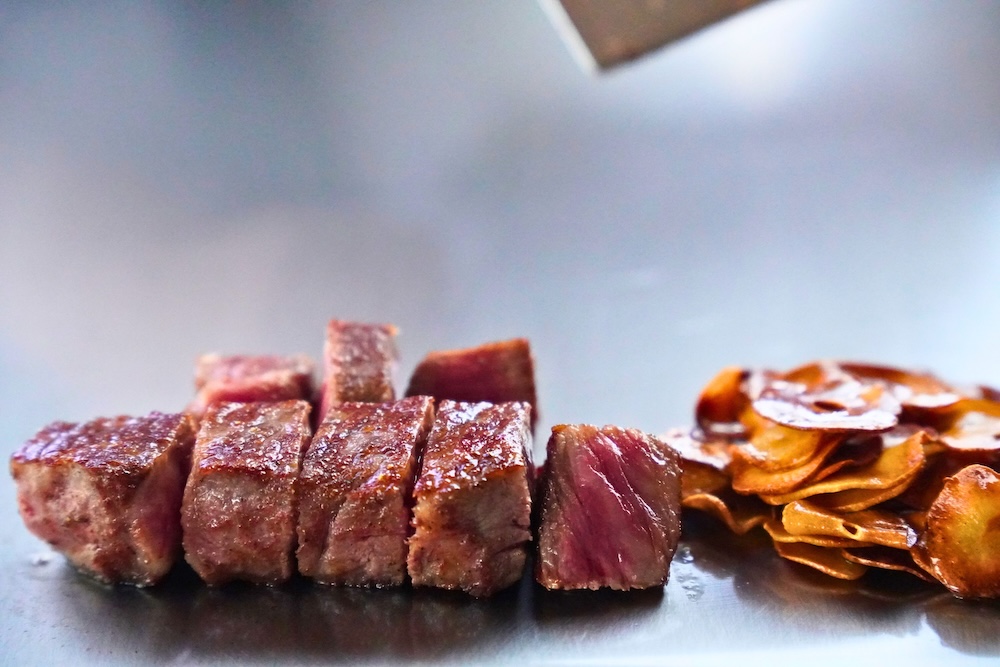
I had the Kobe Beef Lunch for 23,100 yen (Kobe beef sirloin steak 150g, salad, six kinds of grilled vegetables, rice, miso soup, pickles, dessert, and coffee).
First impression: the view is amazing and the whole place feels wide open. The dining room is walled in glass, so it almost feels like you’re floating in the air.
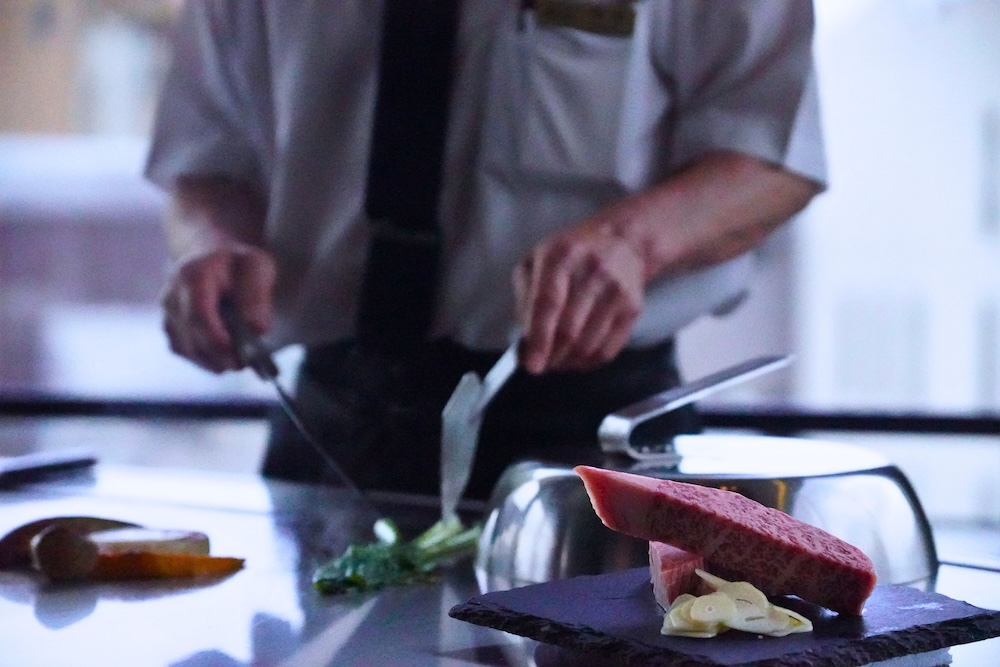
They grill the steak, the vegetables, and the garlic right in front of you, so the whole meal is quite a show.
And the Kobe beef? Absolutely stunning. Seriously delicious. Afterward, I chatted casually with the chef about how many years he’s worked there, what kind of guests come in, what Kobe beef really is, and how this restaurant differs from the Tokyo branch.
Eating Kobe beef at a place with this much real history left a huge impression on me. That counter, casual service and all, was a perfect 100 out of 100.
📍 Planning your visit: Misono takes reservations by phone (078-331-2890). Directions and opening hours are on the Misono Kobe main store access page.
Afternoon to Evening: The Former Foreign Settlement and Meriken Park
📍 Afternoon route (Google Maps): Open the walking route
Start: Kitano-zaka
→ Former Foreign Settlement (Settlement monument)
→ Kobe City Museum
→ Modern buildings on Kaigan-dori
→ Meriken Park
14:30 The Former Foreign Settlement: Port-Opening Kobe’s “Most Beautiful Streets”
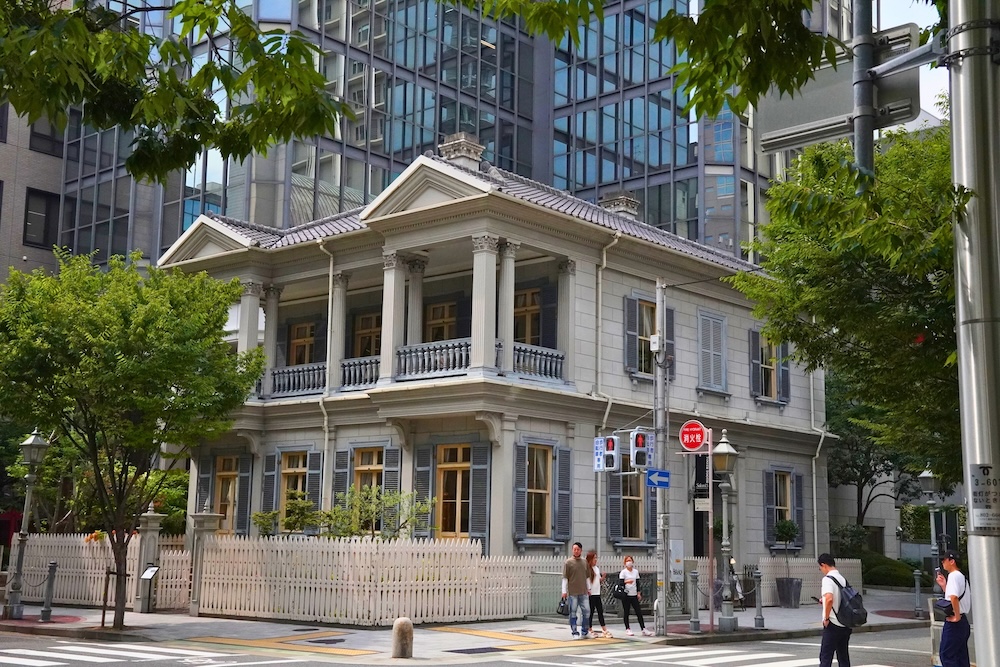
From the south side of Motomachi Station down to Kaigan-dori, this area is packed with modern buildings from the Meiji and Taisho eras. It was once praised as the most beautiful foreign settlement in the East. After the settlement system ended in 1899, trading and shipping companies built their offices here. Those buildings are still in use today, and they’re what give the neighborhood its classy, dignified feel. → Feel KOBE: Sannomiya and Motomachi area guide
Start at the Settlement monument in front of Daimaru Kobe, then follow the numbers on the buildings as you head south, and you won’t get lost.
Along the way, drop by Kobe City Museum on Kyomachi-suji. It’s a neoclassical former bank building, and the Kobe History Gallery on the first floor is free. Get the city’s backstory here first and the buildings you see afterward will start to look different. (It’s closed on Mondays, so this time I could only admire it from the outside. Bummer.)
16:30 Kaigan-dori: Through the Landmark Buildings to the Harbor
Out on Kaigan-dori you get one landmark after another: the Chartered Building, the Shosen Mitsui Building, and the Kobe Meriken Building. They’re from the same era, but the ornamentation and personality of each one is completely different. Just walk past them and the harbor is right there in front of you.
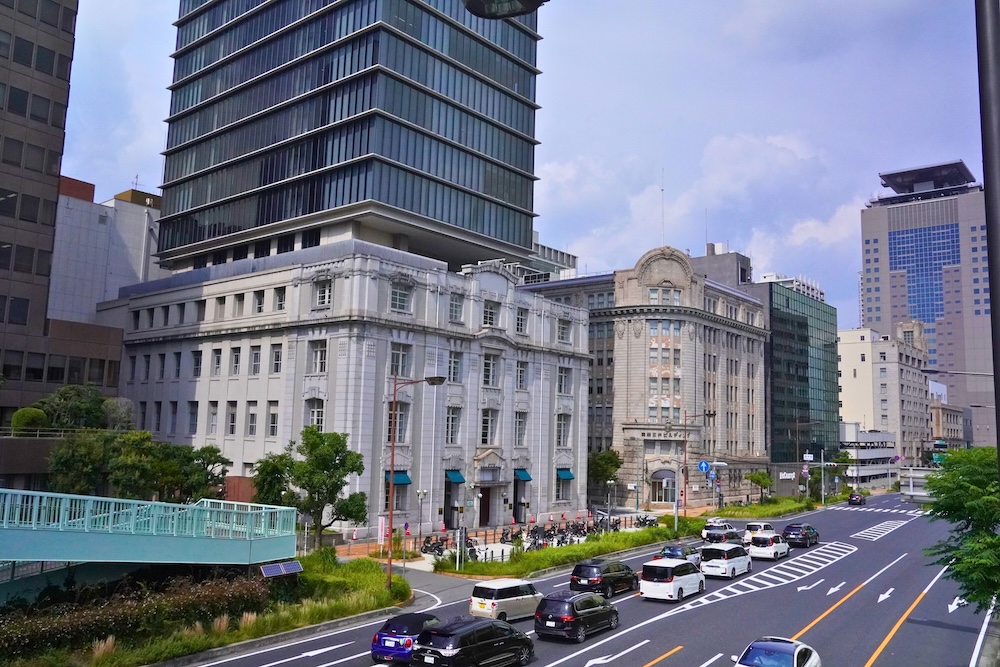
What stuck with me most is how close the harbor and the mountains are.
And packed tightly into that small space is everything a city needs, plus history and landmark architecture. That really impressed me.
Buildings from roughly 90 to more than 100 years ago (the Kobe Meriken Building went up in 1918, the Shosen Mitsui Building in 1922, and the Chartered Building in 1938) stand right next to, or right behind, brand-new modern ones. I loved that mix.
17:30 Meriken Park: Wrapping Up With Kobe’s Harbor at Night
After ancient times, the Meiji era, and the modern era, the day ends with “Kobe, the port city that’s still evolving.” Here you’ll find the red, hourglass-shaped Kobe Port Tower, the Kobe Maritime Museum, and the classic “BE KOBE” monument.
→ Feel KOBE: Meriken Park night view spot
Kobe Port Tower reopened after a renovation in 2024, with a brand-new rooftop deck. The observation floors stay open until 11 pm, so there’s plenty of time to head up after dark.
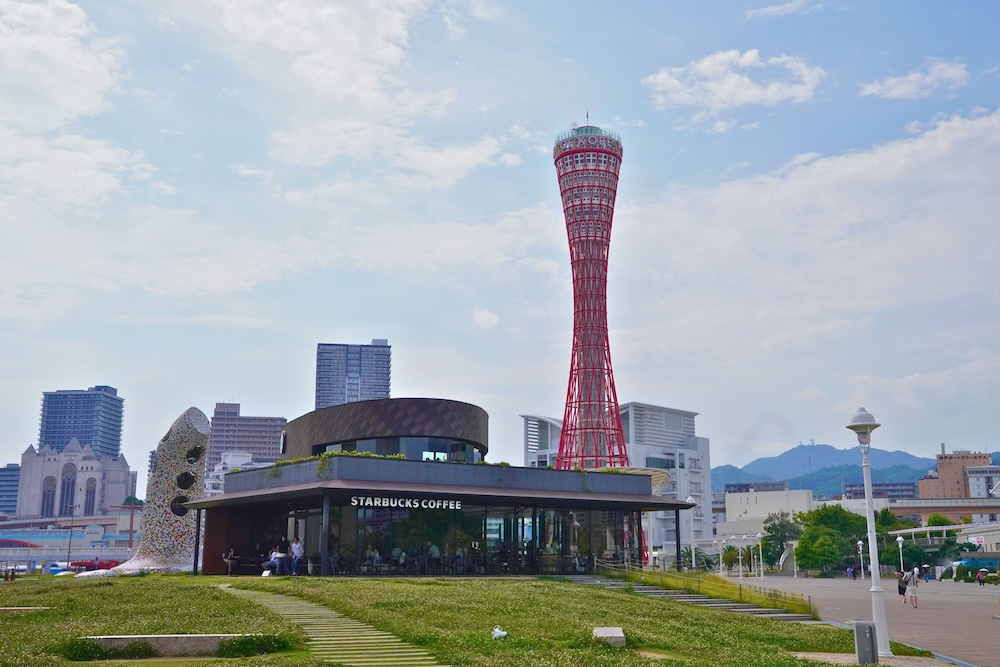
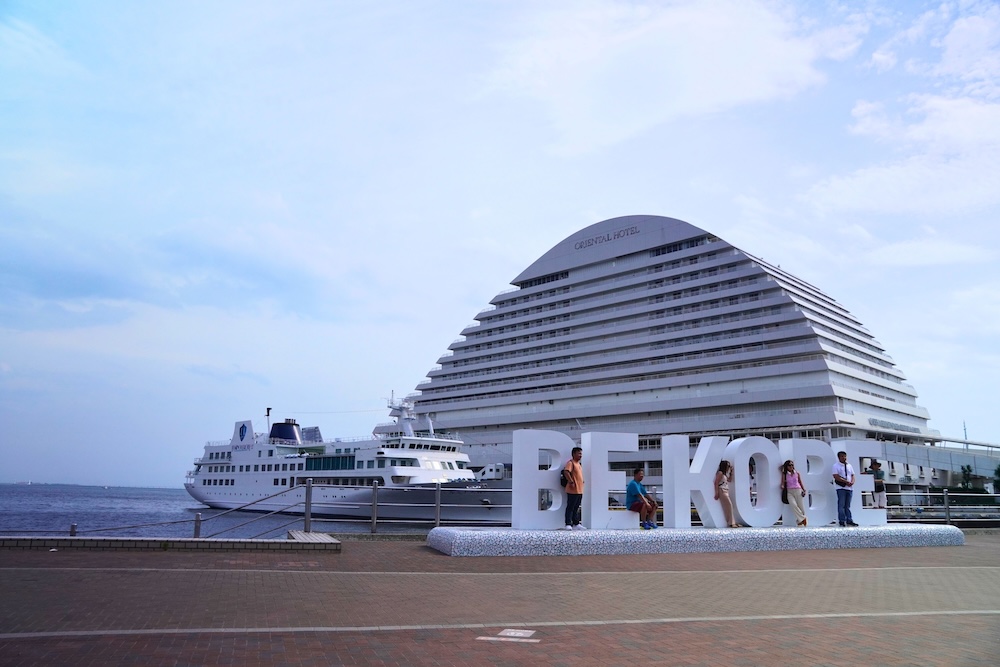
I got here in the early evening, so I didn’t catch the night view this time. But I’ve been to this park before, and it’s really spacious.
Even so, it’s never that crowded, and with lawns and a café, it’s a great place to just kick back and relax.
Practical Info for a Day in Kobe
Can you do it without a car?
Yes. This whole plan is on foot. Ikuta Shrine is right by Sannomiya Station, Kitano Ijinkan-gai is about 10 minutes from the shrine, and both the Former Foreign Settlement and Meriken Park are within walking distance of the Sannomiya and Motomachi area.
One heads-up: Kitano is a hilly neighborhood with a lot of uphill walking, so comfortable shoes are a must.
What day should you go?
Avoid Mondays. Kobe City Museum is generally closed on Mondays (if Monday is a public holiday, it closes the following weekday instead). It’s open 9:30 to 17:30, and until 20:00 on Fridays and Saturdays. It also closes for a while between exhibitions, so check the official website before you go.
Ikuta Shrine’s closing time changes with the season: roughly 17:00 from October to February and 18:00 the rest of the year (check the official website). Since this plan starts in the morning, you’ll be fine.
What time should you aim for the night view?
Get to Meriken Park a little before sunset and you’ll catch the whole shift from dusk to night in one go. Sunset times vary a lot by season, so work backward from that day’s sunset and adjust your afternoon.
Kobe Port Tower’s observation floors are open 9:00 to 23:00 (last entry 22:30). A combo ticket for the observation floors and rooftop deck is 1,200 yen for adults.
Day trip or overnight?
| Plan | Best for | What you’ll miss |
|---|---|---|
| This one-day plan (on foot) | First-timers in Kobe, day-trippers from Osaka or Kyoto, anyone who wants the classics in historical order | Nankinmachi (Chinatown), the night views from Mt. Rokko and Mt. Maya, Arima Onsen |
| 1 night, 2 days | People who want to take Kobe slowly, including the mountain night views and hot springs | Nothing really, but you’ll need to book somewhere to stay |
Coming from Osaka, a day trip is totally fine. But if you’re coming from Tokyo, I’d say you need at least one night to really soak up what Kobe has to offer.
I didn’t include dinner this time, but Kobe has plenty of great spots for dinner too, and they’ll let you enjoy the city even more.
How crowded is it?
I went around midday on a Monday, and it wasn’t that crowded. There was a mix of international travelers and Japanese tourists.
Where should you stay?
If you’re staying over, the central Sannomiya or Motomachi area looks like the best bet. Motomachi has more of an old-town vibe, while Sannomiya is a bit more polished.
Wrap-Up: Is a One-Day Time Trip Through Kobe Worth It?
Absolutely, and then some. Especially if you’ve already done the big-name sights in Japan’s major cities like Tokyo and Osaka. Kobe is small and compact, yet history and modernity live side by side here, set right up against nature.
Put all that together and you get a really fun city walk.
For me, the most interesting part was the architecture.
Just by walking around, you run into buildings from all kinds of eras, built for all kinds of purposes. It’s a great way to spend a day.
Key things to keep in mind:
- You can do everything on foot, but wear comfortable shoes for the Kitano hills
- Skip Mondays, when Kobe City Museum is closed
- For the night view, work backward from sunset when planning your afternoon
Having grown up around Yokohama, I felt a real connection to Kobe.
Both are port cities with deep history, and each sits right next to a giant city: Tokyo for Yokohama, and Osaka for Kobe.
But even with all that in common, Kobe still feels just a little more refined.
That kind of charm and atmosphere is exactly what I hope sticks around for a long time to come.
A city’s vibe and history are things you simply can’t copy. I hope places like this keep living on all across Japan.
Share