
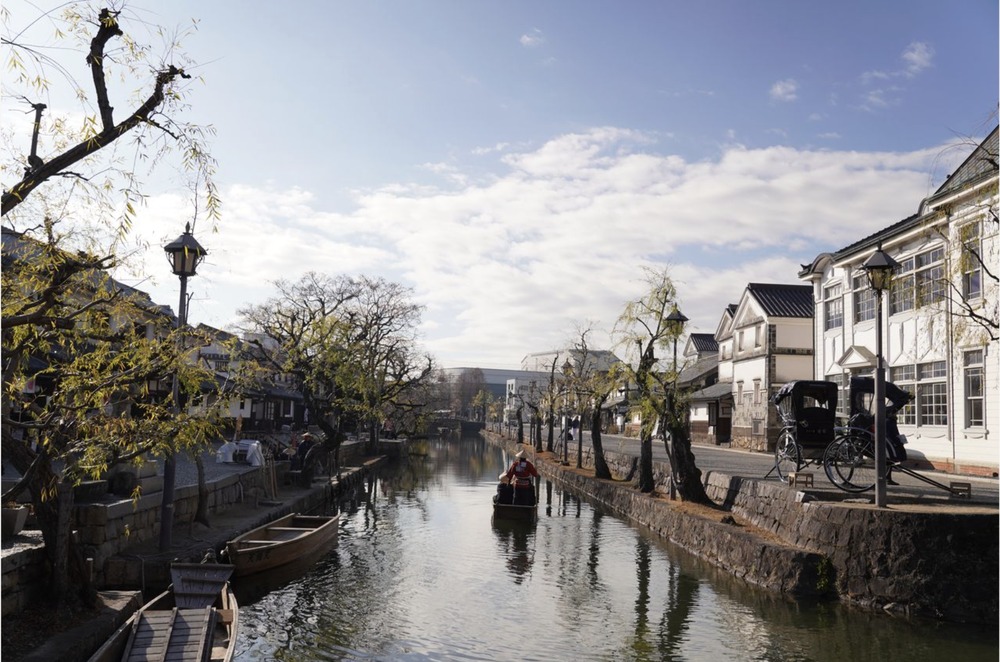
Kurashiki is a city in Okayama Prefecture, western Japan, whose Bikan Historical Quarter preserves an Edo-period merchant town of white-walled storehouses along a willow-lined canal. The quarter’s core has been a national preservation district since 1979. This two-day walking itinerary covers Achi Shrine, the Ohashi House (built 1796), the Kurashiki Museum of Folk-Craft and the denim shops, with one night in the old town.
| Location | Bikan Historical Quarter, Kurashiki City, Okayama Prefecture |
|---|---|
| Nearest station | JR Kurashiki, about 17 minutes from Okayama by local train, then about 13 minutes on foot |
| Time needed | 1 to 2 hours to walk the streets alone. This itinerary takes two days with one night. |
| Ohashi House | 9:00 AM to 5:00 PM. Adults 550 yen. Closed Fridays from December to February. |
| Kurashiki Museum of Folk-Craft | 10:00 AM to 5:00 PM, last entry 4:30 PM. Closed Mondays, except public holidays. |
| Ohara Museum of Art | 9:00 AM to 5:00 PM (3:00 PM December to February). Adults 2,000 yen. Closed most Mondays. |
| Night lighting | Sunset to 10:00 PM from April to September. Sunset to 9:00 PM from October to March. |
Checked in October 2026 against kurashiki-tabi.jp, ohashi-ke.com, kurashiki-mingeikan.com, ohara.or.jp.
Kurashiki does not have the name recognition of Kyoto, Nara, or Kanazawa. But that is exactly why it works so well as a slow, one-night trip. The historic center is compact, walkable, visually beautiful, and full of small shops, old buildings, museums, cafés, local food, and quiet evening streets.
For this trip, I visited Kurashiki with my partner for a one-night birthday getaway. We wanted somewhere cultural, relaxing, and not too overwhelming. The deciding factors were simple: a beautiful old townscape, a manageable size, and enough things to do without needing to rush.
Kurashiki’s Bikan Historical Quarter is known for its white-walled storehouses, willow-lined canal, stone bridges, and old merchant-town atmosphere. The area is only about a 10- to 15-minute walk from JR Kurashiki Station, which makes it especially convenient for travelers without a car.
This is the actual 2-day route we walked.
Who This Kurashiki Itinerary Is For
This itinerary is a good fit if you:
- want a slow 2-day trip in western Japan
- prefer walking through old streets over rushing between famous landmarks
- are interested in Japanese architecture, folk craft, cafés, and local shops
- do not have a driver’s license in Japan
- want a trip that feels cultural but not exhausting
- are looking for Japanese denim from the Kurashiki and Kojima area
- want a romantic but casual overnight trip
It is also a good option if you are already planning to visit Okayama, Hiroshima, Naoshima, or the Setouchi region and want to add a quieter cultural stop.
Quick Overview: 2 Days in Kurashiki
Day 1
- 10:00: Arrive at Kurashiki Station
- 11:00: Walk to the Bikan Historical Quarter
- 11:30: Visit Achi Shrine
- 12:20: Lunch at Kappa for Okayama-style pork cutlet
- 13:00: Continue strolling through the historic area
- 15:00: Rest at Shinkeien Garden
- 16:00: Check in at a canal-side inn
- 18:00: Explore the Bikan Historical Quarter at night
- 19:00: Dinner and drinks at Shinsui
Day 2
- 10:00: Visit the Ohashi House
- 11:00: Shop for Kurashiki and Kojima denim
- 11:30: Coffee break at Kurashiki Coffee-kan
- 12:20: Lunch at Pizzeria La Cenetta
- 13:00: Visit Kurashiki Museum of Folk-Craft
- 15:00: Walk back to Kurashiki Station
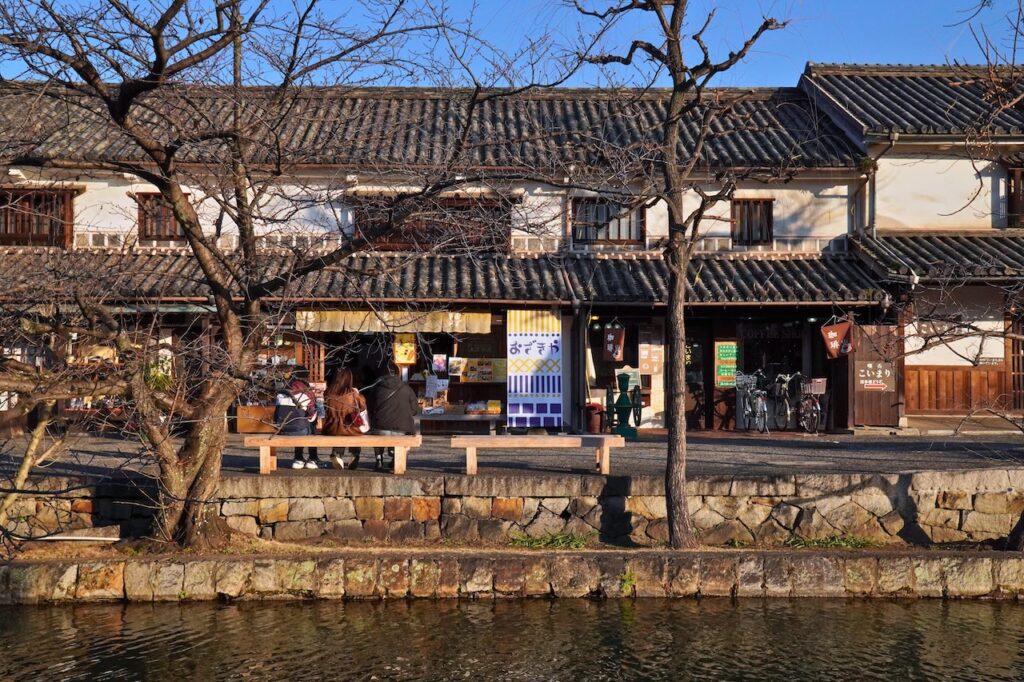
Day 1: Arriving in Kurashiki and Entering the Old Town
📍 Day 1 walking route on Google Maps: View our Day 1 route
: Kurashiki Station
→ Bikan Historical Quarter
→ Achi Shrine
→ Kappa (lunch)
→ Shinkeien Garden
→ Shinsui (dinner)
10:00: Start from Kurashiki Station
Kurashiki is easy to reach by train. From Okayama Station, take a local JR train to Kurashiki Station. The ride is short enough that Kurashiki can technically be visited as a day trip, but staying overnight changes the experience completely.
The daytime streets are lively, but the evening atmosphere is much quieter and more memorable. If your schedule allows it, I recommend spending one night rather than treating Kurashiki as a quick half-day stop.
From Kurashiki Station, walk south toward the Bikan Historical Quarter. The route is straightforward, and you gradually feel the town shift from a modern station area into an older, slower streetscape.
11:00: Walk Through the Bikan Historical Quarter
The Bikan Historical Quarter is the heart of Kurashiki.
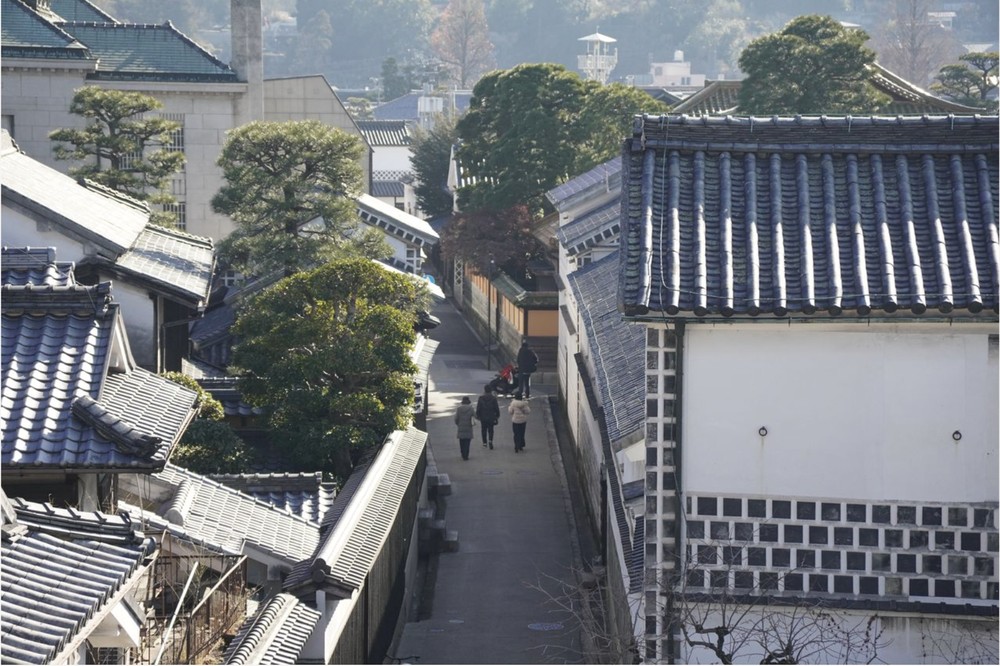
This is the area most visitors come to see: white-walled buildings, black roof tiles, narrow streets, a canal lined with willow trees, and old storehouses that have been converted into shops, cafés, museums, and galleries. Official tourism sources describe the district as a place where visitors can enjoy historic storehouses, namako walls, and a retro-modern riverside view along the Kurashiki River.
What makes Kurashiki enjoyable is not only the scenery itself, but the scale. It is not a huge city where you need to plan every movement. You can simply walk, turn into side streets, look into small shops, stop for snacks, and keep going.
The area has plenty of souvenir shops, food stalls, craft shops, denim stores, cafés, and independent businesses. It feels tourist-friendly, but not completely consumed by tourism. That balance is part of its appeal.
11:30: Climb to Achi Shrine for a View Over the Town
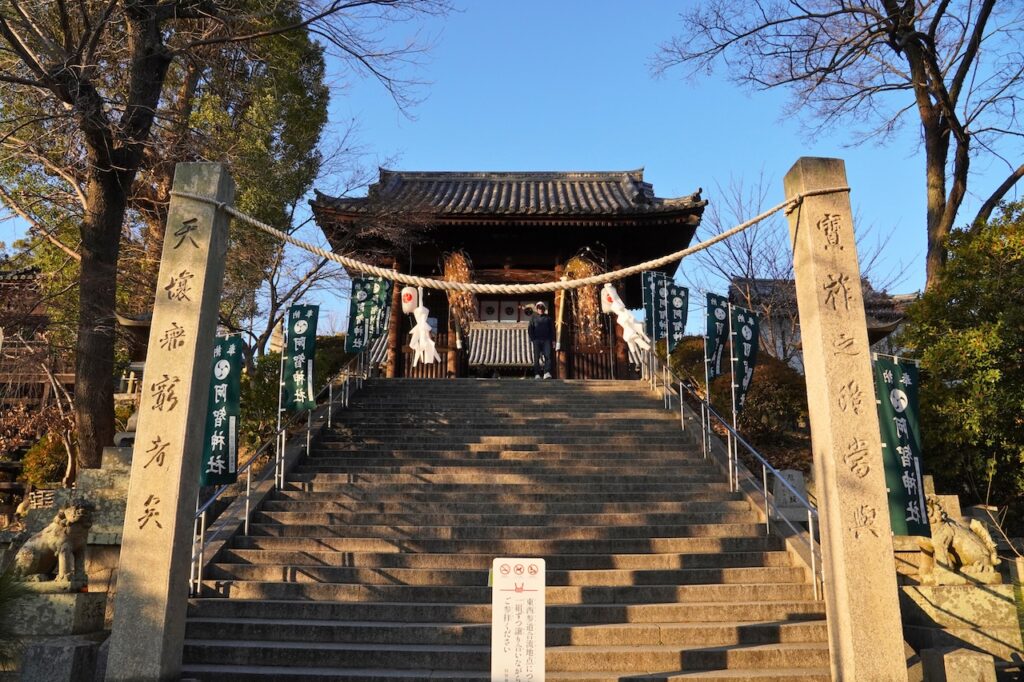
After walking through the historic district, head up to Achi Shrine.
The shrine sits on top of Mt. Tsurugata and overlooks the Bikan Historical Quarter. It is a short climb, but it gives the trip a nice change of perspective. Instead of only seeing the town from street level, you get to look down over the old roofs and surrounding area.
The shrine grounds are peaceful, and the buildings have a dignified atmosphere. It is not a place to rush through. Take a moment to walk around, offer a quiet prayer, and enjoy the view before returning to the streets below.
For travelers who like shrines but do not want to make a full-day temple-and-shrine itinerary, Achi Shrine is just right. It adds a spiritual and scenic layer to the Kurashiki walk without making the day feel heavy.
12:20: Try Okayama-Style Pork Cutlet at Kappa
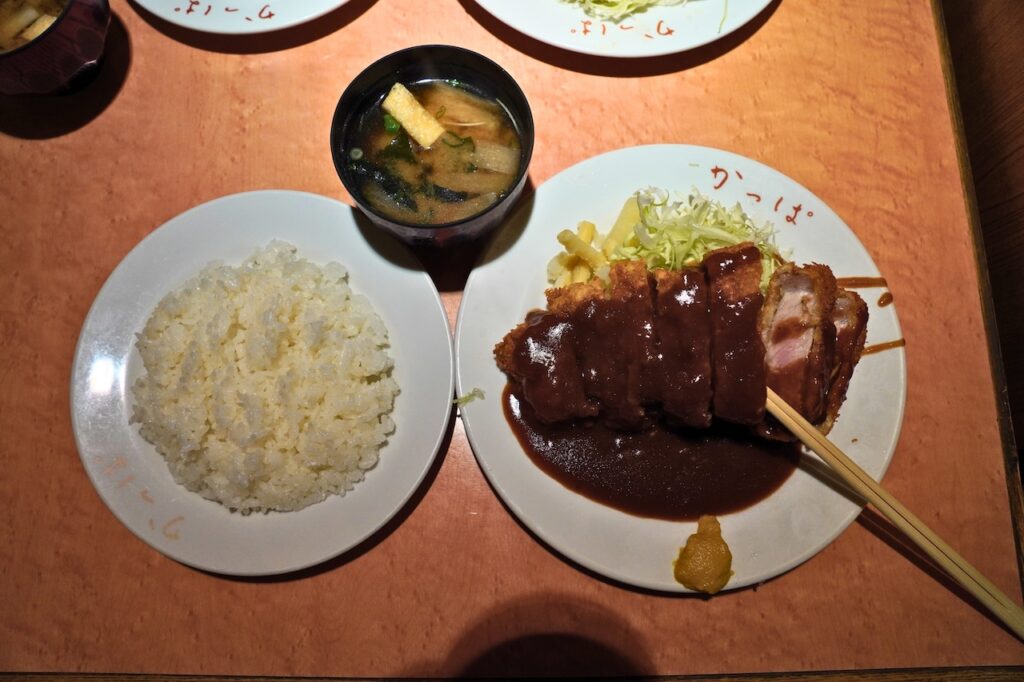
For lunch, we went to Kappa, a popular local restaurant known for its pork cutlet.
The dish to try here is the miso-sauce tonkatsu set meal. It is rich, satisfying, and very Okayama. The restaurant does not take reservations, so you may need to line up outside. In our case, the line moved faster than expected, and we did not have to wait too long.
This is not a quiet hidden restaurant. It is popular for a reason. But if you want a local-style lunch that feels more grounded than a generic tourist meal, it is worth considering.
13:00: Continue Wandering Through the Streets
After lunch, return to the Bikan Historical Quarter.
This is the kind of place where the walk itself is the main activity. You do not need to force the schedule. Look into shops, compare souvenirs, take photos of the canal, and pay attention to the individual buildings.
Many of Kurashiki’s old structures are beautiful on their own. Some are museums, some are shops, some are cafés, and some simply shape the atmosphere of the street. The pleasure is in moving slowly enough to notice them.
If you like crafts, textiles, ceramics, paper goods, or small design objects, you will probably find yourself stopping often.
15:00: Rest at Shinkeien Garden
By mid-afternoon, take a break at Shinkeien.
Shinkeien is a Japanese-style building and garden built in 1893 as a villa for the Ohara family. Today, it serves as a quiet resting place for visitors and locals.
This is a good place to slow down after several hours of walking. The appeal is not dramatic spectacle. It is the feeling of stepping away from the shopping streets and giving your body and mind a pause.
Shinkeien is not one of Japan’s Three Great Gardens. That title refers to Okayama Korakuen, Kanazawa Kenrokuen, and Mito Kairakuen. If you visit Kurashiki together with Okayama City, Korakuen can be added as a separate stop.
16:00: Check In at a Canal-Side Inn
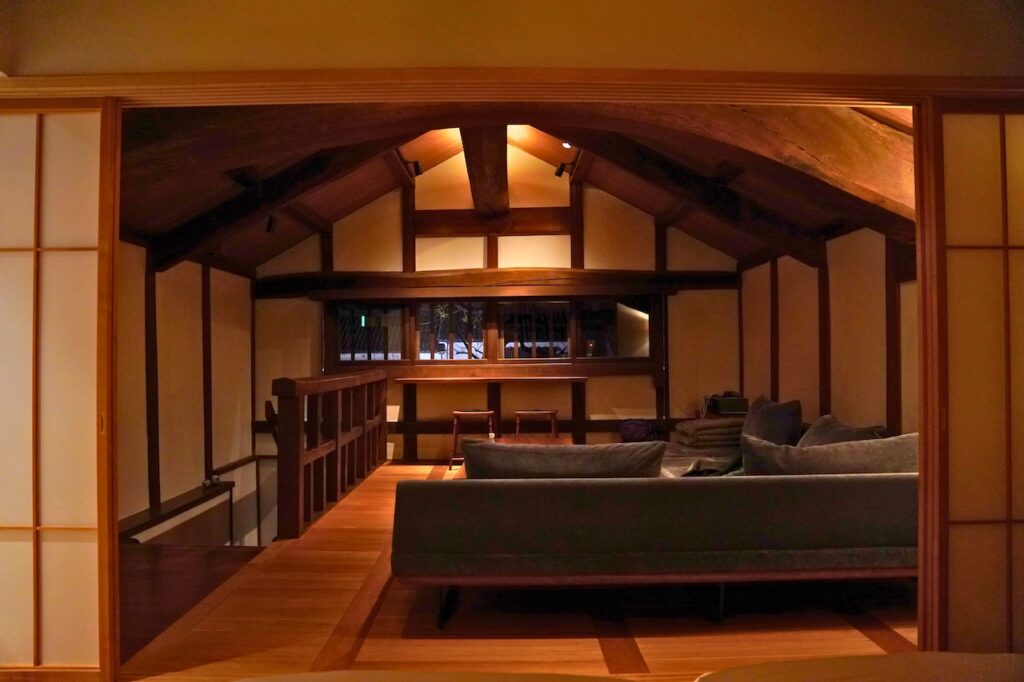
For this trip, we stayed at a property by toutou called Mingeikan Minami Gawahan no Yado.
The location was excellent. Because it sits within the flow of the Bikan area, checking in did not feel like leaving the trip behind. It felt like the walk simply continued into the accommodation.
toutou operates several separate buildings around the town, which makes the stay feel connected to Kurashiki’s streets rather than isolated inside a large hotel. The brand also runs galleries and shops that focus on Japanese handcrafts, so it fits naturally with the cultural tone of the trip.
For a one-night Kurashiki stay, I recommend choosing accommodation either inside or very close to the Bikan Historical Quarter. The main reason is not convenience alone. It is because the area becomes especially beautiful after day-trippers leave.
18:00: Walk the Bikan Historical Quarter at Night
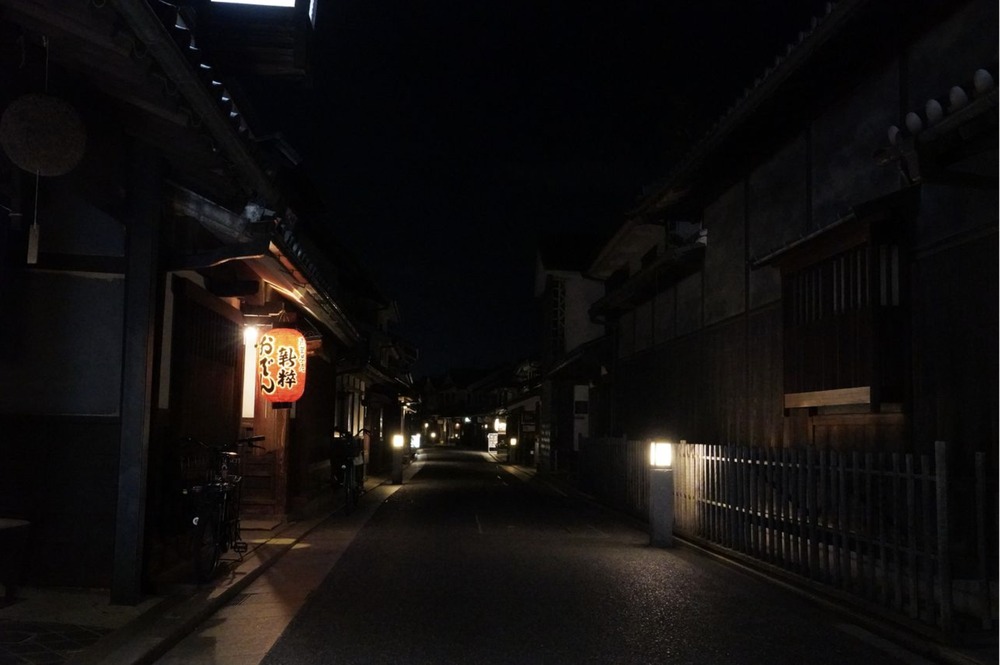
Do not stay in your room all evening.
Even if the accommodation is beautiful, the night walk is one of the best parts of staying in Kurashiki. The Bikan Historical Quarter becomes quieter, the lights reflect on the canal, and the white-walled buildings take on a different atmosphere.
During the day, the area is charming. At night, it becomes more cinematic.
This is also the strongest argument for staying overnight. Day trips can cover the major sights, but they miss the slower evening mood. If you are visiting as a couple, this is probably the most romantic part of the itinerary.
19:00: Dinner and Drinks at Shinsui
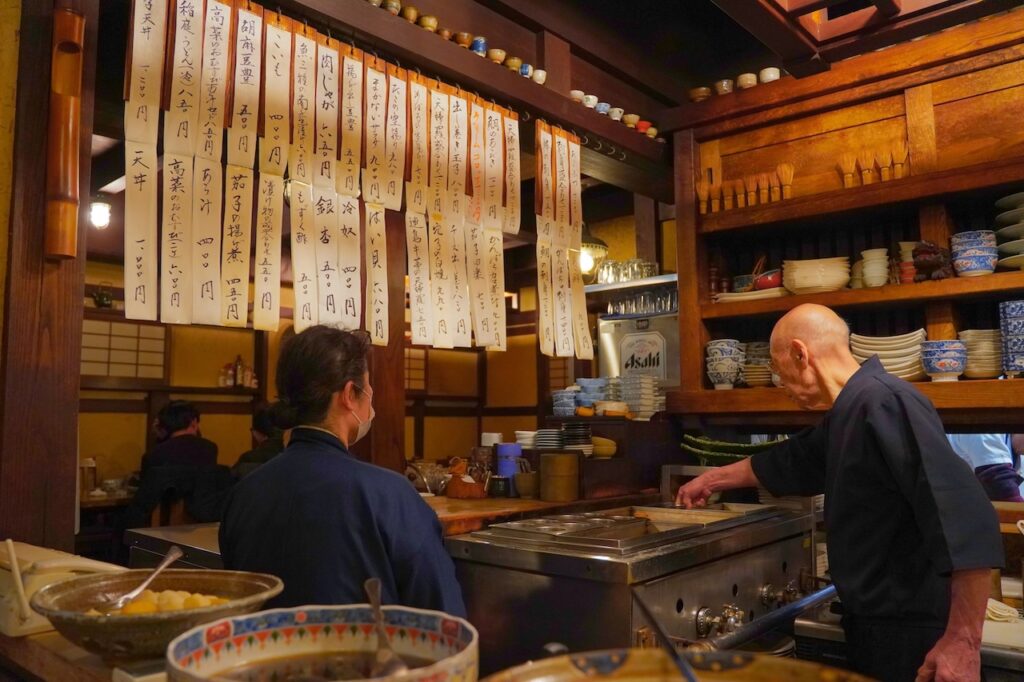
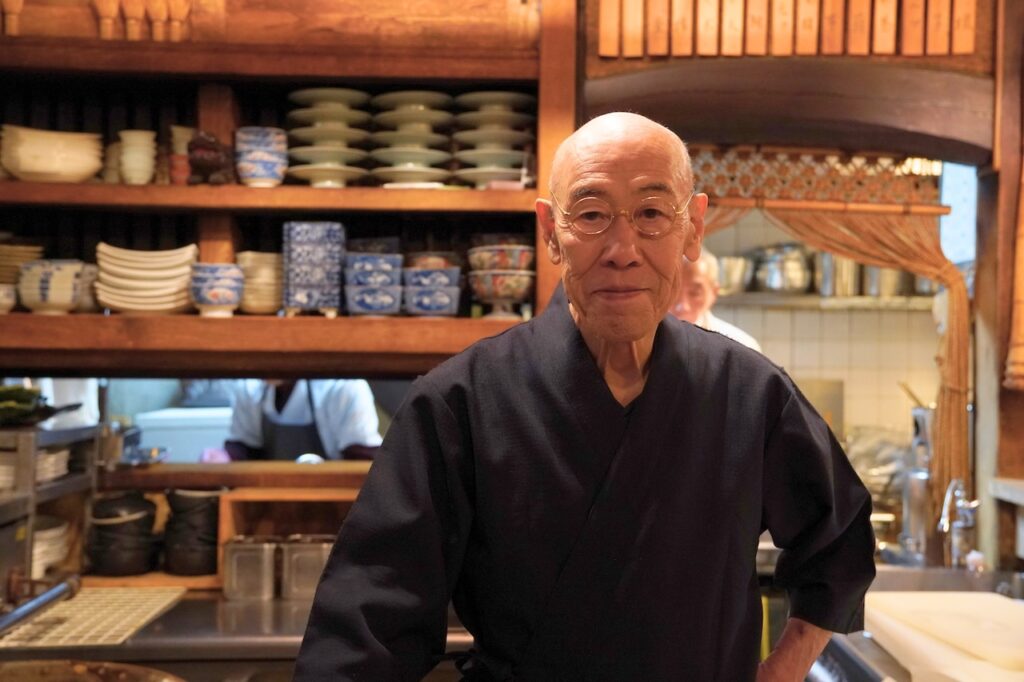
For dinner, we found a small izakaya called Shinsui.
A large lantern outside caught our attention. When we slid open the door, the interior felt like an older local drinking place that had been there for decades: paper menus hanging inside, stacked plates, a counter, and a warm owner who immediately made the space feel friendly.
The food was good, but the experience was even better. The casual conversation, the jokes, the old atmosphere, and the location right in the preserved district made it feel memorable in a way that polished restaurants often do not.
Kurashiki is not only about photogenic streets. Small places like this are what make the trip feel personal.
Day 2: Architecture, Denim, Coffee, and Mingei
📍 Day 2 walking route on Google Maps: View our Day 2 route
: Ohashi House
→ Kurashiki Coffee-kan
→ Pizzeria La Cenetta (lunch)
→ Kurashiki Museum of Folk-Craft
→ Ohara Museum of Art (optional)
→ Kurashiki Station
10:00: Visit the Ohashi House
Start the second day with the Ohashi House.
The Ohashi House is a representative Kurashiki merchant residence and is designated as a National Important Cultural Property. It was built in 1796 by the Ohashi family, who became wealthy through land reclamation during the Edo period. The building preserves features such as a long gatehouse, Kurashiki windows, and Kurashiki latticework.
This is one of the best places in Kurashiki to experience Japanese residential architecture at a larger scale. The building is spacious, dignified, and very different from simply looking at old façades from the street.
Depending on timing, you may also see wedding photos or people in formal kimono nearby. The setting suits that kind of occasion.
If you are interested in how wealthy merchant families lived in regional Japan, this stop adds useful historical depth to the itinerary.
11:00: Shop for Kurashiki and Kojima Denim
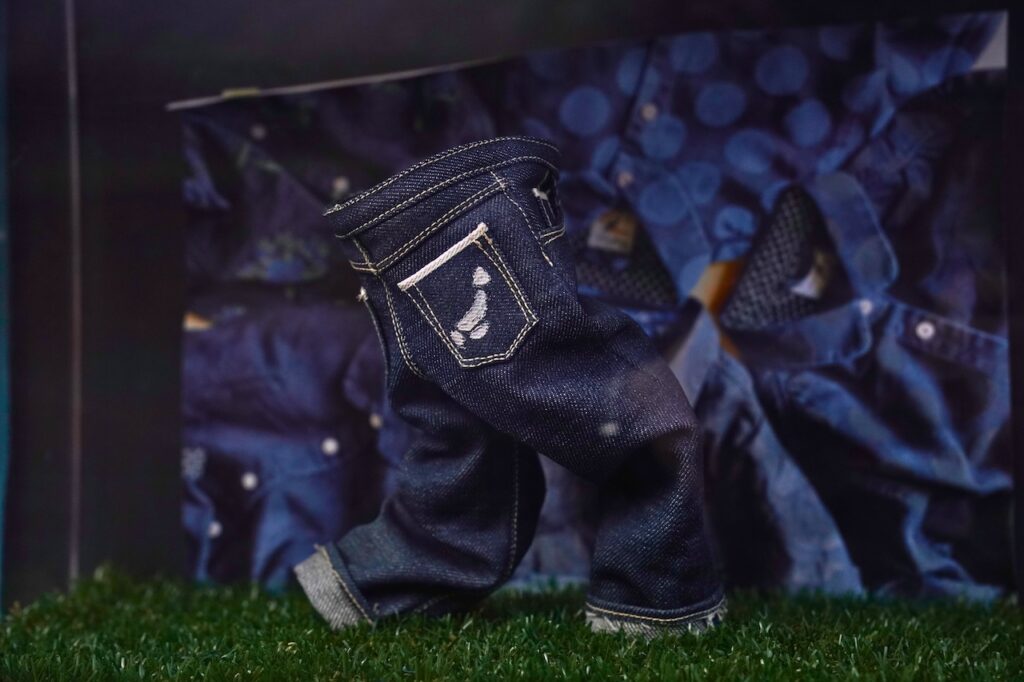
Kurashiki is also closely connected to denim.
The Kojima area of Kurashiki is widely known as the birthplace of domestically produced Japanese jeans, and Kurashiki Denim Street sells denim products from Kojima along with accessories and denim-themed snacks.
In the Bikan area, you can find several shops selling Kurashiki and Kojima denim. On this trip, we stopped by Kurashiki Denim Street and denim shops connected to brands such as MOMOTARO JEANS and JAPAN BLUE JEANS.
If you like fashion, this is one of the most interesting parts of Kurashiki. The town is not only preserving old architecture; it is also connected to modern Japanese craftsmanship through textiles.
You do not need to be a denim expert to enjoy it. But if you care about fabric, stitching, fading, and Japanese manufacturing, you may want to leave extra time here.
11:30: Coffee Break at Kurashiki Coffee-kan
After shopping, stop for coffee.
Kurashiki Coffee-kan has the atmosphere of an old Japanese kissaten. It feels calm, slightly nostalgic, and well suited to the town. The interior has character, and it is a good place to rest before lunch.
A slow itinerary needs pauses. Without them, Kurashiki becomes just another checklist of places. Sitting in a café for 30 or 40 minutes makes the walk more enjoyable.
12:20: Lunch at Pizzeria La Cenetta
For lunch, we went to Pizzeria La Cenetta.
Pizza is obviously not a local Kurashiki specialty, but the food was very good. Not every meal on a trip has to be “regional cuisine.” Sometimes the right choice is simply a good restaurant that fits your route and mood.
If you prefer to keep the trip more Okayama-focused, you could look for local dishes instead. But if you want a satisfying lunch before continuing to museums, Pizzeria La Cenetta works well.
13:00: Visit Kurashiki Museum of Folk-Craft
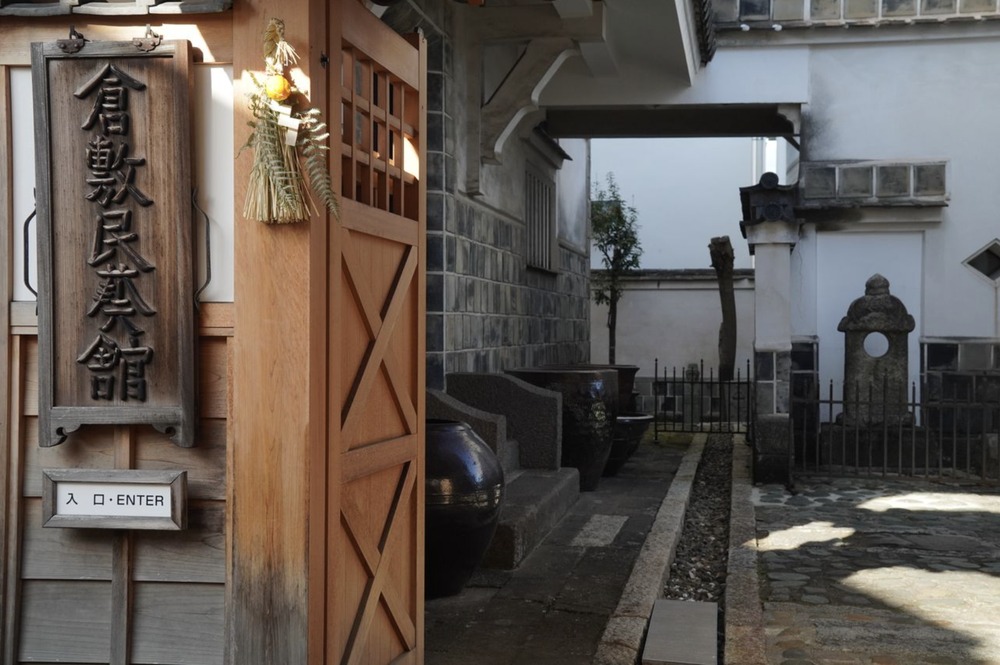
The final major stop of this itinerary is the Kurashiki Museum of Folk-Craft, or Kurashiki Mingeikan.
This museum is especially important if you are interested in mingei, the Japanese folk craft movement. It opened in 1948 as Japan’s second folk craft museum after the Japan Folk Crafts Museum in Tokyo. The building itself is a renovated late-Edo-period rice storehouse, and the collection includes around 15,000 durable and beautiful everyday objects from Japan and around the world.
This is not a flashy museum. That is part of the point.
Mingei is about the beauty of ordinary things: ceramics, baskets, textiles, tools, and objects made for daily use. In Kurashiki, that idea feels especially natural because the museum is not separated from the townscape. It sits inside the same world of storehouses, craft shops, canals, and preserved architecture.
The museum was not crowded when we visited, which made it easier to move slowly and look carefully. For me, this was one of the strongest cultural stops of the trip.
If you have already visited the Japan Folk Crafts Museum in Komaba, Tokyo, Kurashiki Mingeikan is a meaningful follow-up. It gives another perspective on how the mingei movement spread beyond Tokyo and became connected to local architecture, regional business families, and everyday life.
Optional Stop: Ohara Museum of Art
If this is your first time in Kurashiki and you want to add one major art museum, consider the Ohara Museum of Art.
The Ohara Museum of Art was established in 1930 by Magosaburo Ohara and is known as Japan’s first private museum focused on Western art. Its collection includes works by artists such as El Greco, Monet, Renoir, and Gauguin.
We did not build this trip around the Ohara Museum, but from an itinerary perspective, it is one of Kurashiki’s most important cultural sites. If you want more art and less shopping, you could replace part of the denim-shopping time or one café stop with the museum.
15:00: Return to Kurashiki Station
By mid-afternoon, walk back toward Kurashiki Station.
If you still have energy, the north side of the station has more shopping. Mitsui Outlet Park Kurashiki is located close to the station’s north exit, and Ario Kurashiki is a neighboring shopping center directly connected to the station area.
This makes Kurashiki unusually convenient: you can spend most of the trip in a preserved historic district, then end with practical shopping before taking the train.
Practical Tips for Visiting Kurashiki
Is Kurashiki Worth Visiting?
Yes: especially if you enjoy historic streets, folk crafts, denim, cafés, and a slower style of travel. Kurashiki does not try to overwhelm you with major landmarks. Instead, it rewards walking, looking carefully, and spending time in small shops and quiet corners.
If your trip is built around famous sights and big-city energy, Kurashiki may feel small. But if you want a relaxed cultural detour between Kyoto, Hiroshima, or the Setouchi area, it is one of the most rewarding stops in western Japan.
Is One Night Enough for Kurashiki?
For most travelers, one night is the right length. You can see Kurashiki as a day trip from Okayama, Hiroshima, or even Osaka, but you will miss the parts that make the town special: the quiet evening canal, the lit-up white-walled buildings at night, and the calm early morning before the crowds arrive.
One overnight stay covers the Bikan Historical Quarter, Achi Shrine, the Ohashi House, the Kurashiki Museum of Folk-Craft, denim shops, and a few cafés without feeling rushed. Two nights only make sense if you also want to add the Ohara Museum of Art at a slower pace, day-trip to Kojima for denim, or combine Kurashiki with Okayama Korakuen.
Can You Visit Kurashiki Without a Car?
Yes. The entire main itinerary is walkable from JR Kurashiki Station. The Bikan Historical Quarter is only a 10- to 15-minute walk south of the station, and almost every shop, museum, café, and shrine featured in this guide sits within that area.
A car is only useful if you plan to extend the trip to the Kojima denim district or other parts of Okayama Prefecture. For a one- or two-day Kurashiki visit, public transport plus walking is more than enough.
Kurashiki Day Trip vs Overnight Stay
A day trip is enough to see the main sights, but staying overnight changes the experience. Here is a quick comparison to help you decide:
| Option | Best For | What You Miss |
|---|---|---|
| Day trip | Quick sightseeing, Ohara Museum, canal area | Night atmosphere, slower cafés, relaxed shopping |
| Overnight | Couples, slow travelers, culture-focused trips | Requires one hotel night |
If your schedule is tight and you are already moving between Osaka, Hiroshima, or Naoshima, Kurashiki works fine as a half-day or day trip. If you want the full atmosphere, especially the evening Bikan area, one overnight stay is the better choice.
Check Museum Hours Before You Go
Some museums and cultural facilities close on certain weekdays or during the New Year period. Before finalizing your route, check the official websites for opening hours, closing days, and admission fees.
Add Okayama Korakuen If You Have More Time
If you want to expand the trip, combine Kurashiki with Okayama City. Okayama Korakuen, one of Japan’s Three Great Gardens, is the major garden to visit in the area.
Leave Room for Unplanned Stops
Kurashiki is best enjoyed slowly. Do not overpack the itinerary. The side streets, small shops, cafés, and evening walks are part of the experience.
Final Thoughts on Kurashiki
Kurashiki is simply a place with a wonderful atmosphere. While areas preserving traditional Japanese streetscapes and scenery are scattered across the country, Kurashiki stands out as one of them.
Although the Bikan Historical Quarter is a major tourist attraction, it hasn’t become overly commercialized. Perhaps because of this, I felt that the people working in the local tourism industry welcomed visitors from the bottom of their hearts.
Despite the compact size of the town, it offers a rich variety of food, crafts, and historical views, packing the essence of “authentic Japan” into a perfectly balanced experience.
If I were a traveler visiting Japan from a foreign land, spending a few days immersing myself in this town would undoubtedly be a deeply fulfilling experience.
Frequently Asked Questions
How do you get to Kurashiki by train?
Kurashiki is reached by local JR train from Okayama Station, a ride of about 17 minutes on the JR Sanyo Main Line to JR Kurashiki Station. Okayama is a Shinkansen stop, about 45 to 50 minutes from Shin-Osaka and about 35 to 40 minutes from Hiroshima. From Kurashiki Station, the Bikan Historical Quarter is about 13 minutes on foot or about 5 minutes by bus.
What time is the Bikan Historical Quarter lit up at night?
The Bikan Historical Quarter in Kurashiki is lit from sunset until 10:00 PM between April and September, and from sunset until 9:00 PM between October and March. The night lighting covers the Kurashiki River area and Kurashiki Ivy Square. Lighting designer Motoko Ishii produced the scheme, which was put in place with the cooperation of Kurashiki City and nearby residents.
What changes in Kurashiki’s Bikan Historical Quarter in winter?
Some sights in Kurashiki’s Bikan Historical Quarter open for shorter hours or on fewer days in winter. From December to February, the Ohara Museum of Art closes at 3:00 PM instead of 5:00 PM, with last entry at 2:30 PM, and the Ohashi House is closed on Fridays.
What is a namako wall?
A namako wall (namako-kabe) is an exterior wall finish found on the storehouses of Kurashiki’s Bikan Historical Quarter. Tiles, mostly square, are fixed to the wall and the joints between them are filled with raised plaster. Kurashiki City explains that the plaster joints are semicircular in cross-section and resemble a namako, or sea cucumber, which gives the wall its name.
Share