
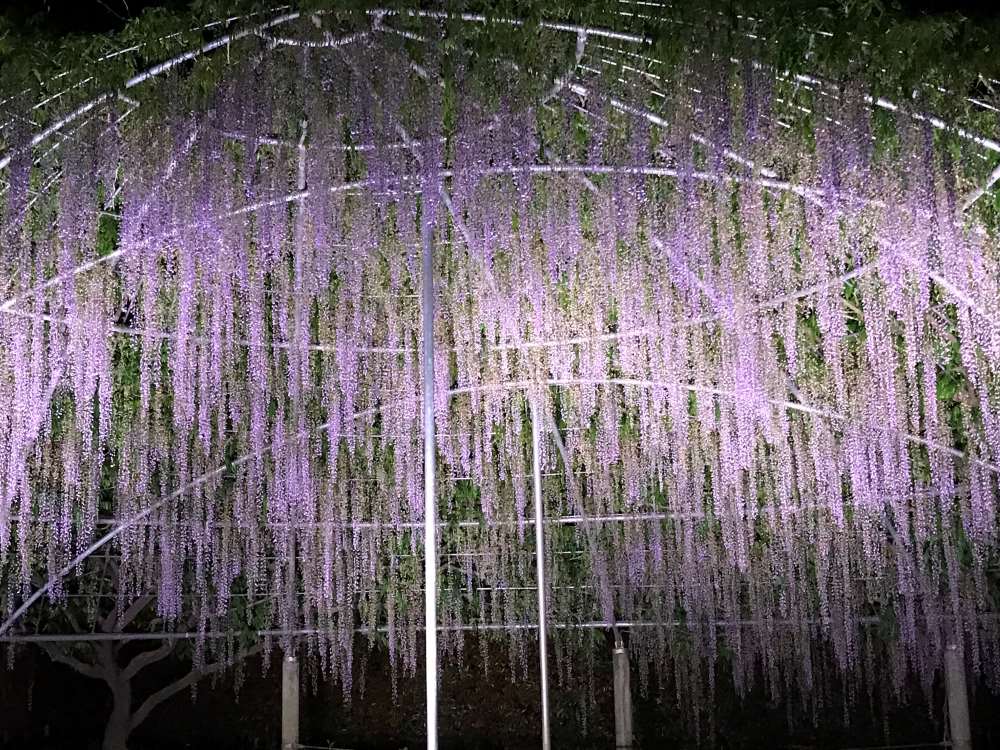
Ashikaga Flower Park is a 100,000-square-meter flower park in Ashikaga, Tochigi Prefecture, best known for its wisteria. Four great wisteria, including trees about 160 years old, and an 80-meter tunnel of white wisteria are designated Natural Monuments of Tochigi Prefecture. The Great Wisteria Festival runs from mid-April to mid-May, and the Flower Fantasy illumination lights the grounds from mid-October to mid-February.
| Location | 607 Hasama-cho, Ashikaga, Tochigi Prefecture 329-4216 |
|---|---|
| Nearest station | Ashikaga Flower Park Station (JR Ryomo Line), about a 3-minute walk |
| Wisteria season | Mid-April to mid-May, blooming in the order pale pink, purple, white and yellow |
| Winter illumination | October 17, 2026 to February 14, 2027. Night session opens at 3:30 PM |
| Admission | Set each morning by bloom. Adults 400 to 2,300 yen in 2026, illumination nights 1,500 yen |
| Closed | December 31 and the third Wednesday and Thursday of February |
| Founded | 1968 elsewhere in Ashikaga. Moved to the present site under its current name in 1997 |
Checked in October 2026 against ashikaga.co.jp, ashikaga-kankou.jp.
Why this spot?
About 80 minutes north of Tokyo by train, Ashikaga Flower Park is a must-see destination for anyone who loves flowers and enchanting light displays.
Although the park is delightful year-round, it truly hits its peak in late April to early May, when the wisterias (known as fuji in Japanese) burst into bloom.
Imagine strolling beneath cascading pastel-colored vines by day, then watching them glow under soft illuminations come nightfall.
Why Ashikaga Flower Park Stands Out
World-Famous Wisteria
- Blooming Period: Typically mid-April to mid-May, though exact timing depends on the weather.
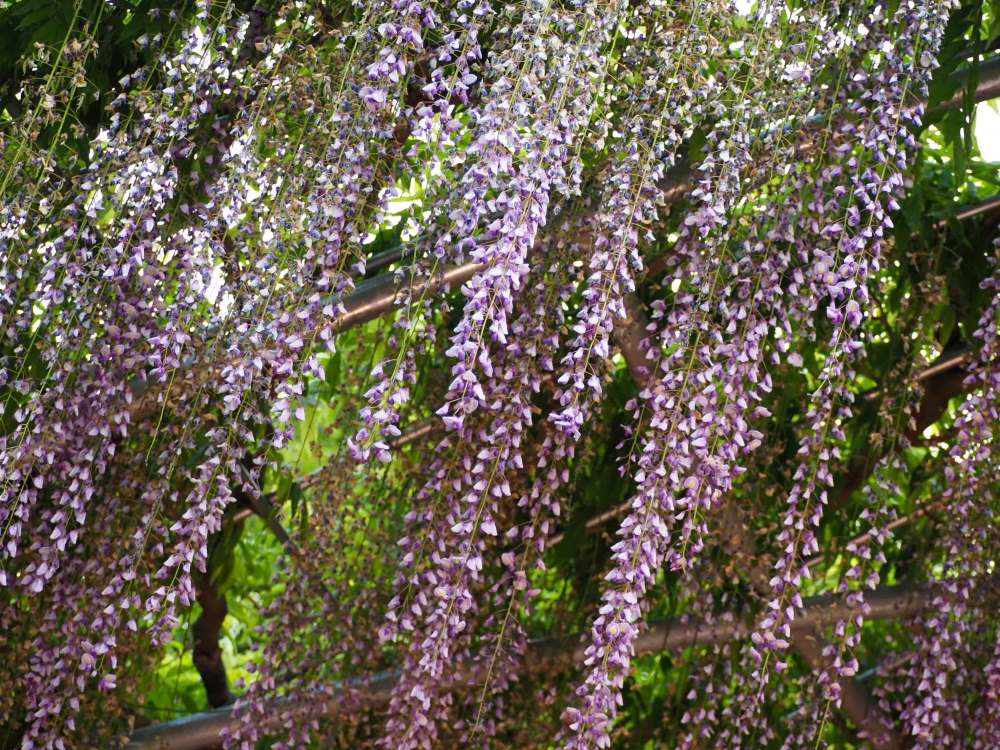
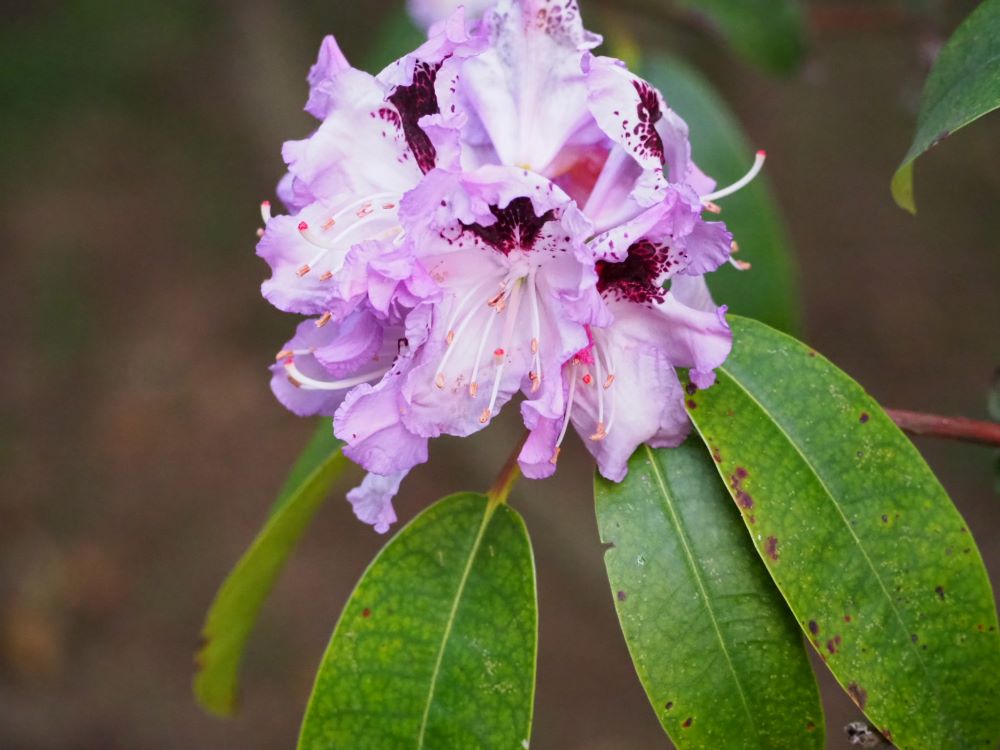
- Varieties: Purple, pink, white, and even yellow wisterias form a stunning, watercolor-like palette.
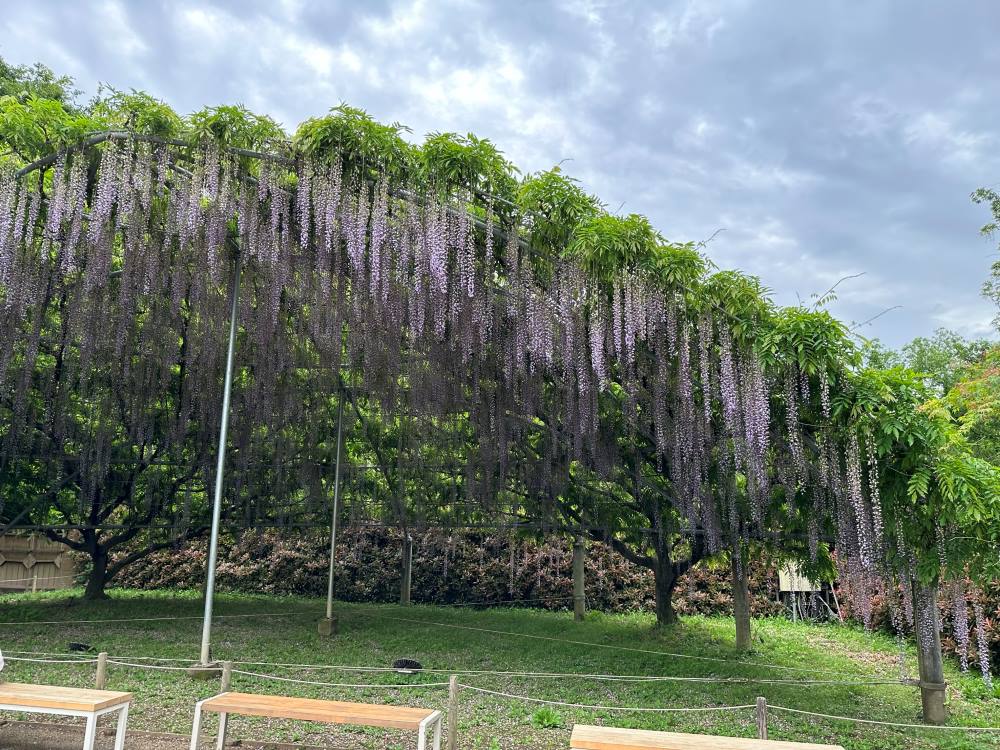
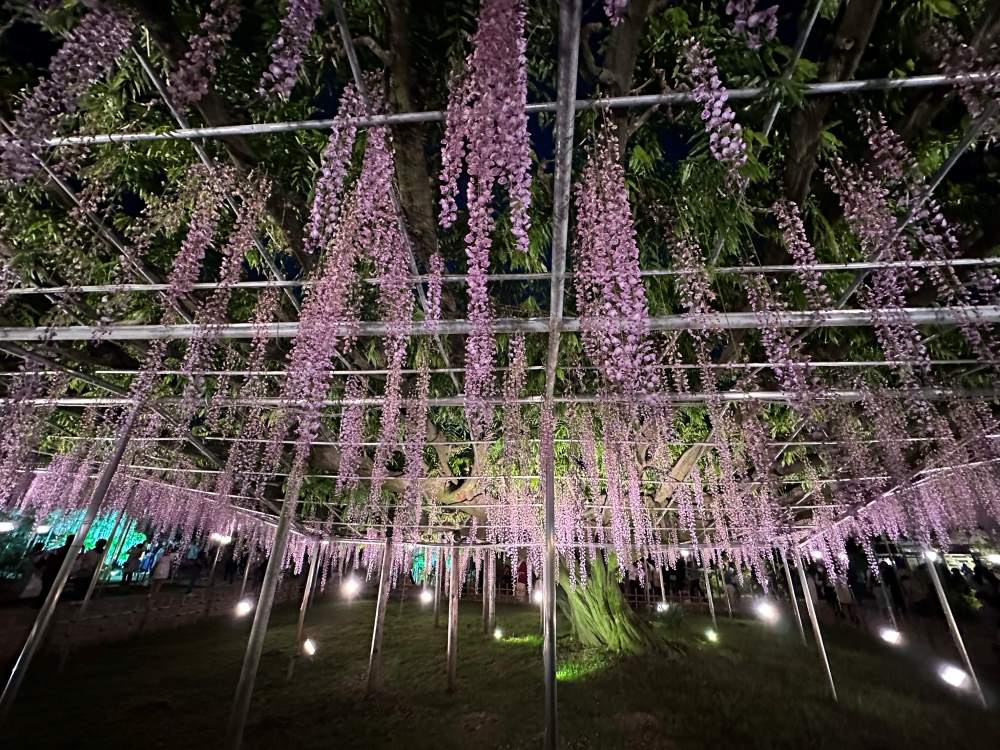
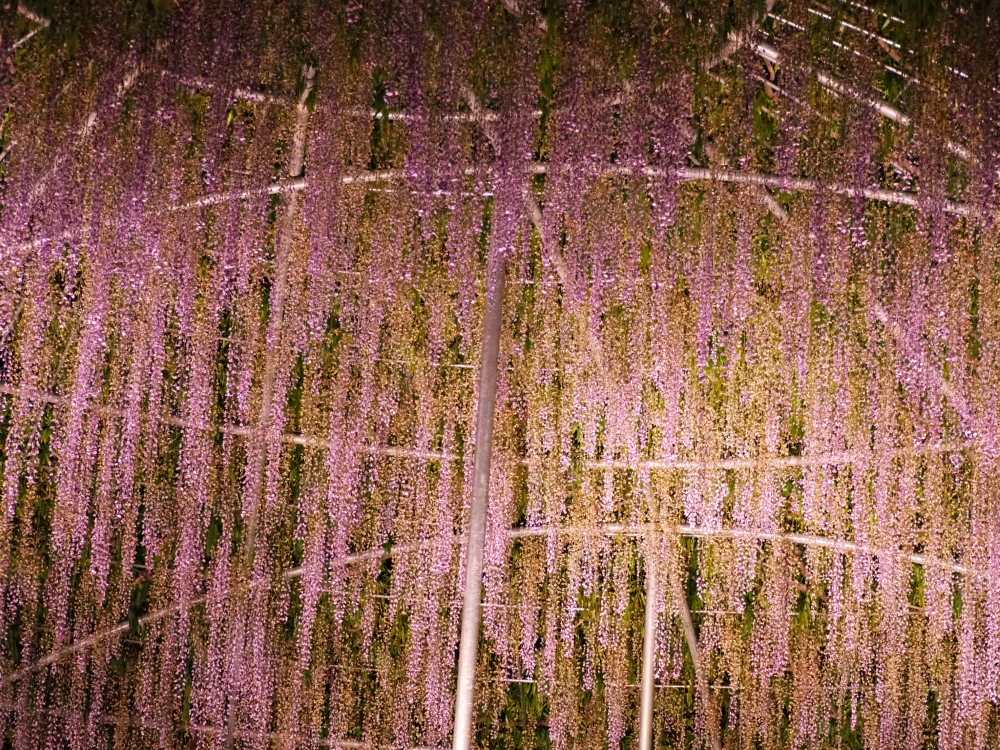
- Ancient Wisteria Tree: One of the park’s main attractions is a wisteria tree said to be about 160 years old. It’s painstakingly supported to create a massive, umbrella-like canopy of flowers.
- Iconic Pathways: The vines drape over trellises and arbors, turning pathways into dreamy tunnels. Walking beneath them on a sunny spring day feels like stepping into a fairytale.
Night Light-Up & Winter Illuminations
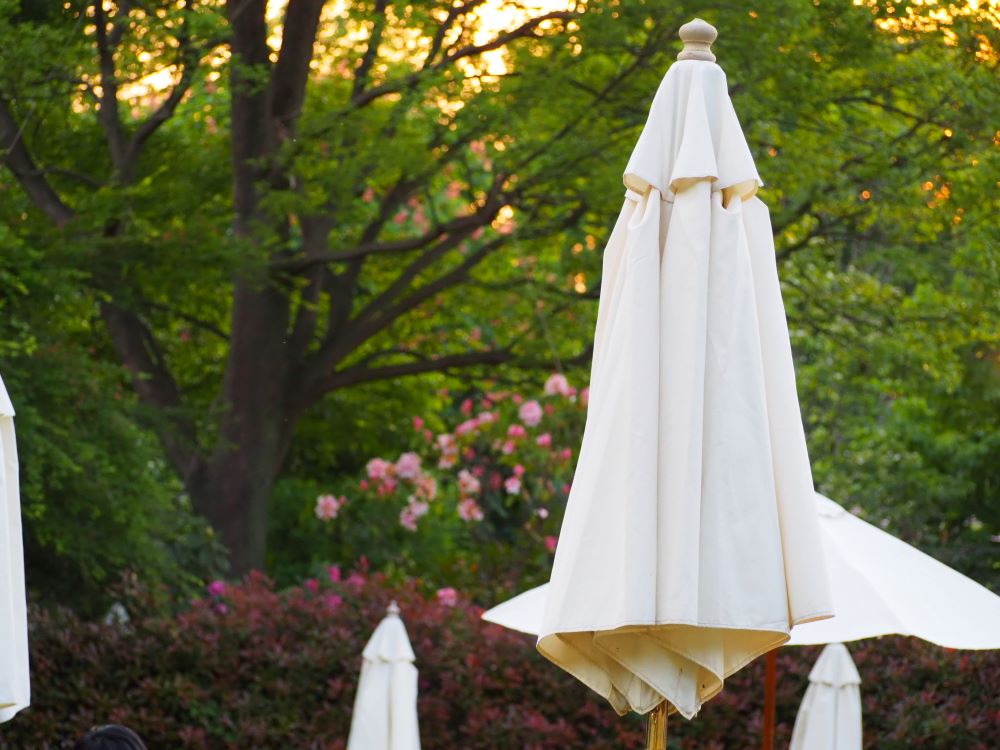
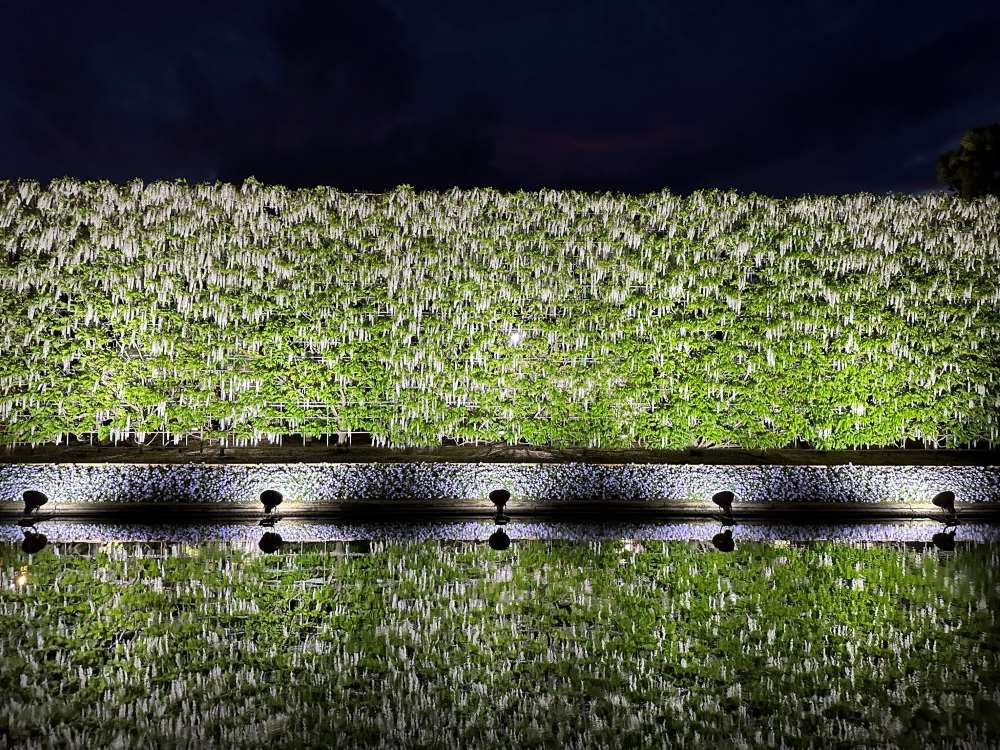
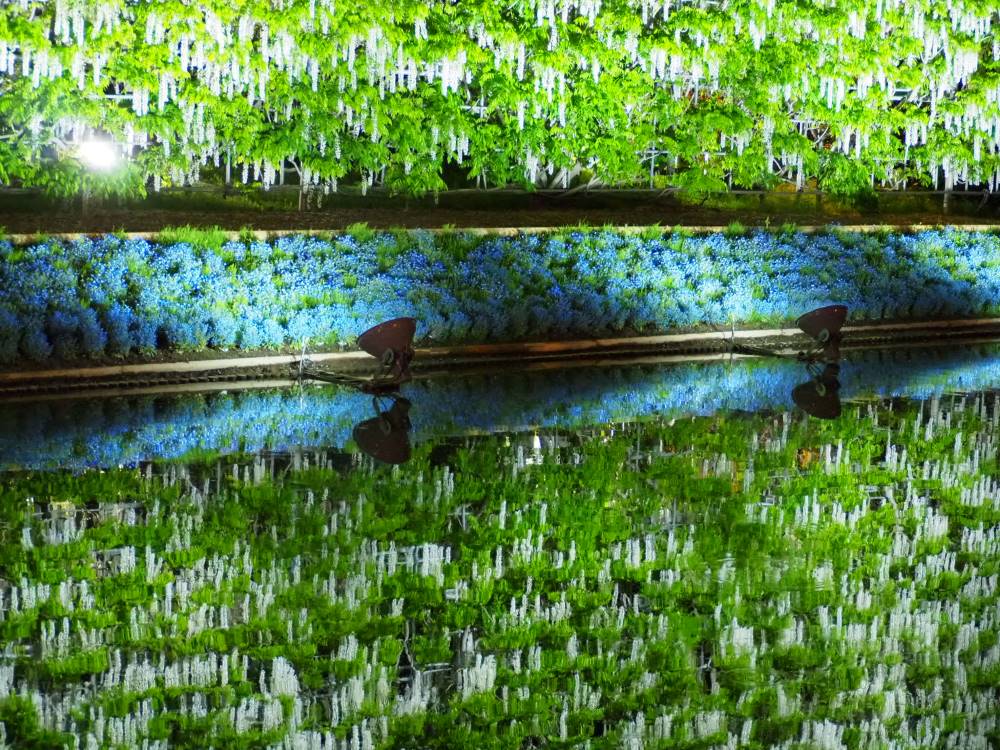
- Evening Wisteria Light-Up: One of the biggest draws is seeing the wisterias illuminated after dusk. If you arrive in the late afternoon, you’ll catch the blossoms in the sunlight before witnessing them transform under ambient lighting, two entirely different worlds in one trip.
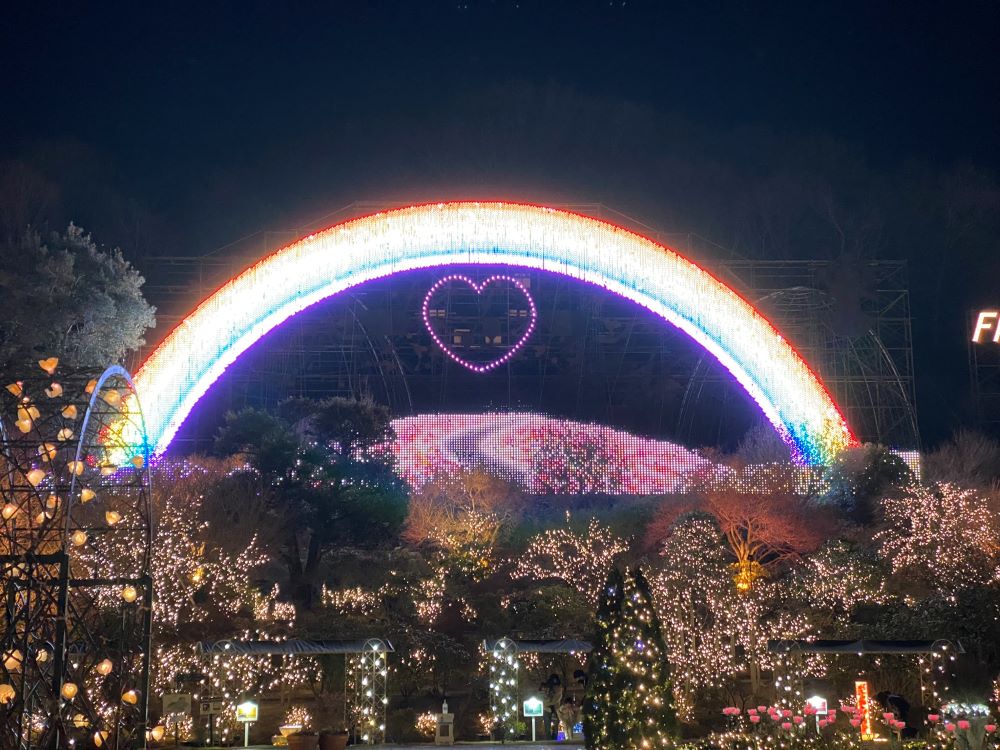
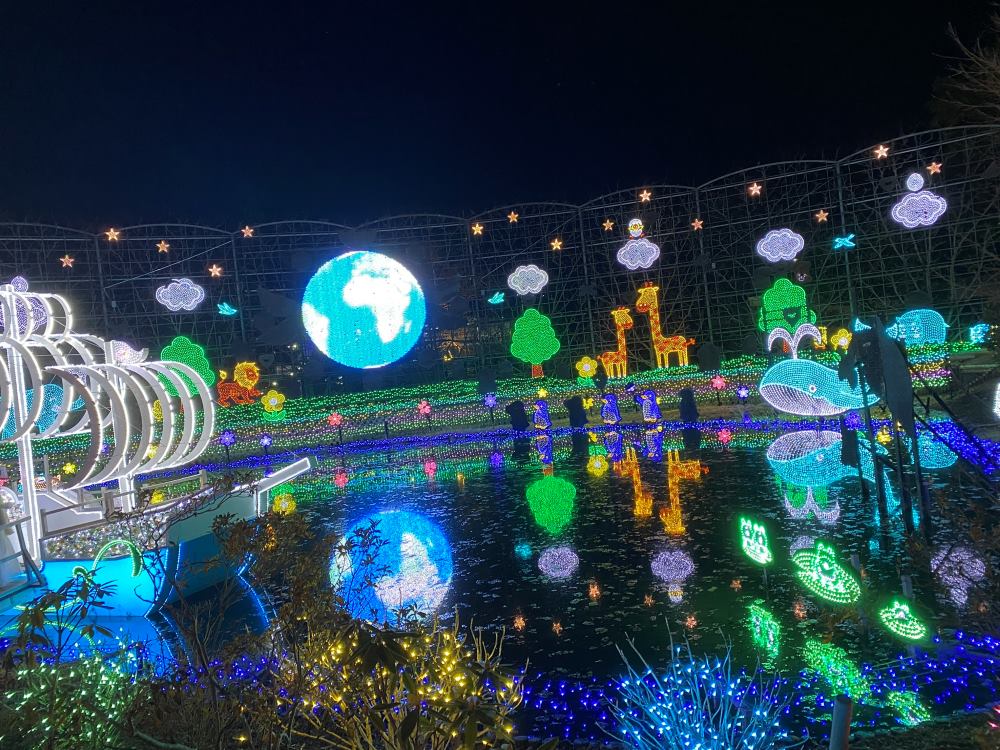
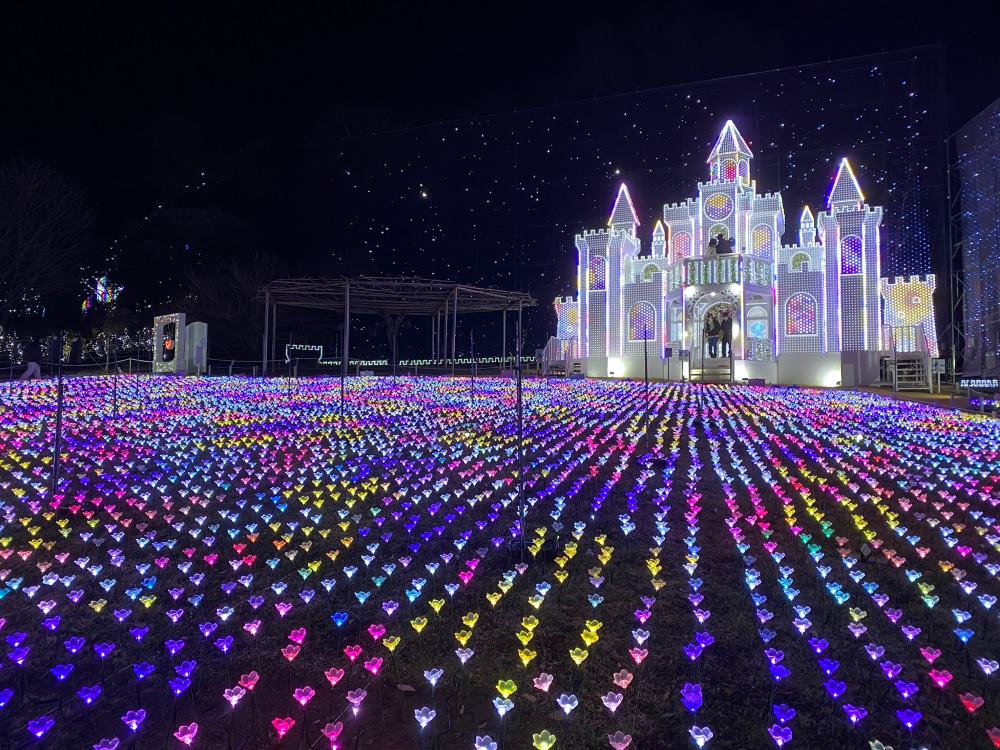
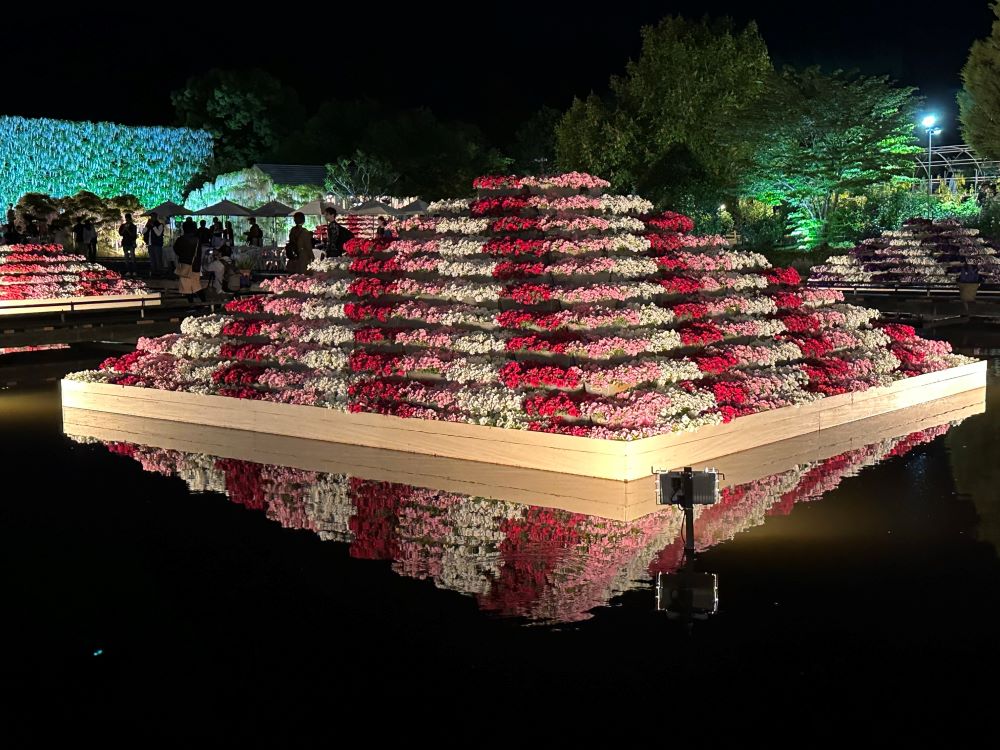
- Winter “Flower Fantasy”: From late fall through winter, the park hosts one of Japan’s top illumination events, turning the grounds into a kaleidoscope of colorful LED displays. Even if you miss wisteria season, the winter lights offer a special kind of magic.
Best Time to Visit & Seasonal Tips
Spring (April: May): Wisteria Galore
- Peak Bloom: Generally the last two weeks of April through the first week of May.
- Beat the Crowds: Weekends can be busy, so consider a weekday visit. If you stay for the evening light-up, be prepared for lines forming around sunset, plan your timing and arrive early.
- Sunset to Nighttime Transition: Arriving late in the day is a great option if you want to see the wisterias in natural light before they’re illuminated. Golden hour paints the vines with a warm glow, and once night sets in, the park takes on an almost otherworldly feel.
Morning Visits
- Fewer Visitors: If you’re not keen on sticking around for the night illuminations, heading over in the morning can help you avoid peak crowds.
- Relaxed Atmosphere: You’ll have more room to explore, snap photos, and take in the floral scents without the evening bustle.
Summer & Autumn
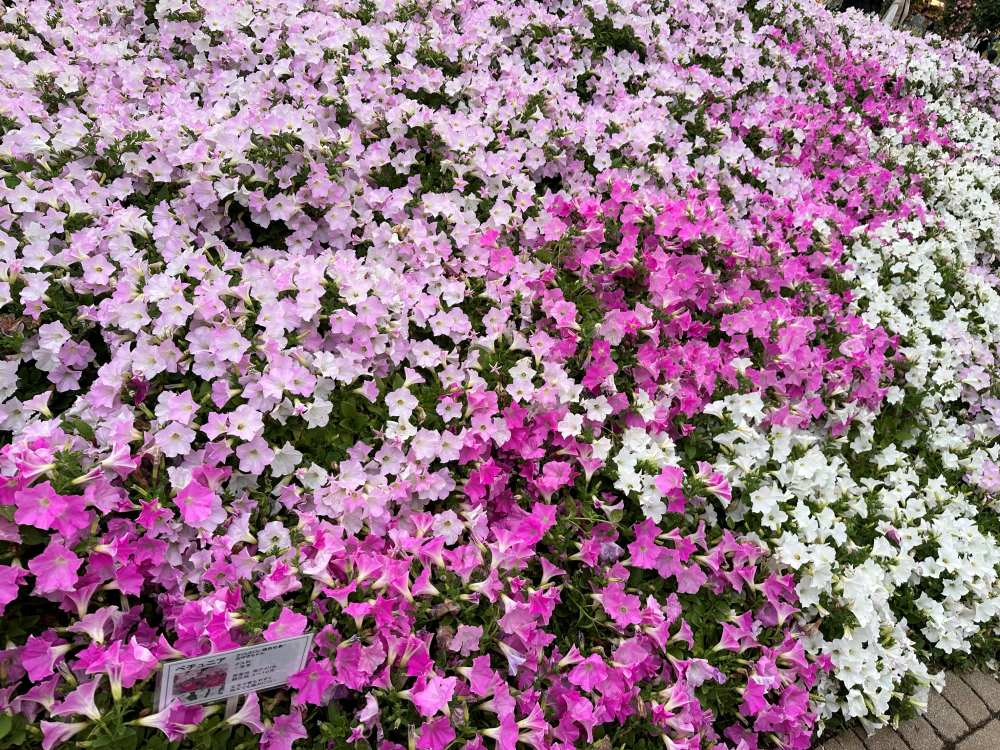
- Other Blooms: The wisterias may be gone, but you’ll find seasonal displays of roses, hydrangeas, and more during the warmer months.
- Off-Peak Perks: Without the wisteria crowds, it’s easier to enjoy the park’s scenery at a leisurely pace.
Winter (Mid-October: February): Illumination Magic
- “Flower Fantasy”: Known throughout Japan for its dazzling LED installations, the winter illumination event is well worth a visit if you’re around during the colder months.
- Dress Warm: Evenings can get chilly, so bring layers and gloves.
Important Planning Details
Check the Official Website
Since operating hours vary: especially during peak bloom or special events. It’s crucial to check the latest schedule on the Ashikaga Flower Park Official Website. Planning your visit around sunrise, sunset, or the evening light-up can make all the difference, so keep an eye on daily updates.
Getting There
- By Train:
- Take the JR Utsunomiya Line or Shonan-Shinjuku Line from Tokyo or Ueno Station to Oyama Station. Transfer to the JR Ryomo Line for Ashikaga Flower Park Station, then walk about 3 minutes to the park.
- Some express trains run directly toward Ashikaga or Ashikaga Flower Park Station.
- By Car:
- Located near the Sano Fujioka Interchange on the Tohoku Expressway.
- Free parking is available but fills up quickly during peak seasons.
Admission & Facilities
- Hours: Typically from 10:00 AM, with extended hours during wisteria season and winter illuminations (until 9:00 or 9:30 PM on busy nights).
- Fees: Admission varies based on bloom status or event periods. Expect a higher fee during peak wisteria or illumination seasons.
- Food & Souvenirs: The park offers cafés, snack stands, and shops selling local specialties like wisteria-flavored soft serve and charming souvenirs.
Side Trips & Local Highlights
Detour to Sano
If you’re driving or have some extra time, consider popping over to nearby Sano for a bowl of Sano Ramen, known for its clear, soothing broth. Sano also boasts a popular outlet mall, giving you a place to shop or unwind if you arrive too early for the park’s peak hours.
Explore Historic Ashikaga
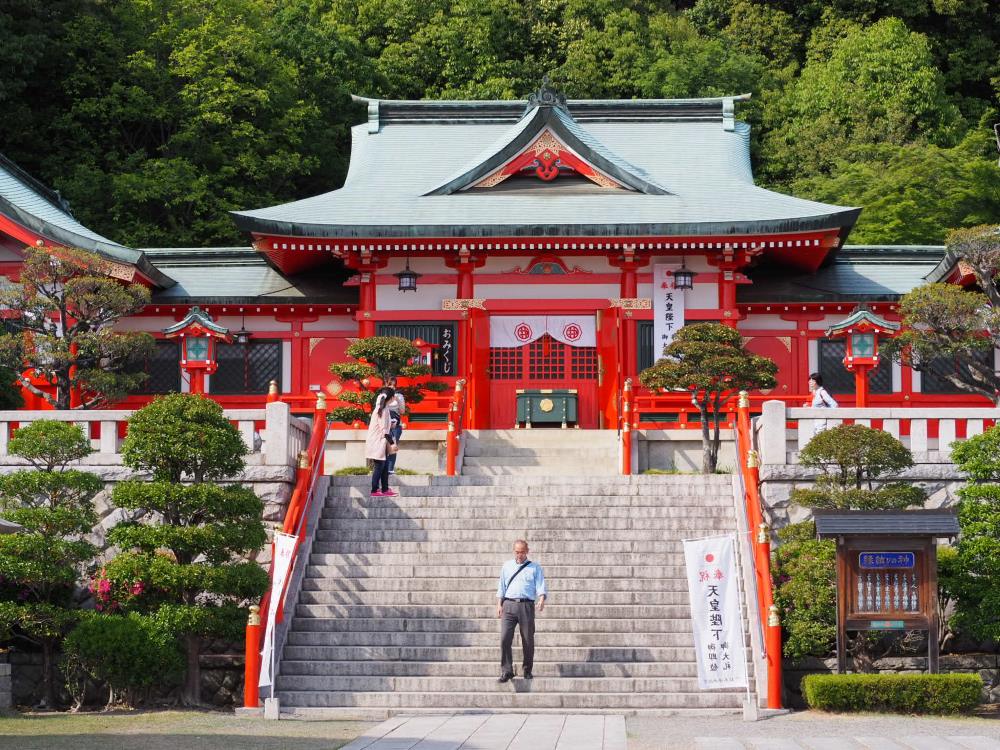
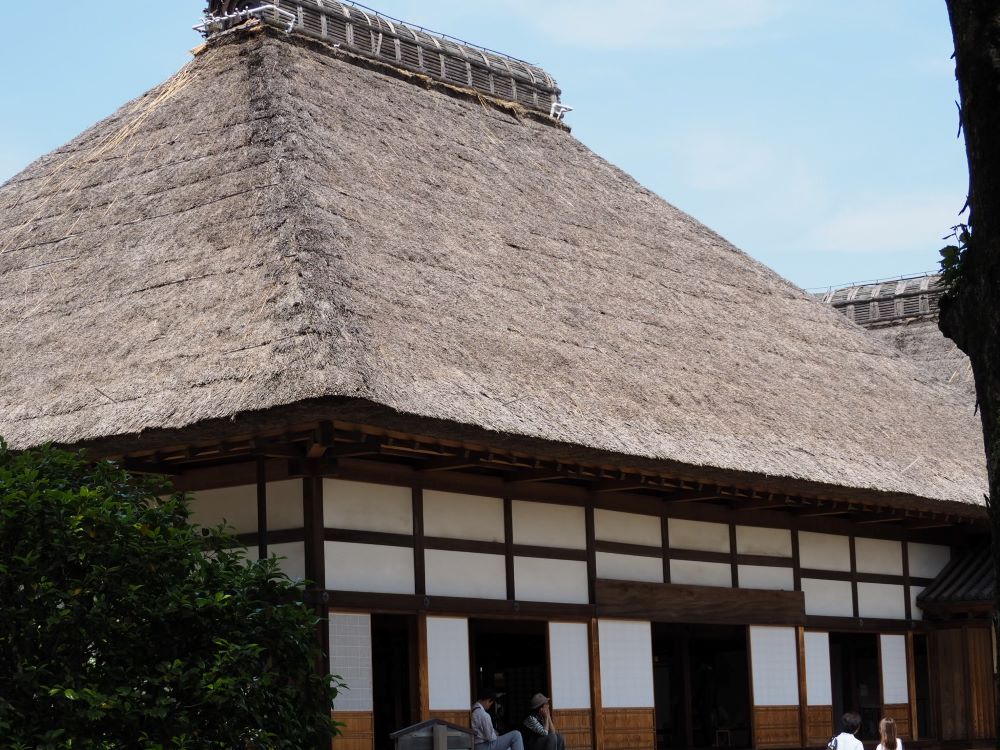
Don’t miss the chance to visit Ashikaga Gakko, said to be Japan’s oldest academic institution, Bannaji Temple, and Orihime Shrine, perched on a hillside with sweeping city views. All three sites add a rich cultural layer to your floral excursion, giving you a deeper look into the area’s history and local traditions.
Final Thoughts
Whether you’re on a quest for the perfect springtime Instagram shot or simply looking to immerse yourself in seasonal beauty, Ashikaga Flower Park delivers an unforgettable experience. Nothing quite compares to watching the wisterias change color under the shifting light, first bathed in soft afternoon sunshine, then glowing gently beneath the evening illuminations.
For the most up-to-date information on hours and blooms, check the official website before you go. And if you can, plan around sunset: it’s the magic window where daytime’s pastel wonderland morphs into a twinkling, illuminated spectacle you’ll remember long after you’ve left.
From wisterias swaying overhead to warm bowls of Sano Ramen and beyond, Ashikaga Flower Park is the kind of trip that captures Japan’s seasonal charm in its purest form.
Frequently Asked Questions
Which station is closest to Ashikaga Flower Park?
Ashikaga Flower Park Station on the JR Ryomo Line is the closest station, about a 3-minute walk from the park. The station opened in April 2018, and the park asks rail visitors to use it. From Tokyo or Ueno, ride the JR Utsunomiya Line to Oyama and change to the Ryomo Line. Tomita Station on the same line is a longer walk.
How much is admission to Ashikaga Flower Park?
Admission to Ashikaga Flower Park ranges from 400 to 2,300 yen for adults in 2026, and the park sets the fee early each morning by bloom. Adult day fees run 400 to 900 yen from July to December and 900 to 2,300 yen in April and May. Winter illumination nights have a regular price of 1,500 yen for adults and 800 yen for children aged 4 to elementary school.
What is there to see at Ashikaga Flower Park in November?
Ashikaga Flower Park in November pairs autumn flowers by day with the Flower Fantasy illumination at night. Amethyst sage and autumn roses are in season from early October to mid-November. The illumination runs from October 17, 2026 to February 14, 2027. The night session opens at 3:30 PM, and the lights come on between about 4:30 PM and 5:00 PM.
In what order do the wisteria bloom at Ashikaga Flower Park?
The wisteria at Ashikaga Flower Park bloom in the order pale pink, purple, white and yellow, which stretches the season to about a month. For 2026 the park listed pale pink wisteria for mid to late April, the purple Great Wisteria for late April to early May, the white wisteria tunnel for early May and the yellow kibana wisteria (laburnum) for early to mid-May.
Can you stay at Ashikaga Flower Park from daytime into the evening light-up?
Day visitors could stay into the evening light-up at Ashikaga Flower Park during the 2026 Great Wisteria Festival, but the winter illumination requires a separate night ticket. At the wisteria festival, evening tickets went on sale at 5:30 PM and nobody had to leave. During the illumination, day and night are separate sessions with a changeover. Night entry starts at 3:30 PM and costs 1,500 yen for adults.
Share