
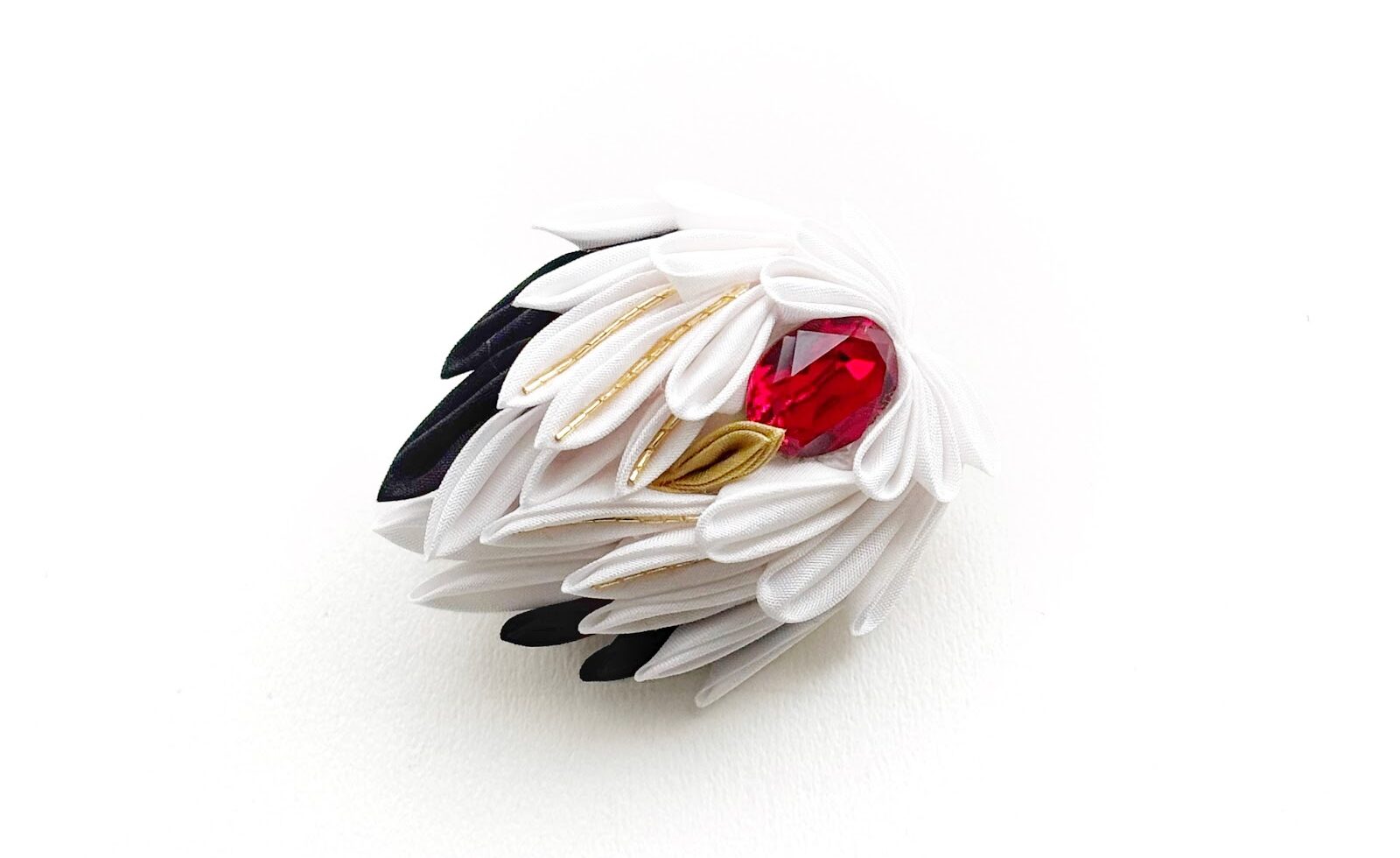
Take a single square of silk, barely a few centimeters across. Pinch it with a pair of tweezers, fold it, and set it down. Repeat that one small motion—dozens, sometimes hundreds of times—and a flower begins to bloom. This is tsumami zaiku (つまみ細工), one of Japan’s most delicate traditional crafts.
You may have seen it without knowing its name: the cascading silk flowers on a maiko’s hairpin, or the bright ornaments worn by children at a Shichi-Go-San celebration. Each tiny petal is a folded piece of cloth, and together they form the elaborate hair ornaments known as tsumami kanzashi.
In this guide we’ll walk through what tsumami zaiku is, where it came from, the two simple folds at its heart, and how this Edo-period craft is finding new life in earrings, brooches, and the modern home.
What Is Tsumami Zaiku?
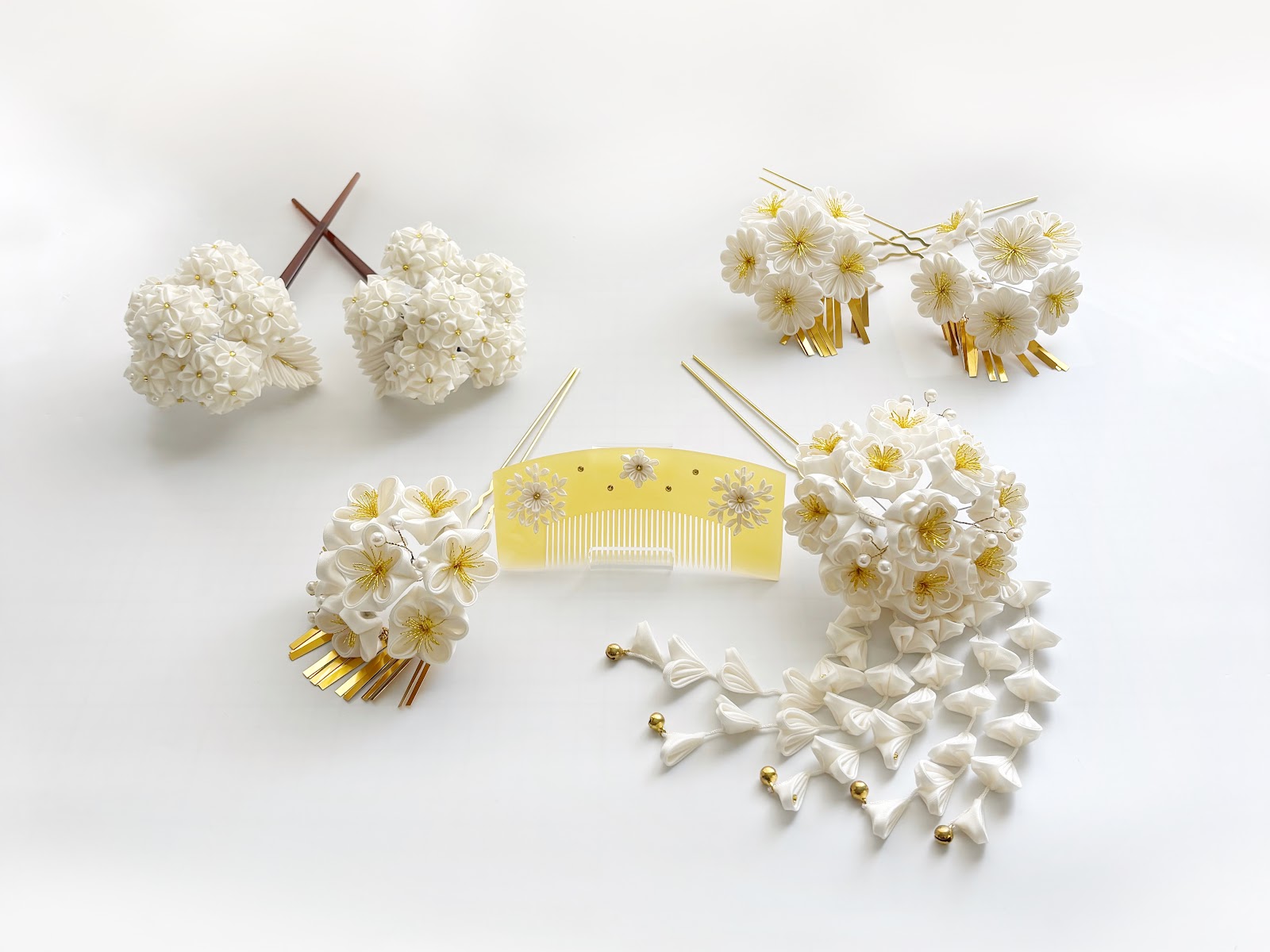
Tsumami zaiku—literally “pinching craft”—is the art of cutting thin silk into small squares, folding each piece with tweezers, and arranging them on a base to form flowers, birds, and other motifs. When these ornaments are mounted on a hairpin, the finished piece is called a tsumami kanzashi.
No machines are involved. The craft relies on a few humble tools—squares of fabric, a pair of tweezers, glue, and a base—and on the patience of the artisan’s hands. A single piece may contain hundreds of individual petals, each folded one at a time.
What makes tsumami zaiku so expressive is that everything depends on subtle choices: the color of the silk, the angle of each fold, the way the petals are layered. The same few techniques can yield a soft spring plum blossom or a sharp, formal chrysanthemum.
A Craft Born from “Mottainai”: The History of Tsumami Kanzashi
The roots of tsumami zaiku reach back roughly 200 years. The technique is said to have begun with a style of petal hairpin made in Kyoto, which was carried to Edo—present-day Tokyo—and developed into a craft of its own.
By the Bunsei era (1818–1830), women decorated the elaborate Shimada hairstyle with small pieces of crepe silk in white, blue, red, and purple, folded into chrysanthemums and cranes. Colorful and affordable, these ornaments became prized souvenirs to bring home from Edo. In 1982, this lineage of craftsmanship—Edo Tsumami Kanzashi—was designated a Traditional Craft of Tokyo, recognizing a technique passed from hand to hand for two centuries.
Beauty born from “mottainai”
Behind the craft lies the spirit of mottainai—a reluctance to let anything go to waste. Tsumami zaiku grew out of the small offcuts of silk left over after sewing a kimono. Scraps too small for anything else became the raw material for flowers. In an age that talks about sustainability, that ethos feels strikingly modern.
The Two Folds That Make Everything: Maru-tsumami and Ken-tsumami
Almost every tsumami flower comes from just two basic folds. By combining them and varying the fabric’s color, size, and texture, artisans create seemingly endless variation.
Maru-tsumami (the round fold)
The corners of the square are folded inward to create a soft, rounded petal. It suits gentle blossoms such as plum, cherry, and chrysanthemum, and gives a warm, friendly impression.
Ken-tsumami (the pointed fold)
The fabric is folded into a slim, sharp point. The crisp tip is used for spiky chrysanthemums, pine needles, and bolder designs, lending a taut, dignified look.
Tools and materials
- Fabric — thin silk such as habutae or crepe (chirimen), cut into small squares.
- Tweezers (tsumami-bashi) — the essential tool for folding pieces just centimeters wide.
- Glue — to hold each fold and fix it onto the base.
- Base — the core or mount on which the flower is built; for a kanzashi, the hairpin stem attaches here.
From a Square of Silk to a Flower: How It’s Made
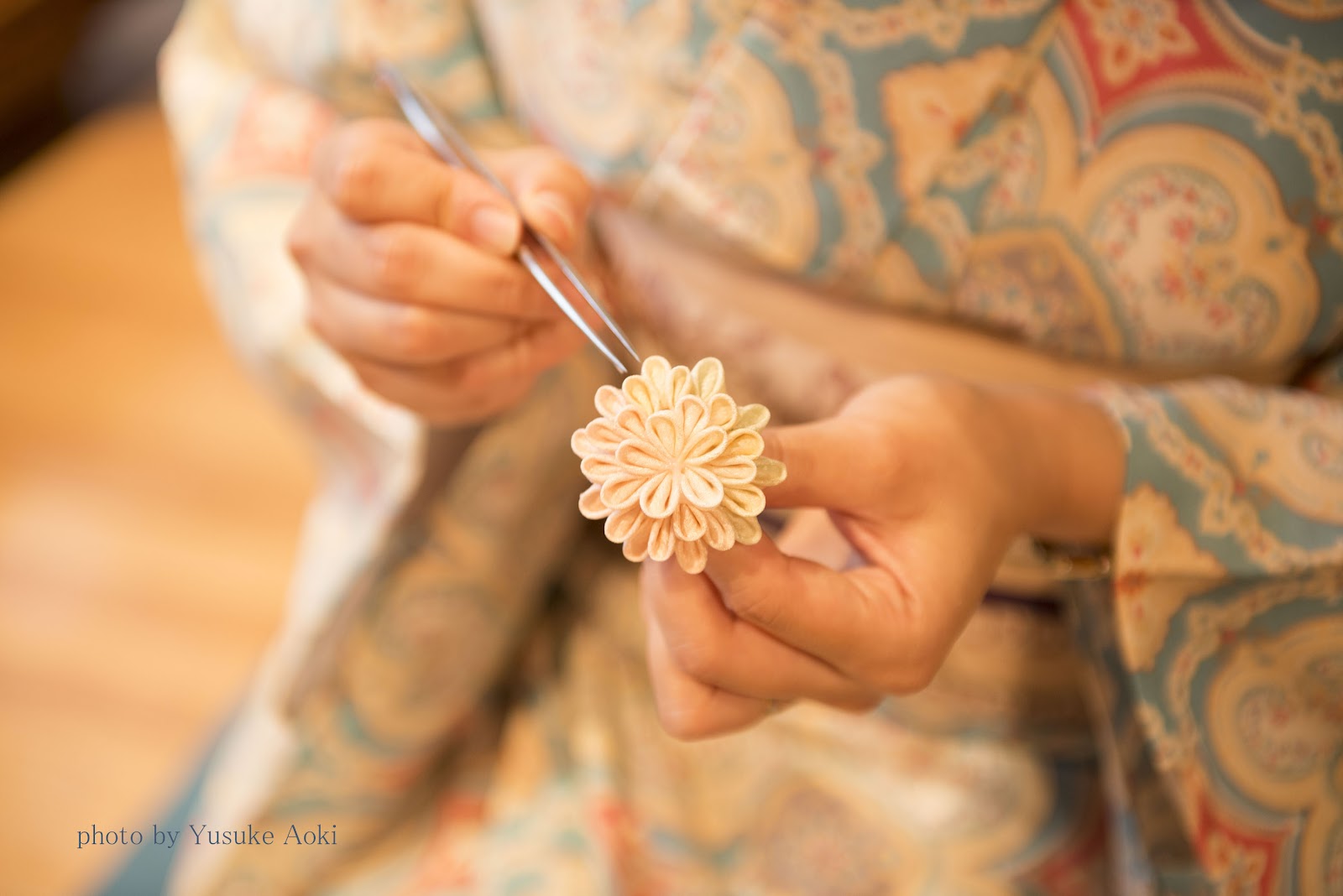
- Cut the silk into dozens or hundreds of small squares.
- Fold each piece, one by one, into maru- or ken-tsumami petals.
- Set on glue, arranging the folded petals and shaping them.
- Assemble, attaching petals to the base to build up the flower or bird.
- Finish by adding the hairpin stem, earring fitting, or other hardware.
A single ornament can use several hundred petals. The delicate beauty exists only on the far side of that quiet, patient repetition.
Beyond the Hairpin: Tsumami Zaiku in Modern Life

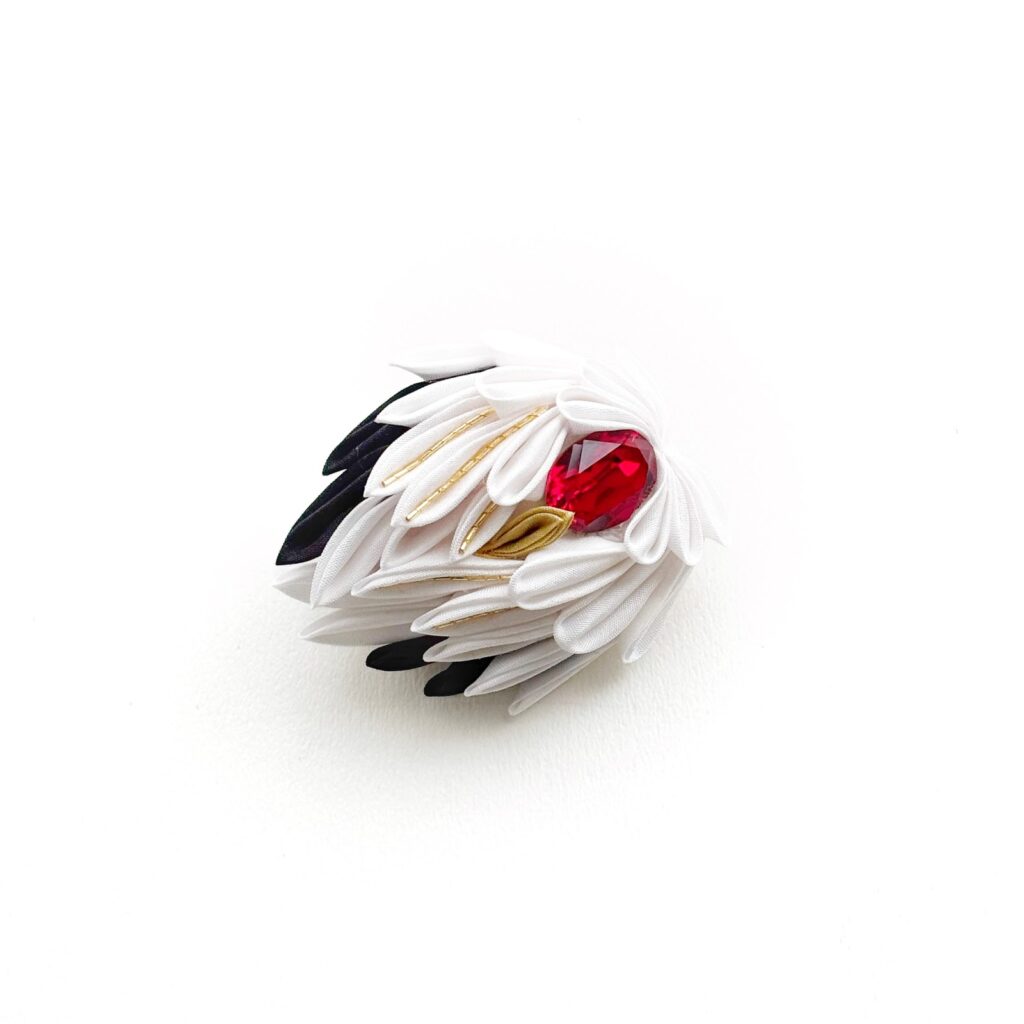
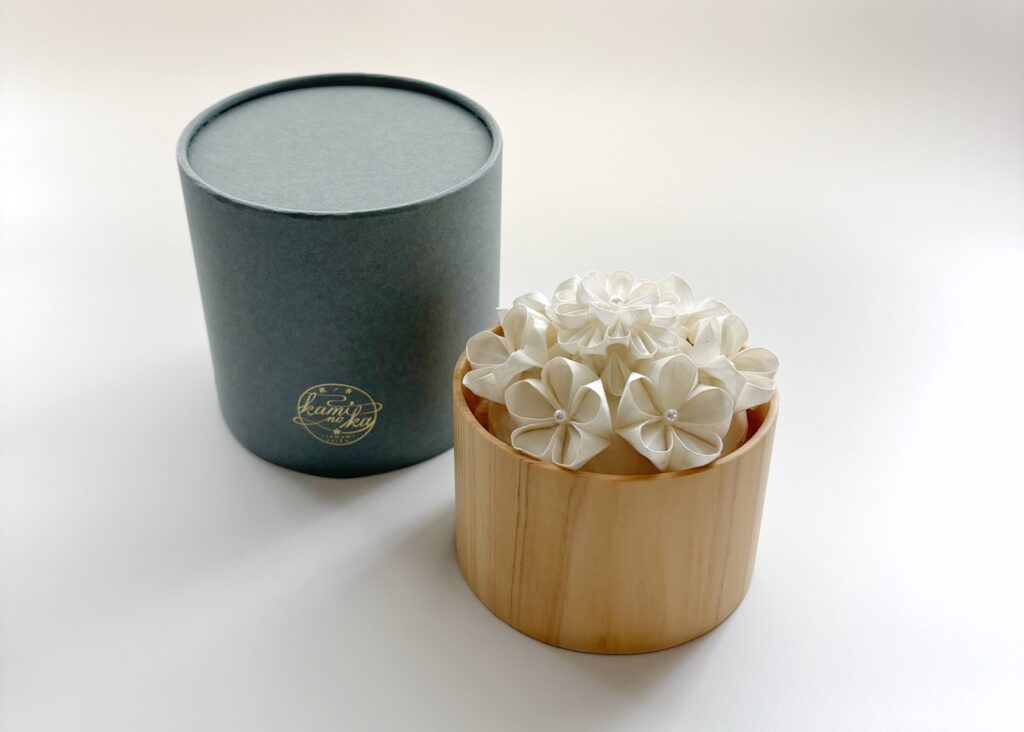
Tsumami zaiku still adorns the formal hairpins of festivals and ceremonies—but in recent years the technique has been reimagined for everyday life. The artisan brand Tsumami Kanzashi Ayano (つまみかんざし彩野), for instance, works across several lines:
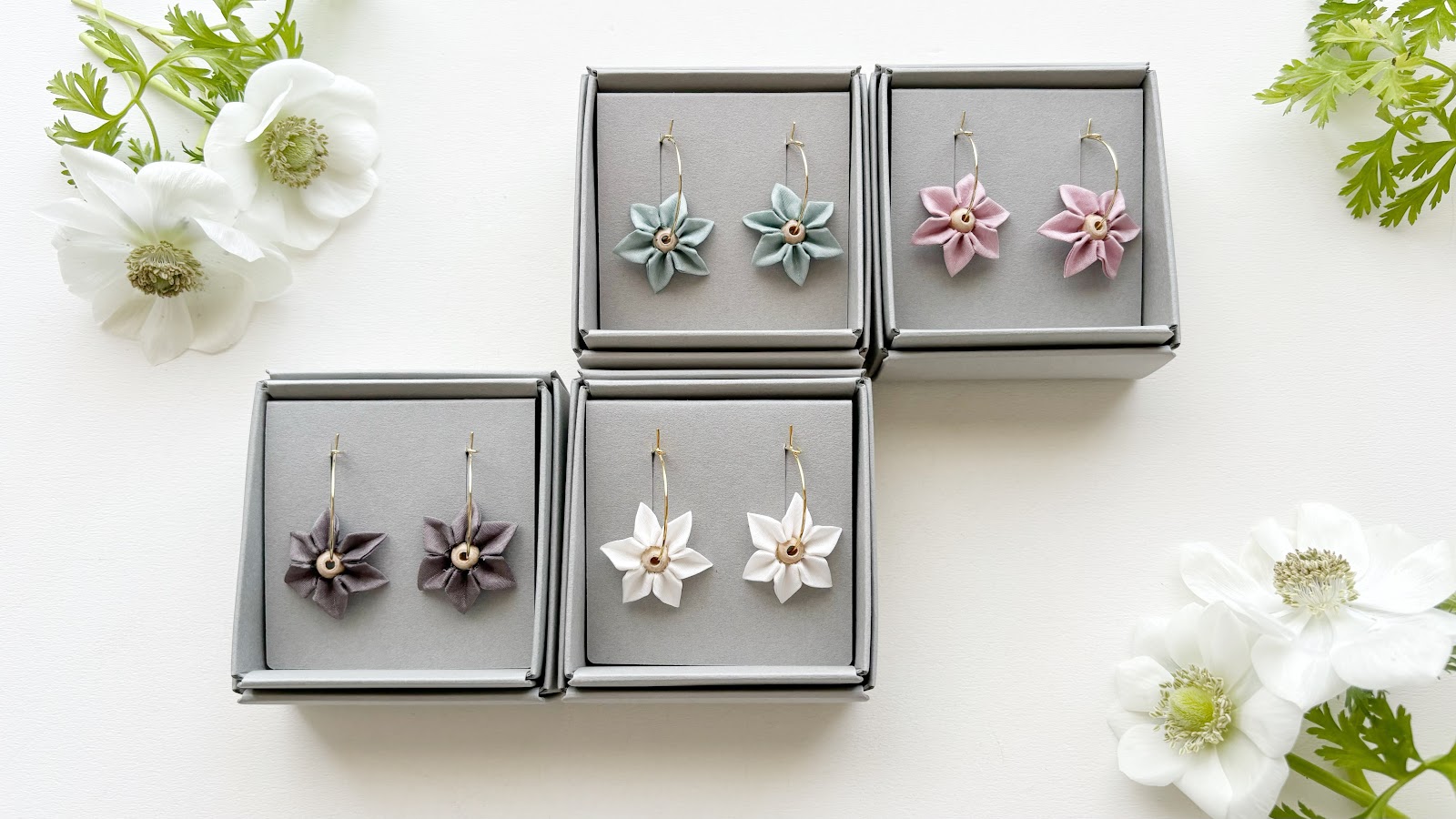
- Serika & Rikka — pierced earrings, clip-ons, and hoops that bring a touch of Japanese color to both kimono and everyday clothes.
- Brooches — worn on a bag, a hat, or a coat lapel.
- Kaminoka — tsumami zaiku reimagined as an aroma diffuser, turning a craft you display into one you live with.
From the formal hairpin to earrings, brooches, and even fragrance, a centuries-old technique is finding a new place in contemporary life.
When to Wear Tsumami Kanzashi
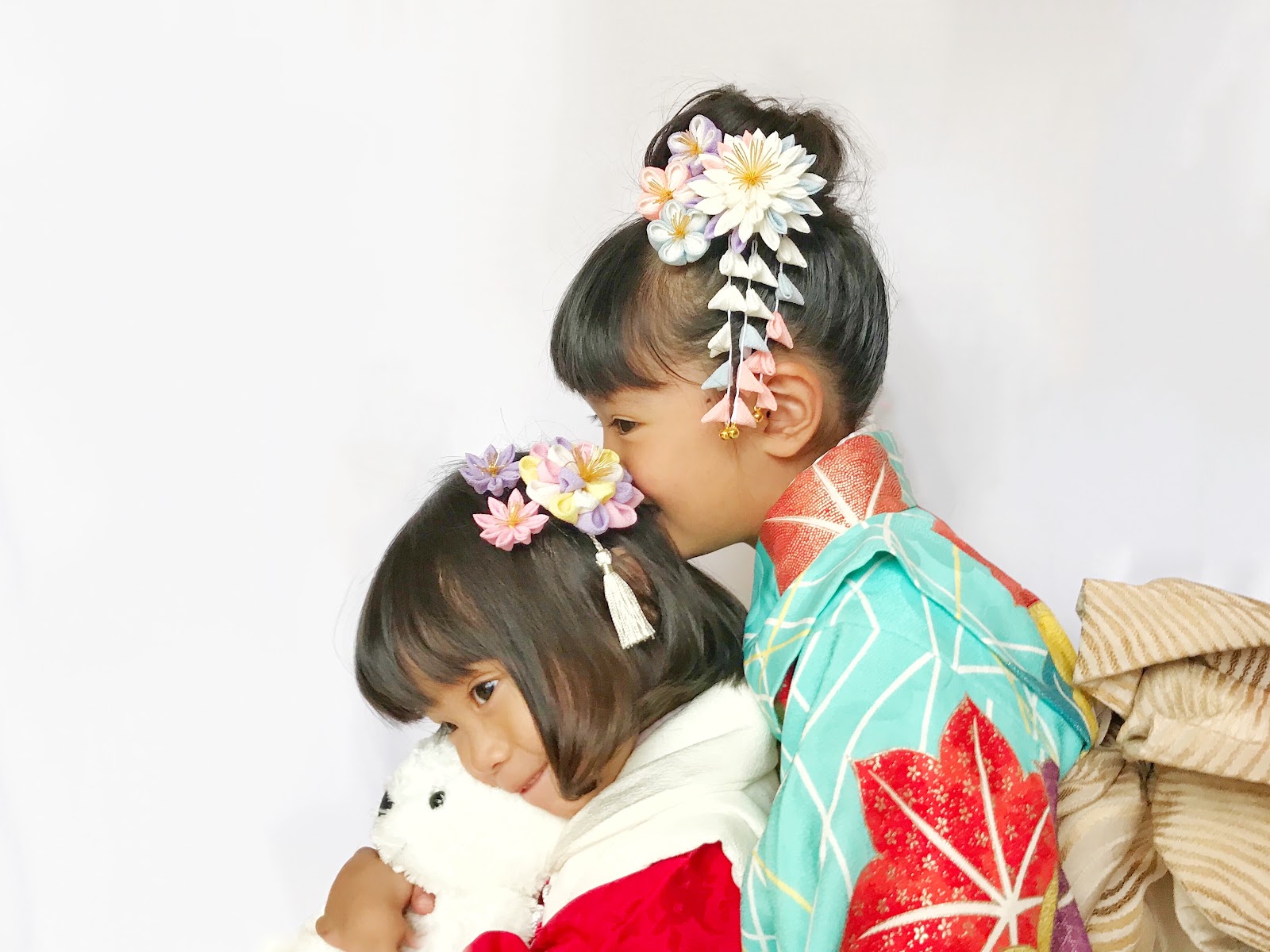
- Shichi-Go-San & Coming-of-Age Day — a classic hair ornament for life’s milestones.
- Weddings & kimono occasions — elegant accents for brides and guests alike.
- Summer festivals & strolls in kimono — seasonal flowers to complete the look.
- Everyday wear — earrings or a brooch pair just as easily with jeans and a knit.
Tsumami kanzashi also make memorable gifts: the warmth and story of handwork carry a meaning that mass-produced pieces simply can’t.
Meet the Artisan
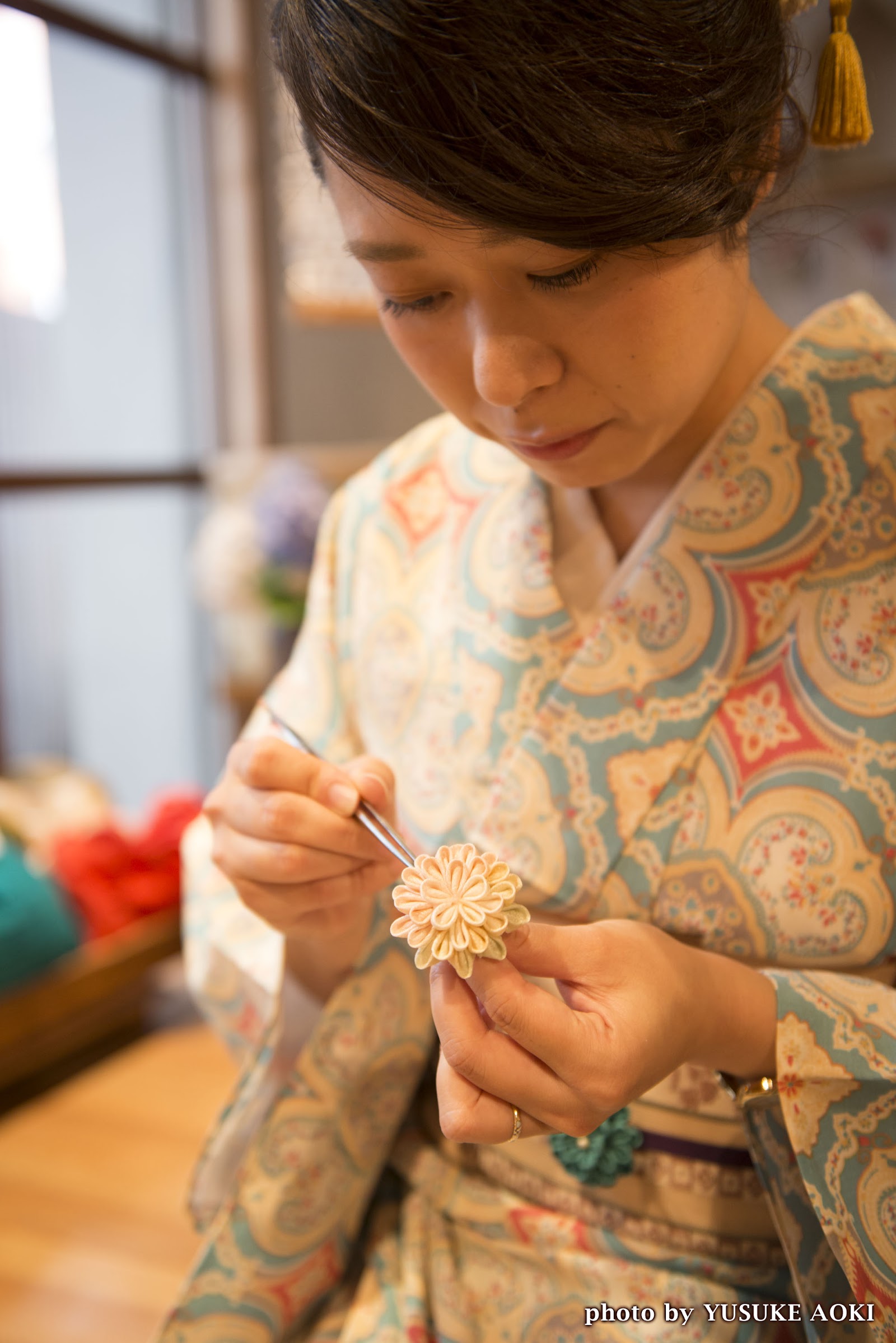
The real charm of tsumami zaiku is hard to capture in photographs alone. Why does an artisan devote themselves to this technique, and what passes through their hands with every folded square of silk? We sat down with a tsumami zaiku artisan to hear how a craft from the Edo period is being woven into modern life.
Bring Tsumami Zaiku into Your Life
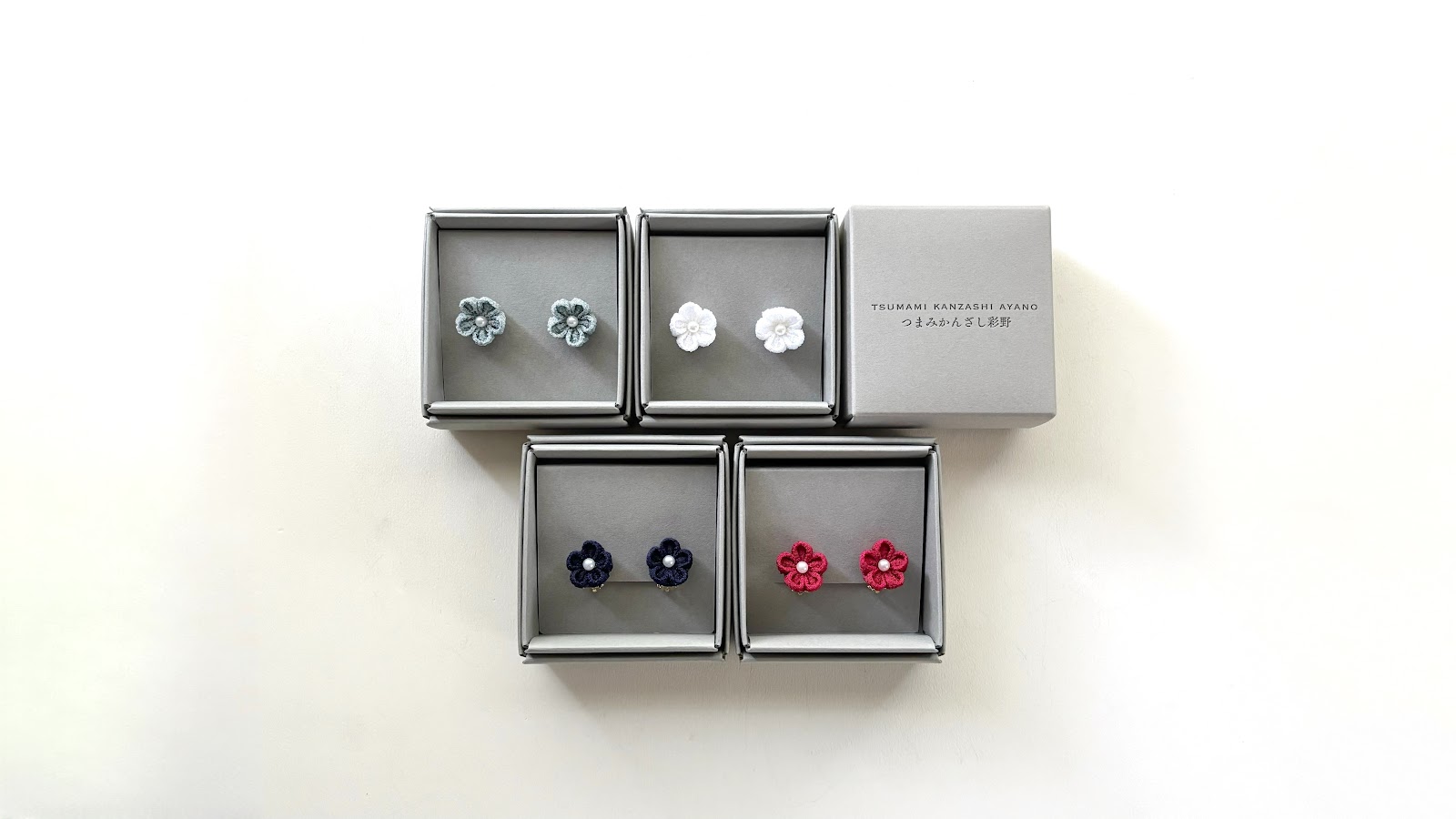
From a craft you admire to one you can wear and live with. Alongside Japanese handwork like craft beer glasses, washi candles, and tea ware, the Japan Documented online shop also carries tsumami zaiku—the delicate beauty of silk flowers, each one folded by hand.
Frequently Asked Questions
What’s the difference between tsumami zaiku and tsumami kanzashi?
Tsumami zaiku is the technique itself—folding cloth into flowers and other shapes. A tsumami kanzashi is an ornament made with that technique and mounted as a hairpin.
What fabric is used?
Traditionally thin silk such as habutae or crepe (chirimen). Its sheen and softness give the craft its refined texture.
What’s the difference between maru-tsumami and ken-tsumami?
Maru-tsumami is a rounded petal; ken-tsumami is a sharp, pointed one. Combining the two basic folds creates a wide range of flowers.
Can beginners make tsumami zaiku?
The basic folds are simple, so it’s approachable—but refined, beautiful work takes real skill, which is exactly what gives an artisan’s handwork its value.
Are there tsumami zaiku pieces for everyday use?
Yes. Earrings, brooches, and aroma diffusers have made the craft easy to bring into daily life.
Share