
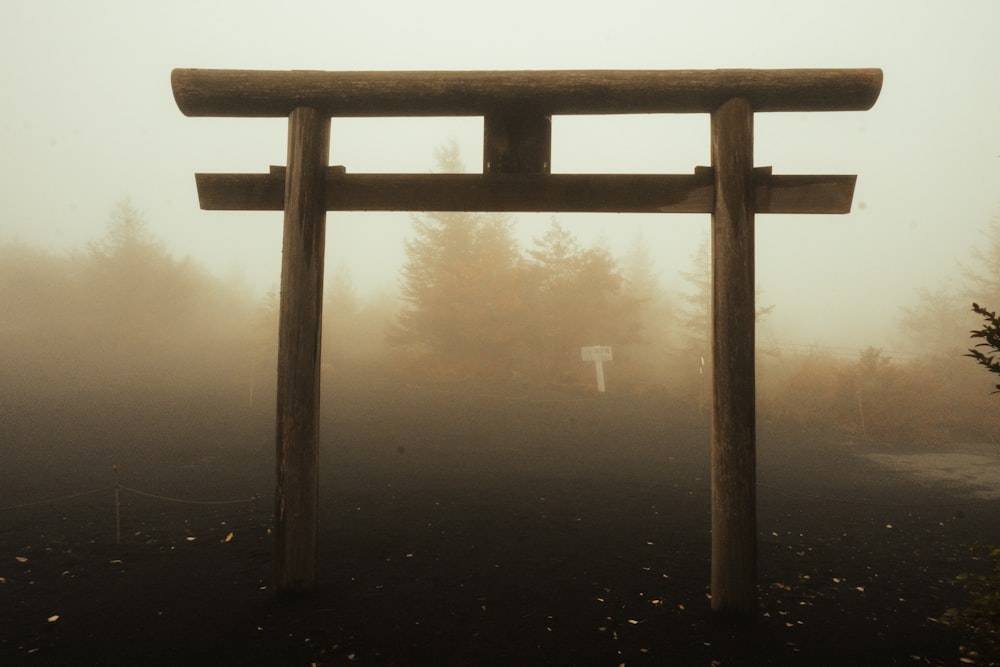
Kamikakushi is a Japanese folklore concept meaning “hidden by the kami,” the belief that a person could be spirited away by gods or spirits and vanish without explanation. The word joins 神 (kami, meaning gods or sacred spirits) with 隠し (kakushi, to hide or conceal). Studio Ghibli borrowed it for the Japanese title of Spirited Away, Sen to Chihiro no Kamikakushi, but the idea is far older and far darker than the film. For centuries it gave shape to a real fear: that someone could cross an invisible boundary in Japan’s mountains, forests, or shrines and never fully return.
There is a kind of disappearance that ordinary language struggles to explain.
Not a confirmed death.
Not simply a journey.
Not even a mystery with a clear beginning and end.
Someone is there, and then they are not.
In Japan, one old word gives this absence a shape: kamikakushi.
The word is often translated as “spirited away.” That translation is not wrong, but it is too light. Kamikakushi does not simply mean that someone vanished. It means they were hidden by the kami, the gods, spirits, or sacred presences that inhabit Japan’s mountains, forests, rivers, shrines, and invisible borderlands. In academic writing on Spirited Away, kamikakushi is described literally as “hidden by kami,” and as a folk belief connected to sudden disappearances, especially of children and women.
Today, many people first encounter the word through Studio Ghibli’s Japanese title for Spirited Away: Sen to Chihiro no Kamikakushi, The Spiriting Away of Sen and Chihiro. Studio Ghibli’s official listing gives the Japanese title as 千と千尋の神隠し and the English title as Spirited Away, released in 2001 and directed by Hayao Miyazaki.
But long before it became part of a globally beloved film title, kamikakushi belonged to an older and darker imagination: the fear that a person could cross a boundary and never fully return.
What Does Kamikakushi Mean?
Kamikakushi is written in Japanese as 神隠し.
The first character, 神, means kami, a word often translated as “god,” though in Japanese religious culture it can also refer to spirits, deities, sacred forces, ancestral presences, or numinous beings connected to nature. The second part, 隠し, comes from “to hide” or “to conceal.”
So, at the most literal level, kamikakushi means:
“hidden by the kami.”
In older village life, the word was used when someone vanished in a way that felt impossible to explain. A child disappeared while playing. A person entered the mountains and did not return. Someone was seen one moment and gone the next. The explanation was not necessarily treated as “fiction” in the modern sense. It was a cultural way to make sense of a disappearance that left no body, no witness, and no closure.
Folklore records show this pattern clearly. The International Research Center for Japanese Studies’ database of yōkai and strange tales includes examples of children disappearing and villagers searching while beating drums, gongs, or the bottoms of wooden measuring boxes. In some accounts, the disappearance is attributed to foxes; in others, to tengu or mountain gods.
This matters because kamikakushi was not only a ghost story. It was also a social language for uncertainty.
When a community did not know whether someone was dead, alive, lost, abducted, or voluntarily gone, the word kamikakushi placed the event into a shared story. It said: this has entered the realm of the unknowable.
Why Spirited Away Uses the Word Kamikakushi
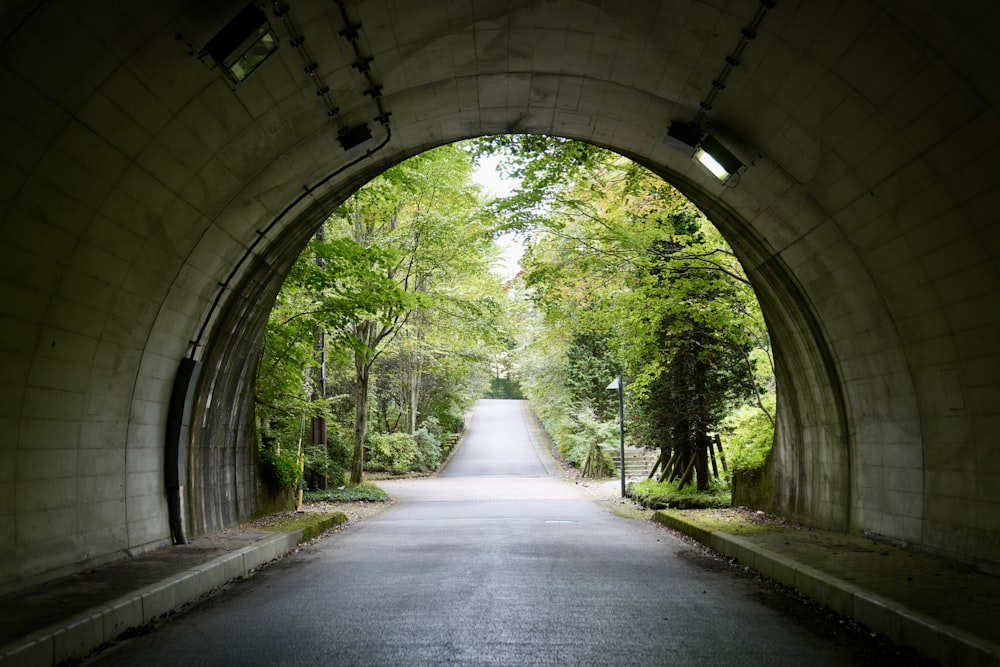
The title Sen to Chihiro no Kamikakushi works because Chihiro’s story is not just a fantasy adventure. It is a disappearance across a boundary.
She enters a tunnel.
She crosses into a world of spirits.
Her parents are transformed.
Her own name is taken from her.
She becomes both Chihiro and Sen.
This is exactly the emotional territory of kamikakushi: not merely being lost, but being removed from the ordinary human world and placed under the rules of another realm.
Scholar Noriko T. Reider notes that kamikakushi in Spirited Away connects the film to Japanese folk belief, where sudden disappearances were often attributed to the spirit realm. Reider also points out that Tōno Monogatari, the famous collection of folklore associated with Yanagita Kunio, contains examples of kamikakushi.
This is why the English title Spirited Away is elegant but incomplete. It captures the action, but not the cultural weight. “Spirited away” sounds like a magical abduction. Kamikakushi carries a heavier question: what happens when someone slips out of the human world altogether?
Kamikakushi Was Often Linked to Mountains, Forests, Rivers, and Children
In many Japanese legends, the person who disappears is a child. This is not accidental.
Children wander. They chase insects, stones, sounds, and curiosity. They do not read landscapes the way adults do. A path, a riverbank, a grove, or the edge of a village can become a threshold.
Traditional accounts often place kamikakushi near mountains, forests, rivers, shrine grounds, or dusk, all liminal settings. These are not random backdrops. In Japanese religious and folk imagination, mountains and forests were never just scenery. They were places where the human world touched something older and less controllable.
The danger was real. Japan is one of the most heavily forested developed countries in the world: the Forestry Agency states that about 70% of Japan’s land is forest.
Japan also has steep mountains, dense vegetation, volcanic terrain, heavy rain, fast rivers, and sudden weather changes. A short walk from a village, temple, shrine, or tourist path can lead into terrain where visibility drops quickly and rescue becomes difficult.
That physical reality is important. It does not “debunk” kamikakushi. It helps explain why the idea became so powerful.
The Modern Reality: People Still Disappear
Kamikakushi belongs to folklore, but disappearance is not only a thing of the past.
According to Japan’s National Police Agency, 82,647 missing persons were located or otherwise accounted for in 2024, including cases reported in earlier years. The same report notes that many people are located on the day of the report or within two to three days, but the existence of missing-person statistics itself shows that disappearance remains a modern administrative reality, not merely a premodern fear.
Mountain accidents are also a continuing issue. In 2024, Japan recorded 2,946 mountain-rescue incidents involving 3,357 people; among them, 300 were dead or missing. The most common accident type was getting lost, accounting for 30.4% of cases, followed by falls and slips.
This is the point where kamikakushi becomes more than folklore. The old word describes a feeling that still exists: the terror of someone vanishing into a landscape that refuses to give them back.
The Mountain Does Not Need to Be Supernatural to Be Terrifying
One of the most frightening things about kamikakushi is that many of its patterns can be read in realistic terms.
A person steps off a trail.
Fog comes in.
The forest becomes visually repetitive.
A familiar route suddenly looks strange.
A riverbank collapses.
A person panics and moves in the wrong direction.
None of these require a monster. That is precisely why they are frightening.
Research published in Current Biology found that humans tend to walk in circles when reliable external directional cues are unavailable. In experiments conducted in forests and deserts, people were more likely to circle when they could not see the sun or other stable reference points.
This offers a sobering modern counterpart to old tales of invisible walls or endless forests. A lost person may feel they are walking straight toward safety while actually looping through the same terrain.
In that sense, the “spirit” that traps a person may not be a visible being. It may be fog, fear, fatigue, and the limits of human perception.
Volcanic Japan and the Fear of Invisible Danger
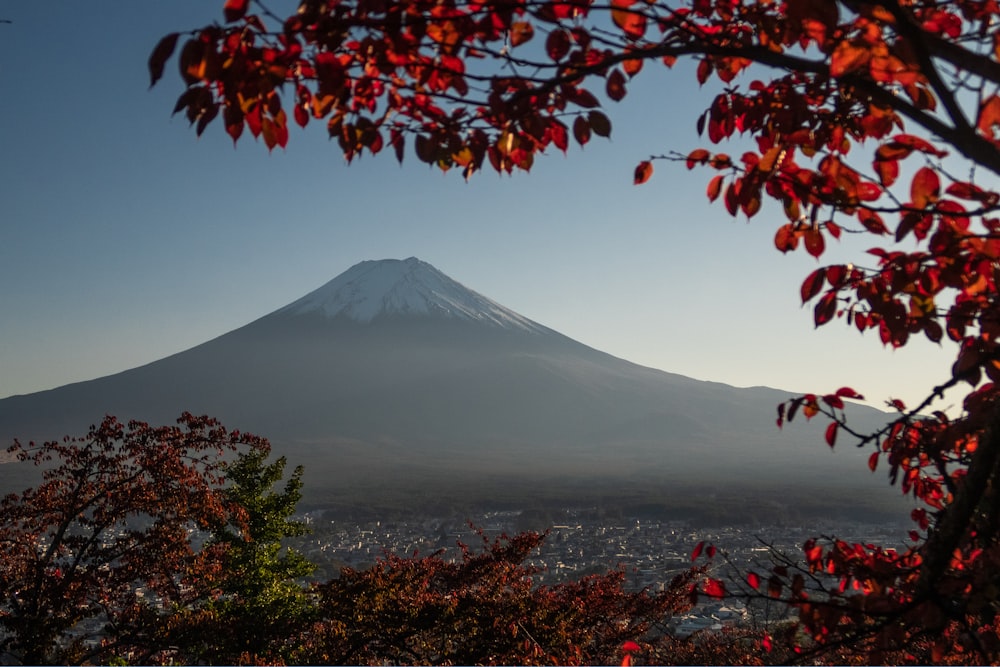
Japan’s landscape also contains hazards that are literally invisible.
The Japan Meteorological Agency currently recognizes 111 active volcanoes in Japan, using the definition of volcanoes that have erupted within roughly the past 10,000 years or that currently show active fumarolic activity.
Volcanic and geothermal areas can emit gases such as hydrogen sulfide. Hydrogen sulfide is especially dangerous because smell is not a reliable warning system. The U.S. National Institute for Occupational Safety and Health notes that the sense of smell becomes rapidly fatigued and cannot be relied upon as a warning for continued exposure.
OSHA describes higher concentrations of hydrogen sulfide as capable of causing collapse within minutes, and at 700–1000 ppm, rapid unconsciousness or collapse within one or two breaths.
This does not mean that every tale of kamikakushi was caused by volcanic gas. That would be an overclaim. But it does show why certain landscapes could acquire an aura of taboo. A place where animals died, people felt dizzy, vegetation would not grow, or strange smells rose from the ground could easily become understood as a place belonging to gods, demons, or the dead.
Folklore is often treated as the opposite of knowledge. In reality, it can preserve environmental memory in symbolic form.
Sinkholes, Caves, and the Ground That Opens Beneath You
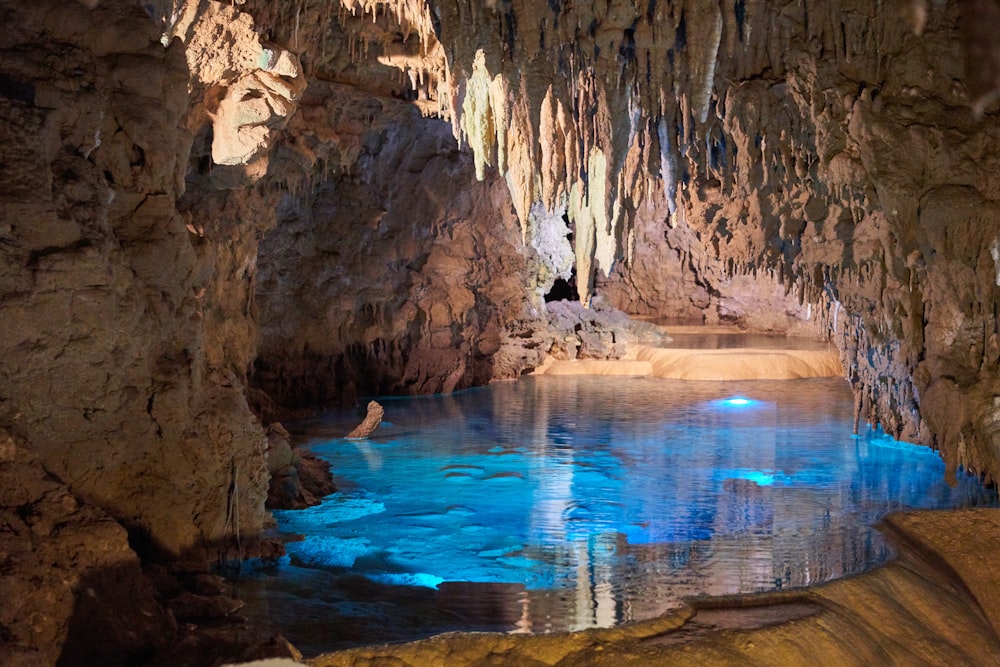
Another realistic layer is geology.
In karst landscapes, water dissolves soluble rock such as limestone, creating caves, underground drainage, and sinkholes. The U.S. Geological Survey explains that sinkholes form where water collects and drains internally rather than flowing away on the surface.
Japan has famous karst areas, including Akiyoshidai in Yamaguchi Prefecture, described by its official tourism site as Japan’s largest karst plateau.
Again, this is not a claim that “kamikakushi equals sinkholes.” The better reading is more careful: in landscapes where caves, pits, steep slopes, river undercuts, and underground drainage exist, a person can vanish from sight with terrifying speed. A premodern community without forensic tools would naturally describe such events in sacred or supernatural language.
The ground itself could behave like a threshold.
Kamikakushi as a Story for Those Left Behind
There is another reason kamikakushi endured: it gave language to grief without closure.
Modern psychology has a term for this: ambiguous loss. Pauline Boss, professor emeritus at the University of Minnesota, coined the term to describe a loss that remains unclear and therefore has no resolution. It can lead to confusion, anxiety, and chronic sorrow.
This is exactly the emotional wound left by an unresolved disappearance.
If someone dies and the body is recovered, grief is still painful, but the family can hold a funeral. There is a date. A place. A ritual. A social recognition that death has occurred.
But when someone disappears, the family is trapped between hope and mourning.
Maybe they are alive.
Maybe they are dead.
Maybe they are suffering.
Maybe they will come home tomorrow.
Kamikakushi gave older communities a way to speak into that unbearable uncertainty. To say “the kami took them” was not only to explain the unexplained. It could also soften blame.
A parent who lost sight of a child might otherwise carry impossible guilt. A village that had searched for days might eventually need to stop. The phrase kamikakushi allowed the community to say: this was beyond ordinary human power.
That does not make the story true in a literal sense. It makes it socially powerful.
Was Kamikakushi a Superstition?
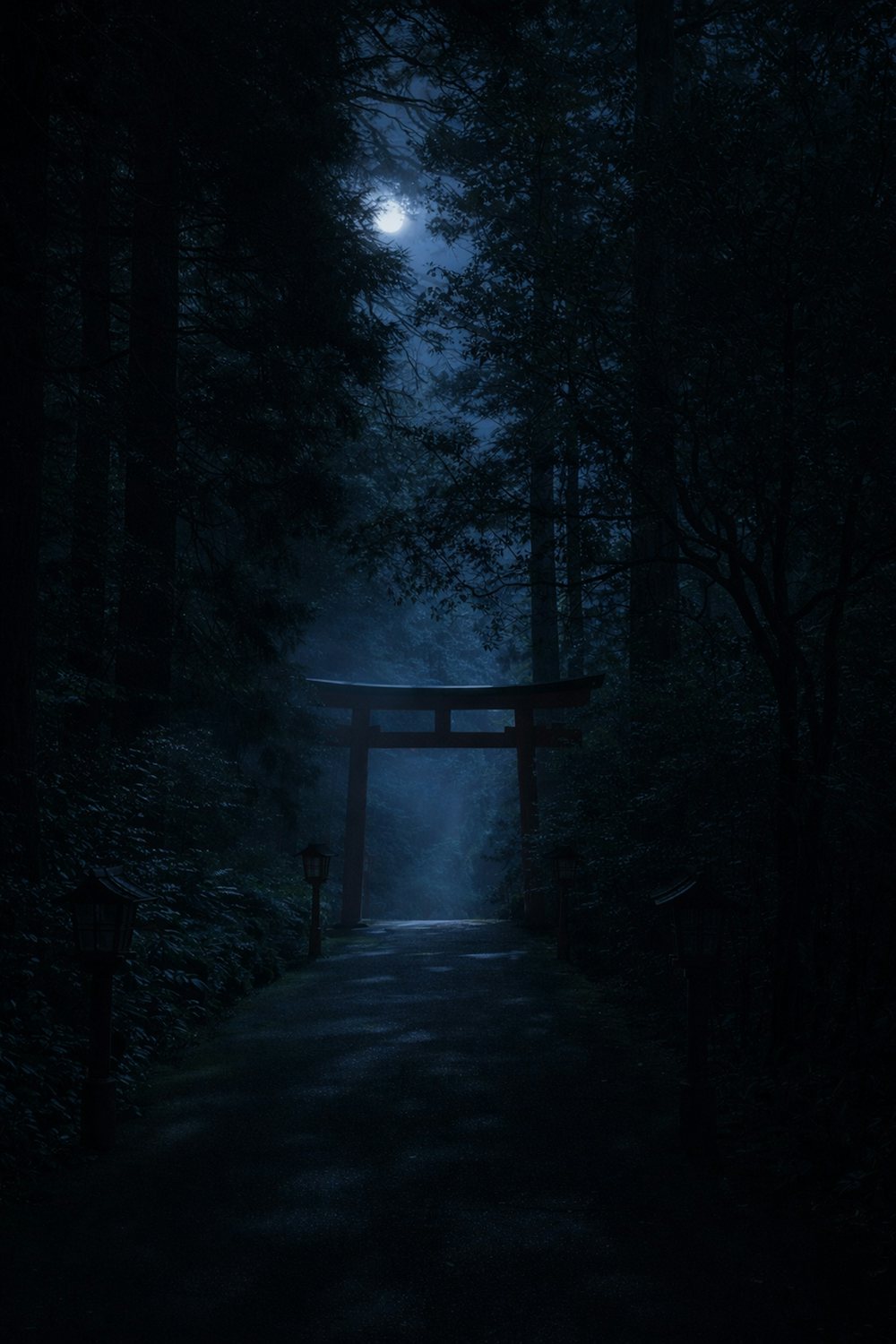
The easy modern answer is yes.
But that answer is too shallow.
Kamikakushi was not simply a primitive mistake waiting to be corrected by science. It was a layered response to real conditions: dangerous geography, limited search technology, child vulnerability, social shame, voluntary disappearance, death without a body, and grief without closure.
Yanagita Kunio, one of Japan’s foundational folklorists, treated subjects such as kamikakushi and hidden villages seriously as part of Japan’s folk imagination. The National Diet Library lists Kamikakushi / Kakurezato as a collection of Yanagita’s works dealing with these themes.
The point is not that gods literally carried people away. The point is that the word gathered many possibilities into one emotionally survivable form.
A runaway.
A drowning.
A fall.
A crime.
A hallucination.
A mountain accident.
A child hiding in fear.
A person who wanted to leave.
A body that could not be found.
Kamikakushi covered them all.
What Kamikakushi Reveals About Japan
Kamikakushi reveals something central about Japanese culture: the boundary between the visible and invisible world is not always treated as absolute.
A shrine gate marks a passage.
A mountain path can become sacred.
A river can separate worlds.
A tunnel can lead somewhere that feels psychologically different from where you began.
This is why Spirited Away feels so deeply Japanese even to viewers who do not understand every symbol. Chihiro does not enter “fantasy” in a Western castle-and-dragon sense. She crosses into a world that feels adjacent to ordinary life, hidden, but not distant.
That is kamikakushi.
Not outer space.
Not another planet.
Not a separate universe.
A place just beyond the tunnel.
Just beyond the trees.
Just across the river.
Just outside the human order.
If You Visit Japan’s Mountains and Sacred Sites
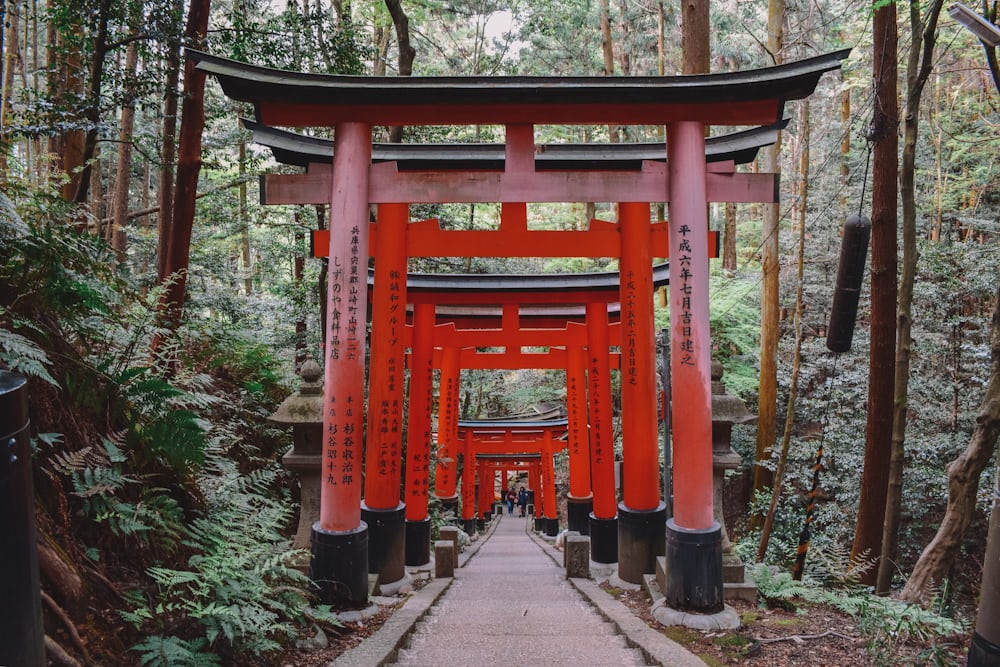
For travelers, kamikakushi should not be treated as a horror aesthetic. It should be treated as a reminder.
Japan’s sacred landscapes are beautiful precisely because they are not fully domesticated. Shrine forests, pilgrimage routes, volcanoes, ravines, waterfalls, and mountain paths can feel peaceful while still being physically dangerous.
The National Police Agency advises mountain visitors to prepare appropriate plans, equipment, maps, compasses, communication devices, spare batteries, and to avoid reckless movement when visibility is poor. It specifically warns that fog, snowstorms, poor health, and poor judgment increase the risk of getting lost or falling.
So the practical lesson is simple:
Stay on marked paths.
Check weather and volcanic warnings.
Do not rely only on your phone.
Carry a battery pack.
Tell someone your route.
Turn back early.
Do not enter restricted geothermal areas.
If you are lost, do not keep walking blindly.
Old folklore and modern rescue advice are closer than they seem. Both say the same thing in different languages:
Respect the boundary.
The Real Meaning of Kamikakushi
Kamikakushi is frightening because it sits between two truths.
The first truth is that people really do disappear.
The second is that not every disappearance can be emotionally resolved.
Modern science can explain many things that older communities could not: disorientation, exposure, volcanic gases, sinkholes, river hazards, dementia, crime, and missing-person behavior.
But science does not erase the human need for meaning. It does not remove the pain of absence. It does not fully answer what a family is supposed to do when someone is gone but not confirmed dead.
That is why kamikakushi still matters.
It is not just a spooky Japanese word behind Spirited Away. It is a cultural memory of disappearance, of mountains that swallow sound, forests that erase direction, rivers that conceal their force, and families left staring at the place where someone was last seen.
To be kamikakushi is to be hidden by the kami.
But perhaps the deeper meaning is this:
Some absences are so painful that humans have always needed another world to hold them.
Frequently Asked Questions
What does kamikakushi mean?
Kamikakushi (神隠し) literally means “hidden by the kami.” It describes the sudden, unexplained disappearance of a person, traditionally blamed on gods, spirits, or supernatural forces rather than on an accident or a crime. The English translation “spirited away” captures the idea but softens how frightening it originally was.
Is kamikakushi real?
Kamikakushi is folklore, not a documented supernatural event. The disappearances behind the belief, however, were very real: people genuinely vanished in Japan’s mountains and forests through falls, exposure, sinkholes, drowning, or simply getting lost. Communities used kamikakushi to explain absences they had no other way to understand.
What is the difference between kamikakushi and kidnapping?
Kidnapping is a human crime with a culprit and usually a motive. Kamikakushi describes a disappearance with no visible cause at all: no body, no ransom, no trace. Historically it was attributed to spirits such as tengu or to the kami rather than to people, although some real cases were later understood as accidents or ordinary abductions.
What does kamikakushi have to do with Spirited Away?
The Japanese title of Spirited Away is Sen to Chihiro no Kamikakushi, “The Spiriting Away of Sen and Chihiro.” Director Hayao Miyazaki chose the word because Chihiro crosses into a spirit world and becomes trapped there, echoing the old belief that the kami could hide a person away in an unseen realm just beyond the ordinary one.
How is kamikakushi written in Japanese?
It is written 神隠し. The first character, 神, means kami: gods, spirits, ancestral presences, or sacred forces in nature. The second part, 隠し, comes from the verb meaning “to hide” or “to conceal.” Together they read as “hidden by the kami.”
Related reading: Mt. Miwa, a mountain worshipped as a living kami, the moss-covered forest shrine of Kamishikimi Kumanoimasu, how to pray at a Japanese shrine, Jindaiji, one of Tokyo’s oldest temples.
Share