
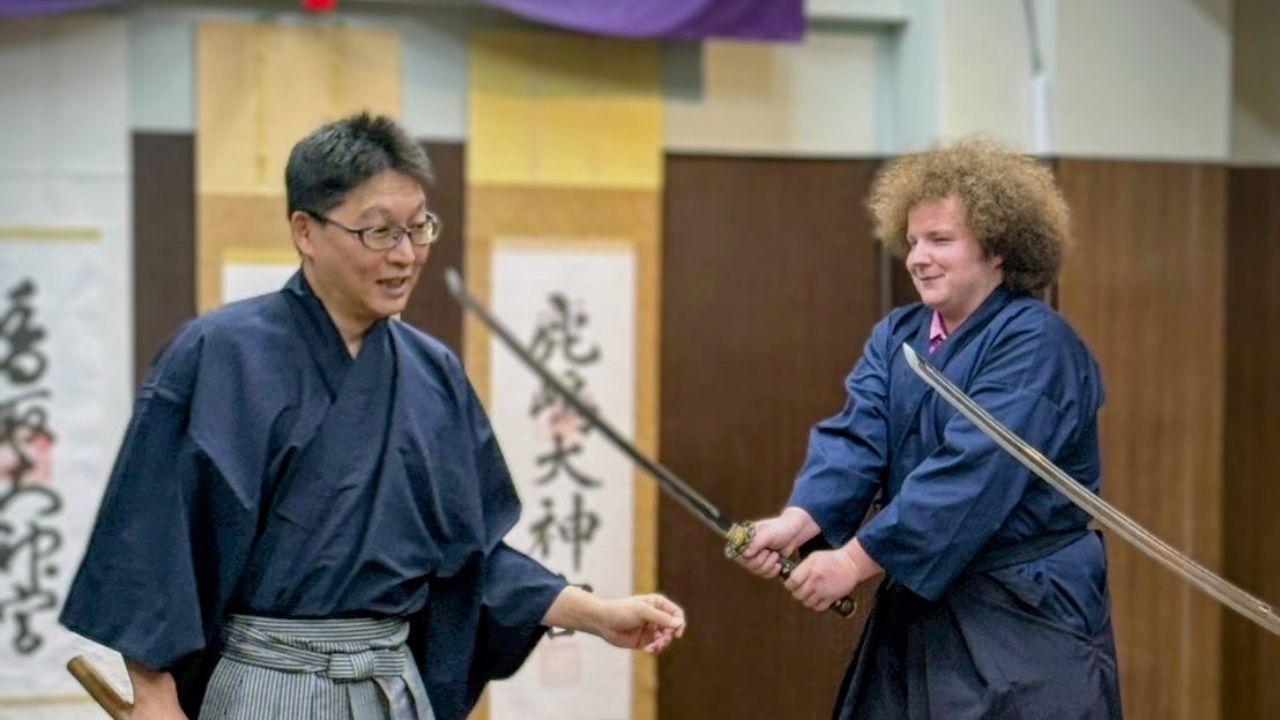
For many visitors to Japan, the katana is one of the most powerful symbols of Japanese culture.
You see it in samurai films, museums, anime, historical dramas, and souvenir shops. But the real culture of the Japanese sword is not about simply swinging a blade. It is about posture, timing, awareness, discipline, and the ability to face one decisive moment with complete focus.
Two words often appear when people begin searching for Japanese sword arts: iaido and battodo. You may also see the older term battojutsu.
They are related, but they are not exactly the same.
This guide explains what iaido and battodo mean, how they differ, and what it is like to experience Japanese sword culture in a real dojo environment.
What Is Iaido?
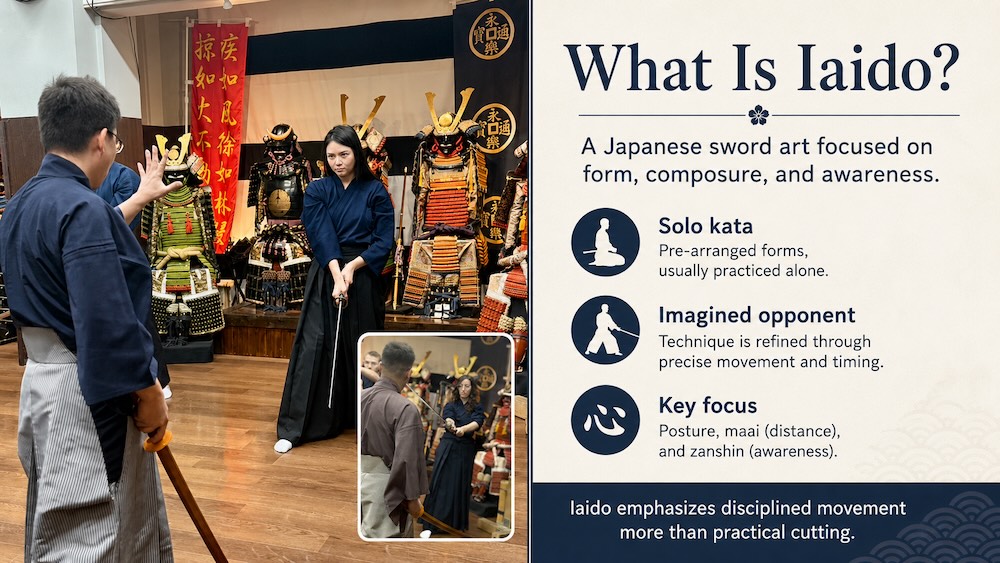
Iaido is a Japanese martial art centered on drawing the sword, cutting, controlling the blade, and returning it to the scabbard through a set form called kata. According to the All Japan Kendo Federation (AJKF), iaido is derived from methods of using the Japanese sword and is practiced as a “Way” to train the mind and body.
Unlike kendo, where two people face each other with bamboo swords, iaido is usually practiced alone. The opponent is imagined. The practitioner must visualize the situation, draw the sword at the correct moment, cut with precision, maintain awareness, and return to stillness.
This is why iaido can look quiet from the outside.
There may be no shouting crowd, no opponent, no dramatic clash of blades. But internally, the practitioner is fully engaged. A single movement requires concentration from beginning to end.
In iaido, the important question is not only, “Can you cut?”
It is also:
Can you remain calm before the cut?
Can you move without hesitation?
Can you control your body, your breath, and your mind?
Can you finish the movement with dignity?
That is why iaido is often described not simply as sword technique, but as a form of self-discipline.
What Does “Iai” Mean?
The word iai is often explained as the ability to respond instantly to a situation.
In practical terms, iaido imagines moments where the sword is still in the scabbard. The practitioner must draw and respond in one continuous flow. The art is not about fighting after both sides are already prepared. It is about awareness before conflict fully begins.
This gives iaido its unique feeling.
The sword is not already out. The body is not already moving. Everything begins from stillness.
Then, in one moment, stillness becomes action.
What Is Battodo?
Battodo is another Japanese sword art closely related to sword drawing, but it places stronger emphasis on actual cutting practice, often called tameshigiri. Tameshigiri-based sword arts are taught by groups such as the All Japan Battodo Federation, whose affiliated dojo practice cutting with a live blade (shinken).
The word can be broken down roughly as:
batto = drawing the sword
do = the way, path, or discipline
So battodo can be understood as “the way of drawing the sword.”
In battodo, the practitioner does not only perform forms in the air. Depending on the school and training environment, practitioners may also cut rolled straw targets with a real Japanese sword. This is not done casually. It requires strict safety, correct posture, correct blade angle, and mental control.
A cut that looks simple from the outside is actually very difficult.
If the angle is wrong, the blade will not pass cleanly.
If the body is unstable, the cut loses power.
If the mind is rushed, the technique collapses.
This is why battodo is not just about strength. It is about alignment.
The sword, body, mind, and target must meet at the same point.
Iaido, Battodo, and Battojutsu: What Is the Difference?
The terms can be confusing, especially for people searching in English.
Here is the simplest way to understand them.
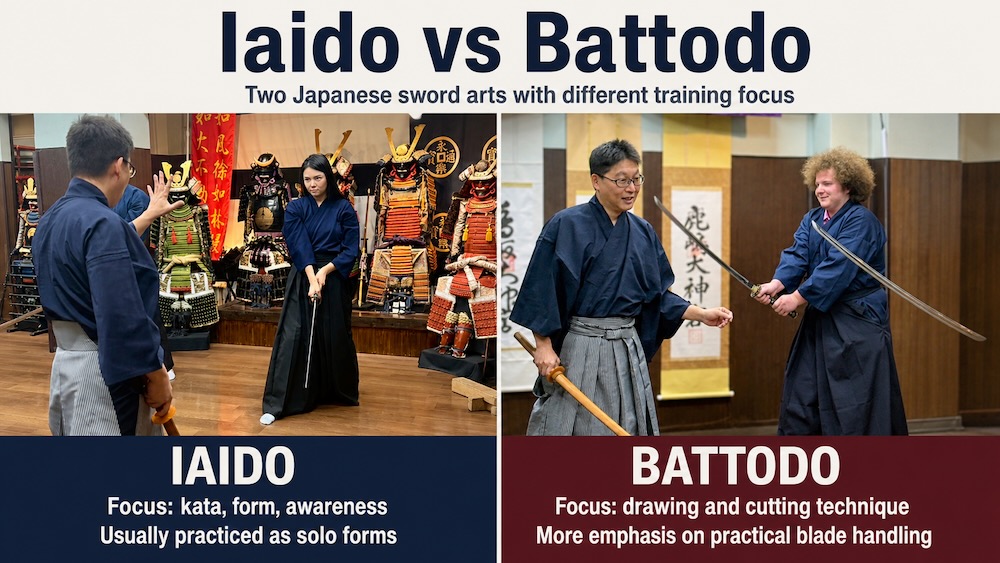
Iaido
Iaido focuses on drawing the sword and performing formal kata. The opponent is usually imagined. The emphasis is on form, timing, etiquette, awareness, and mental discipline.
Battodo
Battodo also involves drawing the sword, but it often places more emphasis on practical cutting and confirming whether the technique actually works through tameshigiri.
Battojutsu
Battojutsu is an older term that generally refers to sword-drawing techniques. The word jutsu means technique or art, while do suggests a path of discipline and personal refinement. In modern English searches, people often use “battojutsu” when they are looking for traditional Japanese sword-drawing arts.
In reality, the exact difference depends on the school, teacher, federation, and historical lineage. But for a visitor trying to understand the basics, this is the useful distinction:
Iaido is often more kata-centered. Battodo is often more cutting-centered. Battojutsu is a broader technical term for sword-drawing methods.
Is This the Same as “Samurai Training”?
Not exactly.
Many tourist experiences use the word “samurai” because it is easy to understand. But serious iaido and battodo are not costume activities. They are martial arts with rules, etiquette, and a long training culture.
That does not mean beginners cannot try them.
A good introductory experience can be very accessible. You may learn how to stand, bow, hold the sword safely, draw with basic control, and understand the meaning behind the movement. But the point is not to pretend to be a samurai for a photo.
The real value is much deeper.
It is the chance to feel how Japanese martial culture treats the body, the mind, and the moment.
What Makes Japanese Sword Arts So Difficult?
At first glance, iaido and battodo may seem simple.
Draw the sword. Cut. Return the sword.
But once you try, you quickly realize how much is hidden inside one movement.
Your feet must be placed correctly.
Your hips must settle.
Your hands must not grip too hard.
Your shoulders must not rise.
Your eyes must remain aware.
Your breathing must not break.
Your movement must begin and end with control.
In Japanese martial arts, technique is rarely just technique. It reveals the person.
If you rush, the sword shows it.
If you hesitate, the sword shows it.
If your body and mind are not aligned, the sword shows it.
That is why one kata can be repeated for years.
The movement may be the same, but the person doing it changes.
Meeting Kamiide: A Modern Teacher of Battodo
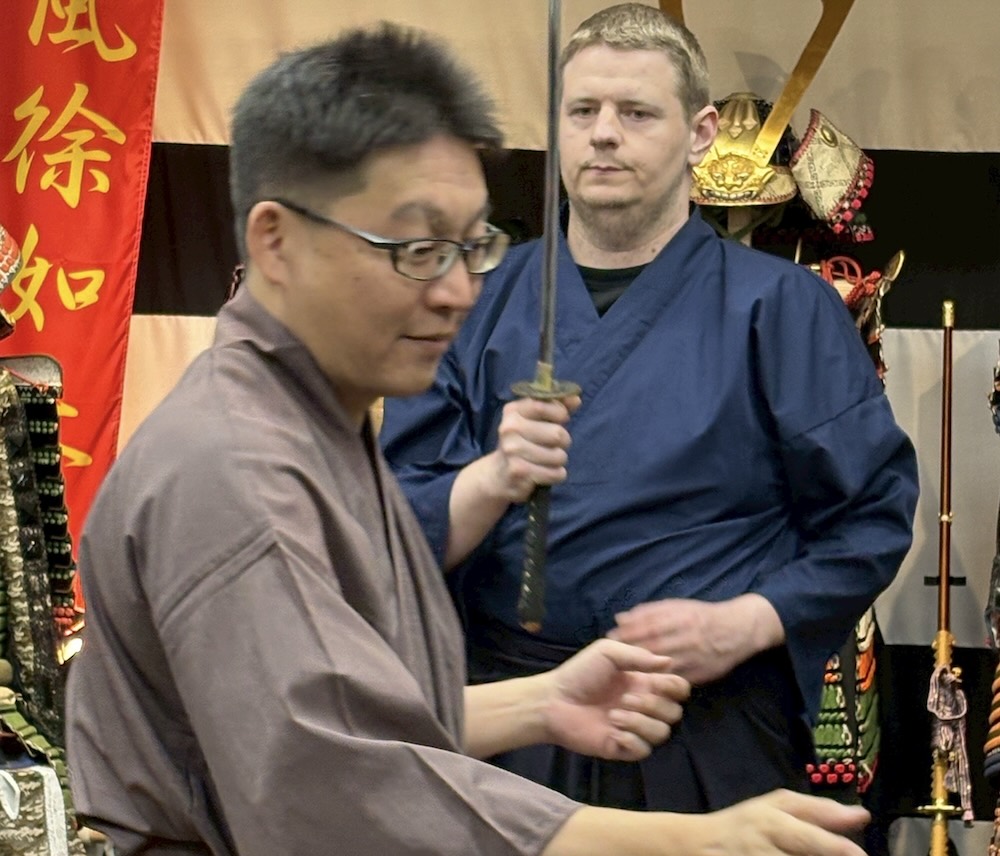
For this article, Japan Documented interviewed Kamiide-san, a battodo practitioner and teacher based in Tokyo.
Kamiide-san has taught sword-drawing techniques to more than 4,000 international visitors in a year through cultural experiences in the past. Zampokai, the organization he belongs to, is affiliated with the All Japan Battodo Federation and has won more medals than any other group within the federation.
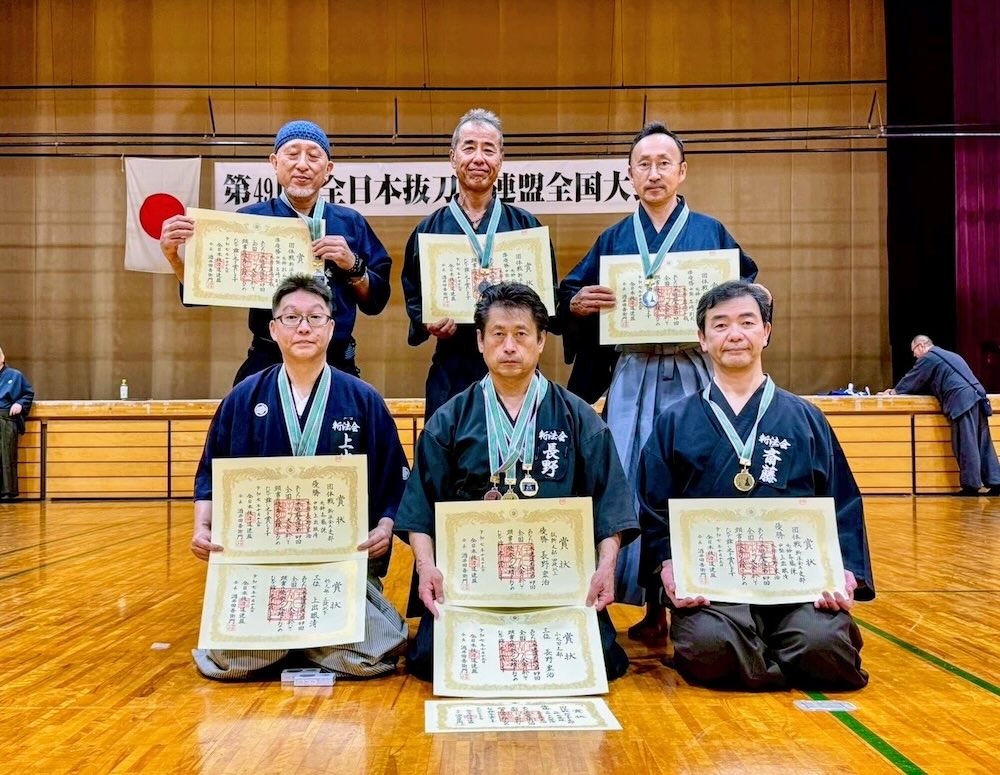
What stood out most in the interview was not only his technical background, but the way he spoke about commitment.
Kamiide-san has changed jobs some times throughout his life. But iaido and battodo remained something he could continue facing seriously. For him, the sword is not simply a tool. It is a way to keep returning to himself.
He also wants people from outside Japan to understand Japanese culture through direct experience, not only through images, films, or surface-level tourism.
That matters.
Because sword arts are not easy to explain only through words. You understand them better when you stand in the space, follow the etiquette, hold the sword, and feel how much concentration even one basic movement requires.
The Unexpected Connection Between Battodo and Racing

Kamiide-san also has another serious passion: cars.
His beloved car is an RX-7, and he participates in circuit racing. At first, racing and battodo seem completely different. One belongs to the world of engines, speed, and machines. The other belongs to the world of Japanese martial arts and the sword.
But Kamiide-san sees a connection.
On the circuit, one lap takes a little over a minute. During that lap, the driver must stay fully focused from beginning to end. A small mistake in timing, angle, or judgment can change everything.
For Kamiide-san, an iaido or battodo kata has a similar quality.
It may also take around a minute from start to finish. During that short time, the practitioner must stay completely present. The beginning matters. The middle matters. The ending matters. You cannot only focus on the dramatic moment of the cut.
The whole sequence is the practice.
That comparison makes his teaching easy to understand, especially for people new to martial arts. Battodo is not about one flashy movement. It is about maintaining concentration through the entire process.
Just like a lap on a circuit, there is no meaningless second.

Can Foreign Visitors Try Iaido or Battodo in Japan?
Yes, but it should be done in the right environment.
For a first-hand account, read about our own samurai sword-cutting experience in Tokyo, where a licensed instructor guided us from etiquette and wooden-sword practice to cutting rolled tatami with a real katana.
Japanese sword arts involve real martial culture and, in some cases, real blades. Safety, instruction, and respect are essential. A good beginner experience should not rush people into dangerous movements. It should first explain the basics: etiquette, posture, how to hold the sword, how to move, and how to understand the purpose of the practice.
For many visitors, even a simple introduction can be memorable.
You may learn how to bow before entering the training space.
You may learn how the sword is handled with both respect and caution.
You may learn the difference between a casual swing and a controlled cut.
You may realize that the most difficult part is not power, but calmness.
This is exactly why iaido and battodo can be meaningful for travelers who want something deeper than standard sightseeing.
You are not only watching Japanese culture.
You are stepping into it.
Who Is This Experience For?
An iaido or battodo experience is especially suitable for visitors who are interested in:
Japanese martial arts
Katana and sword culture
Samurai history
Traditional Japanese etiquette
Mindfulness and concentration
Hands-on cultural experiences
Private or small-group activities in Tokyo
It is also suitable for people who do not have martial arts experience.
In fact, beginners often notice the most because everything is new: the posture, the etiquette, the silence, the way the sword changes the atmosphere of the room.
You do not need to be strong. You do not need to be athletic. You do need to listen carefully and treat the practice with respect.
What Should You Expect in a Beginner Sword Experience?
The exact content depends on the teacher, location, safety conditions, and arrangement. But a beginner-friendly session may include:
An introduction to iaido, battodo, and Japanese sword etiquette
Basic bowing and dojo manners
How to stand and move safely
How to hold a practice sword
Simple drawing and cutting movements
A demonstration by the instructor
Explanation of the meaning behind the forms
Photo time, if permitted by the teacher
The most important point is that this is not only an activity. It is a cultural encounter.
A good teacher does not simply show you how to move. They help you understand why the movement matters.
Why This Experience Feels Different from Normal Sightseeing
Japan has many famous places to visit: temples, shrines, gardens, markets, castles, and museums. They are worth visiting. But many eventually want something more personal.
They want to meet someone.
They want to hear a real story.
They want to try something with their own body.
They want to understand Japan beyond the surface.
Iaido and battodo offer that kind of moment.
When you hold the sword, even a practice sword, your behavior changes. You stand differently. You listen more carefully. You become more aware of space, posture, and timing.
That feeling is difficult to get from simply looking at a display case in a museum.
A sword behind glass teaches history.
A sword in practice teaches awareness.
Both have value. But they are not the same.
How Japan Documented Can Help
Japan Documented introduces Japanese culture through people, stories, and real experiences.
If you are interested in trying iaido, battodo, or a Japanese sword experience in Tokyo, we can help connect you with the right kind of experience depending on your group, schedule, language needs, and level of interest.
This is especially useful for:
Travelers looking for a private cultural experience
Families or groups visiting Tokyo
Creators filming Japan-related content
Companies arranging VIP or incentive travel
Schools or organizations planning cultural learning programs
Because sword arts require proper safety and preparation, advance inquiry is recommended.
Interested in experiencing Japanese sword arts in Tokyo?
FAQ
Is iaido dangerous?
Iaido can be practiced safely under proper instruction, especially when beginners use wooden or blunt practice swords. However, because the art is based on sword handling, students must follow the teacher’s instructions carefully.
Do beginners use a real katana?
Usually, beginners do not start with a sharp sword. Depending on the school and experience format, they may use a wooden sword or a blunt training sword. Sharp blades require advanced control and strict safety management.
Is battodo the same as tameshigiri?
No. Tameshigiri means test cutting, usually against a target such as rolled straw. Battodo is a broader martial discipline, and tameshigiri may be one part of the training.
Is this suitable for children?
It depends on the teacher, the child’s age, and the content of the session. Because sword arts require focus and safety awareness, age restrictions would apply.
Can I take photos or videos?
Sometimes, yes. But this should always be confirmed in advance. A dojo is not just a photo studio; it is a training space.
What should I wear?
For your beginner experience, we recommend wearing comfortable clothes that are easy to move in. Please avoid tight outfits, short skirts, or anything that restricts kneeling and standing. Rental clothing is also available for first-time participants!
Do I need martial arts experience?
No. Many introductory experiences are designed for complete beginners. The most important requirements are attention, respect, and willingness to learn.
Final Thought
Iaido and battodo are not only about the Japanese sword.
They are about the moment before action, the discipline inside movement, and the quiet pressure of doing one thing with complete attention.
For visitors to Japan, this can be one of the most memorable ways to understand Japanese culture. Not as a performance. Not as a fantasy. But as a living practice taught by people who have spent years facing the sword seriously.
And once you try it, you may understand why one simple movement can take a lifetime to refine.
Contact Us
Have a question about iaido, battodo, or visiting a dojo in Japan? Send us a message using the form below and we will get back to you.
If you’re interested in experiencing battodo as a martial art, please come and join us for a session.
Share