
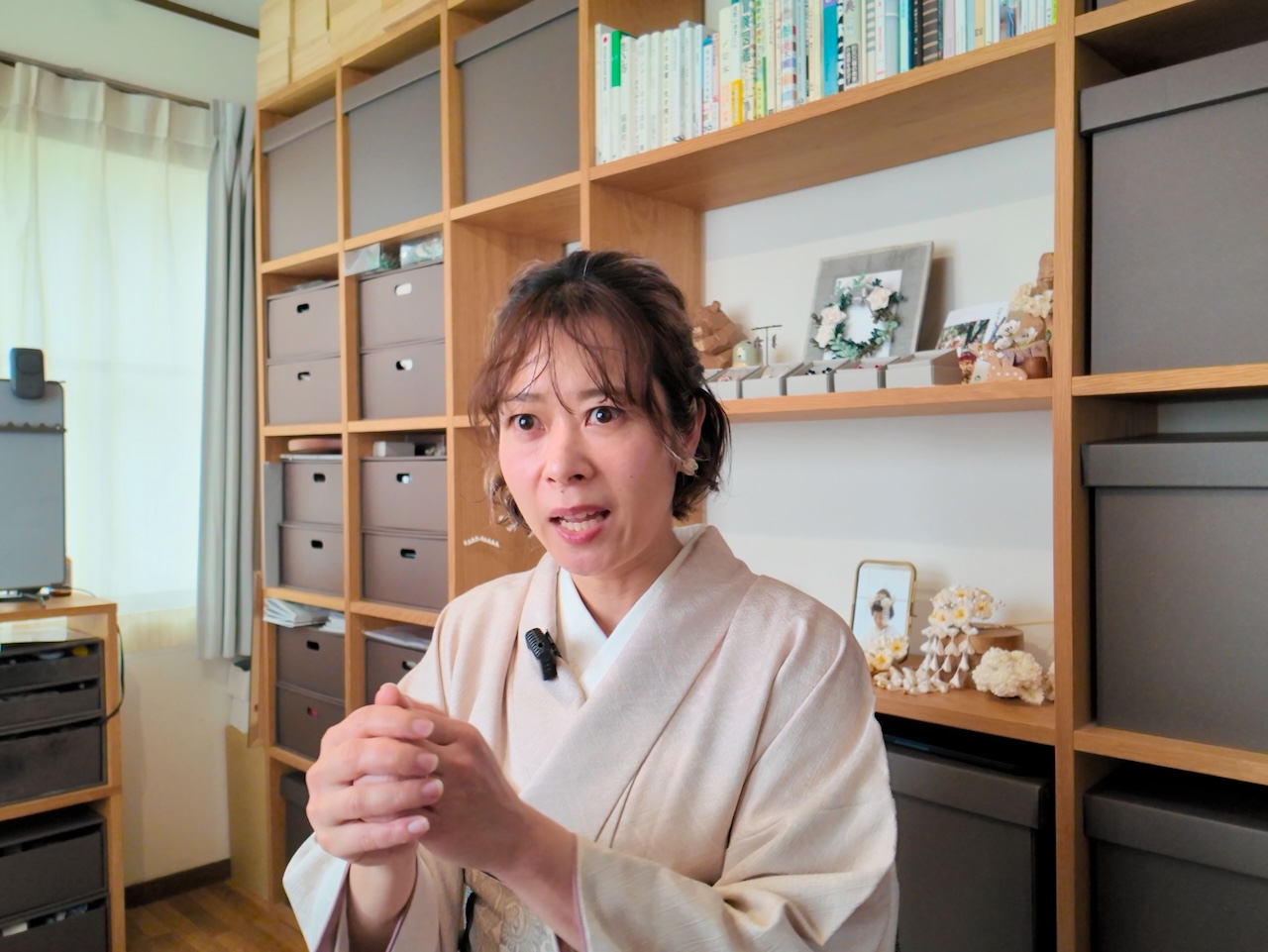
Interview by Leo
The traditional Japanese craft of tsumami zaiku—the intricate art of folding and pinching square pieces of cloth into three-dimensional shapes—has a rich history deeply rooted in the Edo period.
Originally born out of a desire to repurpose leftover kimono fabric, this technique was historically used to decorate everyday objects and fragrant medicine balls before evolving into the elaborate hairpins known as Tsumami Kanzashi.
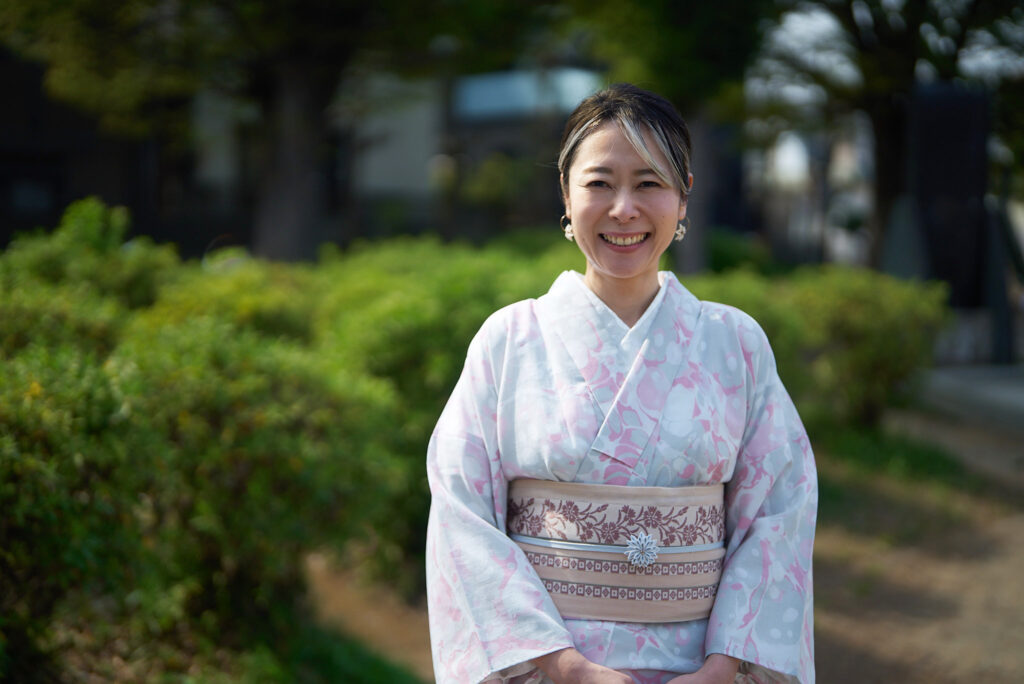
Today, the lifestyle of the average person has drastically changed, and the demand for ornate, traditional hairpins for daily wear has significantly diminished. However, dedicated artisans like Fujii-san are breathing new life into this classic art form by deconstructing the core techniques of Tsumami Zaiku and bridging the gap between historical craftsmanship and contemporary living.
In this exclusive interview, we delve into the meditative world of this delicate craft. Fujii shares her creative process, the historical evolution of the art, and her innovative approaches to making traditional Japanese aesthetics accessible for modern wardrobes and homes.
Unraveling the Threads of Tsumami Zaiku
Leo: I believe you mentioned “tsumami kanzashi” earlier, but can this also be referred to as “tsumami zaiku”? Have you always been focused on this specific craft?
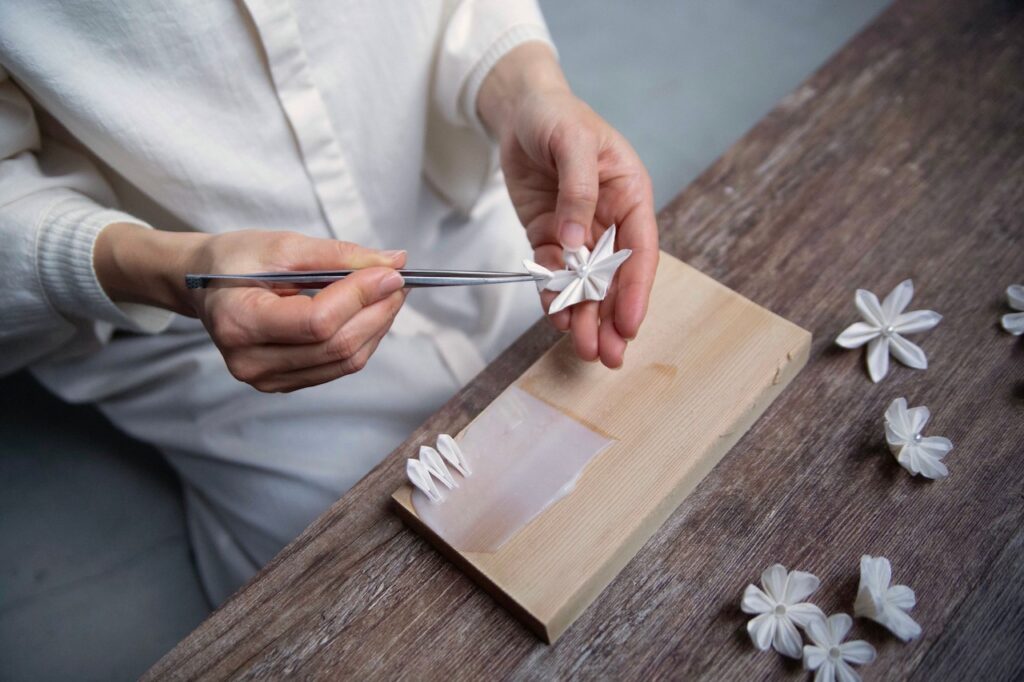
Fujii-san: Tsumami zaiku is actually the foundational technique itself, which involves using tweezers to pinch and fold cloth to create intricate designs. When you use this specific pinching technique to create a hairpin, that final product is called a tsumami kanzashi.
My initial entry into this world was driven by my fascination with the sheer glamour and profound Japanese essence of tsumami kanzashi, which led me to participate in a workshop. While I started with these traditional hairpins, I quickly realized that solely producing kanzashi as a sustainable business would be difficult, as modern Japanese lifestyles simply do not require such elaborate hairpieces on a daily basis.
To adapt, I decided to break down the craft to its very core: the tsumami zaiku technique. My current approach to product development begins by focusing on this fundamental method and exploring how it can be combined with modern lifestyles to create something entirely new and relevant.
What truly captivated me about tsumami zaiku is the transformation of materials. Normally, to make flat fabric three-dimensional, you would imagine using a needle and thread, much like tailoring clothes. However, this craft takes square-cut silk and uses only tweezers to fold it into 3D shapes, which are then secured using starch paste. Furthermore, despite having only two primary techniques, you can express an endless variety of things depending entirely on the creator’s imagination, from plants to the individual scales of a goldfish.

Historical Roots and the Spirit of “Mottainai”
Leo: Even though it is inherently Japanese, what specific aspects of this craft feel the most representative of Japan to you?
Fujii-san: There are several theories about how tsumami zaiku began, but it is generally said to have originated around the early Edo period. During that time, Japanese people wore kimonos daily, and the craft reportedly started as a way to effectively utilize small, leftover scraps of kimono fabric. I believe this desire to avoid waste and find a new use for things is a very uniquely Japanese way of thinking.
It also speaks to a national trait of manual dexterity, as this simple idea of repurposing scraps gradually evolved into a highly refined decorative art. Interestingly, in its earliest days, the technique wasn’t used for hairpins at all.
At the time the craft was born, women’s hairstyles generally featured hair tied in a low, simple knot, which didn’t require hairpins. The elaborate, swept-up styles we associate with traditional Japanese hairdos didn’t become popular until the late Edo period. Based on various historical documents, my understanding is that the early tsumami zaiku techniques were used to decorate the surfaces of storage boxes, such as those holding writing brushes and inkstones, or to adorn kusudama—decorative balls filled with fragrant medicinal herbs that were hung to scent the rooms of high-ranking individuals.
As hairstyles eventually changed and the demand for hair accessories grew, the tsumami zaiku technique merged with hairpins to create the tsumami kanzashi. This became a massive, viral hit in Edo, leading to a surge in specialized artisans in the East Tokyo area, whose legacy continues today.
The Artisan’s Process: From Fabric to Flower
Leo: You mentioned the fabric scraps earlier, but could you walk me through the actual manufacturing process?
Fujii-san: The process begins with preparing the fabric. While it normally starts with dyeing, we are fortunate to work with a dyeing company, so our process begins with purchasing the pre-dyed fabric from them.
We then cut this fabric into precise squares, sized according to the specific motif we want to create. There are two main tsumami zaiku techniques used to shape these squares: maru-tsumami, which is used for creating round flower petals, and kaku-tsumami, which is used for motifs with pointed, sharp edges. By skillfully alternating between these two methods, we can express a wide variety of designs.
Once the fabric is pinched into shape, we line the petals up on a wooden board coated with starch paste. As they sit there, the starch paste slowly soaks and permeates into the folded fabric. Using the adhesive power of that absorbed paste, we then perform a process called “fuku,” which involves arranging the petals onto a base to form a flower or motif.
That concludes the first day of work. The following day, after the starch paste has completely dried, we bundle the flowers together like a bouquet using thread, and finally attach the necessary hardware to turn them into hairpins, brooches, or other accessories.
Resonance Across the Ocean: The Story Woven by Tsumami Kanzashi and Mexico’s “Day of the Dead”
Leo: I heard that your work has created wonderful stories not only within Japan but also overseas. Could you tell us specifically about the episode in Mexico?
Fujii-san: Yes, there was actually a beautiful event where my Tsumami Kanzashi deeply connected with the local traditional culture in the faraway land of Mexico.
In Mexico, there is a very important festival held every autumn called the “Day of the Dead” (Día de los Muertos), where people joyfully welcome and converse with the souls of the departed. It is a warm traditional event that celebrates family bonds and the continuity of life, with the streets brightly decorated with marigold flowers and colorful ornaments.
I was blessed with the opportunity for my tsumami kanzashi to blend into the beautiful scenes of Mexico’s “Day of the Dead.” The photographs taken in Mexico by photographer Masahiro Muramatsu perfectly captured the harmony between the vivid local colors and the traditional Japanese craft of tsumami kanzashi.
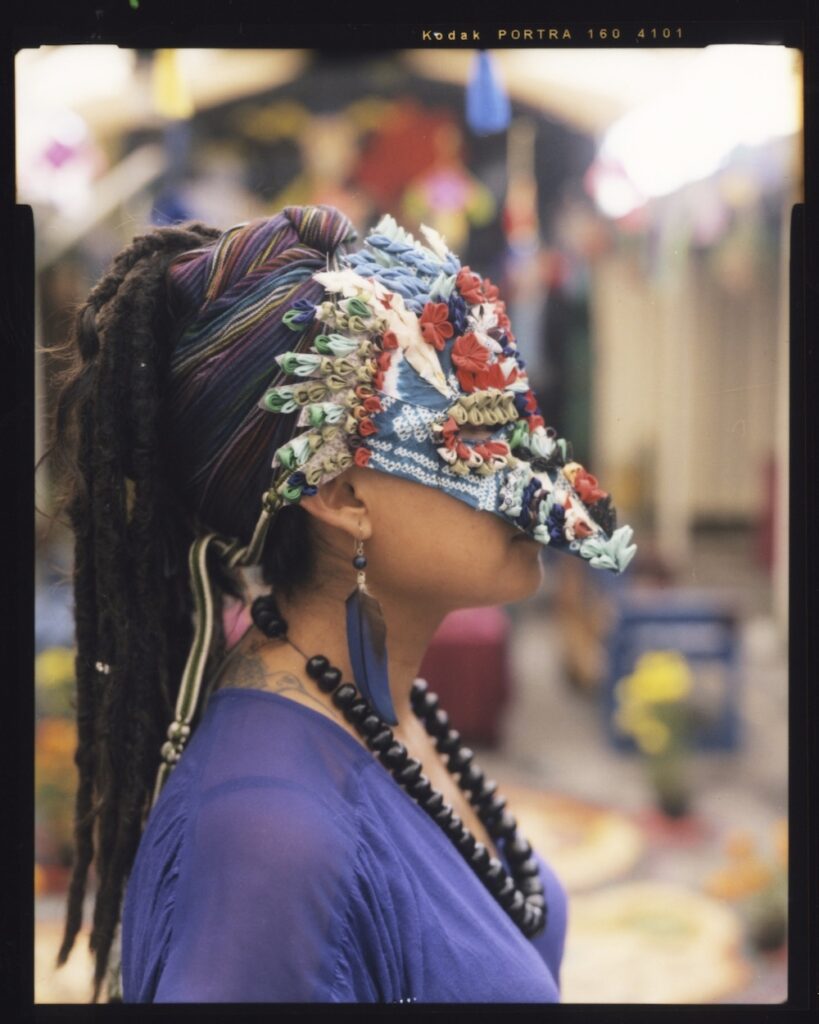
Leo: It seems that the Japanese spirit of “reviving kimono scraps” and the Mexican spirit of “remembering the dead and celebrating life” were truly linked.
Fujii-san: Exactly. The underlying spirit of tsumami zaiku—which breathes new life into fabric scraps that have finished their original role, allowing them to bloom as beautiful flowers—deeply resonated with the worldview of the “Day of the Dead,” where people remember their unseen loved ones alongside vivid colors and celebrate the continuity of life.
What was even more moving was the story born from this connection in Mexico: through a friend, the kanzashi was passed down to a local child. The small fabric flowers I crafted one by one with tweezers in Japan crossed the ocean to Mexico, becoming a bridge that connects people, and connects parent to child. As an artisan, there is no greater joy than this.
Through this experience in Mexico, I strongly reaffirmed that traditional crafts are by no means a thing of the past. They have the power to fit into modern lifestyles and to stay close to people’s hearts, transcending borders and cultural differences. Moving forward, while cherishing this technique and spirit, I want to continue creating works that add color to the lives of people all over the world.
Integrating Tradition into Modern Lifestyles
Leo: As lifestyles change, the things people need and desire also shift. How does your modern tsumami zaiku fit into contemporary life?
Fujii-san: What we excel at is creating items that people can actually wear or use in their daily lives. For instance, we design everyday accessories like pierced and clip-on earrings that I frequently wear with regular Western-style clothing.
We also make versatile pieces like obi-dome (sash clips for kimonos) that can easily be converted into brooches for everyday outfits just by changing the hardware on the back. Beyond wearable accessories, we’ve adapted the craft for home interiors, such as room aroma diffusers.
To adapt the craft for different uses, we sometimes have to change the core materials. While traditional tsumami zaiku is made from silk fabric, our aroma diffusers are crafted using washi (Japanese paper) so the user can drop aromatic oils directly onto the petals. Through these creative material and design adaptations, we constantly consider how tsumami zaiku can seamlessly blend into our modern routines.
The Meditative Joy of Craftsmanship and the Industry’s Future
Leo: What drives you to immerse yourself so deeply into tsumami zaiku? And how many artisans like yourself are currently practicing in Japan?
Fujii-san: I think I am so absorbed in it simply because it is incredibly fun. Creating is enjoyable, and it brings me joy to see the people who work alongside me enjoying it as well.
Moreover, the actual process of making these pieces brings a profound sense of peace to my mind. It’s very similar to the calm, meditative state one achieves while practicing shakyo (sutra copying). Immersing myself in a single, focused task and meticulously repeating the same steps is a rhythm that perfectly suits my personality and lifestyle, which is why I’ve been able to continue doing it for so long.
Regarding the number of artisans, it is said that there are only about 15 to 20 officially certified traditional craftspeople across all of Japan. In Chiba Prefecture, where I live, there are only five of us, including myself, who hold such official designations.
However, that number only accounts for those with formal titles like “Designated Traditional Craft Producer”. If you include the many independent artists who are highly active and passionate about the craft, there are easily thousands or even tens of thousands of practitioners out there. Because the number of officially recognized artisans is so small, there isn’t even a formal union or guild, which means the industry as a whole lacks a unified structure to address broader challenges.
・・・
Want to hear more stories from people living in Japan? Explore more interviews in our Humans of Japan series →
Share