
Watch the full interview with Chiari Matsumoto on YouTube.
Interview by Japan Documented
Many people imagine kintsugi as the Japanese art of repairing broken pottery with gold. But according to Tokyo-based kintsugi artist Chiari Matsumoto, that image leaves out the most important part.
In traditional kintsugi, gold is not what holds the broken pieces together. The real foundation is urushi — a natural lacquer made from tree sap — along with other natural materials used to restore the object so it can be used again.
For Matsumoto, kintsugi is not simply a symbol of beauty or resilience. It is a slow, functional repair process — not just a way to make broken pottery look beautiful, but a way to allow an object to continue its life.
Matsumoto is a 29-year-old kintsugi artist from Mie Prefecture who now works in Tokyo. After starting her career in advertising, she turned to kintsugi during the COVID-19 pandemic, when one of her favorite pieces of pottery broke.
What Is Authentic Kintsugi?
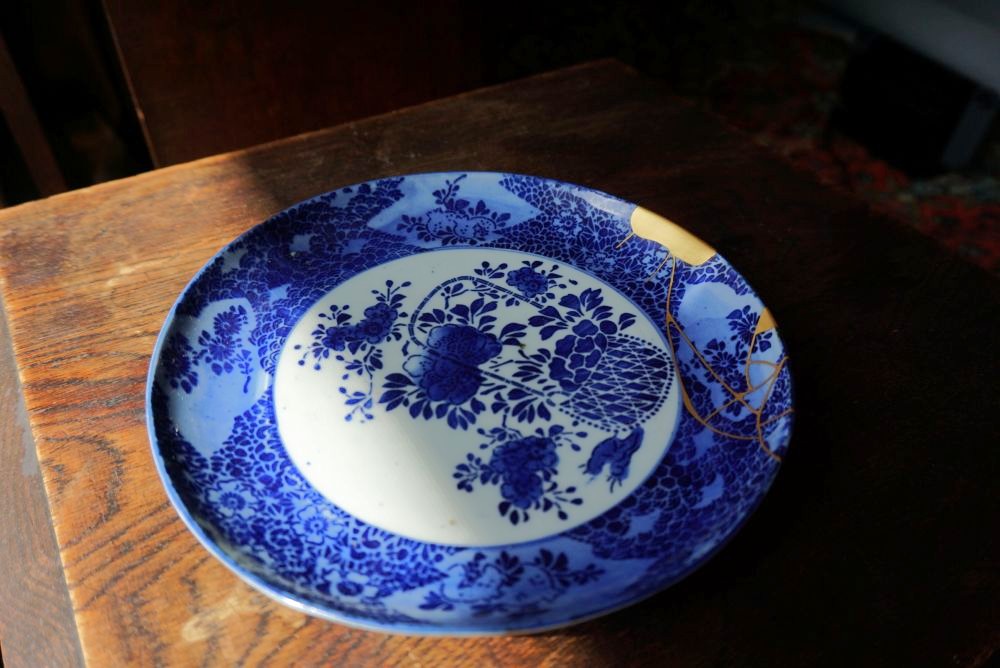
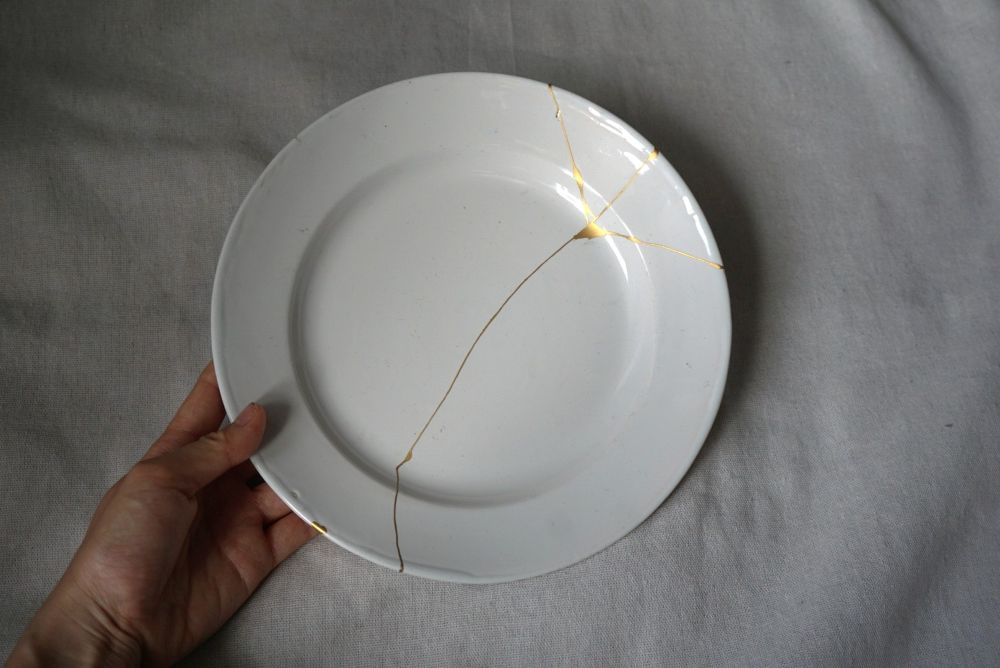
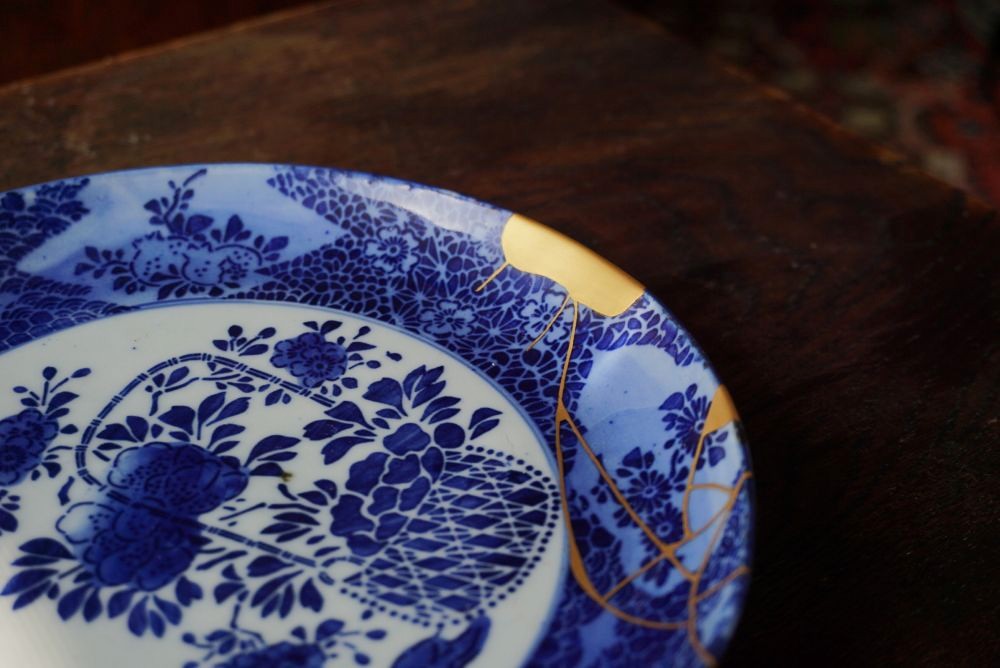
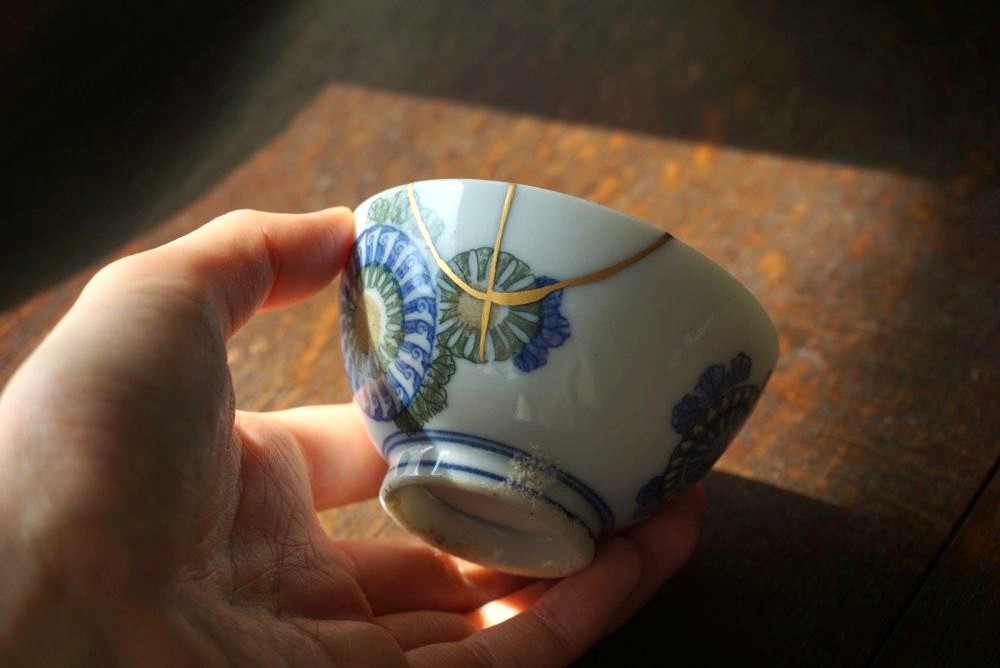
Kintsugi, written in Japanese as 金継ぎ, means “joining with gold.” It is a traditional Japanese repair technique used mainly for ceramics and tableware. When a bowl, plate, cup, or glass breaks, kintsugi does not try to hide the damage. Instead, it repairs the break while leaving the trace visible.
The result is often visually striking: a broken ceramic object restored with delicate metallic lines running across its surface.
Yet the beauty of kintsugi is not only visual. Its deeper value lies in the way it treats damage. A crack is not erased. It becomes part of the object’s history.
For Matsumoto, this point is essential. Although many people now view kintsugi as art, she sees its foundation as repair.
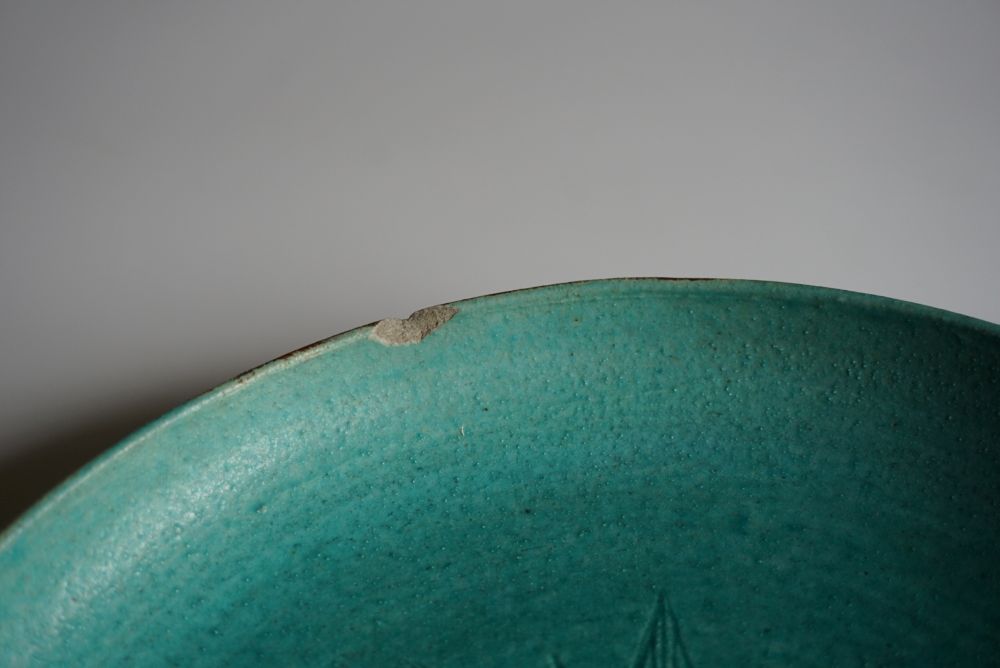
Rather than forcing her own design onto a broken object, she studies the way it has broken and tries to restore it in a way that respects its original shape. The broken line itself becomes the starting point.
In that sense, authentic kintsugi does not begin with decoration. It begins by looking closely at how the object broke.
Meet Chiari Matsumoto, a Tokyo-Based Kintsugi Artist
Chiari Matsumoto did not begin her career as a traditional craftsperson. After studying marketing, she first worked at an advertising company.
Then the COVID-19 pandemic changed the rhythm of her life. Remote work gave her more time alone, and she began thinking seriously about the relationship between work and long-term value.
She found herself asking whether the work she was doing would still hold the same value 100 years from now. That question led her back to something she had always cared about: traditional Japanese crafts.
Around that time, one of her favorite pieces of pottery broke. Instead of throwing it away, she began learning how to repair it.
That moment became the beginning of her path into kintsugi.
Now in her fourth year of practicing kintsugi, Matsumoto spent around two years working in a kintsugi studio before becoming independent. Today, she repairs ceramics and glassware for individual clients, galleries, restaurants, and companies.
Her work is based in Tokyo, but her perspective is shaped by both the city and the natural landscapes she grew up around.
Kintsugi Is Repair First, Art Second
One of the most important ideas in Matsumoto’s approach is that kintsugi should not be reduced to visual decoration.
Many people are drawn to the gold lines. That is understandable. The finished surface is often what catches the eye first. But for Matsumoto, kintsugi begins before the gold appears.
It begins with the decision to repair.
She does not see her role as adding dramatic artistic expression to every object. Instead, she tries to preserve the form created by the break itself. The object’s condition guides the repair.
This makes her view of kintsugi slightly different from the common image of the craft overseas, where it is often treated as a metaphor for personal healing or a purely aesthetic style.

Matsumoto does not reject those interpretations, but she returns the focus to the craft itself: the materials, the waiting, and the practical act of repair.
Traditional kintsugi is not only a philosophy. It is a technical practice involving materials, time, and a deep understanding of how objects are used.
The Biggest Misconception: Kintsugi Is Not “Gold Welding”
As kintsugi has become more popular overseas, Matsumoto has noticed a recurring misunderstanding.
Many people think kintsugi means using gold to glue broken pieces together.
That is not how traditional kintsugi works.
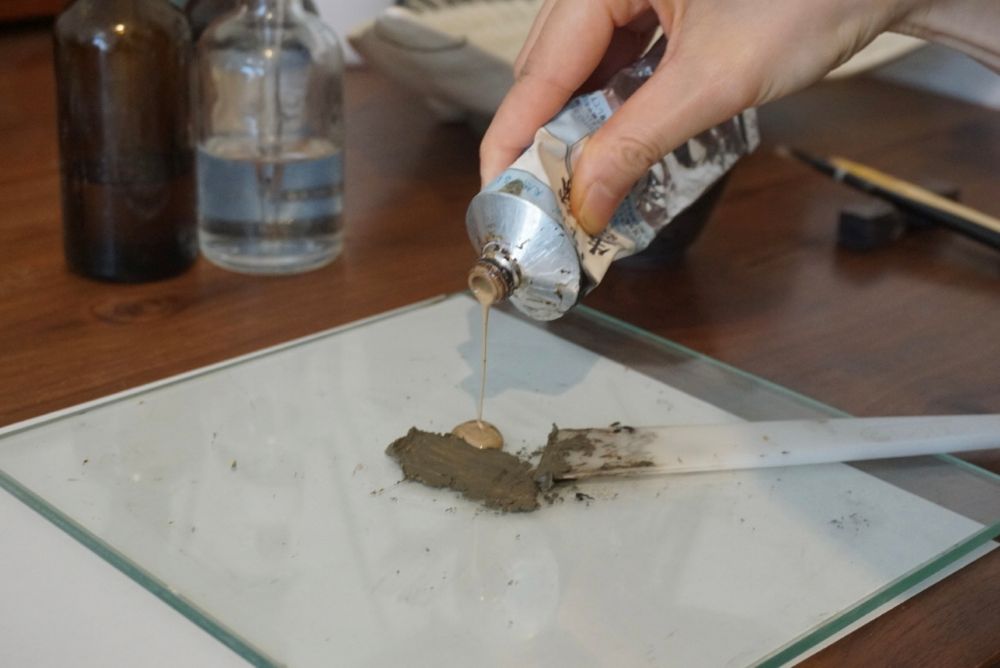
In authentic kintsugi, the main adhesive is urushi, a natural lacquer made from tree sap. The damaged areas may also be filled with mixtures of lacquer, clay, wood powder, or other natural materials. Gold powder is usually applied only near the final stage.
In other words, the gold is not the glue. It is the visible finish.
This distinction matters because it changes how people understand the craft. Kintsugi is not simply a gold effect. It is a repair method built around natural materials and slow curing processes.
Modern repair kits that use synthetic glue can be convenient, especially for decorative objects. Matsumoto does not dismiss them entirely. They may be useful for items like flower vases, containers, or objects that are not used for eating and drinking.
But when the object is tableware, she believes the traditional method has a different value.
Why Urushi Matters in Traditional Kintsugi
Urushi is central to authentic kintsugi.
Because kintsugi was originally a technique for repairing tableware, the repaired object should not merely look fixed. It should be able to return to daily use.
That is why natural materials matter.
Matsumoto emphasizes that traditional kintsugi uses materials such as urushi lacquer and wood powder rather than chemical adhesives. When properly handled and fully cured, these materials allow the repaired object to regain function as a vessel.
This is one of the reasons traditional kintsugi takes time. Urushi does not dry simply by being left in a room. It needs the right humidity and curing environment. Each stage must harden properly before the next stage can begin.
That waiting time is not optional. Without it, the lacquer cannot harden properly, and the repair cannot become strong enough for daily use.
How the Kintsugi Process Works
A single kintsugi repair can take several months. In many cases, Matsumoto says a repair may take around three to four months. If an object is shattered into many pieces, the process can take up to half a year.
Step-by-Step Breakdown of Kintsugi
- Collect and clean broken pieces to reassemble according to the original form.
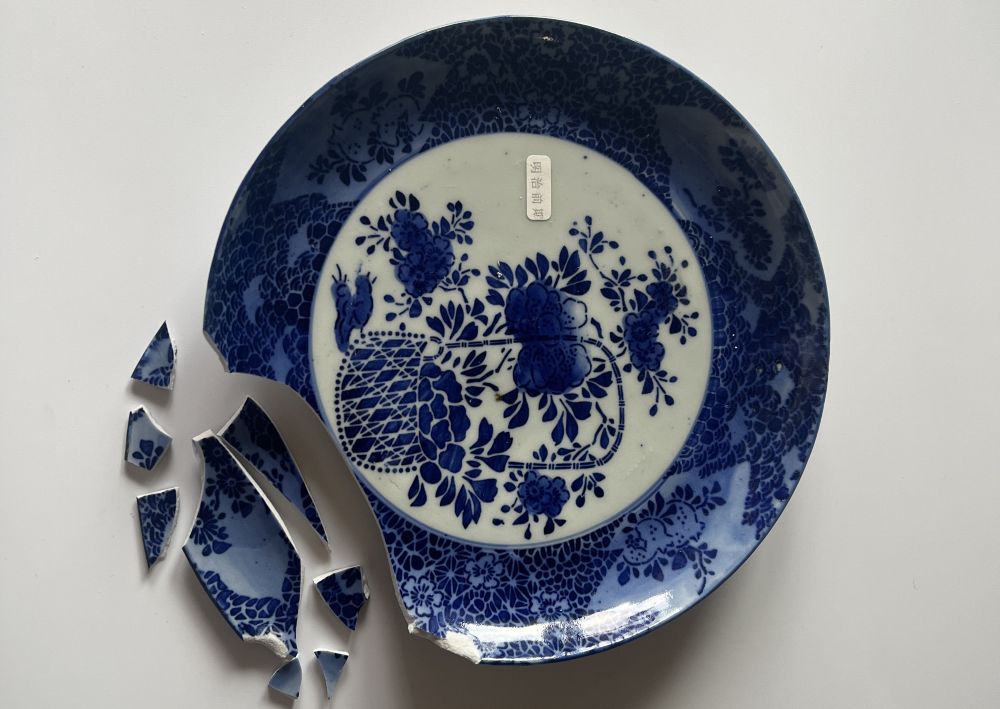
- Bond the pieces using natural lacquer derived from tree sap.
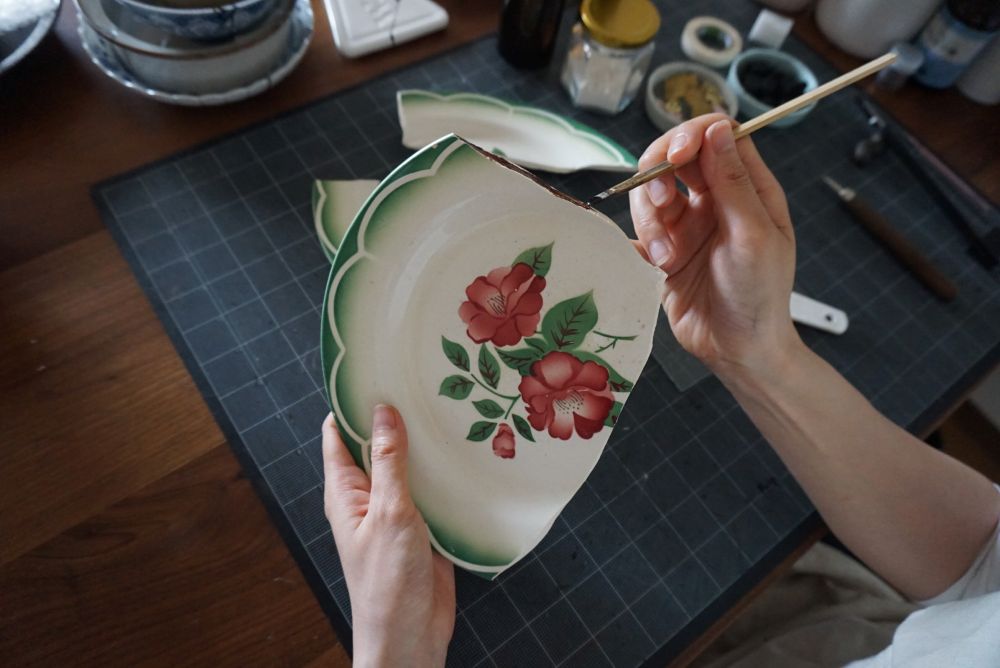
- Fill chips and cracks with clay and lacquer putty.
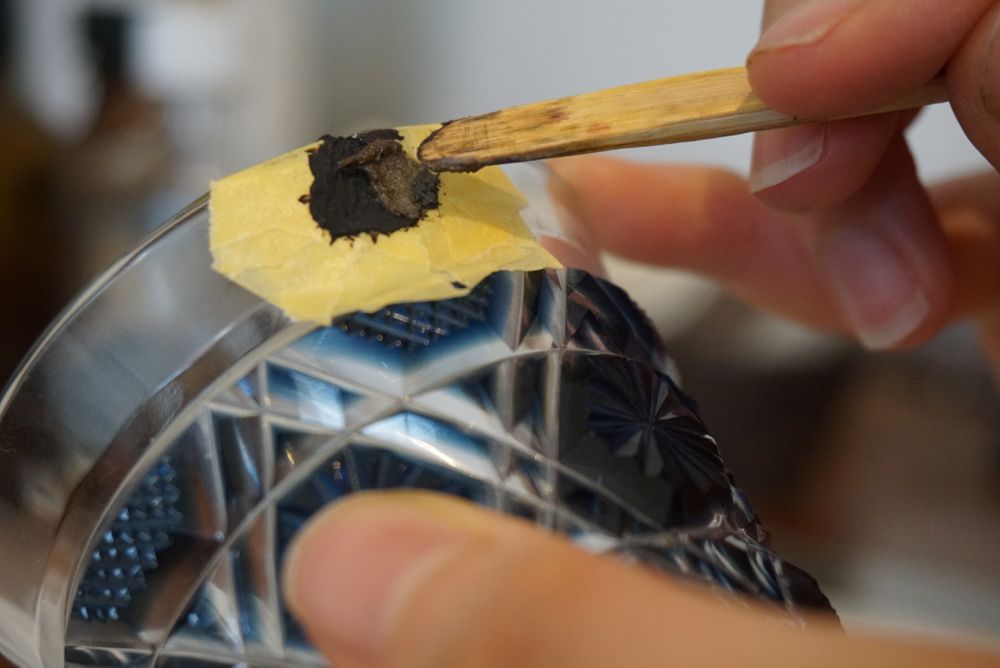
- Apply and dry multiple thin layers of lacquer, building strength.
- Paint with black lacquer, dry, and waterproof.
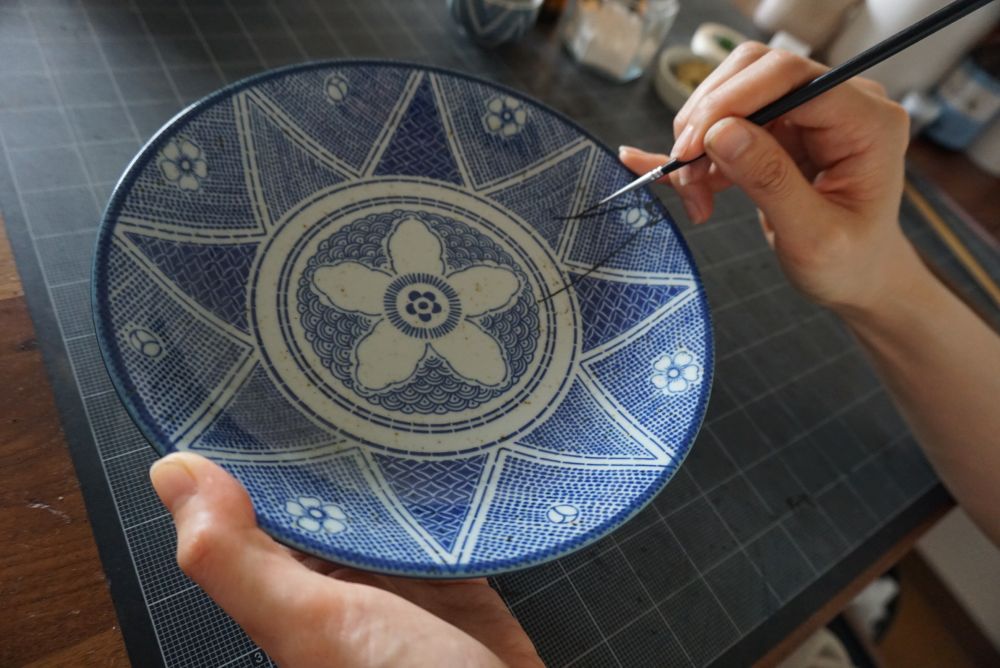
- Dust gold powder onto the repaired sections.
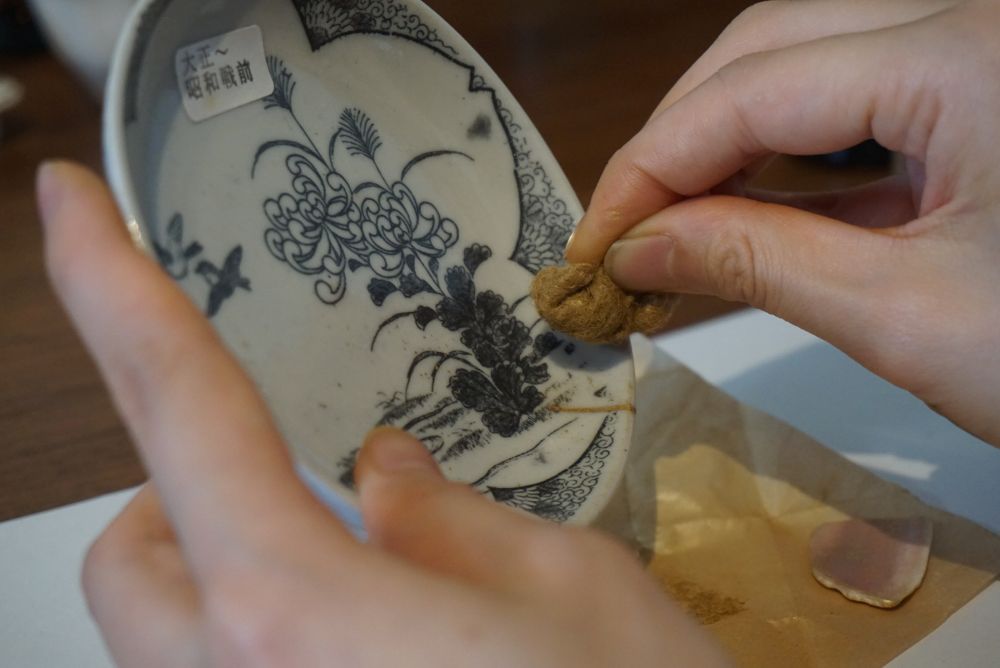
- Finalize with careful polishing after the materials have fully set.
Repairing Memory, Not Just Pottery
Many of the objects Matsumoto receives are not valuable in a financial sense.
Some are expensive pieces, but many are not. They may be bowls bought during travel, handmade vessels, or ordinary objects that have become meaningful through use.
What they have in common is memory.
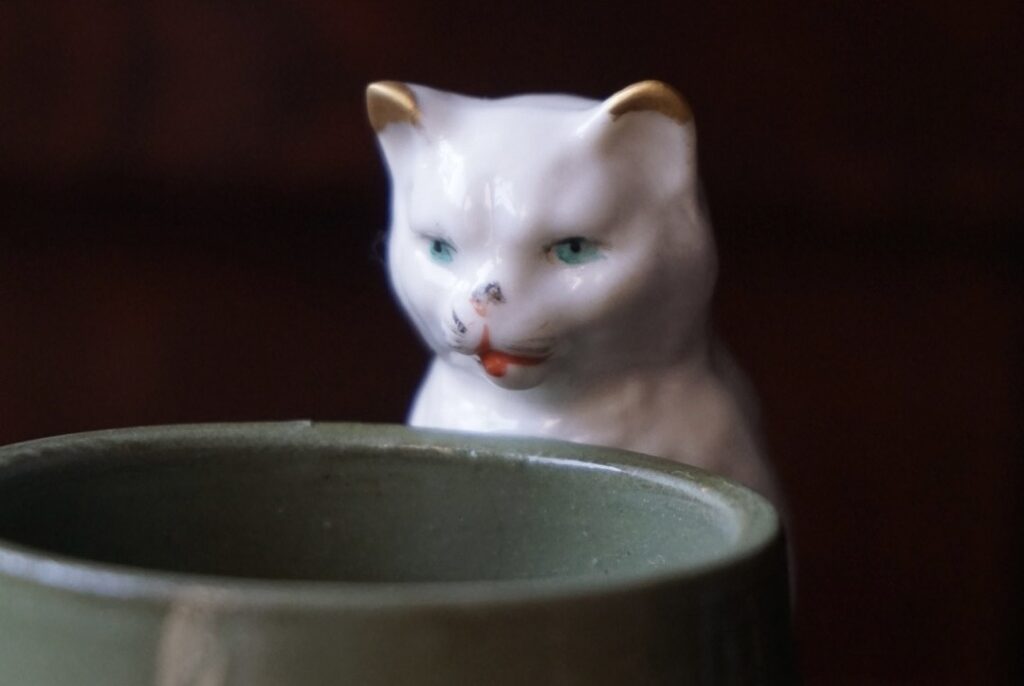
A person may bring an item to be repaired not because it is rare, but because it carries a story. It may remind them of a place, a person, a meal, or a period of life.
This is why many clients come to Matsumoto: not to recover the market value of an object, but to keep using something connected to a memory.
Instead of replacing the broken item with something new, kintsugi allows the owner to accept the break as part of the object’s life.
The repaired line does not erase what happened. It records it.
Why Glass Is Both Beautiful and Difficult
Although kintsugi is most commonly associated with ceramic tableware, Matsumoto is especially drawn to repairing glass.
She remembers being captivated when she first saw a photograph of glass repaired with kintsugi. The contrast between transparent material and a metallic repair line felt especially beautiful to her.
But glass is also one of the most difficult materials to repair.
The process of kintsugi often involves sanding, polishing, and refining the repaired surface. Glass scratches easily, making it technically demanding. Lacquerware can also be difficult for similar reasons.
For Matsumoto, that difficulty is part of the interest. The more delicate the material, the more carefully the repair must be approached.
Why Natural Materials Matter to Matsumoto
Matsumoto’s attachment to natural materials is not only technical. It also connects to her personal life.
She has long enjoyed mountains, rivers, outdoor activities, and time in nature. For her, the fact that kintsugi can repair objects using natural materials is one of the reasons the craft feels so aligned with her own values.
This is also where kintsugi connects to broader Japanese craft traditions.
Many traditional Japanese arts are shaped by the relationship between human hands, natural materials, and time. Kintsugi is no exception. It relies on tree sap, powder, minerals, humidity, and repeated waiting.
For Matsumoto, the use of natural materials is not only technical. It is one reason the craft feels close to the way she lives.
Why Tokyo Is a Natural Home for Kintsugi Today
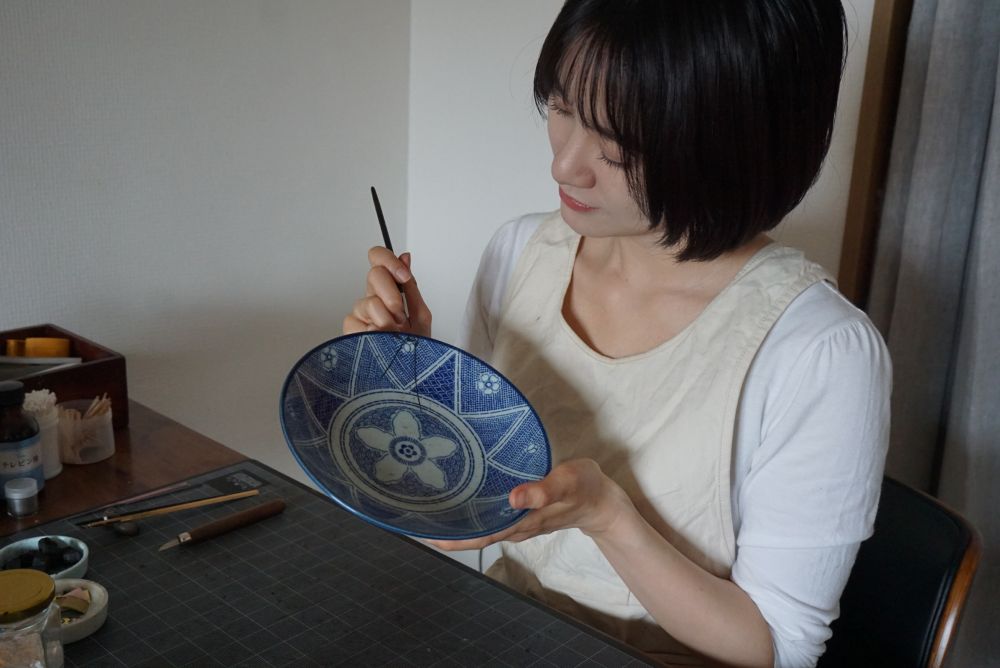
Matsumoto is originally from Mie Prefecture, but she has lived in Tokyo for around a decade. She sees Tokyo as an important place for her work.
In her view, people in Tokyo tend to have a relatively high awareness of kintsugi. Many are willing to pay to repair broken objects rather than discard them.
At the same time, Tokyo is a city of constant change. Buildings disappear. Neighborhoods transform. People move quickly from one thing to another.
For Matsumoto, this makes kintsugi strangely well suited to Tokyo.
Kintsugi is also about change. A vessel breaks, and the break cannot be undone. But the object can be repaired, transformed, and accepted in a new form.
Matsumoto sees a connection between Tokyo and kintsugi: both involve change, and both ask people to adapt rather than return to the past exactly as it was.
The Creative Side of Kintsugi
Although Matsumoto sees kintsugi primarily as repair, there is still room for creativity.
One traditional idea she mentions is mitate — the act of seeing one thing as another. A crack line might resemble a mountain range. A missing chip might suggest the shape of the moon. A repair could be finished in a way that gently brings out those associations.
Sometimes a chipped area may be shaped or finished like a leaf. Sometimes a line may be allowed to flow like a landscape.
This kind of creativity does not ignore the break. It begins from the break.
That is what makes it different from decoration added from the outside. The imagination comes from looking closely at what already happened to the object.
Kintsugi Workshops for International Visitors
As interest in kintsugi grows overseas, Matsumoto has begun offering workshops for international participants, sometimes with the support of an interpreter.
Her goal is not only to let visitors experience the final beauty of gold powder. She wants them to understand the traditional process behind it.
Many participants are surprised by how many steps are involved. The moment when gold powder is applied often creates excitement, but Matsumoto says people are also impressed by the amount of labor behind the result.
They realize that kintsugi is not a quick craft.
It is slow, layered, and demanding.
For international visitors, that may be the most valuable lesson. Authentic kintsugi is not only about the shining line. It is about the time and care required to make repair possible.
Where to See Chiari Matsumoto’s Work
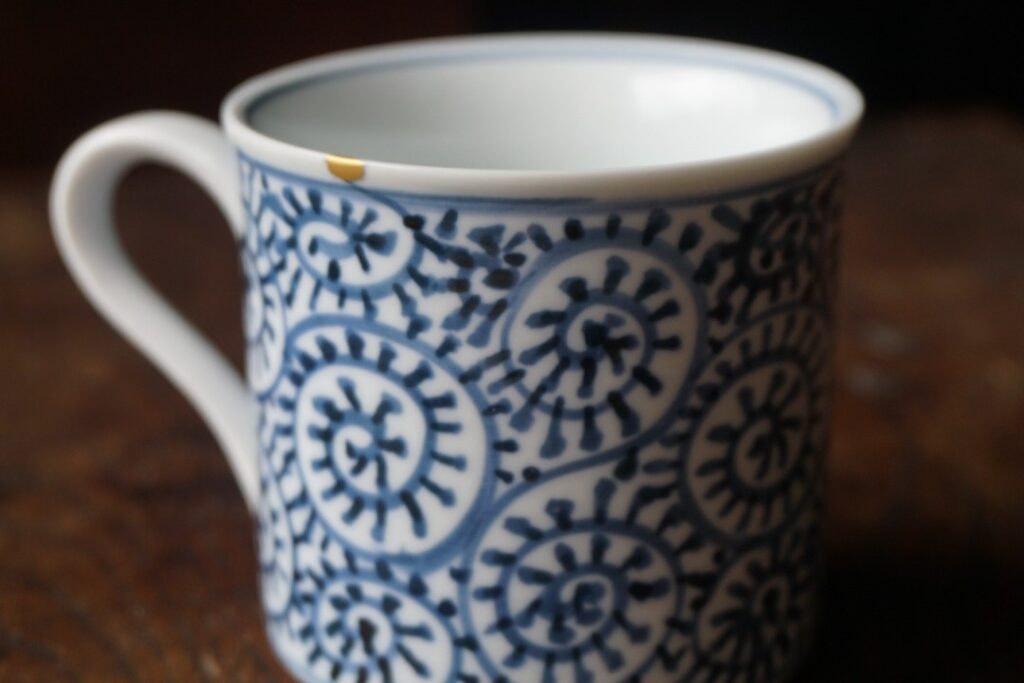
Matsumoto does not currently have a permanent storefront. Her repaired works and event updates can mainly be found through her Instagram account, where she shares examples of her kintsugi repairs and announcements.
Instagram Account: @chiari.mtmt.
She also occasionally participates in events, exhibitions, and sales where visitors can see repaired pieces in person.
Her work spans personal repairs, gallery-related projects, restaurants, and corporate clients. Her clients show how kintsugi still belongs to everyday life: a restaurant cup, a gallery piece, a company vessel, or a personal bowl can all be worth repairing.
What Authentic Kintsugi Teaches Us
Kintsugi is often explained as the beauty of imperfection. But Matsumoto’s work shows that the craft is more concrete than that.
It is the work of choosing the right material, waiting for lacquer to cure, polishing a surface without damaging it, and deciding how much of the break should remain visible.
For many of her clients, the repaired object is not valuable because it is rare or expensive. It is valuable because it has been used, broken, and still kept.
That may be the clearest lesson of authentic kintsugi: repair is not about returning an object to the past. It is about giving it enough strength to continue.
FAQ
What is authentic kintsugi?
Authentic kintsugi is the traditional Japanese technique of repairing broken pottery with urushi lacquer and natural materials, then finishing the repaired lines with gold, silver, platinum, or lacquer. The goal is not only decoration, but functional repair.
Does kintsugi use gold to glue pottery together?
No. In traditional kintsugi, gold is not the adhesive. The broken pieces are joined mainly with urushi lacquer, a natural tree sap. Gold powder is usually applied at the finishing stage.
What is urushi?
Urushi is a natural Japanese lacquer made from tree sap. It is used in traditional lacquerware and kintsugi because it can harden into a strong, durable material when properly cured.
How long does traditional kintsugi take?
Traditional kintsugi often takes at least two to three months. More complex repairs can take four months or even half a year, especially when the object is broken into many pieces or has large missing areas.
Can kintsugi be used on tableware?
Traditional kintsugi was developed as a repair method for vessels and tableware. When properly repaired with suitable natural materials and fully cured, an object may be returned to use. However, the suitability depends on the material, damage, and repair method.
Can glass be repaired with kintsugi?
Yes, glass can be repaired with kintsugi, but it is technically difficult because glass scratches easily during sanding and polishing. Matsumoto describes glass as both one of her favorite and most challenging materials to repair.
What is the difference between traditional kintsugi and modern kintsugi kits?
Traditional kintsugi uses urushi lacquer and natural materials and requires a long curing process. Many modern kits use synthetic adhesives or simplified methods. These can be convenient for decorative repairs, but they are not the same as traditional kintsugi.
Where can travelers experience kintsugi in Tokyo?
Some kintsugi artists and studios in Tokyo offer workshops for visitors, including international participants. Chiari Matsumoto has also begun offering workshops for overseas visitors, sometimes with interpreter support.
・・・
Want to hear more stories from people living in Japan? Explore more interviews in our Humans of Japan series →
Share