
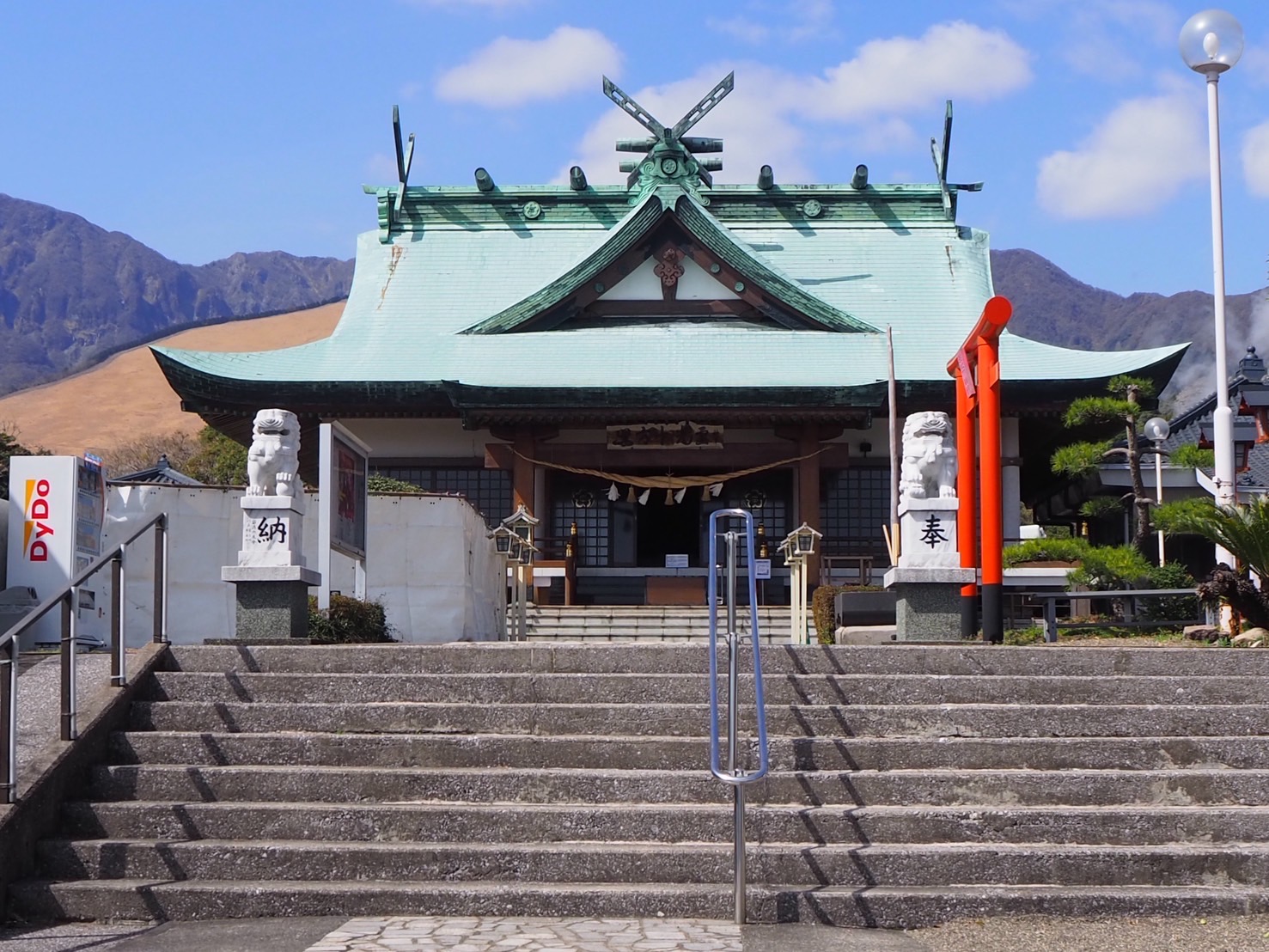
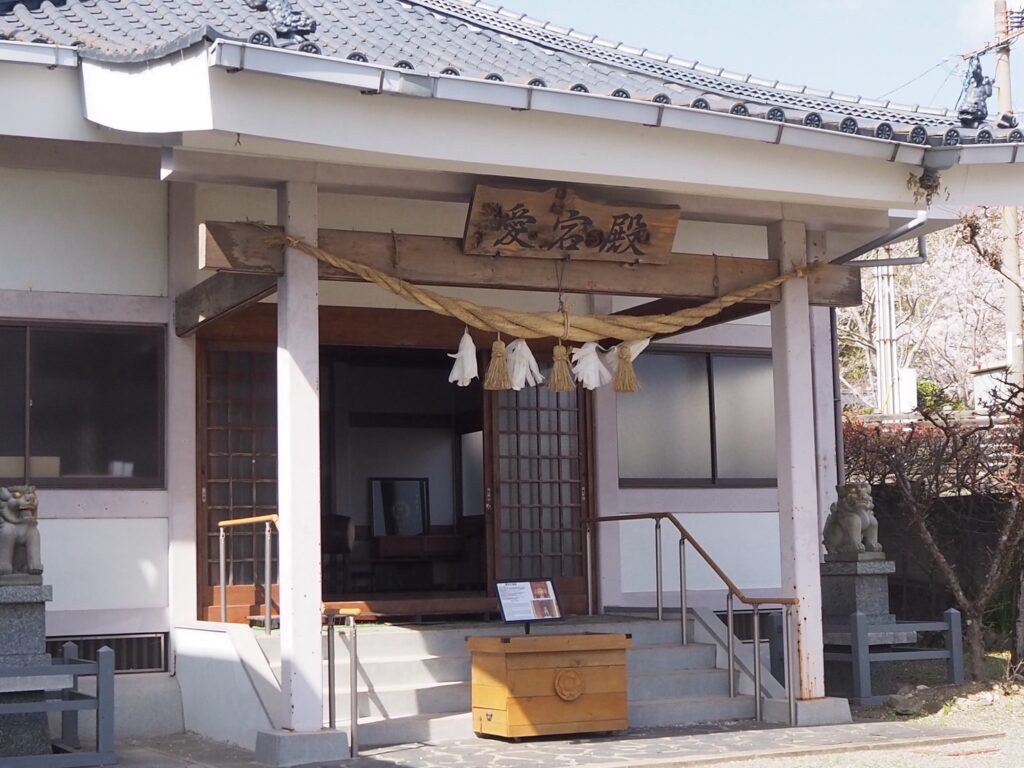
Daiu Shinreikyo is a sanctuary that enshrines Shinto and Buddhist deities together in Beppu, Oita Prefecture, next to Umi Jigoku (Sea Hell). It was established as a religious corporation in 1964, and its grounds hold a main hall, an Inari hall, an Atago hall and an Amida Triad hall.
| Name in Japanese | 大宇真霊教 |
|---|---|
| Location | Miyuki 6-kumi, Beppu, Oita 874-0045, next to Umi Jigoku (Sea Hell) |
| Bus access | Kamenoi Bus from JR Beppu Station west exit, about 20 min to Umijigoku-mae (海地獄前) |
| Visiting hours | 9:00 AM to 5:00 PM |
| Admission | Free |
| Goshuin | 500 or 800 yen per seal. Goshuin book 2,000 yen |
| Official site | daiushinreikyo.jp |
Checked in October 2026 against daiushinreikyo.jp, beppu-jigoku.com.
Beppu is famous for its hot springs and the dramatic “hell tour.” Travelers usually expect steam, boiling ponds, and colorful mineral waters.
Yet only a few steps away from Umi Jigoku (Sea Hell) is a place that feels very different.
The Harmony of Deities
Daiu Shinreikyo does not look like a typical shrine or temple. Inside the grounds you find the Amida Triad, which reflects Buddhist compassion.
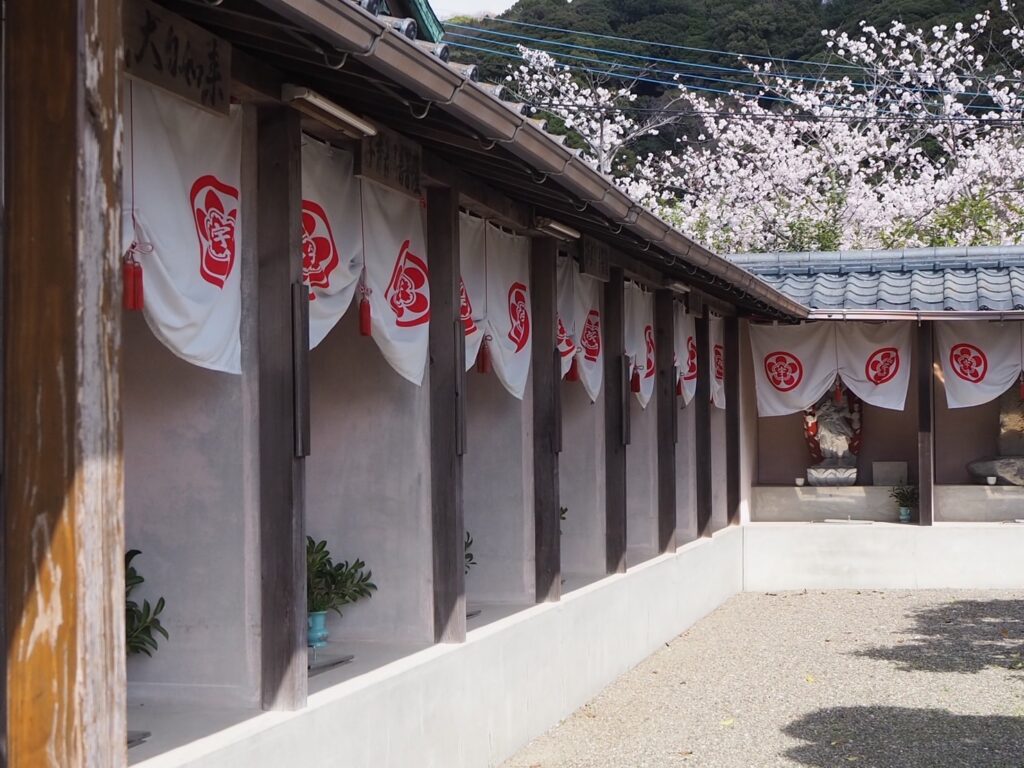
You also see Atago Shōgun Jizō, known as a protective guardian. The Inari deity is here as well. What makes this unusual is that both the Shinto and Buddhist forms of Inari are honored together.
At the center of worship is Ōmihikari no Kami, a god seen as the source of all life. Alongside stands Dainichi Nyorai, the great cosmic Buddha. These figures show how Japan once blended different faiths into one shared practice.
Ofuda: A Spiritual Keepsake
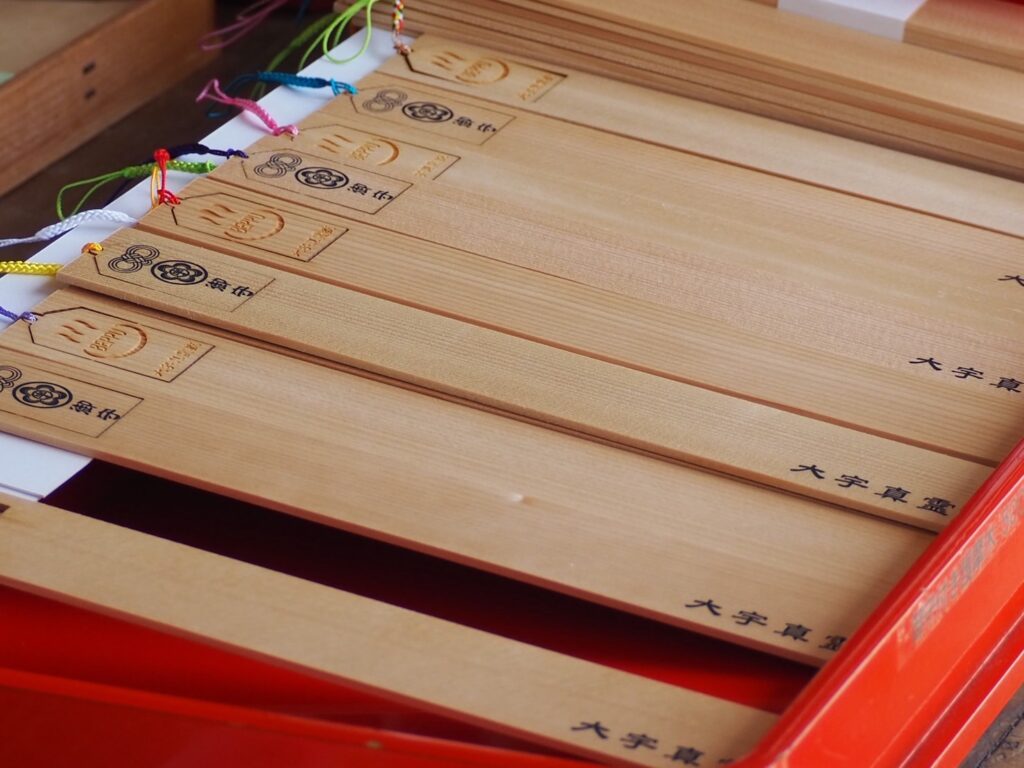
One special feature of Daiu Shinreikyo is its ofuda, or talismans. Visitors write their wishes on them and leave them with the shrine, which burns them at a monthly ceremony. Unlike small charms, these ofuda feel personal because each one carries the words of the person who wrote it.
The official Instagram of the shrine shows young travelers happily filling out kigan jōju fuda, or prayer fulfillment ofuda. Each writer receives an omamori amulet to take home as a reminder of the visit. For believers, the wooden ofuda received after a prayer service act as spiritual protection for the home.
Goshuin and Travel Memories
Daiu Shinreikyo also offers goshuin, the red seal stamps that many travelers collect. Only the goshuin of the main deity is available handwritten. The others come as pre-written sheets, and some designs are seasonal. Visitors can place them in a goshuin-chō, or stamp book. This turns a short stop at the shrine into part of a larger journey across Japan.
Atmosphere and Reflection
The grounds do not include graves or tombs, but some visitors say the Amida Triad hall looks like a memorial hall. Even so, the space creates a calm mood. The contrast is striking. Outside, you hear the noise of the “hell tour.” Inside, you feel quiet and stillness.
Practical Information
Daiu Shinreikyo is open daily from 9:00 AM to 5:00 PM. Admission is free. The location is right next to Umi Jigoku, making it an easy stop after the hot spring tour. From Beppu or Kamegawa Stations, a short taxi ride takes you there. Visitors traveling by car will find parking nearby.
Conclusion: A Hidden Gem Worth Visiting
Beppu offers many hot spring sights, but Daiu Shinreikyo gives another layer to the experience. It is a place where Shinto and Buddhism meet, where you can write your hopes on an ofuda, or collect a goshuin as a memory.
Even if you come only for a short visit, the calm atmosphere lingers. This sanctuary proves that Beppu is not only about steam and spectacle but also about quiet reflection.
Planning a shrine visit? If you’re unsure how to bow, clap, or make an offering once you’re at the shrine, read our step-by-step guide on how to pray at a Japanese shrine, explained by a Shinto priest at Yushima Tenjin in Tokyo.
Frequently Asked Questions
How do you get to Daiu Shinreikyo from Beppu Station?
Daiu Shinreikyo stands next to Umi Jigoku, which is about 20 minutes by Kamenoi Bus from the west exit of JR Beppu Station. Take a bus for Kannawa and get off at Umijigoku-mae, the Umi Jigoku stop. A taxi to Umi Jigoku takes about 15 minutes from Beppu Station or about 10 minutes from Kamegawa Station, according to the official Beppu hell tour site.
Is Daiu Shinreikyo a Shinto shrine or a Buddhist temple?
Daiu Shinreikyo is a place of worship that combines both. Its official site describes it as a religious corporation, established in 1964, that enshrines Shinto and Buddhist deities together. The Inari hall holds a Shinto and a Buddhist form of Inari, and the Amida Triad hall enshrines an Amida triad statue of about 36 centimeters, whose spirit was divided from the principal image of Zenkoji in Nagano.
How much does a goshuin cost at Daiu Shinreikyo?
A goshuin at Daiu Shinreikyo costs 500 or 800 yen, depending on the seal and its format. The official list, checked in October 2026, shows seals for the main deity, the Inari deity and Atago Shōgun Jizō, plus a zodiac seal and a limited seal. Daiu Shinreikyo also sells its own goshuin book for 2,000 yen.
When are the festivals at Daiu Shinreikyo?
Daiu Shinreikyo holds its Inari thanksgiving festival on February 8 and its Atago thanksgiving festival on May 8 every year, and the deity of each hall is unveiled on its festival day. Services are also held twice a month. The full annual schedule is posted on the official site.
Share